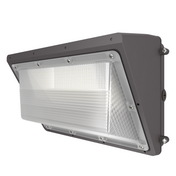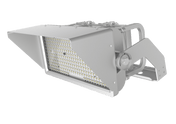

Introduction: Why 140 lm/W Is a Game-Changing Benchmark for LED Wall Lights
Luminous efficacy (measured in lumens per watt, lm/W) is the gold standard for evaluating LED lighting performance—it directly reflects how much light a fixture produces per unit of energy. For LED wall lights, which are widely used in industrial corridors, commercial storefronts, residential exteriors, and public spaces, efficacy has long been a key focus for manufacturers and buyers. In recent years, 140 lm/W has emerged as a high benchmark for LED wall light performance—outpacing the average industry efficacy (100-120 lm/W) and setting a new standard for efficiency, brightness, and sustainability. But why is 140 lm/W considered a "high benchmark"? How do manufacturers achieve this efficacy, and what tangible benefits does it bring to users? This blog explores the significance of 140 lm/W, its technical underpinnings, and why it’s becoming the go-to standard for high-performance LED wall lights.
The Current State of LED Wall Light Efficacy (Why 140 lm/W Stands Out)
To understand why 140 lm/W is a high benchmark, it’s critical to contextualize it within the broader LED wall light market:
- Average efficacy: Most entry-level to mid-range LED wall lights offer 100-120 lm/W—sufficient for basic lighting needs but lacking in energy savings and brightness for high-demand spaces.
- Mid-tier performance: Premium models from mainstream brands typically reach 120-130 lm/W—an improvement, but still not enough to meet the growing demand for ultra-efficient lighting in industrial and commercial settings.
- 140 lm/W and beyond: Top-tier LED wall lights (from brands like Philips, Cree, and Signify) now hit 140-180 lm/W—representing a 16-40% efficacy boost over mid-tier models. This jump isn’t just incremental—it’s transformative for energy consumption and performance.
- Industry relevance: With global energy crises and strict carbon reduction targets (e.g., EU’s 2030 Energy Efficiency Directive, U.S. DOE’s lighting standards), 140 lm/W has become the threshold for "high-performance" LED wall lights—qualifying for premium rebates, tax credits, and sustainability certifications.
For example, a 20W LED wall light with 140 lm/W delivers 2800 lumens—equivalent to a 30W LED wall light with 120 lm/W. This means 140 lm/W fixtures provide the same brightness with 33% less energy— a massive difference for spaces with hundreds of wall lights operating 24/7.
How Manufacturers Achieve 140 lm/W Efficacy (Technical Breakdown)
Hitting 140 lm/W isn’t easy—it requires a holistic approach to LED technology, optical design, and thermal management. Here’s the technical breakdown of how top manufacturers achieve this high benchmark:
1. High-Efficiency LED Chips (The Foundation)
- Premium chip selection: Manufacturers use state-of-the-art LED chips (e.g., Cree XP-G3, Samsung 3030H, Osram Oslon Square) with intrinsic efficacy of 180-220 lm/W—far higher than generic chips (100-150 lm/W). These chips are engineered with advanced semiconductor materials (e.g., gallium nitride, GaN) and optimized epitaxial layers to maximize light output per watt.
- Tight bin sorting: LED chips are binned by efficacy and color temperature. To ensure consistent 140 lm/W performance, top brands use ultra-tight bin sorting (e.g., efficacy variation ±3%)—avoiding "low-performing" chips that drag down overall fixture efficacy.
- Chip packaging: Silicone encapsulation (vs. epoxy) is used to minimize light loss—silicone transmits 95% of light, while epoxy absorbs 5-10%. Some manufacturers also use phosphor coating optimization to improve color rendering without sacrificing efficacy.
2. Optimized Optical Systems (Minimizing Light Waste)
- High-transmittance lenses: 140 lm/W LED wall lights use optical-grade polycarbonate (PC) or acrylic lenses with 92%+ light transmittance—reducing light absorption and reflection. TIR (Total Internal Reflection) lenses are particularly effective, directing 90%+ of chip-emitted light toward the target area (vs. 70-80% for basic diffusers).
- Precision reflectors: Aluminum reflectors with high-reflectivity coatings (e.g., anodized aluminum, vacuum-deposited silver) redirect sideways and backward light forward—adding 5-10% to overall efficacy. These reflectors are computer-designed to avoid light scattering and hotspots.
- Beam angle optimization: For specific use cases (e.g., narrow hallways, wide facades), beam angles are tailored to maximize light utilization. A 60° medium beam for hallways ensures light is focused on walkways, while a 120° wide beam for facades distributes light evenly without waste—both contributing to 140 lm/W efficacy.
3. High-Efficiency Drivers (Converting Electricity to Light)
- Premium driver components: 140 lm/W LED wall lights use high-quality constant-current drivers (e.g., Mean Well, Inventronics, Fulham) with efficiency ≥94%—meaning only 6% of electrical energy is wasted as heat. Cheap drivers (efficiency ≤85%) can’t support 140 lm/W efficacy, as too much energy is lost.
- High power factor (PF): Drivers with PF ≥0.95 (vs. ≤0.85 for low-quality drivers) convert AC power to DC power more efficiently, reducing energy waste from power grid harmonics. This is critical for industrial and commercial settings with large lighting loads.
- Low standby power: Drivers are designed with standby power ≤0.5W—minimizing energy waste when fixtures are off (e.g., motion-sensor wall lights in low-traffic areas).
4. Advanced Thermal Management (Preventing Efficacy Loss)
- High-conductivity heat sinks: LED chips lose efficacy as temperature rises (0.3-0.5% per °C above 25°C). 140 lm/W LED wall lights use large-surface-area aluminum heat sinks (e.g., finned designs, die-cast aluminum) with thermal resistance ≤2°C/W—rapidly dissipating heat to keep chip temperatures low.
- Thermal interface materials (TIM): High-conductivity TIM (e.g., thermal grease, phase-change pads) between LED chips and heat sinks ensures efficient heat transfer—avoiding heat trapping that degrades efficacy.
- Cooling optimization: Some industrial-grade 140 lm/W LED wall lights use passive cooling designs (e.g., open finned housings) to maximize air flow—critical for high-temperature environments (e.g., factories, foundries) where heat buildup is a risk.
The Tangible Benefits of 140 lm/W LED Wall Lights (Why the Benchmark Matters)
140 lm/W isn’t just a technical achievement—it delivers real-world value for users across residential, commercial, and industrial settings:
1. 20-40% Lower Energy Costs (Massive Savings)
-
Direct energy reduction: A 140 lm/W LED wall light uses 20-40% less energy than a 100-120 lm/W model while delivering the same brightness. For example:
- A 20W 140 lm/W fixture (2800 lumens) replaces a 30W 120 lm/W fixture (3600 lumens)—saving 10W per fixture.
- For a commercial building with 200 wall lights operating 12 hours/day, this translates to 8,760 kWh in annual savings—$1,314 at $0.15/kWh.
- HVAC savings: 140 lm/W fixtures produce minimal heat (90% of energy is light, vs. 70% for lower-efficacy models), reducing cooling loads by 8-12%—especially valuable in factories and warehouses with high lighting density.
2. Superior Brightness & Coverage (High Performance)
- More light per watt: 140 lm/W fixtures deliver brighter, more uniform illumination—critical for high-demand spaces like industrial corridors (where visibility prevents accidents), retail storefronts (where brightness attracts customers), and public walkways (where safety is paramount).
- Fewer fixtures needed: Higher efficacy means fewer wall lights are required to cover a space. A warehouse that previously needed 150 120 lm/W fixtures can achieve the same coverage with 120 140 lm/W fixtures—reducing upfront costs and installation labor.
3. Longer Lifespan (Reduced Maintenance)
- Reduced thermal stress: Advanced thermal management keeps LED chips cool, extending lifespan to 50,000-100,000 hours (5-10 years of 12-hour daily use)—vs. 30,000-50,000 hours for 100-120 lm/W fixtures.
- Fewer replacements: For a facility with 200 wall lights, 140 lm/W models require 50% fewer replacements over 10 years—saving $10,000+ in bulb and labor costs.
- Consistent performance: Tight bin sorting and high-quality components ensure 140 lm/W fixtures maintain 90% of initial brightness after 50,000 hours—avoiding the "dimming" issue common with lower-efficacy models.
4. Sustainability & Incentives (Meeting Green Goals)
- Carbon reduction: Each 140 lm/W LED wall light reduces annual CO₂ emissions by 0.8-1.2 tons. For 200 fixtures, that’s 160-240 tons of CO₂ saved yearly—helping businesses meet carbon neutrality targets.
-
Tax credits & rebates: 140 lm/W LED wall lights qualify for premium incentives, such as:
- U.S. IRC Section 179D tax credits (up to 30% of upgrade costs).
- EU Horizon Europe green energy grants (for commercial/industrial users).
- Utility rebates (e.g., DLC Premium certification, which requires ≥150 lm/W for some categories—140 lm/W is a stepping stone to this).
- Eco-friendly design: Most 140 lm/W fixtures use mercury-free LEDs and recyclable materials—aligning with circular economy goals.
5. Versatility Across Use Cases (High Benchmark for All Spaces)
140 lm/W LED wall lights aren’t just for industrial settings—they excel in diverse scenarios:
- Residential exteriors: Bright, energy-efficient illumination for driveways, patios, and entryways—saving homeowners $50-100 annually in energy costs.
- Commercial storefronts: High brightness attracts foot traffic, while energy savings boost profit margins—ideal for restaurants, retail shops, and hotels.
- Industrial corridors: Uniform, bright light prevents accidents in factories, warehouses, and mining sites—paired with IP65+ protection for harsh environments.
- Public spaces: Municipalities use 140 lm/W wall lights for sidewalks, parks, and transit stations—reducing city energy bills and improving public safety.
Top 140 lm/W LED Wall Lights (Setting the Performance Benchmark)
| Product | Efficacy & Key Features | Use Case |
|---|---|---|
| Philips CoreLine LED Wall Light | 140 lm/W, 50,000-hour lifespan, DALI dimming, IP65 | Commercial storefronts, industrial corridors |
| Cree Industrial LED Wall Pack | 150 lm/W, motion sensor integration, IP66, 100,000-hour lifespan | Warehouses, loading docks |
| Signify Interact LED Wall Light | 145 lm/W, IoT connectivity, daylight harvesting, Δu’v’ ≤0.007 | Smart buildings, tech campuses |
| Lepro High-Efficiency LED Wall Light | 140 lm/W, 0-10V dimming, IP65, 5-year warranty | Residential exteriors, small businesses |
Real-World Case Study: 140 lm/W LED Wall Lights in Action
- Scope: 150,000 sq. ft. manufacturing facility with 250 LED wall lights, previously using 120 lm/W fixtures (30W, 3600 lumens) operating 24/7.
- Upgrade: Replaced with 140 lm/W LED wall lights (22W, 3080 lumens)—same brightness, 8W less per fixture.
-
Results:
- Annual energy savings: 250 fixtures × 8W × 24h × 365 = 17,520 kWh—$2,628 at $0.15/kWh.
- HVAC savings: Reduced heat output cut cooling costs by $950 annually.
- Maintenance savings: 100,000-hour lifespan means no replacements for 11+ years (vs. 5 years for old fixtures)—saving $12,500 in labor and bulbs.
- Sustainability impact: 17,520 kWh saved = 12.26 tons of CO₂ reduced annually (per EPA conversion rates).
- Feedback: "The new 140 lm/W lights are brighter and more consistent—our workers report better visibility on the factory floor, and our energy bill has dropped significantly." — Facility Manager.
How to Choose 140 lm/W LED Wall Lights (Buying Guide)
To ensure you’re getting true 140 lm/W performance (avoiding "false claims" from low-quality brands), follow these steps:
- Verify Efficacy Certification: Look for LM79/IEC 60901 certification—these standards ensure accurate efficacy measurements. Avoid brands that don’t provide test reports.
- Check Chip & Driver Brands: Prioritize fixtures with Cree/Samsung/Osram chips and Mean Well/Inventronics drivers—these components guarantee 140 lm/W performance.
- Review Thermal Management: Ensure the fixture has a large aluminum heat sink (3mm+ thickness) and thermal interface materials—critical for maintaining efficacy over time.
- Confirm Environmental Ratings: For outdoor/industrial use, choose IP65+ waterproof/dustproof and IK08 impact resistance—140 lm/W efficacy means nothing if the fixture fails in harsh conditions.
- Look for Warranties: A 5+ year warranty (offered by top brands) indicates confidence in 140 lm/W performance and lifespan.
Conclusion: 140 lm/W Is the New High Benchmark for LED Wall Light Performance
140 lm/W isn’t just a number—it’s a testament to advanced LED technology, optimized design, and a commitment to efficiency. By outperforming average and mid-tier LED wall lights in energy savings, brightness, lifespan, and sustainability, 140 lm/W has established itself as the high benchmark for performance-driven users. Whether you’re a business owner looking to cut costs, a facility manager prioritizing safety, or a homeowner seeking reliable exterior lighting, 140 lm/W LED wall lights deliver unmatched value. As energy efficiency standards tighten and technology advances, 140 lm/W will only become more essential—proving that high performance and sustainability can go hand in hand.