
For stadium owners, sports facility managers, and lighting designers, understanding beam angles is essential to achieving optimal illumination for any sports venue. The beam angle determines how light is distributed across the playing surface—affecting everything from player visibility and spectator experience to energy efficiency and compliance with broadcast standards.
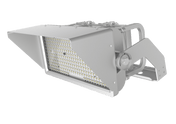
Hylele, a global leader in advanced LED lighting solutions, offers the SP02 series LED sport lights with multiple beam angle options including 10°, 25°, 45°, and 60° , all customizable to meet specific project requirements . But what do these angles mean, and how do you choose the right one for your application? This comprehensive guide explains beam angle fundamentals and provides practical recommendations for various sports venues.
1. What Is Beam Angle and Why Does It Matter?
Defining Beam Angle
The beam angle refers to the angle at which light exits the luminaire and determines the spread of light across the illuminated area . It is typically measured at the point where light intensity drops to 50% of its maximum value (FWHM—Full Width Half Maximum).
Why Beam Angle Is Critical for Sports Lighting
| Factor | Impact |
|---|---|
| Light distribution | Determines how uniformly light covers the playing surface |
| Glare control | Proper beam angles minimize glare for athletes and spectators |
| Energy efficiency | Correct beam selection ensures light reaches intended areas, not wasted |
| Uniformity | Affects horizontal and vertical illuminance consistency |
| Compliance | Helps meet FIFA, IEC, and other sports lighting standards |
A common mistake is selecting fixtures based solely on wattage or lumens without considering beam angle. The result can be dark spots on the field, excessive glare, or wasted energy—all of which compromise performance and increase costs .
2. Categorizing Beam Angles for Sports Lighting
Beam angles for sports lighting generally fall into three categories:
Narrow Beam Angles (10°–30°)
Characteristics:
-
Concentrated, focused light suitable for long-distance projection
-
Higher intensity at the center of the beam
-
Minimal light spread, reducing spill
Best For:
-
High-mast installations (25–50 meters)
-
Long throw distances to field center
-
Focused illumination on specific zones (e.g., goal areas)
Medium Beam Angles (30°–60°)
Characteristics:
-
Balanced distribution between intensity and coverage
-
Versatile for most sports applications
-
Good uniformity when properly overlapped
Best For:
-
General field coverage
-
Mid-range mounting heights (15–25 meters)
-
Multi-purpose venues
Wide Beam Angles (60°–120°)
Characteristics:
-
Broad coverage over large areas
-
Softer light intensity
-
Ideal for lower mounting heights and perimeter lighting
Best For:
-
Spectator seating areas
-
Lower poles (8–15 meters)
-
Supplementary perimeter lighting
Note: While Hylele SP02 primarily offers 10°–60°, wide angles may be available for specialized applications.
3. Beam Angle Selection by Mounting Height
The relationship between mounting height and beam angle is fundamental to proper sports lighting design :
| Mounting Height | Recommended Beam Angle | Effect |
|---|---|---|
| 40–50 meters | 10°–15° (ultra-narrow) | Concentrated light reaches ground with intensity |
| 25–40 meters | 15°–30° (narrow) | Balanced throw distance and coverage |
| 15–25 meters | 30°–60° (medium) | Versatile for most sports applications |
| 8–15 meters | 60°–90° (wide) | Broader coverage, lower intensity |
Rule of thumb: Higher mounting heights require narrower beam angles to ensure sufficient light intensity reaches the playing surface. Using wide beams at high heights produces weak illuminance and poor uniformity .
4. Beam Angle Applications by Sport
Football / Soccer Fields
Requirements: Uniform coverage across 7,140 m² field with high vertical illuminance for broadcast
-
Center field: Narrow beams (15°–25°) from high masts to punch light to center
-
Sidelines and penalty areas: Medium beams (30°–45°) for balanced coverage
-
Typical combination: Multiple beam angles on same pole for layered coverage
For FIFA-standard stadiums, a combination of 10°, 24°, 38°, and 60° beams may be used to achieve perfect uniformity from the center to the edges .
Tennis Courts
Requirements: Focused coverage within court boundaries, minimal glare for players
-
Primary coverage: 20°, 30°, and 45° beams
-
Asymmetric options: 45°×80° for elongated court coverage
-
Mounting height: 8–12 meters typical
The beam angle must be carefully selected to contain light within the court and prevent spill into adjacent courts or surrounding areas .
Basketball Courts
Requirements: Uniform illumination with good vertical light for fast-moving play
Recommended Configuration:
-
General coverage: 30°–45° medium beams
-
Indoor arenas: 45°–60° depending on ceiling height
-
Key zones: May incorporate 25° beams for focused hoop lighting
Baseball Fields
Requirements: Covering large infield and outfield areas with varying throw distances
-
Infield: 25°–45° beams for focused coverage
-
Outfield: 45°–60° beams for broader coverage
-
Foul territory: Wide beams for spectator areas
Multi-Purpose Venues
Requirements: Flexibility to accommodate different sports and events
Recommended Configuration:
-
Mix of narrow and medium beams with smart control compatibility
-
0–10V or DALI dimming allows scene setting for different activities
5. The Hylele SP02 Advantage: Precision Beam Control
Hylele's SP02 series LED sport lights deliver exceptional optical performance with multiple beam angle options :
| Feature | SP02 Specification |
|---|---|
| Beam Angles | 10°, 25°, 45°, 60° (customizable) |
| Luminous Efficiency | Up to 160 lm/W |
| Power Range | 600W – 1800W |
| CRI | >80 |
| IP Rating | IP66 Waterproof / Dustproof |
| Smart Control | DALI, DMX512, 0–10V dimming |
Superior Light Quality
The SP02 adopts Lumileds or Osram LED chips, providing ultra-high brightness and uniform light distribution. The precision optical lenses minimize glare, eliminate shadows, and ensure consistent lighting across the entire field .
Anti-Glare Optical Design
Custom reflectors and light shields reduce glare, complying with FIFA and EN12193 standards for sports illumination . This is particularly important for player safety and broadcast quality.
Application-Specific Recommendations
| Application | Recommended Power | Beam Angle |
|---|---|---|
| Football / Soccer Fields | 1000W–1800W | 10°–45° combination |
| Tennis Courts | 600W–800W | 20°–45° focused |
| Baseball Fields | 800W–1500W | 25°–60° combination |
| Airports & Ports | 1000W–1800W | 15°–40° |
| Outdoor Arenas | 800W–1500W | 25°–60° |
6. Asymmetric Beam Angles for Specialized Applications
In addition to symmetric beam angles, some applications benefit from asymmetric distributions that direct light preferentially in one direction.
What Are Asymmetric Beams?
Asymmetric beams have different beam spreads horizontally and vertically, allowing light to be shaped to specific field geometries. For example, a 45°×80° beam provides:
-
45° vertical spread for forward throw
-
80° horizontal spread for wide coverage
Applications for Asymmetric Beams
Hylele SP02 series can be customized with asymmetric optics to meet specific project requirements .
7. Mixing Beam Angles for Optimal Coverage
Professional sports lighting rarely uses a single beam angle. Instead, designers combine multiple angles to achieve perfect uniformity .
The Layered Approach
| Zone | Beam Angle | Purpose |
|---|---|---|
| Field Center | 10°–15° narrow | Long throw to center from high masts |
| Mid-field | 25°–30° narrow-medium | Transition zone coverage |
| Sidelines/Edges | 45°–60° medium | Broader coverage, reduced glare |
| Spectator Areas | 60°–90° wide | Ambient illumination |
Overlap Strategy
Beams should overlap by approximately 10–20% to eliminate dark spots and ensure uniform coverage . This overlap compensates for any gaps between fixture coverage areas and ensures consistent light levels across the entire playing surface.
8. Beam Angle vs. Other Critical Factors
Relationship with Lux Levels
The same lumen output delivered through different beam angles produces different lux levels at the playing surface:
-
Narrow beam (15°): Higher lux intensity in a smaller area
-
Wide beam (60°): Lower lux intensity over larger area
For example, a 1000W SP02 fixture (160,000 lumens) with a 15° beam will produce significantly higher center-beam lux than the same fixture with a 60° beam.
Relationship with Uniformity
Uniformity requirements for professional sports (U1 ≥ 0.6, U2 ≥ 0.7) demand careful beam angle selection and fixture placement . Too narrow a beam pattern without proper overlap creates "hot spots" and dark zones. Too wide a beam pattern reduces intensity and may fail to meet minimum lux requirements.
Relationship with Glare Control
Glare rating (GR) should be ≤50 for professional venues . Narrower beams directed precisely onto the field—rather than into players' eyes—help control glare. Anti-glare shields and visors can further reduce high-angle spill light .
9. Step-by-Step Beam Angle Selection Guide
Step 1: Determine Mounting Height
Measure the height of your poles or masts. This is the primary factor driving beam angle selection .
Step 2: Calculate Throw Distance
Determine the distance from each fixture to the farthest point it must illuminate (typically field center).
Step 3: Identify Critical Zones
Map out areas requiring focused illumination (goal mouths, penalty areas, center circle) vs. general coverage areas.
Step 4: Select Primary Beam Angles
Based on mounting height and throw distance, select 2–3 beam angles for your layout .
Step 5: Verify with Photometric Analysis
Use software like DIALux or AGi32 to simulate your design. Hylele offers free photometric analysis for qualified projects .
Quick Reference Table
| Venue Type | Mounting Height | Recommended Beam Angles |
|---|---|---|
| Small tennis court | 8–12 m | 20°, 30°, 45° |
| Medium football field | 15–25 m | 25°, 45°, 60° |
| Large stadium | 25–45 m | 10°, 15°, 25°, 45° |
| Baseball field | 20–35 m | 15°, 25°, 45°, 60° |
| Multi-purpose arena | 15–30 m | 25°, 45°, 60° (with dimming) |
10. Frequently Asked Questions
Q: What beam angle is best for a football stadium with 35m poles?
A: For 35m poles, use a combination: 15°–25° narrow beams for long throw to field center, and 30°–45° medium beams for sidelines and near-field coverage .
Q: Can I use the same beam angle for all fixtures in my sports field?
A: No. Professional sports lighting requires multiple beam angles to achieve uniform coverage from center to edges. A single beam angle will create uneven illumination .
Q: What's the difference between beam angle and field angle?
A: Beam angle is typically measured at 50% of maximum intensity. Field angle is measured at 10% of maximum intensity. Field angle is always larger and represents the full extent of usable light .
Q: How does beam angle affect glare?
A: Narrower beams directed precisely onto the field—not into players' eyes—help control glare. Anti-glare shields and proper aiming are also essential .
Q: What beam angles does Hylele SP02 offer?
A: Hylele SP02 series offers 10°, 25°, 45°, and 60° beam angles, with customizable asymmetric options for specific applications .
Q: Do I need different beam angles for TV broadcast vs. recreational play?
A: Yes. Broadcast requires higher uniformity and vertical illuminance, often achieved with more fixtures and carefully layered beam angles. Recreational venues can use simpler configurations.
Q: What is an asymmetric beam angle?
A: An asymmetric beam has different horizontal and vertical spreads (e.g., 45°×80°), allowing light to be shaped to specific field geometries like elongated tennis courts or football sidelines .
Q: Can Hylele provide custom beam angles?
A: Yes. Hylele offers customizable beam angles and optics to meet specific project requirements .
11. Common Beam Angle Mistakes to Avoid
Mistake 1: Using Only Wide Beams for High Masts
At 35m height, 60° beams spread light too broadly, reducing intensity at field level and potentially spilling into stands .
Mistake 2: Ignoring Overlap
Beams must overlap by 10–20% to eliminate dark spots. Insufficient overlap creates uneven illumination .
Mistake 3: Overlooking Vertical Illuminance
Broadcast venues require good vertical light for cameras. Narrower beams aimed across the field improve vertical illuminance.
Mistake 4: Neglecting Glare Control
Beams aimed too high or without proper optics create glare that impairs players and spectators. Always consider aiming angles and shielding .
Mistake 5: Copying Another Venue's Design
Every venue has unique dimensions, mounting heights, and requirements. Always perform site-specific photometric analysis.
Conclusion: Getting the Beam Angle Right for Your Sports Venue
Understanding beam angle options for LED sports lighting is essential to achieving optimal illumination for any sports facility. The right combination of narrow, medium, and wide beams—carefully matched to mounting height, field size, and application requirements—ensures uniform coverage, minimal glare, and energy-efficient operation.
Hylele's SP02 series LED sport lights deliver exceptional flexibility with:
-
Multiple beam angle options: 10°, 25°, 45°, 60° (customizable)
-
Industry-leading 160 lm/W efficacy reducing energy consumption by up to 70%
-
Precision optical lenses minimizing glare and eliminate shadows
-
Smart control compatibility for adaptive, multi-purpose venues
By following the guidelines in this article—matching beam angle to mounting height, layering multiple angles for uniform coverage, and verifying with photometric analysis—you can design a sports lighting system that meets the most demanding standards for player performance, spectator experience, and broadcast quality.
As the global sports industry evolves toward smarter, greener designs, Hylele SP02 ensures every game, every performance, and every audience moment shines brighter than ever.