
Introduction
Outdoor stadium lighting has undergone a dramatic transformation. The days of flickering metal halide lamps with 10‑minute warm‑up delays are rapidly ending. In 2026, LED sports lights have become the global standard for professional arenas, collegiate stadiums, high school fields, and community recreation complexes.
But with dozens of manufacturers, hundreds of fixture models, and technical specifications ranging from CRI to flicker percentage, how do you choose the best LED sports lights for your outdoor stadium?
This comprehensive guide answers that question. We’ll cover:
-
The top LED sports lighting fixtures for 2026 across different venue types
-
IES lighting standards and what illuminance levels your sport requires
-
DLC V6.0 certification – what’s changed and why it matters for rebates
-
Key technical specifications (CRI, flicker, uniformity, glare control, IP rating)
-
Manufacturer comparison: Signify, Musco, Eaton, Cree, Acuity Brands, and more
-
Real‑world case studies and ROI analysis
-
Step‑by‑step selection checklist for stadium owners and facility managers
By the end, you‘ll have a clear, actionable roadmap to specify and purchase the right LED sports lighting system for your outdoor stadium – whether you’re lighting a Little League field or a World Cup stadium.
The 2026 Sports Lighting Market: Key Trends
Before diving into specific products, it helps to understand the broader market landscape in 2026. The global sports lighting market was valued at USD 883.1 million in 2025 and is projected to grow at a CAGR of 7.9% to reach USD 1.87 billion by 2035. Several forces are driving this growth:
-
LED dominance: The LED sports lighting segment generated USD 637.5 million in 2025, reflecting clear leadership over traditional lighting technologies.
-
Outdoor applications lead: The outdoor applications segment accounted for 67.7% of market share in 2025, driven by demand for durability in harsh environmental conditions, longer operational life, and improved light control.
-
Broadcast requirements: 4K and 8K ultra‑high‑definition broadcasting demands higher illumination quality, uniformity, and flicker‑free operation – specifications that legacy metal halide systems cannot reliably meet.
-
Energy efficiency mandates: Government regulations enforcing minimum energy performance targets, with phased compliance timelines extending into the next decade, are accelerating LED adoption.
-
Smart controls: Competition among sports lighting suppliers has expanded to encompass system integration capabilities, smart control platforms, industry‑proven experience, and full‑lifecycle services.
The takeaway: 2026 is the year when LED sports lighting becomes not just the preferred choice but the necessary choice for new installations and retrofits.
Top LED Sports Lighting Fixtures for Outdoor Stadiums in 2026
Based on 2026 industry data, manufacturer announcements, and technical specifications, here are the leading LED sports lighting solutions organized by venue type and application.
Professional & Broadcast‑Grade Stadiums
Musco Show-Light with TLC for LED® — Musco Lighting, a 50‑year leader in sports lighting, continues to set the industry standard. In May 2026, Daytona International Speedway announced a venue‑wide LED lighting project featuring Musco‘s state‑of‑the‑art system – making it the largest sports facility in the world to receive this technology. The system delivers brighter, more consistent illumination while reducing energy consumption by approximately 50%. Musco‘s patented glare control technology and precise positioning make it a top choice for NFL, MLB, NBA, NHL, and Olympic venues.
Signify (Philips) Interact Sports — Signify led the sports lighting market with over 12% market share in 2025. Their Interact Sports system allows managers to control lighting dynamically through an intuitive interface, reducing energy consumption while delivering broadcast‑ready illumination. Philips‘ commitment to sustainability and innovation keeps it at the forefront of the market.
Eaton Ephesus Stadium Series — Eaton‘s Ephesus division (acquired in 2015) has become a major force. A notable 2026 retrofit at Ford Fields in Beaumont, Texas replaced an outdated 1,500‑watt metal halide system with Ephesus LED lighting, reducing energy usage and maintenance costs by up to 75%. The Ephesus system offers individualized fixture management via dynamic control features. Key specifications: 135,000‑hour LM79 rated life, temperature range of -40°C to 60°C, and >70 CRI.
Cree Lighting — Cree is consistently named among the top five players in the global sports lighting market alongside Signify, Musco, Eaton, and Zumtobel Group. Known for high‑efficacy LED solutions with exceptional optical control.
Acuity Brands — Acuity‘s broad portfolio of lighting and control products serves all facets of the sports world. Their LED sports lighting fixtures are known for versatility, efficiency, and advanced control systems for easy manipulation of lighting effects.
Stadium Lighting Fixtures by Category
| Category | Representative Fixtures | Key Features | Best For |
|---|---|---|---|
| LED Floodlights | Ovia launch system (2026), VEGA 2026, Huadian FL23 | 100,000+ hour lifetime, professional‑grade optics, outdoor‑rated | Football, soccer, baseball, track & field |
| Multi‑Mode LED | Ephesus Stadium Series, Acuity Brands ‘Invue‘ Series | Dynamic control, upgradable, zero moving parts | Multi‑use stadiums requiring both sports and concert lighting |
| RGB Entertainment Lighting | Musco RGB accent lighting, LED moving heads | 16.7M+ color combinations, DMX/RDM control, synchronized effects | Fan engagement, pre‑show effects, halftime |
Additional notable products for 2026:
-
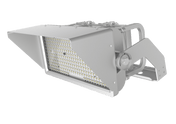
ONOR VEGA 2026 LED Football Stadium Floodlight – Designed specifically for large outdoor and indoor spaces requiring uniform field coverage, precise optic control, and broadcast‑ready performance.
-
Huadian FL23 LED Stadium Lighting – Engineered specifically for large outdoor stadiums, providing efficient illumination and energy‑saving performance. Notable for its high energy efficiency, durability, and long lifespan.
-
Shine Lighting PLAYER ONE Sports Light – Available in 480W, 600W, 800W, 1000W, and 1200W power packages.
Understanding IES Lighting Standards: Match the Class to Your Venue
The Illuminating Engineering Society (IES) provides the industry standard for sports lighting under ANSI/IES RP‑6 guidelines, which remain the most widely referenced document for sports field lighting in North America as of 2026. The tiered “Class“ system matches lighting performance to the level of play:
IES Lighting Class System
| Class | Description | Target Illuminance (fc) | Uniformity Ratio (Avg:Min) | Typical Venues |
|---|---|---|---|---|
| Class I | Professional & national competition | 100–150 fc | ≤ 1.5:1 | Pro leagues (NBA, NFL, MLB), venues >5,000 capacity |
| Class II | Intermediate & regional competition | 50–80 fc | ≤ 2.0:1 | College sports, minor league, mid‑sized venues (up to 5,000) |
| Class III | Recreational & high school | 30–50 fc | ≤ 2.5:1 | High school gyms, municipal parks, clubs (under 2,000 spectators) |
| Class IV | Social & training | 10–30 fc | ≤ 3.0:1 | Training sessions, elementary activities, social play |
For televised events, Class I facilities require broadcast‑quality lighting: flicker‑free operation, CRI >80, and vertical illuminance adequate for cameras.
IES Recommendations by Sport (2026)
| Sport | Class I (Pro/Broadcast) | Class II (College) | Class III (HS/Rec) | Class IV (Training) |
|---|---|---|---|---|
| Baseball / Softball | 100 fc | 70 fc | 50 fc | 30 fc |
| Football | 100 fc | 50 fc | 30 fc | 20 fc |
| Soccer | 75 fc | 50 fc | 30 fc | 20 fc |
| Tennis | 100 fc | 75 fc | 50 fc | 30 fc |
| Basketball | 100 fc | 75 fc | 50 fc | 30 fc |
| Ice Hockey | 100 fc | 70 fc | 50 fc | 30 fc |
| Track & Field | 50 fc | 30 fc | 20 fc | 10 fc |
| Lacrosse | 70 fc | 50 fc | 30 fc | 20 fc |
| Pickleball | 75 fc | 50 fc | 30 fc | 20 fc |
Source: FSG compilation based on IES standards
Vertical illuminance is increasingly important, with recommendations that vertical levels should typically reach 30% to 50% of the horizontal target to maintain adequate chromatic contrast for broadcast cameras.
DLC V6.0 Certification: What‘s Changed for 2026
If you‘re planning to purchase LED sports lights for a commercial or municipal stadium, DLC certification is not optional – it’s the key to utility rebates and incentive programs covering approximately 70% of commercial lighting programs in the US and Canada.
Critical 2026 update: DLC SSL V6.0 (and LUNA V2.0) is now active. Applications opened on January 5, 2026. Products not certified under V6.0 will be removed from the Qualified Products List (QPL) on October 1, 2026. V5.1 products must transition by December 15, 2026.
Key changes under DLC V6.0 for sports lighting:
-
Efficacy thresholds raised by 10–20 lm/W: The new standard raises minimum efficacy by an average of 14% compared to V5.1, with category‑specific increases up to 19%.
-
Premium tier requirements: Field‑adjustable light output / dimming functionality required.
-
Color temperature restrictions: Outdoor products except sports lighting can go up to 5700K; other outdoor products limited to 5000K.
-
Controllability: Stronger requirements for controllability (Standard vs. Premium tiers), including color quality, light distribution, glare control, and power quality.
For sports lighting buyers: Always verify that the fixtures you‘re specifying are DLC V6.0 Premium listed. Non‑certified or V5.1 products will not qualify for utility rebates after the 2026 deadlines.
How to Choose the Right LED Sports Lights: A 7‑Step Framework
Selecting the wrong sports lighting system is expensive to fix. Use this systematic framework to make the right choice.
Step 1: Determine Your Required Illuminance Level
Match your venue and level of play to the IES class system above. For Class I (professional with broadcast), you need 100–150 fc horizontal illuminance with a uniformity ratio (Avg:Min) of ≤ 1.5:1. For Class III (high school or recreational), 30–50 fc is sufficient with less stringent uniformity requirements.
Also check your sport’s specific vertical illuminance needs – especially for volleyball, basketball (rim visibility), and tennis (ball tracking at eye level).
Step 2: Prioritize Broadcast Specifications (If Televised)
If your stadium hosts televised events – even occasional broadcasts – the following specifications are non‑negotiable:
-
Flicker‑free operation (>90% modulation at 1000Hz+): Visible flicker ruins slow‑motion replays.
-
CRI > 80 (preferably 90+): Accurate color reproduction for jerseys, balls, and skin tones. Premium LED sports lights now achieve 90‑95+ CRI.
-
CCT 5000K–5700K: Natural daylight color temperature for true‑to‑life broadcast images.
-
Lux levels 1200–2000+ lux for professional broadcasts: Equivalent to approximately 112–186 fc.
For broadcasts, also check flicker percentage specifications – demand <3% flicker at all dimming levels, and <1% for professional slow‑motion applications.
Step 3: Evaluate Optical Performance — Uniformity and Glare
Uniformity and glare directly affect player safety and comfort. Key metrics:
-
Uniformity ratio (Emin/Emax or Eavg/Emin): For Class I professional play, a ratio of 1.5:1 (Eavg/Emin) is typical. For competitive basketball, the IESNA RP‑6 standard recommends a minimum‑to‑average uniformity ratio (U0) of 0.6 to 0.7.
-
Glare Rating (GR): Look for GR ≤ 50 for player comfort; premium systems achieve GR ≤ 40. Musco‘s patented glare control technology is widely recognized for excellence in this area.
-
Spill light control: For outdoor stadiums near residential areas, choose fixtures with full‑cutoff optics and BUG ratings (B0‑U0‑G1 or better) to minimize light trespass and comply with dark‑sky ordinances.
Step 4: Specify Environmental Durability (IP Rating)
Outdoor stadiums face rain, dust, extreme temperatures, and wind. Minimum requirements:
-
IP65: Dust‑tight and protected against water jets – suitable for most outdoor applications.
-
IP66: Full protection against dust and powerful water jets – recommended for stadiums in harsh weather conditions, coastal areas, or locations with frequent heavy rain.
-
Operating temperature: Look for -30°C to +50°C minimum; premium fixtures like Ephesus offer -40°C to +60°C range.
-
IK rating: IK08 or IK10 for vandal‑prone locations.
Step 5: Controls and Smart Capabilities
Modern LED sports lights should support:
-
0‑10V dimming (minimum) or DALI for granular control
-
DMX-512 or RDM for dynamic effects and entertainment lighting
-
Scheduling and zoning for practice vs. game vs. broadcast modes
-
Remote monitoring to track fixture health, energy usage, and receive fault alerts
-
Integration with BMS for full automation
Step 6: Compare Total Cost of Ownership (Not Just Purchase Price)
The higher upfront cost of LED sports lights is quickly recovered through lower operating expenses.
Typical savings: Energy reductions of 50–75% are common. The Ford Fields retrofit achieved up to 75% energy and maintenance reduction. The Daytona Speedway LED upgrade is expected to cut energy consumption by approximately 50%. LED systems offer instant operation and superior visual performance compared to legacy options.
Lifespan: Quality LED sports lights deliver 50,000–100,000 hours (L70). Traditional metal halide lamps last only 10,000–20,000 hours – and require expensive boom lift replacements. A stadium used 6 hours per night, 365 days per year, would see over 45 years of service from 100,000‑hour LEDs.
Payback period: Real‑world 2026 examples show payback between 1.5 and 3 years, depending on operating hours and local electricity rates. For a 200‑lux floodlight system in a club setting, payback is under 2 years. A 350‑lux hockey pitch upgrade saves over £11,300 annually, with payback less than 3 years. When you factor in energy savings (60‑75%), maintenance savings (80‑90%), and utility rebates, the ROI becomes compelling.
Step 7: Verify Certifications and Apply for Rebates
-
Confirm DLC V6.0 Premium listing for full rebate eligibility (utility rebates often 300+ per fixture).
-
Check UL 1598 or UL 844 (hazardous locations, if applicable).
-
For Canadian projects, verify CSA certification.
-
Document your installation – serial numbers, photometric plan, and contractor information are required for rebate applications.
Major LED Sports Lighting Manufacturers Comparison (2026)
| Manufacturer | Headquarters | Market Position | Key Technologies | Notable Venues |
|---|---|---|---|---|
| Signify (Philips) | Netherlands | Market leader (>12% share) | Interact Sports (smart control platform) | Global professional stadiums |
| Musco Lighting | USA (Iowa) | Premier sports specialist | SportsCluster, TLC for LED, Control‑Link, glare control | Daytona Speedway, NFL, MLB, NBA, NHL, Olympics |
| Eaton (Ephesus) | USA | High‑output specialist | Ephesus Stadium Series, 135,000h LM79 life, -40°C to 60°C | Ford Fields, major college stadiums |
| Cree Lighting | USA | Top‑5 global player | High‑efficacy LED, optical precision | Professional and collegiate venues |
| Acuity Brands | USA (Georgia) | Broad portfolio leader | Full lighting + controls ecosystem | Diverse sports facilities |
| Zumtobel Group | Austria | European leader | Glare minimization, uniform distribution | European stadiums, arenas |
| GE Lighting | USA (Ohio) | Century‑old innovator | Bright, uniform illumination, energy efficiency | Stadiums of all sizes |
| Cooper Lighting | USA (Georgia) | Eaton division | ’Invue‘ Series, optimized optical control | North American venues |
| Thorn Lighting | UK | European heritage | High‑flux LED units, weather‑resistant | Outdoor sports events globally |
Sources: GMInsights market analysis, TrendForce, LogosLED
Real‑World Case Studies: Successful 2026 LED Stadium Upgrades
Case 1: Daytona International Speedway (NASCAR)
-
Project: Venue‑wide LED lighting installation across oval track, road course, infield, pit box
-
Partner: Musco Lighting
-
Expected energy reduction: ~50%
-
Additional features: RGB accent lighting with 16.7M+ color combinations synchronized with caution lights
Case 2: Ford Fields (Beaumont, Texas) – Youth Baseball Complex
-
Project: 12‑field retrofit replacing 1,500W metal halide
-
Partner: Eaton Ephesus
-
Energy & maintenance reduction: Up to 75%
-
Key benefit: Dynamic control features for individualized fixture management
Frequently Asked Questions (FAQ)
Q: What is the best LED sports light for a high school football stadium?
A: For high school level (IES Class III), you need 30–50 fc average illuminance with uniformity around 2.5:1. Recommended fixtures include mid‑range LED floodlights from Cree Lighting, Acuity Brands, or Cooper Lighting. Ensure IP65 rating and DLC V6.0 certification for rebate eligibility.
Q: How many lumens do I need for an outdoor stadium?
A: A general rule: For professional soccer (1,500 lux target), you need approximately 50‑60 lumens per square foot of playing field. Always request a photometric design from a qualified lighting engineer for accurate fixture count – every stadium layout is unique.
Q: Are LED sports lights flicker‑free for slow‑motion TV broadcasts?
A: Quality LED sports lights with high‑frequency drivers produce <3% flicker, which is imperceptible to cameras. For professional slow‑motion applications, specify <1% flicker at all dimming levels and verify with manufacturer data sheets.
Q: How long does it take to install LED sports lights in a stadium?
A: Installation timelines vary by venue size and complexity. A typical high school football stadium (4‑6 poles, 40‑60 fixtures) can be retrofitted in 2‑4 weeks. A professional stadium like Daytona Speedway takes approximately 9 months from start to completion.
Q: What is the typical warranty on LED sports lights?
A: Reputable manufacturers offer 5‑10 year limited warranties covering both LED modules and drivers. Some premium brands (e.g., Eaton Ephesus, Musco) offer 10‑year warranties.
Q: Can I get utility rebates for LED sports lighting upgrades in 2026?
A: Yes – if the fixtures are DLC V6.0 Premium listed. As of 2026, nearly 700 utility and efficiency programs require or reference the DLC QPL for rebate eligibility. Work with your lighting supplier to identify available rebates before purchasing.
Q: Do LED sports lights work with existing poles and mounting structures?
A: Usually yes. Most LED sports lights are designed as direct replacements for traditional floodlights with standard mounting brackets (slip‑fitter, trunnion, or yoke mounts). However, verify weight differences – LEDs are significantly lighter, which may require different wind load calculations for existing poles.
Selection Checklist for Stadium Owners and Facility Managers
Use this checklist when evaluating LED sports lighting proposals:
-
IES Class identified (I, II, III, or IV) based on level of play
-
Target illuminance (fc or lux) documented for your specific sport(s)
-
Uniformity ratio specified (Class I requires ≤ 1.5:1 Avg:Min)
-
CRI ≥ 80 (≥ 90 recommended for broadcast)
-
Flicker specification (<3%; <1% for broadcast slow‑mo)
-
CCT selected (5000K‑5700K recommended for outdoor sports)
-
Glare rating (GR) ≤ 50 (≤ 40 preferred)
-
IP rating confirmed: IP65 minimum for outdoor
-
Operating temperature range verified for your climate
-
DLC V6.0 Premium listing confirmed (critical for rebates)
-
Control protocol specified (0‑10V, DALI, DMX, or wireless)
-
Warranty duration confirmed (5‑10 years preferred)
-
Utility rebate amount estimated before purchase
-
Professional photometric plan obtained
-
Certified installer / lighting contractor selected
Final Summary
The best LED sports lights for outdoor stadiums in 2026 share a common set of features: high efficacy (≥150 lm/W), excellent optical control for uniformity and glare reduction, broadcast‑ready CRI and flicker performance, durable IP65/IP66 construction, and DLC V6.0 Premium certification for full rebate eligibility.
Top manufacturers like Signify, Musco, Eaton (Ephesus), Cree Lighting, and Acuity Brands lead the market with proven systems installed in professional, collegiate, and community venues worldwide.
When selecting your system, follow this decision framework:
-
Start with your IES class – be honest about your level of play and broadcast needs
-
Prioritize optical quality – uniformity and glare control protect players and fans
-
Verify DLC V6.0 certification – this is your gateway to utility rebates
-
Compare TCO, not purchase price – energy and maintenance savings pay back in 1.5‑3 years
-
Get a professional photometric plan – proper layout is as important as fixture quality
-
Work with a certified installer – sports lighting requires specialized aiming and controls integration
The transition to LED sports lighting is no longer a question of “if” – in 2026, the question is “which system best fits my specific venue and budget?” Use this guide to answer that question confidently and to negotiate with manufacturers and contractors from a position of knowledge.