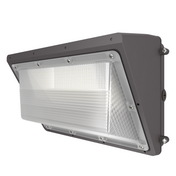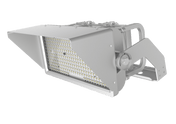

In 2025, the focus of competition in the LED area light market has shifted from "basic lighting" to "performance upgrades," with high lumen brightness, long lifespan durability, and high-level waterproofing becoming the three core concerns for consumers. However, problems such as "falsely advertised lumens," "inflated lifespans," and "confusing waterproofing ratings" still exist in the market, leading many users to fall into the misconception of "choosing bright lights that are not energy-efficient, and choosing expensive lights that are not durable." This article, based on the latest industry standard (GB/T 31148-2024) and actual test data, provides an in-depth analysis from three dimensions: "misconceptions about high lumens, key technologies for long lifespan, and comparison of waterproofing ratings," and offers scenario-based purchasing solutions to help you accurately match your needs and avoid decision-making errors.
I. High Lumen Selection: More Than Just "Brightness," It's About "Energy-Efficient Brightness"
In 2025, when consumers purchase LED area lights, "lumen value" becomes the primary parameter they focus on, but most people confuse the concepts of "high lumen" and "high luminous efficacy." In reality, lumens (lm) represent total luminous flux, while luminous efficacy (lm/W) represents energy efficiency. Only by combining both can the true performance of a luminaire be reflected.
1. New National Standard Requirements for High Lumens and Luminous Efficacy by 2025
According to the new national standard GB/T 31148-2024, by 2025, LED area lights must simultaneously meet both "lumen compliant" and "luminous efficacy qualified":
- - Residential scenarios: A 20-30㎡ living room requires a lumen value ≥ 2500 lm, corresponding to a luminous efficacy ≥ 110 lm/W (Level 2 energy efficiency);
- - Commercial scenarios: A 50㎡ office requires a lumen value ≥ 6000 lm, corresponding to a luminous efficacy ≥ 130 lm/W (Level 1 energy efficiency);
- Industrial scenarios: A 100㎡ workshop requires a lumen value ≥ 15000 lm, corresponding to a luminous efficacy ≥ 140 lm/W (Level 1 energy efficiency).
2. Core Technological Differences in High-Lumen Lighting Fixtures
In 2025, mainstream brands' high-lumen products adopted two technological approaches, each with its own advantages and disadvantages:
|
Technology type
|
Representative products
|
Advantages
|
Applicable Scenarios
|
|---|---|---|---|
|
COB Integrated Light Source
|
Opple Commercial Lighting COB Panel Light (40W/5200 lm)
|
The light spot is uniform and the color rendering index is high (Ra≥90).
|
Office, Clothing Retail
|
|
Multiple SMD LEDs
|
Mean Well industrial and mining lamp (100W/14000 lm)
|
High heat dissipation efficiency, with a luminous efficacy of up to 140 lm/W.
|
Industrial workshops, stadiums
|
3. Three Key Steps for Choosing High-Lumen Products
- Calculate Lumen Requirement by Area: Calculate using the formula "Lumens Required per ㎡ = Scene Illumination Requirement (lux) × 0.8". For example, if an office requires 300 lux of illuminance, 240 lm per ㎡ is needed.
- Check Luminous Efficacy and Energy Efficiency: Prioritize products with a luminous efficacy ≥ 130 lm/W (Level 1 energy efficiency) for significant energy savings.
- Verify Data to Prevent False Labeling: Request third-party testing reports (such as CQC certification) from the seller to confirm that the lumen value is the "initial luminous flux" rather than the "theoretical value".
II. Long Lifespan Comparison: "True Durability" as Seen Through "Warranty Period"
The "long lifespan" of LED spotlights doesn't simply refer to usage time, but rather to maintaining 80% of the initial luminous flux (L70 standard) within the rated lifespan. While mainstream brands claim lifespans of 50,000-100,000 hours by 2025, actual performance varies significantly, primarily depending on heat dissipation design and light source quality.
1. Four Core Factors Affecting the Lifespan of LED Spotlights
- - Heat Dissipation Material: Aviation-grade aluminum profiles (heat dissipation coefficient 200+ W/(m·K)) are superior to ordinary aluminum, reducing the junction temperature of the LED chips by 15-20℃ and extending lifespan by 30%;
- - Driver Power Supply: Lighting fixtures using constant current drives have twice the lifespan of those using constant voltage drives. Look for configurations with "IC solutions + electrolytic capacitors";
- - LED Chip Quality: Imported Samsung 5630 LED chips have a 50% longer lifespan than ordinary LED chips, and are widely used by mainstream brands by 2025;
- - Protection Design: Sealed designs prevent dust from entering and affecting heat dissipation. Lighting fixtures with IP65 or higher protection ratings generally have longer lifespans.
2. Comparison of Lifespan and Warranty of Mainstream Brands in 2025
|
brand
|
Claimed lifespan (hours)
|
Warranty period
|
Core security technology
|
|---|---|---|---|
|
Mi Home
|
50,000
|
3 years
|
Intelligent temperature control and heat dissipation + custom LED beads
|
|
Opple
|
60,000
|
5 years
|
Honeycomb heat dissipation structure + constant current drive
|
|
Ming Wei
|
100,000
|
5 years
|
Heat pipe cooling + military-grade capacitors
|
III. Waterproof Rating Comparison: IP65/IP67/IP68 - How to Choose?
Waterproof rating (IPXX) is a key indicator for LED area lights to adapt to different environments. In 2025, IP65, IP67, and IP68 rated products were the most common on the market, but many users were unclear about the differences between the three, leading to "mismatched scenarios."
1. Analysis of Core Parameters of Waterproof Rating
The IP rating consists of "dustproof rating (first digit)" and "waterproof rating (second digit)." The mainstream dustproof rating for LED area lights is level 6 (completely dustproof). The main difference lies in the waterproof rating:
- - IP65: Waterproof rating level 5, can withstand low-pressure jets (such as rain), without continuous immersion;
- - IP67: Waterproof rating level 7, can withstand short-term immersion (1 meter water depth for 30 minutes);
- - IP68: Waterproof rating level 8, can withstand long-term immersion (specified water depth, needs to be specified by the seller).
2. Waterproof Rating Scenario Matching Comparison in 2025
|
Waterproof rating
|
Applicable Scenarios |
Typical environmental challenges
|
Recommended product types
|
|---|---|---|---|
|
IP65
|
Balcony, under the eaves, parking lot
|
Rain splashes, dust accumulates
|
Outdoor ceiling lights, garage lights
|
|
IP67
|
Courtyard, poolside, coastal areas
|
Heavy rain soaking, salt spray corrosion
|
Outdoor floodlights, pool lights
|
|
IP68
|
Underwater environment, underground parking garage entrances
|
Long-term water accumulation, high-pressure water flow
|
underwater spotlights, tunnel lights
|
3. Two Methods to Verify Waterproof Performance
When purchasing, you can verify the waterproof performance using the following methods to avoid "false labeling":
- - Check the sealing process: High-quality lamps use a silicone sealing ring and die-cast parts molded as a single piece, with no obvious glue marks at the gaps;
- - Request a test report: Look for the "GB/T 4208-2017" waterproof test standard report to confirm the test duration and water depth data.
IV. 2025 Scenario-Based Purchasing Solutions: Optimal Match of High Lumens + Long Lifespan + Waterproofing
Combining three core indicators, we provide precise purchasing solutions for four high-frequency scenarios:
1. Residential Balcony (5-10㎡)
Core Requirements: Medium brightness, rainproof, long lifespan
Recommended Configuration: LED ceiling light with a lumen output of 800-1200 lm (luminous efficacy ≥110 lm/W), IP65 waterproof, and a 3-year warranty. For example, the Philips smart balcony light, 10W, 1100 lm luminous flux, supports mobile phone control, and costs approximately 150-200 yuan.
2. Commercial Supermarket (200-300㎡)
Core Requirements: High and uniform brightness, long lifespan, moisture-proof
Recommended Configuration: COB panel light with a lumen output of 3000-5000 lm/light (luminous efficacy ≥130 lm/W), IP65 waterproof, and a 5-year warranty. For example, the NVC commercial lighting COB panel light has a power of 40W, a luminous flux of 5200 lm, Ra≥90, and a unit price of approximately 200-250 yuan.
3. Outdoor Stadiums (1000-2000㎡)
Core Requirements: Ultra-high lumens, rain resistance, long lifespan
Recommended Configuration: LED floodlights with a lumens value of 20000-30000 lm/lamp (luminous efficacy ≥140 lm/W), IP67 waterproof rating, and a 5-year warranty. For example, the Guoxing Optoelectronics stadium floodlight has a power of 200W, a luminous flux of 28000 lm, supports remote dimming, and a unit price of approximately 1500-2000 yuan.
4. Underground Parking Garage (500-1000㎡)
Core Requirements: Energy-efficient, high lumen output, water-resistant, low maintenance
Recommended Configuration: Smart sensor lights with a lumen output of 1500-2000 lm/light (luminous efficacy ≥130 lm/W), IP67 waterproof rating, and a 5-year warranty. For example, the Sanxiong Aurora parking garage sensor light has a power of 15W, a luminous flux of 1950 lm, a human detection distance of 8 meters, and a unit price of approximately 120-150 yuan.
V. Frequently Asked Questions (FAQ)
Q1: Are high-lumen lamps always more energy-consuming?
A1: Not necessarily. The key is luminous efficacy. For example, a 100W/14000 lm lamp (luminous efficacy 140 lm/W) is brighter and saves 17% more energy than a 120W/14400 lm lamp (luminous efficacy 120 lm/W). In 2025, both lumen output and luminous efficacy should be considered when purchasing lamps.
Q2: Can IP67 lamps be submerged in water?
A2: Not recommended. IP67 only supports short-term (30 minutes) immersion in 1 meter of water. For long-term immersion, choose an IP68 rating and confirm the seller's stated "continuous immersion depth" (e.g., 2 meters).
Q3: What's the difference between lamps with a 3-year and 5-year warranty?
A3: The main difference lies in materials and manufacturing processes. Lighting fixtures with a 5-year warranty typically use better heat dissipation materials (such as aviation aluminum), imported LED chips, and high-quality driver power supplies. Actual lifespan measurements show they are 40%-50% longer than products with a 3-year warranty.
Q4: Are there any cost-effective brands in 2025 that offer a combination of "high lumens + long lifespan + waterproofing"?
A4: Yes. For home use, choose Mijia (balanced cost-effectiveness); for commercial use, choose Opple (high color rendering and long lifespan); for industrial use, choose Mean Well (ultimate performance). These brands all have passed the new national standard certification and have comprehensive after-sales service systems.
VI. Summary: The "Golden Formula" for Selecting LED Area Lights in 2025
Selecting LED area lights = (Scene area × 240 lm/㎡) to determine lumen requirements + (Luminous efficacy ≥ 130 lm/W) to ensure energy saving + (IP rating to match the environment) to ensure durability + (Warranty ≥ 3 years) to mitigate risks. Remember: "Brightness depends on lumens, energy efficiency on luminous efficacy, lifespan on warranty, and safety on waterproofing." Considering all three is key to choosing a truly high-performance product.
In 2025, LED area light selection has entered an era of "performance segmentation." Hopefully, this guide comparing high lumens, long lifespan, and waterproofing ratings will help you avoid common pitfalls and accurately match your needs. If you encounter any problems when selecting lights for specific scenarios, feel free to leave a comment, and I'll provide you with a personalized solution!