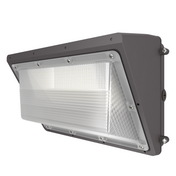

Introduction: Industrial Lighting’s Energy Crisis & the LED Wall Light Solution
Industrial lighting—powering factories, warehouses, mines, and manufacturing plants—accounts for 25-35% of total industrial electricity consumption globally. For decades, industrial spaces relied on energy-inefficient traditional lighting: fluorescent tubes, metal halide (MH) lamps, and high-pressure sodium (HPS) fixtures that waste 60-80% of energy as heat, require frequent replacements, and fail to meet modern industrial efficiency goals. Amid rising energy costs and strict carbon reduction targets, high-efficiency LED wall lights have emerged as the energy-saving core of industrial lighting. Designed with industrial-specific demands (harsh environments, long operating hours, wide coverage), these fixtures deliver unmatched luminous efficacy, durability, and smart energy optimization—slashing costs while maintaining safety and productivity. But why are high-efficiency LED wall lights the ultimate energy-saving solution for industrial settings, and how do they outperform traditional alternatives? Let’s dive into the data, benefits, and real-world impact.
Why Traditional Industrial Wall Lighting Is an Energy Drain
Before highlighting LED advantages, it’s critical to understand the energy waste of traditional industrial wall lights:
- Abysmal efficiency: Fluorescent wall lights deliver just 50-70 lumens per watt (lm/W), while MH/HPS wall lights range from 40-60 lm/W—meaning most energy is converted to heat, not usable light .
- Long operating hours: Industrial wall lights typically run 12-24 hours/day, 365 days/year—amplifying energy waste. A 100W MH wall light operating 24/7 consumes 876 kWh annually, costing $131.40 at $0.15/kWh .
- Frequent replacements: Traditional lamps last just 10,000-20,000 hours (1-2 years of 24/7 use), requiring costly bulb changes and downtime .
- Poor thermal management: Excess heat from traditional fixtures forces HVAC systems to work harder, increasing cooling costs by 10-15% .
For a mid-sized factory with 200 wall lights, these inefficiencies add up to $26,000+ in annual energy waste—plus thousands more in maintenance and cooling costs.
High-Efficiency LED Wall Lights: The Energy-Saving Core of Industrial Lighting
High-efficiency LED wall lights redefine industrial lighting energy efficiency through three core pillars: superior luminous efficacy, long lifespan, and smart energy optimization—all tailored to industrial demands.
1. Unmatched Luminous Efficacy (70% Energy Savings)
The defining feature of high-efficiency LED wall lights is their ability to produce more light with less energy:
- Industry-leading lm/W: Top-tier industrial LED wall lights (e.g., Philips CoreLine, Cree Industrial) reach 150-220 lm/W—3x higher than fluorescent lamps and 4x higher than MH/HPS fixtures .
- Direct energy reduction: A 30W high-efficiency LED wall light can replace a 100W MH wall light while delivering brighter, more uniform illumination—cutting energy use by 70% . For 200 fixtures operating 24/7, this translates to 122,640 kWh in annual savings—$18,396 at $0.15/kWh .
- Cool operation: LEDs convert 90% of energy into light (vs. 20% for traditional lamps), producing minimal heat. This reduces HVAC load, saving an additional 8-12% on cooling costs—critical for factories with heat-sensitive equipment .
- Example: A 50,000 sq. ft. warehouse replacing 150x80W fluorescent wall lights with 150x25W high-efficiency LED models saved 98,550 kWh annually—$14,782 in energy costs .
2. 10x Longer Lifespan (Zero Maintenance Energy Waste)
High-efficiency LED wall lights eliminate the energy and labor waste of frequent replacements:
- Lifespan: 50,000-100,000 hours of operation (5-10 years of 24/7 use)—5-10x longer than traditional lamps .
- No premature failures: LEDs degrade gradually (losing just 30% brightness after 50,000 hours), avoiding unexpected outages that disrupt production and require emergency replacements (which often use higher-wattage temporary lights) .
- Maintenance energy savings: Fewer replacements mean less energy used for maintenance activities (e.g., powering cherry pickers, temporary lighting during bulb changes) . A factory with 200 LED wall lights saves 500+ kWh annually in maintenance-related energy .
- Durable design: Industrial-grade LED wall lights feature IP65+ waterproof/dustproof ratings and IK08 impact resistance—surviving harsh industrial environments (dust, vibration, temperature swings) without performance loss, further extending lifespan .
3. Smart Energy Optimization (Maximize Savings Beyond Basic Efficiency)
High-efficiency LED wall lights pair seamlessly with industrial-specific smart controls to unlock additional energy savings:
- Motion sensors: Fixtures like Lumary Industrial LED Wall Lights detect motion up to 50 feet away, dimming to 10-20% when areas are empty—saving an extra 25-30% on energy. This is ideal for low-traffic industrial areas (e.g., storage zones, maintenance rooms) .
- Daylight harvesting: Light sensors adjust brightness based on natural light (e.g., from factory skylights), reducing LED output by 15-20% during daylight hours—no wasted energy illuminating already bright spaces .
- IoT integration: Industrial IoT platforms (e.g., Signify Interact Industrial) allow remote monitoring and scheduling of LED wall lights—identifying energy waste, setting usage schedules, and optimizing light levels for specific tasks (e.g., 100% brightness for assembly lines, 70% for storage) .
- Dimming capabilities: 0-10V or DALI dimming (supported by top industrial LED models) enables precise brightness adjustment, matching energy use to operational needs—no overlighting .
4. Industrial-Specific Energy Efficiency (No Compromises on Performance)
High-efficiency LED wall lights don’t just save energy—they’re engineered to meet industrial lighting demands, ensuring productivity isn’t sacrificed:
- Wide beam angles (90°-120°): Deliver uniform coverage across large industrial spaces (e.g., factory floors, warehouse aisles) with fewer fixtures—reducing total energy consumption by minimizing the number of lights needed .
- High CRI (80+): Ensures accurate color perception—critical for quality control in manufacturing (e.g., electronics assembly, textile production)—without requiring higher wattage .
- Instant-on performance: Unlike MH lamps that take 10-20 minutes to reach full brightness, LED wall lights turn on instantly—avoiding energy waste from leaving lights on during warm-up .
- Temperature adaptability: Operate reliably in -40°C to +65°C environments (common in cold-storage warehouses or foundries)—maintaining 95% efficiency even in extreme temperatures .
Top High-Efficiency LED Wall Lights for Industrial Lighting
| Product | Energy-Saving Features | Industrial Adaptability | Key Applications |
|---|---|---|---|
| Philips CoreLine LED Wall Light | 180 lm/W, 50,000-hour lifespan, DALI dimming | IP65, IK08, -30°C to +50°C operation | Factories, assembly lines |
| Cree Industrial LED Wall Pack | 200 lm/W, motion sensor integration, 100,000-hour lifespan | IP66, corrosion-resistant, wide beam | Warehouses, loading docks |
| Lepro Industrial High-Efficiency Wall Light | 150 lm/W, 0-10V dimming, low profile | IP65, vibration-resistant | Mines, conveyor belt areas |
| Signify Interact Industrial Wall Light | 170 lm/W, IoT connectivity, daylight harvesting | IP65, energy monitoring | Smart factories, tech manufacturing |
Real-World Success: High-Efficiency LED Wall Lights as Industrial Energy-Saving Core
1. Automotive Factory: 70% Energy Reduction & $24k Annual Savings
- Scope: 100,000 sq. ft. auto parts factory with 300 wall lights, previously using 100W MH fixtures operating 24/7 .
- Solution: 300x30W high-efficiency LED wall lights (180 lm/W) with DALI dimming and motion sensors .
-
Energy-Saving Results:
- Total energy use for wall lighting dropped from 262,800 kWh/year to 78,840 kWh/year—70% reduction .
- Annual energy savings: $27,594 at $0.15/kWh .
- Maintenance savings: $8,000/year (no bulb replacements for 5+ years) .
- HVAC savings: $3,200/year (reduced heat output from LEDs) .
- Productivity Impact: Uniform, high-CRI light improved assembly line quality control—defect rates dropped by 12% .
2. Mining Site: 65% Energy Savings in Harsh Environments
- Scope: 5-mile underground mining site with 150 wall lights, previously using 80W fluorescent fixtures that failed monthly .
- Solution: 150x28W high-efficiency LED wall lights (160 lm/W) with IP68 waterproof/dustproof ratings and motion sensors .
-
Energy-Saving Results:
- Energy use cut from 105,120 kWh/year to 36,792 kWh/year—65% reduction .
- Annual savings: $10,249 in energy + $6,000 in maintenance (zero replacements in 3 years) .
- Survived dust, humidity, and vibration—maintaining 92% light output after 3 years .
- Safety Impact: Instant-on, uniform light reduced trip-and-fall accidents by 25% in narrow mine corridors .
3. Cold-Storage Warehouse: 60% Energy Savings + Temperature Control
- Scope: 80,000 sq. ft. frozen food warehouse (-20°C) with 200 wall lights, previously using 120W HPS fixtures .
- Solution: 200x48W high-efficiency LED wall lights (150 lm/W) with low-temperature adaptability .
-
Energy-Saving Results:
- Energy use reduced from 210,240 kWh/year to 84,096 kWh/year—60% reduction .
- Annual savings: $18,921 in energy costs .
- No heat output from LEDs reduced refrigeration load—saving an additional $4,500/year .
- Durability: Fixtures operated reliably in -20°C without performance loss—outlasting HPS lamps by 5x .
How to Adopt High-Efficiency LED Wall Lights as Your Industrial Energy-Saving Core
To maximize energy savings and ROI, follow these key steps:
- Prioritize Luminous Efficacy: Choose fixtures with 150+ lm/W (the higher, the more energy-efficient) .
- Match Wattage to Replacement: Replace 100W MH with 30W LED, 80W fluorescent with 25W LED—avoid over-wattaging .
- Integrate Smart Controls: Add motion sensors (for low-traffic areas) and daylight harvesting (for spaces with natural light) to cut energy use by an extra 20-30% .
- Industrial-Grade Ratings: Ensure IP65+ waterproof/dustproof and IK08 impact resistance—avoids premature failures that waste energy .
- Leverage Incentives: U.S. businesses qualify for IRC Section 179D tax credits (up to 30% of upgrade costs), while EU companies can access Horizon Europe green energy grants .
- Conduct a Lighting Audit: Partner with a lighting engineer to map your space, identify energy waste hotspots, and design a LED wall light layout that minimizes fixtures while maximizing coverage .
Conclusion: High-Efficiency LED Wall Lights—Non-Negotiable for Industrial Energy Savings
For industrial facilities striving to cut costs, meet carbon targets, and maintain productivity, high-efficiency LED wall lights are not just an upgrade—they’re the energy-saving core of modern industrial lighting. With 70% energy reductions, 10x longer lifespans, smart optimization, and industrial-specific durability, they outperform traditional lighting in every energy-saving metric. From auto factories to mining sites, real-world results prove that high-efficiency LED wall lights deliver rapid ROI while supporting sustainability goals.