
Selecting the right outdoor lighting is critical for safety, security, and aesthetics. Among the most popular solutions, LED wall pack lights have become the go‑to choice for commercial, industrial, and even residential properties. But with so many options on the market – different wattages, beam angles, color temperatures, and certifications – how do you choose the best one for your specific outdoor application?
This comprehensive guide walks you through every factor you need to consider, from basic performance metrics to advanced smart controls and regulatory compliance in 2026. By the end, you’ll be able to confidently specify LED wall packs that deliver optimal illumination, energy savings, and long‑term reliability.
What Are LED Wall Pack Lights?
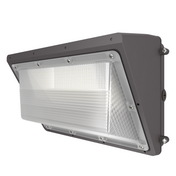
LED wall packs are rectangular or square fixtures mounted on the exterior walls of buildings. They project light outward and downward to illuminate adjacent areas such as:
-
Building entrances and exits
-
Loading docks and service doors
-
Parking lots and perimeter walkways
-
Alleyways and dumpster enclosures
-
Signage and facade highlighting
Unlike floodlights (which are often aimed from poles or eaves), wall packs are designed specifically for wall‑mounting and provide a more controlled, even distribution. Thanks to LED technology, modern wall packs consume 50–75% less energy than older metal halide or high‑pressure sodium versions, last 50,000–200,000 hours, and offer excellent color rendering.
Step 1: Define Your Outdoor Application
Before diving into specifications, clarify the primary purpose of the lighting. Different outdoor applications demand different light distributions, brightness levels, and features.
| Application | Typical Mounting Height | Desired Effect | Recommended Distribution |
|---|---|---|---|
| Entrance / doorway | 10–15 ft | Even, glare‑free illumination for faces and packages | Type II or III, wide beam (100°–120°) |
| Parking lot (building‑mounted) | 15–20 ft | Wide coverage to eliminate dark spots | Type III or Type V, 120°+ beam |
| Loading dock / service area | 12–18 ft | High brightness, motion activation helpful | Type III or IV, full cutoff |
| Perimeter security | 12–20 ft | High lumen output, minimal shadows | Type III, often with motion sensor |
| Walkway / pathway | 8–12 ft | Low glare, uniform light along the path | Type II, medium beam |
| Building facade / signage | Variable | Accent lighting, warmer CCT possible | Narrow beam (optional) or wash effect |
Once you know the application, you can prioritize the right specifications.
Step 2: Understand Key Performance Specifications
2.1 Lumen Output (Brightness)
Lumens measure the total visible light emitted. For wall packs, lumen requirements vary with mounting height and area size.
| Mounting Height | Recommended Lumens | Equivalent Wattage (LED) | Typical Application |
|---|---|---|---|
| 8–10 ft | 1,500–3,000 lm | 15–30W | Walkways, small entrances |
| 10–15 ft | 3,000–6,000 lm | 30–60W | Building entrances, loading zones |
| 15–20 ft | 6,000–12,000 lm | 60–100W | Parking lots, security perimeters |
| 20+ ft | 12,000–20,000+ lm | 100–200W | Large commercial/industrial areas |
Pro tip: Don’t rely on wattage alone – two fixtures with the same wattage can have very different lumen outputs depending on efficacy (lm/W). Always compare lumens.
2.2 Color Temperature (CCT – Correlated Color Temperature)
CCT affects visibility, security perception, and compliance with dark‑sky ordinances.
-
3000K (Warm White) – Softer, amber appearance. Blends with residential neighborhoods, reduces glare and light pollution. Often required in dark‑sky zones.
-
4000K (Neutral White) – Balanced, natural white. Good for general commercial applications where moderate security is needed.
-
5000K (Cool White) – Crisp, daylight‑like appearance. Provides highest contrast and perceived brightness. Preferred for security and surveillance applications.
Recommendation: For most commercial outdoor security, 4000K or 5000K is ideal. However, always check local codes – many cities now mandate CCT ≤3000K for wall packs to minimize skyglow.
2.3 Beam Angle and Light Distribution (NEMA / IES Types)
The beam angle determines how the light spreads. For wall packs, IESNA (Illuminating Engineering Society) distribution types are the industry standard:
-
Type II – Light is distributed primarily to the sides, suitable for walkways and narrower areas.
-
Type III – Light projects forward and to the sides, ideal for parking lots and general perimeter lighting. The most common wall pack distribution.
-
Type IV – Asymmetric, forward‑throw distribution for illuminating areas directly in front of the wall (e.g., loading docks).
-
Type V – Circular, symmetrical pattern for open areas like courtyards.
Note on beam angle (in degrees): Some manufacturers specify a beam angle (e.g., 120°). For wall packs, wider is generally better (100°–120°) for even coverage. Narrower beams (60°–90°) are used for accenting or very high mounting.
2.4 Efficacy (lm/W)
Efficacy measures how efficiently a fixture converts electricity into light. Higher efficacy means lower energy bills.
-
Poor: <100 lm/W (avoid)
-
Good: 110–130 lm/W
-
Excellent: 130–150 lm/W
-
Premium: 150+ lm/W
In 2026, aim for at least 130 lm/W. DLC 6.0 standards (effective October 2026) require most wall packs to achieve 130–150+ lm/W to qualify for utility rebates.
Step 3: Evaluate Environmental Durability – IP and IK Ratings
Outdoor fixtures must withstand rain, dust, temperature extremes, and physical impact.
IP Rating (Ingress Protection)
-
IP65 – Dust‑tight and protected against low‑pressure water jets. Minimum recommended for general outdoor use.
-
IP66 – Dust‑tight and protected against powerful water jets (e.g., heavy rain, hose‑down).
-
IP67 – Dust‑tight and protected against temporary immersion (for flood‑prone areas).
Recommendation: IP65 is sufficient for most wall pack applications. Choose IP66 for coastal areas, car washes, or loading docks that are pressure‑washed.
IK Rating (Impact Protection)
-
IK08 – Withstands 5 joules of impact (e.g., a 1.7 kg object dropped from 30 cm). Suitable for most commercial walls.
-
IK09 – Withstands 10 joules.
-
IK10 – Withstands 20 joules (e.g., vandal‑resistant). Recommended for ground‑level or easily accessible public areas.
Recommendation: IK08 is standard; specify IK10 for schools, parking garages, or areas prone to vandalism.
Step 4: Choose the Right Optical Design – Full Cutoff vs. Semi‑Cutoff
-
Full‑cutoff wall packs have a solid housing that extends below the light source, preventing any upward light emission. They are dark‑sky compliant and required in many municipalities. They also direct all light downward for maximum efficiency.
-
Semi‑cutoff wall packs allow some light to escape above horizontal. They may still meet basic code requirements but are increasingly disfavored due to light pollution concerns.
Bottom line: In 2026, specify full‑cutoff wall packs unless a specific application (e.g., architectural accent) demands otherwise.
Step 5: Smart Controls and Energy Management
Adding controls to your wall pack can dramatically reduce energy waste while improving security.
5.1 Photocell (Dusk‑to‑Dawn)
A built‑in or external photocell automatically turns the light on at dusk and off at dawn. Virtually all outdoor wall packs should include a photocell – it’s the easiest energy‑saving measure.
5.2 Motion Sensor with Bi‑Level Dimming
This is the gold standard for security and efficiency. The fixture operates at low output (e.g., 20–30%) during unoccupied hours and instantly jumps to 100% when motion is detected. Benefits:
-
Saves 40–60% energy compared to full‑brightness all night.
-
Startles potential intruders with sudden bright light.
-
Extends LED lifespan.
Look for wall packs with an integrated PIR (passive infrared) motion sensor or a separate sensor port.
5.3 0‑10V Dimming and Networked Controls
For large commercial properties, 0‑10V dimming allows you to integrate wall packs into a building automation system (BAS). You can schedule dimming curves, monitor energy use, and receive maintenance alerts. DALI‑2 or Bluetooth Mesh are emerging options.
Step 6: Certifications and Compliance – Don’t Overlook These
Certifications protect you from unsafe or non‑compliant products and are often required for rebates and permits.
| Certification | What It Means | Required For |
|---|---|---|
| UL / cUL or ETL | Electrical safety tested to North American standards | All commercial installations (insurance, code) |
| DLC (DesignLights Consortium) | High efficacy and quality; required for most utility rebates | Projects seeking energy incentives |
| IES LM‑79 / LM‑80 | Verified photometric performance and LED lifespan | Professional specifications, warranties |
| Dark Sky (IDA) | Zero uplight, reduced light pollution | Municipal compliance, LEED points |
| Title 24 JA8‑2025 (California) | Meets California energy code for outdoor fixtures | Projects in California |
| RoHS | Restriction of hazardous substances | Export to EU |
2026 critical update: DLC Version 6.0 takes full effect on October 1, 2026. After that date, only DLC 6.0‑listed wall packs will be eligible for most North American utility rebates. When purchasing, confirm the product is already V6.0 listed or will be updated before the deadline.
Step 7: Field‑Selectable Features – One Fixture for Many Jobs
Field‑selectable wall packs allow you to adjust wattage and/or CCT on‑site using DIP switches or sliding selectors. This is a huge advantage for contractors, distributors, and property managers:
-
Selectable wattage – Choose between e.g., 50W, 70W, or 100W to match the exact lumen need.
-
Selectable CCT – Choose 3000K, 4000K, or 5000K to comply with local codes or change ambiance.
With selectable features, you can stock one SKU and use it across multiple applications, reducing inventory costs and simplifying installations.
Examples: RAB W22 series, SATCO/NUVO beam‑selectable wall packs, Maxlite Wallmax.
Step 8: Compare Total Cost of Ownership (TCO) – Not Just Price
A cheap $50 wall pack might seem attractive, but it often fails within 2–3 years, lacks proper surge protection, and cannot be repaired. Calculate 10‑year TCO:
| Cost Factor | Budget Fixture ($50) | Quality Fixture ($150) |
|---|---|---|
| Purchase price (1 fixture) | $50 | $150 |
| Energy cost over 10 years (70W vs 70W – same) | $900 | $900 |
| Number of replacements (failure every 2 years) | 4 additional | 0 |
| Replacement labor & lift rental | $800 | $0 |
| Lost security during outages | High risk | Minimal |
| Total 10‑year cost | $1,750 | $1,050 |
Quality also brings higher lumens per watt, better warranty (5–10 years), and peace of mind.
Step 9: Avoid Common Mistakes When Choosing Wall Packs
-
Buying without a photocell – Lights that run 24/7 triple your energy bill and shorten driver life.
-
Ignoring dark‑sky compliance – Even if not required locally, future codes may force expensive retrofits.
-
Choosing the wrong beam angle – A narrow beam on a low wall creates hot spots and dark zones.
-
Overlooking surge protection – Outdoor installations are prone to lightning or grid surges. Look for ≥6kV surge protection.
-
Failing to check UL/ETL marking – Uncertified fixtures may cause electrical fires or void insurance.
-
Mounting too low with high lumen output – Causes excessive glare and discomfort.
Step 10: Quick Selection Checklist – Your Outdoor Wall Pack Decision Guide
Use this checklist to compare products:
| Feature | Your Requirement | Example Good Product |
|---|---|---|
| Application | Entrance / parking / security | Choose Type III or V |
| Mounting height | ___ ft | Then lumens: see table above |
| Lumens needed | ___ lm | Match to size |
| CCT | 3000K, 4000K, 5000K | Check local dark‑sky rules |
| Beam / distribution | Type III (most common) | Confirm IES type |
| Efficacy | ≥130 lm/W | Look for DLC listing |
| IP rating | IP65 minimum | IP66 for coastal/washdown |
| IK rating | IK08 minimum | IK10 for vandal‑prone |
| Full cutoff? | Yes | Zero uplight mandatory |
| Controls | Photocell, motion sensor, 0‑10V | Choose as needed |
| Certifications | UL, DLC 6.0 (for rebates) | Verify current listing |
| Warranty | 5 years minimum | 7–10 years preferred |
Final Recommendation: Best LED Wall Packs for Common Outdoor Applications
| Application | Top Pick (2026) | Why |
|---|---|---|
| General commercial security | RAB W22 Full‑Cutoff | Photocell included, selectable wattage/CCT, DLC listed, rugged |
| Flexibility / contractor favourite | SATCO/NUVO Beam‑Selectable | 60°/90°/110° beam, selectable wattage/CCT, DLC Premium |
| Longest lifespan / harsh environment | Access Fixtures APTO EXTREME‑LIFE | 200,000 hours, IP66, IK08, zero uplight, fully customizable |
| Best for rebates & DLC 6.0 | Maxlite Wallmax | Already DLC 6.0 listed, high efficacy, full cutoff |
| Coastal / high corrosion | Hubbell Litepak LNC2 | 1,000‑hour salt spray rating, zero uplight, Type III |
Conclusion
Choosing the right LED wall pack for your outdoor application doesn’t have to be complicated. Start by defining the purpose (security, entrance, parking), then match lumen output to mounting height, select a full‑cutoff distribution (preferably Type III), ensure at least IP65 and IK08 durability, and confirm UL/DLC certifications. Add a photocell (mandatory) and consider motion sensors for extra savings and security.
By investing in quality, compliant LED wall packs today, you’ll enjoy lower energy bills, fewer maintenance headaches, and a well‑lit property that meets both current codes and future expectations.