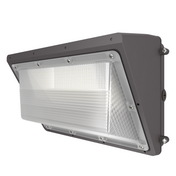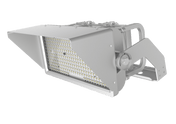

Selecting the right LED stadium lights for your project is a decision that impacts player performance, spectator experience, operational costs, and long-term reliability. Whether you’re building a new community soccer field, upgrading a professional stadium, or retrofitting an indoor arena, the “best” LED stadium lights aren’t a one-size-fits-all solution—they’re the ones that align with your project’s unique needs, from lighting standards to budget constraints.
With 2026 bringing advanced LED technology, smarter controls, and stricter industry regulations, the selection process has become more nuanced. Facility managers, sports organization leaders, and contractors often struggle with questions like: What brightness level do I need? How do I balance upfront cost with long-term savings? Which technical specs matter most for my sport?
In this comprehensive guide, we’ll break down the step-by-step process to choose the best LED stadium lights for your project, backed by 2026 industry data, sports governing body standards (FIFA, NFL, NCAA), and expert insights. By the end, you’ll have a clear framework to make an informed decision that delivers value for years to come.
1. Define Your Project’s Core Requirements First
Before diving into technical specs, start by outlining your project’s fundamental needs—this will narrow down your options and prevent overspending on unnecessary features.
Step 1.1: Identify the Sport & Usage
Different sports have unique lighting demands, and usage frequency dictates durability and performance requirements:
- Outdoor field sports (football, soccer, rugby): Require wide beam angles (120–150°) for uniform coverage of large areas, plus high illuminance (1000–2000 lux) for competitive play.
- Indoor court sports (basketball, volleyball, tennis): Need medium beam angles (60–90°) to avoid glare, with precise uniformity (ratio >0.8) for fast-paced gameplay.
- Baseball/softball: Demand narrow beam angles (30–60°) to focus light on the diamond, with minimal glare for batters and umpires.
- Amateur/recreational use: Lower illuminance (500–1000 lux) is sufficient, prioritizing cost-effectiveness.
- Professional/broadcast use: Require 1500–3000 lux, high CRI (90+), and flicker-free performance (100Hz+ refresh rate) for HD/4K broadcasts.
- Event frequency: Daily use (e.g., professional stadiums) requires longer lifespans (100,000+ hours), while occasional use (e.g., community fields) can opt for mid-range durability.
Step 1.2: Assess the Facility Size & Layout
The size and shape of your facility determine the number of fixtures, wattage, and mounting height:
- Small facilities (youth soccer fields, tennis courts): 5–10 fixtures with 100–200W output (15,000–30,000 lumens each) mounted at 20–30 feet.
- Medium facilities (high school football fields, indoor arenas): 15–30 fixtures with 200–300W output (30,000–45,000 lumens each) mounted at 30–40 feet.
- Large facilities (professional stadiums, college campuses): 50–200+ fixtures with 300–500W output (45,000–100,000 lumens each) mounted at 40–60 feet.
- Layout considerations: Irregularly shaped fields (e.g., baseball diamonds) need customizable beam angles, while rectangular fields benefit from symmetric fixture placement.
Step 1.3: Set a Budget & ROI Timeline
Your budget will influence upfront costs vs. long-term savings:
- Upfront budget focus: Opt for DLC-listed mid-range fixtures (avoid cheap, non-certified models that fail quickly).
- Long-term savings focus: Invest in high-efficacy (180+ lm/W) fixtures with smart controls—they’ll pay for themselves in 1–2 years via energy savings.
- ROI priorities: Factor in utility rebates (20–50% of fixture cost in 2026) and maintenance savings (LEDs cost 90% less to maintain than metal halide).
2. Master Key Technical Specs: What to Prioritize
LED stadium light performance is defined by technical specs—knowing which to prioritize will ensure you get the right product for your project.
2.1: Illuminance (Lux) & Lumen Output
- Illuminance (lux): The amount of light reaching the field surface—this is the most critical spec for sports lighting.
- Recreational use: 500–1000 lux
- High school/college play: 1000–1500 lux
- Professional play: 1500–2000 lux
- Broadcast use: 2000–3000 lux
- Lumen output: Total light emitted by the fixture—match lumens to facility size. For example, a 100x120ft youth soccer field needs ~300,000 total lumens (10 fixtures x 30,000 lumens each).
- Key tip: Don’t confuse “raw lumens” with “usable lumens”—LEDs with directional optics deliver 30–50% more usable light than omnidirectional traditional lights.
2.2: Efficacy (Lumens per Watt, lm/W)
Efficacy measures energy efficiency—higher is better for reducing operational costs:
- 2026 minimum standard: 130 lm/W (avoid fixtures below this, as they’re outdated).
- Mid-range: 150–180 lm/W (balance of cost and efficiency).
- High-end: 180–200+ lm/W (ideal for large facilities or high-energy-cost regions).
- Real-world impact: A 300W LED with 180 lm/W delivers 54,000 lumens—replacing a 1000W metal halide (40,000 lumens) while using 70% less energy.
2.3: Color Rendering Index (CRI) & Color Temperature (CCT)
Light quality directly impacts visibility and broadcast quality:
- CRI: Measures how accurately colors are rendered (1–100). For sports:
- Recreational: 70–80 CRI (acceptable for casual play).
- Competitive/broadcast: 80–90+ CRI (critical for distinguishing uniforms, equipment, and field markings).
- CCT: Measures light “warmth” (in Kelvin, K):
- 4000K (cool white): Ideal for outdoor fields—balances natural-looking light with reduced glare.
- 5000K (daylight): Perfect for indoor arenas and broadcast venues—mimics natural sunlight for crisp visibility.
- 6000K+ (cool daylight): Avoid for most sports—causes excessive glare and eye strain.
2.4: Uniformity Ratio
Uniformity ensures no dark spots or hotspots—critical for fair gameplay:
- Minimum standard: >0.7 (FIFA/NFL/NCAA requirement) for player areas; >0.5 for spectator areas.
- How to achieve it: Choose fixtures with adjustable beam angles and use lighting design software (e.g., Dialux) to map placement.
- Risk of poor uniformity: Increases player injuries, inconsistent gameplay, and low-quality broadcast footage.
2.5: Flicker & Glare
These specs impact player comfort and broadcast compatibility:
- Flicker: Measured as flicker percentage ( roadcast). Avoid fixtures with visible flicker—they cause eye strain and motion blur in footage.
- Glare: Measured by UGR (Unified Glare Rating)—aim for 0. Anti-glare optics and proper mounting height (40+ feet for large facilities) reduce glare.
2.6: Durability & Weather Resistance
Outdoor and high-use facilities need rugged fixtures:
- IP Rating: Minimum IP65 (waterproof and dustproof) for outdoor use; IP67 for harsh weather (rain, snow, humidity).
- Temperature range: -40°F to 140°F (operates reliably in extreme climates).
- Construction: Aluminum housings (heat dissipation) and shatterproof lenses (resistant to impact).
- Lifespan: L70 rating (70% lumen retention) of 50,000–100,000 hours (5–10 years of daily use).
3. Evaluate Controls & Smart Features
Modern LED stadium lights offer smart controls that enhance efficiency and flexibility—choose features that align with your project’s needs.
3.1: Essential Controls
- Dimming: 0–10V, DALI, or DMX512 dimming—reduce brightness during practice or low-attendance events (save 30–40% energy).
- Motion sensors: Ideal for low-traffic areas (e.g., parking lots, perimeter security)—activate lights only when motion is detected.
- Photocells: Automatically turn lights on/off based on ambient light—eliminates human error.
- Timers: Schedule on/off times based on game/practice calendars—ensure lights are only on when needed.
3.2: Advanced Smart Features (2026 Trends)
- IoT integration: Connect to building management systems (BMS) or mobile apps to monitor energy use, fixture health, and adjust settings remotely.
- Energy monitoring: Track kWh usage per fixture—identify savings opportunities.
- Predictive maintenance: Alerts you when fixtures need cleaning or drivers need replacement—reduces downtime.
- Human-centric lighting: Adjust CCT and brightness based on time of day (e.g., warmer tones for evening games)—improves spectator comfort.
3.3: Compatibility Check
Ensure controls work with your existing infrastructure:
- For retrofits: Verify compatibility with existing wiring and control systems.
- For new builds: Choose a unified control platform (e.g., Philips Dynalite, Lutron) for seamless integration.
4. Consider Installation & Maintenance Requirements
Installation and maintenance impact long-term costs and downtime—factor these into your decision.
4.1: Installation Complexity
- Mounting options: Pole-mounted (most common), wall-mounted, or ceiling-mounted (indoor arenas). Ensure fixtures are compatible with your existing poles or plan for new pole installation.
- Wiring: Wired LEDs require electrical permits and licensed electricians; solar LEDs (for remote areas) need no wiring but require sunlight access.
- Installation timeline: 1–2 days for small facilities, 1–2 weeks for large stadiums—plan around game schedules to avoid downtime.
4.2: Maintenance Needs
- Low-maintenance must-haves: No bulb replacements (LEDs are fixture-integrated), sealed drivers, and easy-to-clean lenses.
- Maintenance schedule: Clean lenses 2–3 times per year (remove dust/debris), inspect wiring (wired LEDs) every 2–3 years, and replace drivers (if needed) every 10–15 years.
- Warranty: Choose fixtures with 5–10 year warranties—covers defects, lumen depreciation, and driver failure. Avoid brands with warranties.
5. Verify Certifications & Compliance
Certifications ensure your LED stadium lights meet industry standards and qualify for rebates:
5.1: Critical Certifications
- DLC (DesignLights Consortium): Mandatory for utility rebates—certifies efficiency and performance. Look for DLC Premium (highest efficiency) or DLC Standard.
- Energy Star: Indicates energy efficiency and quality (meets EPA standards).
- FCC/UL: Ensures electrical safety and compliance with regional regulations.
- Sports governing body approval: FIFA, NFL, or NCAA-approved fixtures for competitive play—avoids disqualification from tournaments.
5.2: Rebate Eligibility (2026)
- Utility rebates: 20–50% of fixture cost (varies by region)—check with your local utility provider (e.g., PG&E, Duke Energy) for available programs.
- Tax incentives: Federal/state tax credits (e.g., Section 179 in the U.S.) for energy-efficient upgrades—reduces upfront costs.
- Green certifications: LEED points for using energy-efficient, mercury-free LEDs—enhances facility value.
6. Compare Top Brands & Avoid Common Pitfalls
Choosing a reputable brand and avoiding mistakes will ensure your investment pays off.
6.1: Top LED Stadium Light Brands (2026)
- Commercial/professional: Philips, Cree, GE Current, Hubbell—offer high-performance, DLC-certified fixtures with 10-year warranties.
- Mid-range: Hyperikon, Lepro, Westgate—balance cost and quality for high school/community facilities.
- Budget-friendly: Ensure DLC certification—avoid no-name brands with 00-hour lifespans.
6.2: Common Mistakes to Avoid
- Prioritizing upfront cost over quality: Cheap fixtures fail within 2–3 years, increasing long-term costs.
- Ignoring lighting design: Buying fixtures without mapping placement leads to poor uniformity and glare.
- Overlooking rebates: Uncertified fixtures don’t qualify for rebates—missing out on 20–50% savings.
- Choosing the wrong beam angle: Too narrow = dark spots; too wide = wasted light and glare.
- Forgetting maintenance access: Ensure fixtures are easy to reach (e.g., pole-mounted with lift access) to avoid high labor costs.
7. Step-by-Step Selection Checklist (2026)
Use this checklist to streamline your decision-making process:
- Define sport, usage frequency, and facility size.
- Determine required illuminance (lux) and total lumens.
- Set minimum specs: 130+ lm/W, 80+ CRI, <5% flicker, IP65+ rating.
- Choose controls (dimming, sensors, timers) based on efficiency goals.
- Verify DLC/Energy Star certification for rebates.
- Select a reputable brand with a 5+ year warranty.
- Use lighting design software to map fixture placement (ensure uniformity >0.7).
- Calculate total cost (fixtures + installation + rebates).
- Estimate ROI (energy + maintenance savings vs. upfront cost).
- Request product samples or site demos (test brightness and glare).
8. Real-World Project Examples
Example 1: High School Football Field Retrofit
- Project needs: 100x53yd field, 1000 lux, competitive play, $15,000 budget.
- Selected fixtures: 18 x 250W DLC Premium LED stadium lights (37,500 lumens each, 150 lm/W, 85 CRI, 4000K).
- Controls: Dimming + photocells + timers.
- Costs: \(12,600 (fixtures) + \)3,000 (installation) - \(3,600 (utility rebate) = \)12,000 total.
- ROI: 1.5 years (saves $8,000 annually in energy + maintenance vs. metal halide).
Example 2: Professional Soccer Stadium Broadcast Upgrade
- Project needs: 110x70yd field, 2500 lux, 4K broadcast, $100,000 budget.
- Selected fixtures: 80 x 400W high-end LED stadium lights (72,000 lumens each, 180 lm/W, 90 CRI, 5000K, % flicker).
- Controls: IoT integration + DMX dimming + predictive maintenance.
- Costs: \(80,000 (fixtures) + \)20,000 (installation) - \(25,000 (rebate) = \)75,000 total.
- ROI: 2 years (saves $37,500 annually in energy + maintenance vs. metal halide).
9. FAQ: Common Questions About Choosing LED Stadium Lights
Q: How many LED stadium lights do I need for my field?
A: Use the formula: Total lumens needed = Field area (sq. ft.) x Lux requirement x 1.2 (wastage factor). Divide by lumens per fixture to get the number of fixtures. For example, a 10,000 sq. ft. field needing 1000 lux: 10,000 x 1000 x 1.2 = 12,000,000 total lumens. If using 30,000-lumen fixtures: 12,000,000 / 30,000 = 40 fixtures.
Q: Can I use solar LED stadium lights for a professional stadium?
A: Solar LEDs work for remote or low-visibility areas (e.g., parking lots), but professional stadiums require consistent high brightness (2000+ lux) that solar can’t reliably deliver (weather-dependent). Stick to wired LEDs for main field lighting.
Q: What’s the difference between DLC Standard and DLC Premium?
A: DLC Premium fixtures have higher efficacy (170+ lm/W vs. 130+ lm/W for Standard) and qualify for larger rebates. They’re ideal for large facilities or high-energy-cost regions.
Q: How long does it take to install LED stadium lights?
A: Small facilities (5–10 fixtures): 1–2 days. Medium facilities (15–30 fixtures): 3–5 days. Large stadiums (50+ fixtures): 1–2 weeks. Installation time depends on access (e.g., lift availability) and wiring complexity.
Q: Do LED stadium lights require a lighting designer?
A: For large or professional facilities: Yes—lighting designers use software to optimize placement, uniformity, and glare. For small recreational fields: Basic placement (even spacing) may suffice, but consulting a designer ensures compliance with standards.
Q: What’s the average lifespan of LED stadium lights?
A: 50,000–100,000 hours (L70 rating), which translates to 5–10 years of daily use (8 hours/day). High-quality fixtures can last 15+ years with minimal lumen depreciation.