
Introduction
If you manage a commercial property – a retail plaza, office campus, warehouse distribution center, or municipal parking lot – you have likely faced this decision: upgrade to modern LED area lights or stick with your existing high-intensity discharge (HID) fixtures. For decades, metal halide (MH) and high-pressure sodium (HPS) were the only practical options for outdoor area lighting. But LED technology has matured rapidly, and in 2026 the gap in performance, efficiency, and total cost of ownership is enormous.
This guide provides a comprehensive, head‑to‑head comparison between LED area lights (shoebox fixtures) and traditional HID outdoor fixtures across 12 key criteria: energy consumption, lumen output, lifespan, light quality, maintenance, heat emission, dimming/controls, environmental impact, safety, glare, uniformity, and total cost of ownership.
By the end, you will understand exactly why LED area lights have become the standard for new installations and retrofits – and why continuing to operate HID fixtures is likely costing your business thousands of dollars each year.
What Are LED Area Lights and Traditional HID Outdoor Fixtures?
-
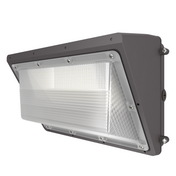
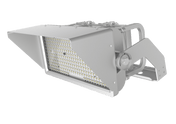
LED Area Lights (Shoebox Lights): High‑output, pole‑mounted luminaires that use light‑emitting diodes as the light source. They typically feature a rectangular “shoebox” housing, advanced optics (Type II, III, IV, or V distribution), and integrated drivers. Modern units achieve 130–180 lm/W and last 100,000+ hours.
-
Traditional HID Outdoor Fixtures: This category includes metal halide (MH) and high‑pressure sodium (HPS) lamps mounted in cobra‑head or shoebox‑style housings. MH offers moderate color rendering (CRI 65‑75) with a bluish‑white light; HPS produces a golden‑orange light with very poor color rendering (CRI 20‑25). Both require ballasts and have warm‑up and restrike delays.
Head‑to‑Head Comparison: LED Area Lights vs HID Outdoor Fixtures
| Feature | LED Area Light (Shoebox) | Metal Halide (MH) | High‑Pressure Sodium (HPS) |
|---|---|---|---|
| Typical wattage | 100W – 500W | 250W – 1000W | 150W – 400W |
| Luminous efficacy | 130 – 180+ lm/W | 65 – 100 lm/W | 80 – 130 lm/W |
| Typical lumens (for 250W equiv.) | ~30,000 lm | ~20,000 initial lm | ~27,000 initial lm |
| Lifespan (L70) | 50,000 – 150,000 hours | 10,000 – 20,000 hours | 24,000 – 40,000 hours |
| Lumen maintenance | >90% at 50,000 hours | 50‑70% at half life | 60‑80% at half life |
| Start‑up time | Instant on (<0.5 sec) | 3–10 min warm‑up | 3–5 min warm‑up |
| Restrike after power loss | Instant | 10–15 min cool‑down | 1–2 min |
| Color rendering (CRI) | 70–90+ | 65–75 | 20–25 (very poor) |
| Color temperature | 3000K – 6500K (selectable) | 3000K – 4200K (fixed) | 1900K – 2200K (orange) |
| Dimming capability | 0‑10V, DALI, wireless (standard) | Rare, expensive, inefficient | Rare, inefficient |
| Smart controls ready | Yes (sensors, IoT, BMS) | No / retrofit only | No / retrofit only |
| Heat emission | Low – efficient heat sinking | High – surface >200°C | High – surface hot |
| UV/IR radiation | None | Emits UV and IR | Emits IR, negligible UV |
| Hazardous materials | None (RoHS) | Contains mercury | Contains mercury and sodium |
| Maintenance frequency | Very low (check every 5‑10 years) | Relamp every 1‑2 years | Relamp every 2‑4 years |
| Uniformity (with good optics) | Excellent (0.5‑0.7 avg/min) | Poor (0.2‑0.4 avg/min) | Poor (0.2‑0.4 avg/min) |
| Glare control | Full‑cutoff optics available | Often glass refractors with glare | Often glass refractors with glare |
| Typical payback period | 6 – 24 months (retrofit) | Not applicable (old tech) | Not applicable |
1. Energy Efficiency – The Biggest Difference
The most immediate and compelling reason to switch from HID to LED area lights is energy savings. HID fixtures waste a significant portion of their input power as heat, not light. For example:
-
A typical 400W metal halide shoebox fixture actually draws 450–460W (including ballast losses) and produces around 36,000 initial lumens – an efficacy of only ~80 lm/W.
-
To replace that same light output, you need only a 150W – 180W LED area light achieving 150‑200 lm/W. That is a 60‑70% reduction in energy consumption.
Real‑world example – 50‑fixture parking lot operating 4,000 hours/year at $0.12/kWh:
| Technology | Wattage per fixture | Annual kWh per fixture | Annual cost per fixture | Total annual cost (50 fixtures) |
|---|---|---|---|---|
| Metal Halide 400W | 460W | 1,840 kWh | $220.80 | $11,040 |
| HPS 250W | 280W (incl. ballast) | 1,120 kWh | $134.40 | $6,720 |
| LED Area Light 150W | 150W | 600 kWh | $72.00 | $3,600 |
Comparing LED to MH: Annual savings = 3,600 = 74,000 in energy savings alone – before factoring in maintenance or rebates.
2. Lifespan and Lumen Depreciation – HID Fades Fast
HID lamps suffer from rapid lumen depreciation. By the time a metal halide lamp reaches 50% of its rated life (5,000‑10,000 hours), it may produce only 50‑65% of its initial lumens – yet it continues drawing full power. This means your parking lot becomes progressively darker, compromising safety and security, while your electricity bill stays the same.
LED area lights use the L70 rating (time until output drops to 70% of initial). Premium LED area lights achieve 100,000+ hours L70. At 12 hours of nightly operation (4,380 hours/year), that is over 22 years of consistent, predictable light output.
Practical impact: With HID, you must over‑light initially (to compensate for future depreciation) or relamp frequently. With LED, you design for the required maintained light level from day one – no compensation needed.
3. Light Quality and Visibility
Color Rendering Index (CRI):
-
HPS produces a monochromatic orange glow (CRI ~20). Everything looks yellow or gray. Security cameras cannot distinguish clothing colors or vehicle details. Faces appear washed out.
-
Metal halide offers moderate CRI (65‑75), but color shifts as the lamp ages (often becoming greenish or pinkish).
-
LED area lights deliver CRI 70‑90+ with consistent color temperature throughout life. For parking lots and commercial perimeters, CRI ≥ 80 is now standard.
Start‑up and restrike: HID lights take 3‑10 minutes to warm up to full brightness. If a motion sensor triggers the light, the area remains dark during the critical initial seconds. If power flickers, HID lamps must cool down for 10‑15 minutes before restriking – leaving your parking lot completely dark. LED area lights turn on instantly and restrike instantly.
4. Maintenance Costs and Downtime
Outdoor HID fixtures require regular lamp replacements. A metal halide lamp in a parking lot operating 4,000 hours/year needs replacement every 12‑18 months. Each replacement involves:
-
A bucket truck or scissor lift (if pole‑mounted)
-
A trained electrician (labor cost 200 per hour)
-
Disposal of mercury‑containing lamps (special handling required)
-
Downtime or after‑hours work
Cost per relamp (single fixture): 150 in labor + 30 for the lamp + disposal fees.
Over a 10‑year period, a 100‑fixture parking lot will require approximately 600‑800 lamp replacements (since each fixture needs 6‑8 lamps over its life). Total maintenance cost can exceed 50,000.
LED area lights eliminate lamp replacements entirely. At most, you might clean the lenses every few years. Maintenance savings alone often exceed the entire cost of the LED retrofit.
5. Heat Emission and HVAC Impact
HID fixtures emit 80‑90% of their energy as heat, not light. In outdoor applications, this heat does not directly affect building HVAC, but it does:
-
Accelerate degradation of the fixture housing, gaskets, and wiring.
-
Create hot surfaces that can burn maintenance personnel.
-
Contribute to urban heat island effect.
LED area lights run cool. The aluminum heatsink keeps the driver and LEDs within safe operating temperatures, extending component life and improving safety during maintenance.
6. Dimming and Smart Controls – HID Cannot Compete
Modern LED area lights are controls‑ready with integrated 0‑10V dimming as a standard feature. This unlocks powerful energy‑saving and security strategies:
-
Bi‑level dimming: Run lights at 20‑30% during low‑activity hours (e.g., 11pm‑5am). When a motion sensor detects activity, the fixture instantly brightens to 100% for 5‑15 minutes. This can cut energy use by an additional 40‑60% compared to running HID fixtures at full power all night.
-
Scheduling: Automatically dim lights during closed hours, then return to full output before employees arrive.
-
Remote monitoring: Track fixture status, detect failures, and log energy consumption from a central dashboard.
-
Integration with CCTV: Link lighting events to security cameras for automated recording.
HID fixtures are not dimmable without expensive, inefficient step‑down transformers, and they are incompatible with standard motion sensors because of the warm‑up delay.
7. Environmental and Regulatory Compliance
-
Hazardous materials: Metal halide and HPS lamps contain mercury (and HPS also contains sodium). They must be handled and disposed of as universal waste under EPA regulations. LEDs contain no mercury and are RoHS compliant.
-
Dark‑sky compliance: Many municipalities now mandate full‑cutoff outdoor lighting to reduce light pollution. LED area lights are available with precision optics that direct light downward (backlight, uplight, glare – BUG ratings as low as B0‑U0‑G1). Traditional HID cobra‑head fixtures often emit significant uplight and glare.
-
Energy codes: ASHRAE/IES 90.1 and many state energy codes require lighting controls (e.g., automatic shutoff or dimming) for outdoor commercial spaces. HID fixtures cannot meet these requirements without expensive retrofits.
8. Uniformity and Glare – LED Wins on Visual Comfort
Uniformity (ratio of average illuminance to minimum illuminance) is critical for parking lot safety. HID fixtures with glass refractors produce bright spots directly under the pole and rapid falloff toward the next pole. Typical HID uniformity is 0.2‑0.4 (min/avg), meaning some areas are only 20‑40% as bright as the average.
LED area lights with Type II, III, or IV optics can achieve 0.5‑0.7 uniformity, virtually eliminating dark spots. This improves pedestrian safety, reduces tripping hazards, and makes security footage more usable.
Glare is another issue. HID fixtures often use unprotected lamps or simple refractors that cause blinding glare for drivers entering the parking lot. LED fixtures with full‑cutoff optics and anti‑glare louvers direct light precisely where needed – onto the ground, not into drivers‘ eyes.
Total Cost of Ownership (TCO) – 10‑Year Comparison
Let’s compare a 250W HPS shoebox fixture (common for parking lots) vs a 100W LED area light that provides equivalent maintained lumens. Assumptions: 4,000 hours/year operation, $0.12/kWh electricity, 100 fixtures.
| Cost Component | HPS (250W) | LED (100W) |
|---|---|---|
| Fixture purchase price (per fixture) | 150 | 250 |
| Lamps over 10 years (4,000 hrs/yr) | 4 lamps @ 80 | $0 |
| Ballast replacement (10 yrs) | Likely 1‑2 @ 60 = $50 | $0 (integral driver rated 100,000h) |
| Energy cost over 10 years (per fixture) | 1,120 kWh/year × 10 × 1,344 | 400 kWh/year × 10 × 480 |
| Maintenance labor (10 yrs, per fixture) | 4 relamps × 200 | $10 (cleaning) |
| Total 10‑year cost per fixture | 1,744 | 740 |
| Savings per fixture with LED | – | 1,104 |
For 100 fixtures, total 10‑year savings: 110,400. Even accounting for higher upfront LED fixture costs, the payback period is typically 12‑18 months. When utility rebates (DLC Premium often 75 per fixture) are applied, payback can shrink to under 12 months.
When Should You Still Consider HID Outdoor Fixtures?
In 2026, the answer is almost never for new installations. The only possible edge cases:
-
Very low usage (<500 hours per year) – e.g., a rarely used rural parking lot. Even then, LED avoids mercury disposal and maintenance hassle.
-
Extreme low‑temperature operation (below -40°C) – some LED drivers can struggle, but many manufacturers now offer -40°C‑rated models.
-
Existing fully functional HID fixtures – it may be economical to run them until failure rather than retrofit immediately. However, with high energy costs and available rebates, even functional HID fixtures often justify early replacement.
For any new project, expansion, or major retrofit, LED area lights are the superior choice across every performance and economic metric.
How to Switch from HID to LED Area Lights
If you decide to upgrade, follow this step‑by‑step process:
-
Audit your existing HID fixtures – note wattage, mounting height, spacing, pole locations, and operating hours.
-
Measure existing light levels at night (or request a lighting audit from a professional).
-
Calculate required lumens using IES RP-20-14 guidelines (parking lots: 5‑20 lux maintained, 0.5‑2 footcandles).
-
Select DLC V6.0 Premium‑certified LED area lights to maximize rebate eligibility (be aware that V5.1 products will be delisted after Dec 15, 2026).
-
Choose the correct distribution pattern – Type II for roadways/pathways, Type III for standard parking lots, Type IV for building perimeters.
-
Add controls – at minimum, a dusk‑to‑dawn photocell. For additional savings, add bi‑level dimming with motion sensors.
-
Hire a licensed electrical contractor for proper mounting (slip‑fitter to existing poles) and wiring (including 0‑10V dimming leads if controls are planned).
-
Apply for utility rebates – your contractor or lighting supplier can help with documentation.
Frequently Asked Questions
Q: Can I simply replace the HID lamp with an LED retrofit bulb (corn bulb) in my existing shoebox fixture?
A: While LED corn bulbs exist, they are not recommended for outdoor area lighting. Corn bulbs typically have poor thermal management (overheating in enclosed fixtures), incompatible optics (harsh glare and poor uniformity), and short lifespans. A complete LED shoebox fixture replacement delivers better performance, reliability, and full DLC rebate eligibility.
Q: How many lumens do I need to replace a 400W metal halide shoebox?
A: A 400W MH produces approximately 36,000 initial lumens, but maintained lumens (after depreciation) are much lower. A 150W‑180W LED area light producing 22,500‑27,000 lumens will provide equivalent or better maintained illumination due to superior lumen maintenance and uniformity.
Q: Do LED area lights work with existing photocells?
A: Yes, most LED area lights include an integrated dusk‑to‑dawn photocell or have a twist‑lock receptacle for a universal photocell. Ensure the photocell is rated for LED loads (some older HID photocells may not switch properly with low‑wattage LEDs).
Q: What is the best color temperature for a parking lot?
A: 4000K – 5000K (neutral to cool white) is standard for commercial parking lots. It provides good visibility, color rendering, and security camera performance. Avoid 6500K (very cool), which can appear harsh.
Q: Are LED area lights eligible for utility rebates in 2026?
A: Yes, provided they are listed on the DLC Qualified Products List (QPL). Important: DLC V6.0 is now active; V5.1 products will be delisted on December 15, 2026. Always verify that the model you select is V6.0‑certified to ensure rebate eligibility for the duration of your project.
Q: How long do LED area lights last compared to HID?
A: Quality LED area lights are rated for 100,000+ hours L70 (22+ years at 12 hours/night). HID lamps last 10,000‑40,000 hours (2‑9 years), but with severe lumen depreciation starting much earlier.
Conclusion
The evidence is overwhelming: LED area lights are vastly superior to traditional HID outdoor fixtures for commercial parking lots, roadways, building perimeters, and other outdoor applications. In 2026, continuing to operate metal halide or high‑pressure sodium lighting is an expensive, inefficient, and environmentally questionable choice.
LED area lights offer:
-
60‑70% lower energy consumption
-
100,000+ hour lifespan – eliminate relamping for a decade or more
-
Superior light quality – high CRI, instant on, consistent color
-
Smart controls ready – dimming, motion sensing, remote monitoring
-
Dark‑sky friendly – full‑cutoff optics reduce light pollution
-
Fast payback – typically 12‑18 months, often less with rebates
If your commercial property still relies on HID outdoor lighting, now is the time to plan your upgrade. The energy savings alone will pay for the new fixtures within two years – and the improvement in safety, security, and aesthetics will be immediately noticeable.
Take action today: Schedule a night‑time walkthrough of your parking lot or commercial exterior. If you see uneven coverage, poor color, or slow warm‑up times, contact a lighting professional for a free LED retrofit assessment.