
Lighting a football field is fundamentally different from illuminating a parking lot or warehouse. Football is a fast-paced, dynamic sport played on a large rectangular field where players must track balls in the air, read defenses across 100 yards, and make split-second decisions. Poor lighting isn't just an inconvenience—it's a safety hazard and a performance barrier.
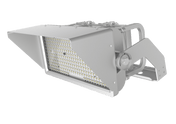
LED sports lights#StadiumLighting #LightingInstallation have become the industry standard for football fields, offering superior uniformity, energy efficiency, and broadcast-quality illumination. This guide provides a comprehensive framework for designing and installing LED lighting systems for football fields, from community recreation to professional venues.
1. Understanding Football Field Lighting Standards
The Illuminating Engineering Society (IES) RP-6 standard provides the authoritative framework for football field lighting, classifying venues into four tiers based on level of play and spectator capacity.
| Class | Level of Play | Typical Venues | Horizontal Illuminance (fc) | Uniformity Target (Avg:Min) |
|---|---|---|---|---|
| Class I | Professional & Broadcast | NFL, Division I, venues >5,000 capacity | 100 fc | ≤ 1.5:1 |
| Class II | College & Regional | NCAA Div I–III, minor league, venues <5,000 | 50 fc | ≤ 2.0:1 |
| Class III | High School | Varsity, venues with spectator seating | 30 fc | ≤ 2.5:1 |
| Class IV | Training & Recreation | Practice fields, no spectators | 20 fc | ≤ 3.0:1 |
The uniformity requirement is critical. A uniformity ratio of 2.0 or below ensures that no part of the field is significantly darker than any other—essential for player safety and ball tracking.
2. Key Design Considerations
2.1 Field Dimensions and Pole Layout
Football fields are 120 yards long (including end zones) and 53.3 yards wide. Common pole configurations include:
| Configuration | Best For | Pole Placement |
|---|---|---|
| 4-Pole Layout | Recreational, small high school fields | Poles at 20-yard lines on each sideline |
| 6-Pole Layout | Large high school, small college | Poles at 10-yard lines (4 poles) + 50-yard line (2 poles) |
| 8-Pole Layout | College, professional | Poles at goal lines (4 poles) + 30–35 yard lines (4 poles) |
Pole heights typically range from 50–70 feet for school and municipal fields, with larger venues using 90+ foot poles. Each pole typically supports 6–20 fixtures, depending on wattage and beam angle requirements.
2.2 Spacing Formula
A general rule for football field spacing: poles should be placed 50–100 feet outside the field boundaries, with equal numbers on both sidelines to eliminate shadows. Higher poles require narrower beam angles to ensure adequate light reaches the playing surface.
3. Critical Technical Specifications
3.1 Wattage and Lumen Output
| Level of Play | Typical LED Wattage per Fixture | Lumens per Fixture | Total Field Lumens (Approx.) |
|---|---|---|---|
| Recreational / Practice | 300–500W | 45,000–70,000 lm | 320,000–640,000 lm |
| High School | 400–600W | 56,000–84,000 lm | 500,000–1,000,000 lm |
| College | 600–1000W | 84,000–140,000 lm | 1,000,000–1,500,000 lm |
| Professional | 1000–1500W+ | 140,000–200,000+ lm | 1,500,000–3,000,000+ lm |
Replacement guidance: A 450–600W LED fixture can often replace a 1500W metal halide football light, depending on pole height, throw distance, and required light levels.
3.2 Beam Angle Selection
Different beam angles work together to ensure uniform coverage across the entire field:
| Beam Angle | Best For | Application |
|---|---|---|
| 10°–25° (Narrow) | Long-distance throws from tall poles | End zones, far sidelines from corner poles |
| 25°–45° (Medium) | General coverage | Center of field, hash marks |
| 45°–60° (Wide) | Near-field illumination | Sidelines, near zones from shorter poles |
Most football fields use multiple beam angles so the center of the field, hash marks, end zones, and sidelines receive balanced coverage.
3.3 Uniformity and Glare Control
Uniformity target: For most school and community fields, target a uniformity ratio (Avg:Min) of 2.0 or below. This ensures players experience consistent light levels across the entire field.
Glare control: Use visors or shields on fixtures to direct light downward and away from player sightlines. Glare Rating (GR) targets: ≤ 19 for professional venues, ≤ 22 for high school and training fields.
4. The Photometric Plan: Non-Negotiable
A professional photometric plan (created using software like AGi32 or DIALux) is the foundation of successful sports lighting design. It provides:
| Element | What It Specifies |
|---|---|
| Pole locations | Exact coordinates on the field |
| Pole heights | Typically 50–80 ft for school/municipal fields |
| Fixture types | Model, wattage, optics (beam angles) |
| Fixture quantity per pole | Usually 6–20 fixtures per pole |
| Aiming angles | Tilt (vertical) and rotation (horizontal) for each fixture |
| Target foot-candles | Average and minimum at grid points |
| Uniformity ratios | Avg:Min and Max:Min |
| Glare rating (GR) | Target ≤ 45–55 depending on level |
Do not proceed without an approved photometric plan. Field adjustments "by eye" almost always fail.
5. Installation Best Practices
5.1 Pre-Installation Checklist
Before ordering fixtures, confirm these items:
-
Field dimensions and orientation
-
Existing pole height, condition, and structural capacity—do not assume poles are ready for LED; structural capacity must be verified
-
Electrical voltage and circuit capacity (most facilities operate on 100–277V; some use 277–480V)
-
Spill light and glare concerns (especially if near residential areas)
-
Maintenance access to fixtures—will you need a bucket truck or lift?
5.2 Pole and Foundation Installation
5.3 Fixture Mounting and Wiring
5.4 Fixture Aiming: The Most Critical Step
Even the best fixtures perform poorly if aimed incorrectly. Follow the aiming table from your photometric plan precisely.
Tools needed:
-
Digital protractor/inclinometer (measure tilt angle relative to horizontal)
-
Compass (measure rotation angle relative to field reference)
-
Optional: Laser pointer (visualize beam center for verification)
Procedure:
5.5 Post-Installation Verification
6. LED vs. Metal Halide: Football Field Comparison
| Metric | 1500W Metal Halide | 600W LED (Equivalent) |
|---|---|---|
| System watts | ~1,650W (incl. ballast) | 600W |
| Energy reduction | — | 60–70% |
| Lifespan (L70) | 10,000–15,000 hours | 50,000–100,000 hours |
| Maintenance | Lamp changes every 2–3 years | None for 10–20 years |
| Warm-up time | 5–15 minutes | Instant (<0.5 seconds) |
| Restrike after outage | 10–15 minutes | Instant |
| CRI | 65–75 | 80–90+ |
7. Frequently Asked Questions
Q: How many LED lights are needed for a football field?
A: A standard football field commonly uses 16 to 24 high-output LED sports lights on 4 to 6 poles, but the exact count depends on pole height, beam angle, target foot-candles, and whether the field is for practice, high school games, college, or broadcast use.
Q: What pole height is best for football field lighting?
A: Many school and municipal football fields use poles around 50–80 feet tall. Larger stadiums and broadcast venues may use higher mounting heights. Higher poles usually require narrower optics and careful aiming.
Q: Can a 600W LED replace a 1500W metal halide football light?
A: Often, yes. A 450–600W LED stadium fixture can replace a 1500W metal halide fixture in many football-field applications while significantly reducing energy use. Confirm against field size, pole height, and target light levels.
Q: Do football fields need a photometric study?
A: Yes. A football field should be planned with a photometric study so the owner can review fixture count, pole locations, average foot-candles, uniformity, glare control, spill light, and electrical load before installation.
Q: What beam angle should football field lights use?
A: Beam angle depends on pole placement and throw distance. Narrower beams are used for long throws from high poles, while wider beams cover nearer zones. Most football fields use more than one beam angle so the end zones, sidelines, and center of the field receive balanced coverage.
Q: What is the typical payback period for LED football field lighting?
A: With 60–70% energy savings and maintenance elimination, most projects achieve payback in 2–4 years, with accelerated returns in high-operating-hour facilities.
Final Verdict
Designing and installing LED sports lights for a football field requires a systematic approach:
| Step | Key Action |
|---|---|
| 1. Define level of play | Identify IES Class (I–IV) and target foot-candles |
| 2. Select pole configuration | 4-, 6-, or 8-pole layout based on venue size |
| 3. Get a photometric plan | Never guess—use AGi32 or DIALux |
| 4. Specify critical features | CRI ≥ 80, IP65+, flicker-free, glare control |
| 5. Install professionally | Crane for poles; licensed electrician for wiring |
| 6. Aim precisely | Use inclinometer and photometric aiming table |
| 7. Verify with measurements | Measure lux levels and uniformity post-installation |
The bottom line: Football field lighting is engineered, not estimated. Skip the guesswork—start with a professional photometric plan, verify your infrastructure, and specify fixtures that meet the IES standards for your level of play. Modern LED systems deliver superior performance while paying for themselves through energy and maintenance savings.