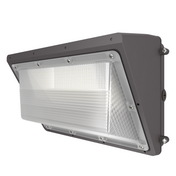

The outdoor lighting landscape has undergone a fundamental transformation as 2026 unfolds. Driven by tightening energy codes, accelerated smart city investments, and a growing global emphasis on dark sky compliance, LED wall pack lights have emerged as the cornerstone of perimeter illumination for commercial, industrial, and municipal applications worldwide. This comprehensive update covers the latest market trends, technological breakthroughs, regulatory shifts, and product innovations shaping the LED wall pack industry in 2026.
1. Market Overview: Robust Growth Across All Segments
The global LED wall pack market continues its upward trajectory in 2026. According to recent market analysis, the LED wall pack outdoor light market was valued at approximately USD 3.5 billion in 2023 and is projected to reach around USD 9.6 billion by 2032, growing at a compound annual growth rate (CAGR) of 11.8% from 2024 to 2032. The broader outdoor LED wall light segment—which encompasses solar-powered, hardwired, and battery-operated variants—has been valued at approximately USD 1.8 billion in 2023 and is projected to reach USD 3.8 billion by 2032, reflecting a CAGR of 8.1%. Future Market Report estimates the outdoor LED wall light market size at USD 1,500.45 million in 2024, projected to reach USD 2,980.75 million by 2032, with a CAGR of 8.2%.
Key drivers fueling this expansion include the accelerating shift toward energy‑efficient outdoor lighting across both public and private sectors, the decreasing cost of LED components, and the integration of smart technologies such as IoT-enabled controls and sensor systems. The rapid urbanization and infrastructure development across Asia Pacific, the sustained retrofit momentum in North America, and increasingly stringent lighting regulations in the European Union continue to amplify demand.
Regionally, North America currently holds a significant share, while Asia Pacific is projected to witness the fastest growth during the forecast period, driven by rapid industrialization, urbanization, and favorable government initiatives promoting energy-efficient lighting solutions in countries like China, India, and Japan. North America commands a noteworthy 36.1% of the global market share, with the United States representing 21.4% of worldwide demand. Floodlights remain the dominant product segment, accounting for 42.5% of the outdoor LED wall light market.
2. DLC 6.0 Certification Revolution: What Specifiers Must Know in 2026
One of the most consequential developments for the LED wall pack industry in 2026 is the rollout of the DesignLights Consortium (DLC) Version 6.0 SSL Technical Requirements. The DLC published the final V6.0 standard in November 2025, with applications opening on January 5, 2026. The most critical deadline for manufacturers and specifiers alike is October 1, 2026, when unapproved products will be removed from the DLC Qualified Products List (QPL). All existing DLC-listed products must meet the new efficacy thresholds by this date to remain eligible for the approximately 70% of North American energy efficiency programs—nearly 700 in total—that use the QPL to determine rebate eligibility.
V6.0 raises the bar for minimum energy efficiency by an average of 14% compared to V5.1, with category-specific increases reaching up to 19%. This means that many wall pack fixtures that qualified under earlier DLC versions will no longer make the cut. OEMs with older or lower-proficiency LED modules must act now to avoid forced delisting in 2026. The new standard also emphasizes premium performance, with DLC Premium-listed fixtures typically requiring efficacy of at least 150–170 lm/W and integrated controls or sensor-ready ports.
For facility managers planning retrofits, the implications are clear: starting in late 2026, only DLC 6.0-listed wall packs will qualify for utility rebates. Key models already meeting the new standard include the Atlas Patented Anti-Glare LED Wallpack (63.7W, 6,966 lumens, DLC-approved) which replaces up to 400W metal halide fixtures, as well as SATCO‘s NUVO Beam Selectable Wall Packs, which are DLC Premium Listed with selectable optics (60°/90°/110°) and three CCT options. Maxlite has also released its Wallmax Full Cutoff LED Wall Pack line with selectable wattage from 84W to 100W, DLC-listed and TAA-compliant.
3. Notable Product Launches and Industry Announcements in 2026
3.1 Appleton Expands IWL LED Wall Pack Series with Broader Lumen Range
In April 2026, Appleton™ announced a significant upgrade of its IWL LED Wall Pack Series with two new models, bringing enhanced performance to one of the market’s most rugged, weatherproof outdoor luminaire lines. Both new luminaires feature four field-selectable lumen outputs ranging from 4,000 to 17,000 lumens, plus three selectable color temperatures: 5000K, 4000K, or 3000K. This level of flexibility allows the same fixture to be used across vastly different applications, from corridor lighting requiring moderate output to large perimeter security zones demanding maximum illumination—all while maintaining a single SKU for simplified inventory management. The IWL series is particularly well-suited for industrial environments requiring extreme weather resistance and long-term reliability. An integrated photocell enables dusk-to-dawn automatic operation without external control devices, reducing installation complexity and total system cost.
3.2 SATCO/NUVO Launches Selectable Beam Angle LED Wall Packs
SATCO Products, a division of NUVO Lighting, has introduced a new generation of LED wall packs featuring beam-selectable optics (60°, 90°, and 110°), selectable CCT (3000K/4000K/5000K), and multiple wattage packages ranging from 20W to 100W. All models are DLC Premium Listed, making them eligible for maximum utility rebates across North America. The beam-selectable capability represents a significant advancement in inventory efficiency for electrical distributors and contractors—one fixture can now address three distinct lighting distribution requirements, reducing the need to stock multiple SKUs. The 5000K variant delivers crisp, cool white illumination ideal for security-driven applications, while the 3000K option is better suited for architectural facade lighting where warmer ambiance is preferred.
3.3 Access Fixtures Announces Top-Rated LED Wall Packs for 2026
Access Fixtures (Worcester, MA), a leader in high-performance commercial and industrial LED lighting, announced its Top-Rated LED Wall Packs for 2026 in December 2025. The lineup includes two standout models:
-
APTO EXTREME-LIFE Full Cutoff LED Wall Pack: This premium fixture features an industry-leading 200,000-hour L70-rated lifespan—more than double the standard 50,000–100,000 hour offering. Its IK08 impact rating and IP66 environmental certification ensure resistance to impacts, water jets, and harsh climatic conditions. The fixture is fully customizable with selectable housing colors, Kelvin temperatures (3000K, 4000K, or 5000K), multiple optics options, CRI selection, and advanced controls such as photocells and programmable occupancy/daylight sensors. For dark-sky compliance, the APTO delivers zero uplight when equipped with 2200K or 3000K LEDs, minimizing light pollution and preserving nighttime visibility.
-
WULI Solar-Powered LED Wall Pack: Recognizing the growing demand for off-grid sustainable solutions, Access Fixtures introduced the WULI line, a 5-watt and 10-watt solar-powered wall pack that eliminates wired power entirely. Featuring a mono-crystalline PV panel and a LiFePO₄ battery supporting 3,000–5,000 DOD cycles, just four hours of daily charging ensures uninterrupted nighttime operation. Originally announced in December 2025, WULI remains one of the most significant solar wall pack product launches in the first half of 2026, with applications spanning egress lighting, security illumination, wall washing, and signage highlighting.
3.4 Cree Lighting Advances L2 PCBA Solutions for Wall Pack Manufacturers
Cree LED has introduced its fully assembled Level 2 (L2) PCBA solutions—engineered for reliability, scalability, and simplified sourcing. This development provides wall pack manufacturers with a streamlined path to design compliant, high-efficacy luminaires that meet or exceed DLC 6.0 requirements. The new lineup offers CCT options as low as 2700K, reflecting the growing requirement for warmer outdoor installations that reduce glare and light pollution. Using 5050 LEDs also makes it easier to meet lumen targets for wall pack fixtures without expanding board size. For OEMs seeking a single-source supply chain for LED components and assembled boards, this offering reduces procurement complexity while ensuring consistent optical performance across production runs.
3.5 Havells Lighting Releases Gen-2 Selectable Wattage Wall Pack
Havells Lighting announced the Gen-2 Semi Cutoff LED Wall Pack in January 2026. The fixture delivers up to 18,120 lumens of high-CRI illumination while supporting 0–10V dimming for flexible control. Selectable wattage settings and selectable CCT (3000K/4000K/5000K) enable installation customization to meet site-specific requirements. The semi-cutoff design provides a balanced approach between light trespass control and downward illumination—an increasingly popular choice for commercial properties where walkways and building perimeters require consistent lighting without the strict uplight elimination mandated by full-cutoff designs.
3.6 RAB Lighting Updates SLIM Field-Adjustable Wall Pack
RAB Lighting has updated its popular SLIM series with a field-adjustable wall pack offering selectable wattage (26W / 18W / 12W) and selectable CCT (3000K / 4000K / 5000K). The ultra-slim profile–less than 2 inches thick–makes it suitable for installation in visually sensitive architectural applications where bulkier fixtures would detract from building aesthetics. An integrated photocell enables automatic dusk-to-dawn operation, while the bronze finish and die-cast aluminum construction ensure durability in any climate.
4. Design and Technology Trends Shaping LED Wall Packs in 2026
4.1 Dark Sky Compliance Becomes a Baseline Requirement
Light pollution has moved from a niche environmental concern to the center of outdoor lighting regulations. Dark sky compliant wall packs—fixtures engineered to eliminate upward light altogether—have shifted from premium options to baseline requirements in an increasing number of jurisdictions. Full-cutoff designs incorporate shrouds and precision optics that direct illumination downward and outward without allowing any light to escape above horizontal. The International Dark-Sky Association (IDA) guidelines are being incorporated into municipal codes across North America and Europe, with many cities now requiring dark-sky certification for all new outdoor building lighting.
In 2026, anti-glare full cutoff wall packs have become the default specification for commercial and institutional projects. These fixtures feature an awning-like cover that restricts outward glare while projecting light downward to help meet dark sky regulations. Additionally, the trend extends beyond compliance to aesthetic drivers, as new homes, hotels, and commercial buildings increasingly incorporate dark‑sky principals into architectural lighting plans. Rugged die-cast aluminum housings with powder-coat finishes tested to 1,000-hour salt spray ratings provide the necessary durability for these applications while delivering zero-uplight distributions via individual acrylic micro-strike optics.
4.2 Field‑Selectable Wattage and CCT Become Standard
The days of fixed-output fixtures are ending. In 2026, field-selectable wattage and CCT options have become standard features on virtually all mid-tier and premium LED wall packs. The ability to choose between 3000K, 4000K, or 5000K on a single fixture, along with multi-level wattage selection (e.g., 50W/70W/85W/100W), dramatically reduces SKU counts for distributors and contractors—a single fixture now serves applications from pathway illumination to parking lot security. This flexibility also allows on-site adjustments to compensate for unanticipated changes in mounting height, ambient light levels, or coverage area, resulting in fewer change orders and more satisfied end users.
Manufacturers have responded by embedding DIP switches or sliding switches behind easily accessible panels, enabling configuration changes in seconds rather than requiring replacement units. The RAB Lighting W22-M-100 exemplifies this trend with customizable field‑adjustable wattage settings of 50W, 70W, 85W, and 100W.
4.3 Integrated Smart Controls: Photocells and Motion Sensors
The integration of smart controls into LED wall pack fixtures has accelerated in 2026. Integrated photocells and motion sensors that automatically turn lights on at night or when motion is detected are no longer add-ons but standard inclusions on many models. These controls deliver significant energy savings without requiring a separate control system installation or programming. The combination of photocell and PIR (passive infrared) sensing allows fixtures to operate at reduced output during unoccupied nighttime hours and instantly return to full brightness when activity is detected—a dual‑strategy approach that maximizes energy savings without compromising security.
Some manufacturers now offer wall packs with programmable dimming schedules and 0–10V dimming capabilities, enabling compliance with increasingly strict energy codes that mandate bi-level or stepped lighting for unoccupied spaces. For 2026, the trend points further toward IoT-enabled fixtures that can be centrally managed from building automation systems, providing real-time diagnostics, occupancy analytics, and maintenance alerts across entire facility perimeters.
4.4 Solar‑Powered Wall Packs Gain Commercial Traction
Solar-powered LED wall packs have crossed from residential novelty to legitimate commercial solution in 2026. Driven by a combination of environmental concerns, rising electricity costs, and dramatic improvements in photovoltaic efficiency, solar wall packs are now viable for an expanding range of commercial applications. These solutions reduce dependence on grid power and appeal to eco‑conscious facility owners.
Access Fixtures’ WULI series leads this charge with its 5W and 10W offerings, but the category is expanding rapidly. Solar wall packs are now being deployed for off‑grid perimeter lighting, construction site security, parking lot island illumination, and gateway signage—applications where trenching for utility power would have been cost-prohibitive. Advances in LiFePO₄ battery chemistry (3,000–5,000 cycle life) coupled with high-efficiency mono-crystalline panels mean that as few as four hours of daily charging now provides full nighttime operation in most climate zones. While high-output (>50W) solar wall packs remain expensive and application‑limited, the lower wattage segment is seeing exponential adoption in 2026.
4.5 Modular and Customizable Designs
Modular and customizable designs are gaining significant traction in the LED wall pack market, allowing better adaptability to different architectural structures and outdoor environments. Increased focus on aesthetics combined with functional lighting is encouraging manufacturers to explore novel form factors and finishes. The APTO EXTREME-LIFE series offers complete customization spanning housing color, Kelvin temperature, optics, CRI, and advanced controls—all without sacrificing its remarkable 200,000-hour L70 lifespan. This modular approach extends product longevity and simplifies maintenance since individual components can be upgraded or replaced independently rather than requiring complete fixture swap-outs. Circular economy principles are also emerging as a key differentiator, with an increasing number of specifiers demanding products designed for repair, reuse, and component‑level recycling at end of life.
5. Major Regulatory Updates Impacting Outdoor Lighting
5.1 DLC 6.0 Full Implementation – October 1, 2026 Deadline
The October 1, 2026 deadline for DLC 6.0 compliance represents a major inflection point for the LED wall pack industry. The new standard raises the average efficacy requirement by 14%. All wall pack products currently on the DLC QPL must demonstrate compliance with V6.0 efficacy thresholds or risk removal, which in turn eliminates eligibility for the vast majority of state‑ and utility‑funded energy efficiency rebates in the United States and Canada. For specifiers, verifying that selected wall packs carry the DLC 6.0 designation is now essential before any rebate‑based procurement can proceed. Premium tier DLC certification—which typically requires at least 150–170 lm/W depending on the product category, plus integrated controls or sensor-ready ports—qualifies for 10–25% higher rebates in many jurisdictions.
5.2 California Title 24 JA8-2025 Requirements
As of January 1, 2026, the California Energy Commission’s 2025 Title 24 Building Energy Efficiency Standards have taken full effect. All outdoor lighting products used in new construction, additions, and alterations in California must now bear the JA8‑2025 or JA8‑2025‑E label and be registered in the CEC database—previous JA8-2022 labels are no longer valid. This directly impacts LED wall pack specifications for building lighting in California and, given the size of the state’s economy, these standards often foreshadow national trends. The JA8-2025 designation requires rigorous testing and third-party verification of energy performance, power quality, color consistency, and dimming compatibility—standards that many imported wall packs currently fail to meet.
5.3 EU EPBD: Mandatory Lighting Controls
In the European Union, the Energy Performance of Buildings Directive (EPBD) now mandates that all new commercial buildings be equipped with automatic lighting control systems—a fundamental shift from “optional” to “mandatory” status. Luminaries must support networking, dimming, and energy monitoring capabilities. For EU‑targeted wall pack exports, conformance with EN 60598 standards and ErP lot 9 (energy labeling) regulations remains non‑negotiable.
5.4 New China MEPS Apply to LED Wall Packs
China has issued its revised Minimum Energy Performance Standard (GB 30225-2026), which expands coverage to explicitly include LED high‑bay lamps but also encompasses outdoor lighting products. The standard raises minimum energy efficiency requirements by approximately 10% and introduces efficiency adjustments for products featuring high color rendering, anti-glare design, and smart controls. For wall pack manufacturers sourcing from Chinese factories, these revisions affirm a continued emphasis on energy savings and lighting quality.
5.5 Dark Sky and Light Trespass Ordinances Proliferate
Local dark sky ordinances—restricting allowable fixture types, shielding requirements, and maximum correlated color temperatures—are proliferating across North America and Europe. Many municipalities now mandate full‑cutoff fixtures for any wall‑mounted building lighting that illuminates paths, loading areas, or building facades within certain distances of property lines. Compliance increasingly requires fixtures with certified zero uplight, Type III or Type IV distributions, and CCTs below 4000K—often 3000K or less. Photometric data confirming the absence of uplight must be provided by the manufacturer and verified through independent LM‑79 testing, and the selected wall pack must demonstrate that it contributes zero lumens above 90°.
For commercial property owners, non‑compliance can result in fines, mandated retrofits, and delayed certificate of occupancy. Therefore, in 2026, specifying a wall pack that is not dark sky‑ready is rapidly becoming unacceptable throughout most of the US and Western Europe.
6. Energy Savings and ROI: Comparing LED Wall Packs to HID Alternatives
The financial case for upgrading from metal halide or high-pressure sodium wall packs to LED has never been stronger. Compared to legacy HID wall packs (150W, 250W, or 400W), modern LED wall packs consume between 50% and 75% less energy. A 50W LED wall pack replaces a 150W metal halide fixture, saving over 300 kWh annually per fixture. By extending this across a portfolio of 50 fixtures, a facility owner can anticipate annual energy savings of 15,000 kWh, representing approximately USD 2,000–USD 3,000 per year in operating cost reduction based on 2026 average commercial electricity rates.
Maintenance savings amplify the ROI. Metal halide bulbs require replacement every 10,000 to 15,000 hours—typically every 18 to 24 months in 12‑hour nightly operation scenarios. LED wall packs with L70 ratings of 100,000 to 200,000 hours require essentially zero relamping for a decade or more. When combined with DLC 6.0 Premium tier rebates that can provide USD 50–USD 200 per fixture in upfront incentives, typical payback periods for LED wall pack retrofits now fall between 12 and 24 months. The 50‑75% energy reduction not only lowers electricity bills but also reduces cooling loads during summer months, since LEDs generate dramatically less heat than HID sources.
7. Procurement Checklist for 2026: What Buyers Must Verify
When selecting LED wall pack lights for commercial, industrial, or municipal projects in 2026, specifiers should require the following documentation:
-
✅ DLC 6.0 listing (Premium tier recommended for maximum rebate eligibility)
-
✅ IES LM‑79‑19 photometric report confirming luminaire efficacy, total lumen output, and distribution pattern
-
✅ IES LM‑80 and TM‑21 for L70 projected lifespan (≥100,000 hours is now baseline; 150,000–200,000 hours is premium)
-
✅ UL 1598 or ETL certification for safety (not merely component-level approvals)
-
✅ IP rating appropriate for environment (IP65 minimum for general outdoor; IP66/IP67 for coastal or washdown areas)
-
✅ IK impact rating (IK08–IK10 recommended for public or high‑traffic perimeter zones)
-
✅ Dark sky compliance (zero uplight certification, Type III/IV distribution, <4000K CCT where required)
-
✅ Selectable features (CCT and wattage selection enables one‑SKU inventory and site‑adjustable output)
-
✅ Integrated controls (photocell and motion sensor options for energy code compliance)
-
✅ Driver brand (Mean Well, Inventronics, Philips, and other reputable manufacturers preferred)
-
✅ Warranty (5‑year standard; 7‑ to 10‑year for premium lines such as APTO)
-
✅ Photocell or sensor port (allows future upgrade to smart controls without rewiring)
Many of the products discussed above specifically provide these certifications. For example, the SATCO beam‑selectable wall packs are DLC Premium Listed. The APTO EXTREME-LIFE carries IP66 and IK08 ratings in addition to its 200,000‑hour L70 rating. The Hubbell Litepak LNC2 features zero uplight distributions, Type III full cutoff design, and a 1,000‑hour salt spray rating that confirms corrosion resistance for coastal installations .
8. Outlook: What to Expect Beyond 2026
Looking ahead to 2027 and beyond, the LED wall pack market is poised for continued evolution on multiple fronts. The convergence of D4i‑certified drivers, IoT connectivity, and dark‑sky optics will transform perimeter lighting from a passive utility into an active building intelligence asset. Expect to see accelerated adoption of continuous dimming systems that adjust output based on real‑time occupancy, ambient light, and traffic patterns—further reducing energy consumption beyond the already impressive 50‑75% savings compared to legacy HID fixtures.
Solar‑powered LED wall packs will expand into higher wattage categories as battery technology improves and photovoltaic cells become more efficient, gradually making grid‑connected fixtures unnecessary for an expanding range of applications. Meanwhile, the regulatory trends currently accelerating across North America, the EU, and Asia are creating a new baseline for outdoor lighting performance that will permanently reshape specifier expectations.
Facility managers who delay outdoor lighting upgrades to 2027 risk missing the current window for DLC 6.0‑related rebates. Those who invest in DLC 6.0‑compliant, dark‑sky‑ready, field‑selectable LED wall packs with integrated smart controls will enjoy the highest performance, lowest total cost of ownership, and most favorable regulatory posture for years to come.