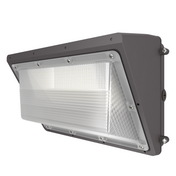

Parking lots and garages are the unsung workhorses of commercial properties—they’re the first and last space visitors interact with, and their lighting directly impacts safety, security, and operational costs. For facility managers, property owners, and contractors, outdoor LED wall pack lights have become the non-negotiable solution for these high-traffic, 24/7 environments. Unlike outdated high-pressure sodium (HPS) or metal halide (MH) fixtures, LED wall packs deliver superior brightness, energy efficiency, and durability—all while meeting strict 2026 compliance standards (including DLC 5.1 and ASHRAE 90.1).
This comprehensive guide breaks down why LED wall packs are essential for parking facilities, how to select the right fixtures for your space, installation best practices, and real-world ROI data. Whether you’re retrofitting an existing garage or designing a new parking lot, these insights will help you make a cost-effective, compliant decision that enhances safety and reduces long-term expenses.
1. Why LED Wall Packs Are Critical for Parking Lots & Garages
Parking facilities face unique lighting challenges: constant use, harsh conditions (moisture, dust, temperature swings), and liability risks from accidents or crime. LED wall packs address these pain points better than any traditional lighting solution:
1.1 Unbeatable Energy Savings & Cost Reduction
Parking lots and garages operate 24/7, making energy efficiency a top priority. LED wall packs consume 60–80% less energy than HID fixtures. For example, a 150W LED wall pack (22,050 lumens) replaces a 400W MH fixture—which actually draws 458W with ballast—while delivering brighter, more uniform light. For a mid-sized parking garage with 200 fixtures, this translates to **$118,712 in annual energy savings** (based on $0.22/kWh electricity rates, common for commercial facilities).
When paired with smart controls—motion sensors, photocells, or bi-level dimming—savings jump even higher. Bi-level dimming (required by Chinese garage lighting standards T/CIES 001—2016) reduces power to 10–20% during low-traffic periods (e.g., 2 AM–5 AM), cutting energy use by an additional 30%. Photocell-equipped models automatically shut off during daylight hours, eliminating wasted energy, while motion sensors trigger full brightness only when vehicles or pedestrians are present—ideal for remote parking lots with sporadic use.
1.2 Industrial-Grade Durability for Harsh Environments
Parking facilities demand lighting that can withstand moisture, dust, and physical impact:
- Lifespan: 50,000–150,000 hours (L70 rating) vs. 10,000–20,000 hours for HID. A single LED wall pack can operate maintenance-free for 10+ years, even in 24/7 use.
- Weather Resistance: IP65+ ratings (required for open parking lots) protect against rain, wind-driven dust, and hose-down cleaning. Underground garages require at least IP20 (dust-resistant), while coastal or snowy regions benefit from IP66-rated fixtures to resist salt corrosion and heavy precipitation.
- Impact Protection: IK08–IK10 ratings withstand accidental damage from vehicles, shopping carts, or vandalism—critical for high-traffic parking garages in urban areas.
This durability eliminates costly maintenance: no more monthly bulb replacements, cherry picker rentals, or traffic disruptions. For a 200-fixture garage, this saves an estimated $15,000 annually in labor (at $100/hour for a 2-person crew) and replacement bulbs/ballasts.
1.3 Compliance with Parking Lighting Codes
Parking lots and garages face stricter regulations than most commercial spaces. Modern LED wall packs meet key 2026 standards to avoid fines and ensure safety:
- DLC 5.1 Premium Certification: Requires ≥140 lm/W efficacy and advanced dimming capabilities, unlocking utility rebates (15–25% of upfront costs) and ensuring energy efficiency.
- ASHRAE 90.1/IECC 2024: Mandates minimum efficacy of 123 lm/W for parking garage luminaires and requires smart controls (occupancy sensors or daylight harvesting) to reduce waste.
- Title 24 (California): Requires occupancy sensing + daylight control for fixtures near pedestrian areas, and limits glare to 10 candelas per square meter to avoid distracting drivers.
- T/CIES 001—2016 (China): Mandates 4000K–6000K CCT (cool white) for garages, power factor ≥0.85, and bi-level dimming to 10–20% power during low-traffic hours.
- ANSI/IESNA RP-20: Specifies minimum light levels (5–10 fc for parking lots, 3–5 fc for garage walkways) to reduce slip-and-fall liability.
Non-compliant lighting can result in fines (up to $10,000 for repeat violations in California) or denied insurance claims if an accident occurs in an under-lit area—making certified LED wall packs a critical risk-mitigation tool.
1.4 Enhanced Safety & Security
Parking facilities are high-risk areas for accidents and crime. LED wall packs address these risks with:
- Uniform Illumination: Full-cutoff or semi-cutoff optics distribute light evenly, eliminating dark spots that hide hazards (potholes, curbs) or criminals. This meets ANSI/IESNA’s 5–10 fc standard for parking lots, ensuring drivers and pedestrians can see clearly.
- Anti-Glare Design: Glare from traditional HID fixtures can blind drivers, leading to accidents. LED wall packs with Type III/IV light distribution and shielded lenses reduce glare to safe levels, complying with Title 24 and IESNA standards.
- High CRI: 80+ CRI (Color Rendering Index) ensures accurate color representation, critical for CCTV footage clarity. Police reports show that high-CRI lighting helps identify suspects 40% more often than HPS fixtures (which have CRI <20).
- Instant On/Off: Unlike HID fixtures (which take 5–10 minutes to warm up), LED wall packs turn on instantly—critical for emergency situations or after power outages.
FBI data shows that well-lit parking facilities reduce theft by 34% and vehicle break-ins by 42%—a key benefit for retail, office, or hospital parking lots where security is a top priority.
2. Key Criteria for Choosing LED Wall Packs for Parking Lots & Garages
Not all LED wall packs are suitable for parking facilities. Prioritize these features to ensure performance, compliance, and value:
2.1 Certifications: DLC 5.1 Premium & UL/ETL Listed
- DLC 5.1 Premium: The gold standard for commercial lighting. Look for fixtures with DLC IDs (e.g., Durado III, Lightide LT-WP01) to qualify for utility rebates. Avoid "DLC Qualified" (non-Premium) fixtures, as they have lower efficacy (<140 lm/W) and don’t qualify for the highest rebates.
- UL/ETL Listed: Verifies the fixture meets national electrical codes (NEC) for safety. For wet environments (open parking lots), choose "UL Listed for Wet Locations"—not just "Damp Locations."
- IP Rating: IP65+ for open parking lots (resists rain, dust), IP20+ for underground garages (dust-resistant). Coastal areas should opt for IP66 to resist salt corrosion.
2.2 Efficacy & Lumen Output
- Efficacy: Aim for ≥140 lm/W (DLC 5.1 Premium minimum). Premium models (e.g., Lightide LT-WP01 120W) reach 145–150 lm/W, maximizing energy savings.
-
Lumen Output by Application:
- Small Parking Lots (≤50 spaces): 5,000–10,000 lumens per fixture (30–60W LED).
- Medium Parking Lots (50–200 spaces): 10,000–20,000 lumens per fixture (60–120W LED).
- Large Parking Lots (≥200 spaces): 20,000–30,000 lumens per fixture (120–180W LED).
- Underground Garages: 3,000–8,000 lumens per fixture (20–50W LED)—lower lumens to avoid glare in enclosed spaces.
2.3 Optics & Light Distribution
- Full-Cutoff vs. Semi-Cutoff: Full-cutoff directs 100% of light downward, eliminating light trespass and skyglow—ideal for urban parking lots near residential areas. Semi-cutoff balances coverage and glare control, making it suitable for large industrial parking lots.
- Beam Angle: Type III (120° spread) for building perimeters and walkways; Type IV (150° spread) for wide-open parking areas. Avoid Type V (360°) fixtures, as they waste light upward.
2.4 Smart Control Compatibility
Choose fixtures with built-in or compatible smart controls to maximize efficiency:
- Photocells: Dusk-to-dawn operation (standard for parking facilities) to eliminate daytime energy waste.
- Motion Sensors: Trigger full brightness when vehicles/pedestrians are detected, then dim to 10–20%—ideal for low-traffic areas like garage stairwells.
- 0-10V Dimming: Integrate with building management systems (BMS) for centralized control of large parking facilities.
- Emergency Backup: 90-minute battery backup (UL 924 compliant) for egress paths in case of power outages—required by most building codes.
2.5 Durability & Weather Resistance
- Housing: Die-cast aluminum with polyester powder coating to resist rust and corrosion. Avoid plastic housings, which crack in extreme temperatures.
- Lens: Tempered glass or anti-UV polycarbonate to prevent yellowing and damage from impacts.
- Operating Temperature: -40°C to +50°C (-40°F to 122°F) to withstand harsh winters and hot summers.
2.6 Color Temperature
- 3000K–4000K: Warm white to neutral white—ideal for retail or hotel parking lots to create a welcoming atmosphere.
- 5000K–6000K: Cool white—mimics natural daylight, enhancing visibility for security cameras and reducing eye strain for night-time drivers. Recommended for industrial parking lots and garages.
3. Top-Rated LED Wall Packs for Parking Lots & Garages (2026)
Based on DLC certification, efficacy, and real-world performance, these models stand out for parking facilities:
3.1 Lightide LT-WP01 Series
- Specs: 40W (5,607 lumens) to 120W (14,552 lumens), 140–150 lm/W, 3000K/4000K/5000K CCT, IP65, ETL/CETL listed, DLC QPL certified.
- Key Features: Adjustable beam angle, photocell option, anti-glare lens, -40°C to +50°C operating range.
- Best For: Small to medium parking lots, underground garages, and coastal areas (corrosion-resistant housing).
- Price: $69.99–$149.99 (rebate-eligible).
3.2 Hylele Oval Series
- Specs: 120W (15,600 lumens), 130 lm/W, 5000K CCT, IP65, UL listed, DLC Premium certified.
- Key Features: Built-in dusk-to-dawn sensor, full-cutoff optics, 100,000-hour lifespan, 5-year warranty.
- Best For: Large parking lots, industrial facilities, and high-security areas.
- Energy Savings: Replaces 400W MH fixtures, cutting energy use by 67%.
3.3 Flakeeper 120W LED Wall Pack
- Specs: 120W (16,800 lumens), 140 lm/W, 5000K CCT, IP66, ETL listed.
- Key Features: Dusk-to-dawn sensor, weatherproof housing, instant on/off, 50,000-hour lifespan.
- Best For: Open parking lots, hotel garages, and areas prone to heavy rain or snow.
- Price: $89.99 (2-pack option available for cost savings).
3.4 Keystone Slim LED Wall Pack
- Specs: 30W–90W (4,200–12,600 lumens), 140 lm/W, 3000K/4000K CCT, IP65, UL listed, DLC Premium certified.
- Key Features: Slim profile (ideal for tight spaces), 0-10V dimming, corrosion-resistant hardware, 7-year warranty.
- Best For: Underground garages, retail parking lots, and buildings with architectural constraints.
4. Installation & Maintenance Best Practices
Proper installation ensures longevity, compliance, and optimal performance. Follow these guidelines:
4.1 Professional Installation Requirements
- Hire a licensed electrician to comply with NEC and local codes. Parking facility lighting requires expertise in wet-location wiring and load calculations.
- Mount fixtures 10–15 feet high for parking lots (maximizes coverage) and 8–10 feet high for garages (reduces glare).
- Use silicone sealant around mounting plates and conduit entries to maintain IP rating—critical for wet locations.
- Ensure fixtures are spaced 20–30 feet apart (depending on lumen output) to avoid dark spots. For example, 10,000-lumen fixtures should be spaced 25 feet apart for uniform coverage.
4.2 Maintenance Checklist
- Quarterly: Clean lenses (dust and dirt reduce light output by 10–15%) and inspect gaskets for wear. Test sensors to ensure they’re functioning correctly.
- Annual: Verify wiring connections (loose connections cause flickering or failure) and check for corrosion, especially in coastal areas.
- 5-Year Mark: Conduct a lumen output test. Replace fixtures if output drops below 70% of original (L70 rating). Most LED wall packs maintain brightness beyond this point, but proactive checks prevent liability.
4.3 Layered Lighting Design (For Large Facilities)
For large parking lots or multi-level garages, combine LED wall packs with pole-mounted flood lights for comprehensive coverage:
- Wall Packs: Illuminate building perimeters, entrances, and walkways to eliminate shadows near structures.
- Flood Lights: Cover open parking areas with wide-beam fixtures (15,000–40,000 lumens) mounted on poles.
- Stairwell/Egress Lighting: Use low-lumen (3,000–5,000) LED wall packs with emergency backup to comply with NFPA 101.
5. ROI Analysis: LED Wall Packs for Parking Facilities
Let’s calculate the return on investment for a 200-fixture parking garage retrofit (replacing 400W MH with 150W LED wall packs):
5.1 Upfront Costs
- LED Wall Packs: $100–$150 per fixture (total: $20,000–$30,000).
- Installation: $50–$75 per fixture (total: $10,000–$15,000).
- Total Upfront Cost: $30,000–$45,000.
5.2 Savings
- Energy Savings: $593.56 per fixture annually (based on $0.22/kWh) → $118,712 total/year.
- Maintenance Savings: $75 per fixture annually (eliminated bulb changes and labor) → $15,000 total/year.
- Utility Rebates: 15–25% of upfront cost → $4,500–$11,250.
5.3 Payback Period
- After rebates: $30,000–$45,000 – $4,500–$11,250 = $25,500–$33,750 net upfront cost.
- Annual Total Savings: $133,712.
- Payback Period: 2.6–3.3 months (yes, less than 4 months!).
For smaller facilities (50 fixtures), payback is equally fast—6–8 months—with 10+ years of subsequent savings.
6. Common Mistakes to Avoid
- Choosing Non-Certified Fixtures: Sacrifices rebates, safety, and compliance. Non-DLC fixtures use 20–30% more energy, negating savings.
- Underestimating Lumens: Dark spots increase liability. Use the ANSI/IESNA fc standards as a minimum—err on the side of brighter for security.
- Ignoring Smart Controls: Missing out on 20–30% extra energy savings. Photocells and motion sensors are low-cost add-ons with high ROI.
- DIY Installation: Violates electrical codes and voids warranties. Wet-location wiring mistakes can cause fires or electrocution.
- Prioritizing Price Over Quality: Cheap fixtures (under $50) fail in 2–3 years, requiring replacement and negating long-term savings. Invest in DLC Premium models with 5+ year warranties.
Conclusion
Outdoor LED wall pack lights are the ultimate solution for parking lots and garages—they’re energy-efficient, durable, compliant, and proven to enhance safety. By prioritizing DLC 5.1 Premium certification, anti-glare optics, and smart controls, you’ll select a solution that meets 2026 industry standards and delivers rapid ROI (as little as 2.6 months for large facilities).
Whether you’re retrofitting an existing garage or designing a new parking lot, the models highlighted in this guide (Lightide LT-WP01, Hyperlite Oval Series, Flakeeper 120W) represent the gold standard for parking facility lighting. Invest in quality, and you’ll enjoy brighter, safer, and more cost-effective lighting for decades—while reducing liability and improving the visitor experience.
Make the switch to LED wall packs today—and transform your parking facility into a high-performance, low-maintenance asset.