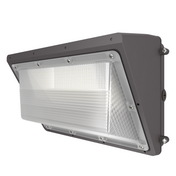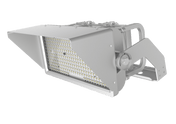

Choosing the right industrial lighting is only half the battle; proper installation and usage are what unlock their full potential for safety, longevity, and efficiency. Hylele Field Lights are engineered not just for superior performance but also for straightforward deployment and intelligent operation. This definitive guide walks you through the key stages—from pre-installation planning to long-term optimization—ensuring you get the maximum return on your investment.
Phase 1: Pre-Installation Planning and Preparation
A successful installation starts long before mounting the first fixture. Careful planning prevents costly rework and ensures optimal performance.
-
Site Assessment & Layout Design:
-
Lux Level Calculation: Determine the required light levels (in lux) for your specific application (e.g., construction site, logistics yard, agricultural field). Use Hylele's photometric data (IES files) with lighting design software to model the layout.
-
Pole Placement & Spacing: Based on the fixture's beam angle (e.g., Type III for pathways, Type V for large squares) and mounting height, calculate the optimal pole spacing-to-height ratio to achieve uniform illumination without dark spots.
-
-
Infrastructure & Safety Check:
-
Power Supply Verification: Ensure the electrical supply (voltage, frequency) matches the fixture's input requirements (e.g., AC100-277V wide voltage). Check that circuit breakers are correctly rated.
-
Structural Integrity: Verify that poles, walls, or trusses can support the fixture's weight and wind load, especially in exposed outdoor areas.
-
Safety First: Always de-energize the circuit at the main breaker and use a voltage tester to confirm it's dead before starting work.
-
Phase 2: Installation Process – Step-by-Step Best Practices
Hylele lights are designed for an installer-friendly setup. Following these steps ensures a secure, code-compliant, and weatherproof installation.
-
Unboxing & Inspection: Carefully unpack all components. Verify you have the fixture, mounting bracket(s), screws, and a compatible photocell or sensor if ordered. Check for any shipping damage.
-
Mounting Bracket Assembly: Attach the provided U-bracket or knuckle mount to the pole or surface using high-grade, corrosion-resistant stainless steel bolts. Use a torque wrench to tighten to the manufacturer's specified value to prevent loosening from vibration.
-
Wiring Connection:
-
Pass the supply cable through the pole and the mounting bracket's conduit opening.
-
Connect the AC power lines (Line, Neutral, Ground) to the corresponding terminals in the fixture's waterproof junction box. Hylele terminals are typically clearly marked and allow for tool-less push-in or screw-down connections.
-
Crucial Waterproofing: For outdoor installations, always use a weatherproof cable gland at the entry point. Ensure the IP66/IP67-rated rubber gasket on the junction box cover is properly seated before sealing it tightly.
-
-
Fixture Mounting & Aiming: Secure the light to the bracket. Once powered, temporarily activate the light to precisely adjust the tilt angle for the desired lighting coverage before final tightening.
Comparison of Common Installation Types:
| Installation Type | Best For | Key Consideration |
|---|---|---|
| Pole Top Mount | Parking lots, yards, perimeter security | Ensure pole height matches the required light spread. |
| Wall Mount | Building facades, loading docks, under-canopy | Use heavy-duty anchors for masonry and maintain clearance. |
| Trunnion Mount | Side-of-pole for roadway or pathway | Aiming accuracy is critical for controlling glare. |
Phase 3: Smart Configuration and Daily Use
Modern Hylele Field Lights offer intelligent features that require correct setup to maximize energy savings and functionality.
-
Photocell & Sensor Setup:
-
For models with an integrated dusk-to-dawn sensor, ensure it has a clear view of the sky, unobstructed by the fixture's own body or nearby structures.
-
For motion sensors (microwave/PIR), configure the sensitivity and duration settings according to the area's traffic pattern to avoid false triggers or missed detection.
-
-
Dimming and Control System Integration:
-
If connected to a 0-10V, DALI, or wireless control system, follow the controller manufacturer's instructions to pair and group the lights for zoned scheduling, daylight harvesting, or adaptive dimming.
-
Phase 4: Proactive Maintenance for Maximum Lifespan
While Hylele lights are built for minimal maintenance, simple periodic checks ensure decades of peak performance.
-
Semi-Annual Visual Inspection: Check for any significant accumulation of dirt, snow, or debris on the lens, which can reduce light output by up to 20%. Clean gently with a soft cloth and mild detergent if needed.
-
Annual Electrical Check: During a scheduled maintenance shutdown, inspect cable glands and seals for integrity. Verify all mechanical fasteners are tight.
-
Understanding Lifespan Metrics: Hylele lights are rated for L90/B10 at 100,000 hours. This means after 100,000 hours (over 11 years at 24/7 operation), 90% of the fixtures will still be emitting at least 90% of their initial light. There is no "bulb" to replace—the fixture is designed as a long-term asset.
Troubleshooting Common Non-Electrical Issues
-
Problem: Uneven lighting or dark spots.
-
Solution: Revisit the aiming angles. The spacing between poles may be too wide for the selected beam pattern.
-
-
Problem: Light turns on/off erratically at dusk/dawn.
-
Solution: The photocell may be dirty or obstructed. Clean the sensor dome and ensure it's not facing a direct artificial light source.
-
-
Problem: Reduced overall brightness over time.
-
Solution: This is likely normal lumen depreciation. If excessive, clean the lens and optical chamber as dirt buildup is the most common cause.
-
Conclusion: Installation as an Investment
Properly installing and configuring your Hylele Field Lights is the final, critical step in securing a reliable, high-performance lighting system. By investing time in correct installation and setup, you ensure the product delivers on its promise of exceptional durability, dramatic energy savings, and low total cost of ownership for years to come.
Ready to plan your project? Download detailed installation manuals, IES files, and CAD drawings from the Hylele technical support portal, or contact our engineering team for customized layout assistance.