
Parking lots—whether for retail centers, office parks, residential communities or industrial facilities—are critical spaces that demand reliable, consistent illumination. Nothing undermines parking lot safety, functionality and user confidence quite like uneven lighting and harsh shadows: dark pockets create hiding spots for criminal activity, obscure tripping hazards like curbs or potholes, and make navigation difficult for drivers and pedestrians alike. In 2026, uniform LED lighting has emerged as the definitive solution to banish parking lot shadows for good, blending advanced LED technology, strategic layout design and precision fixture selection to deliver seamless, consistent light coverage across every square foot of parking space. This guide breaks down why shadow-free uniform lighting is non-negotiable for modern parking lots, the key principles of effective uniform lighting design, the best LED fixtures for the job, and actionable 2026 best practices to implement a shadow-free lighting system that elevates safety, reduces liability and enhances the overall user experience.
Why Lighting Shadows in Parking Lots Are a Critical Risk (and Business Liability)
Shadows in parking lots are far more than a minor inconvenience—they’re a serious safety hazard and a significant legal liability for property owners and managers. Industry safety data and insurance claims highlight the tangible risks of uneven parking lot lighting, making shadow elimination a top priority for any facility:
- Increased criminal activity: Dark, shadowed areas are the top target for parking lot theft, vandalism and assault. A 2026 study by the National Crime Prevention Council found that parking lots with uneven lighting and shadow zones have a 3x higher rate of property crime and violent incidents compared to those with uniform illumination.
- Higher accident and injury rates: Shadows obscure obstacles like speed bumps, curbs, fallen debris and even other pedestrians/drivers, leading to an increased risk of slip-and-fall injuries, low-speed collisions and vehicle-pedestrian accidents. These incidents often result in costly personal injury claims and elevated insurance premiums for property owners.
- Poor user experience and reduced foot traffic: Customers, employees and residents avoid parking lots that feel dark or unsafe due to shadows. Retail and commercial properties with shadowed parking lots report a 15-20% drop in after-hours foot traffic, directly impacting revenue and tenant satisfaction.
- Non-compliance with building and safety codes: Most municipal and state building codes mandate minimum illumination levels and uniformity ratios for parking lots to protect public safety. Failure to meet these standards can result in fines, mandatory redesigns and even legal action in the event of an incident.
Uniform lighting eliminates these risks by creating a shadow-free environment with consistent brightness, making parking lots safer, more compliant and more welcoming for all users.
Core Principles of Uniform Parking Lot Lighting (No More Shadows!)
Creating a shadow-free parking lot with uniform lighting isn’t just about installing more light fixtures—it’s about designing a system based on three non-negotiable lighting principles that ensure seamless coverage and eliminate dark zones. These principles are the foundation of every effective 2026 uniform parking lot lighting design:
1. Target the Right Illumination Uniformity Ratio
The uniformity ratio (the ratio of minimum illuminance to maximum illuminance in a space) is the single most important metric for eliminating shadows. For parking lots, the 2026 industry and code standard is a minimum 3:1 uniformity ratio (max light : min light), with a 5:1 ratio as the gold standard for high-traffic or high-safety areas (e.g., retail parking lots, hospital lots). A ratio below 3:1 guarantees harsh shadows and uneven light—avoid this at all costs by using lighting simulation software (DIALux, Relux) to model and optimize uniformity before installation.
2. Match Beam Angle to Fixture Mounting Height
Shadows form when light fixtures have misaligned beam angles and mounting heights—either the light is too concentrated (creating hotspots and dark edges) or too spread out (resulting in low overall brightness). For 2026 uniform parking lot lighting, follow this proven beam angle/height pairing:
- 60°-90° wide beam angles: Ideal for low mounting heights (10-15ft) – perfect for small residential parking lots or narrow parking aisles.
- 40°-60° medium beam angles: The sweet spot for mid-range heights (15-20ft) – the most common choice for commercial retail and office park parking lots.
- 20°-40° narrow beam angles: Best for high mounting heights (20-30ft) – designed for large industrial parking lots or open parking fields with wide aisles.
3. Use Overlapping Light Zones to Eliminate Gaps
The simplest way to banish shadows is to design lighting layouts with 15-20% overlapping light coverage between adjacent fixtures. This means the light output from one fixture bleeds into the coverage area of the next, eliminating any dark gaps or shadow zones between them. For grid-style parking lot layouts (the most common), space fixtures in a uniform pattern (square or staggered) with overlapping zones—staggered layouts are often preferred for better uniformity and fewer shadows than straight grid layouts.
2026’s Best LED Fixtures for Uniform Shadow-Free Parking Lot Lighting
LED technology is the backbone of modern uniform parking lot lighting, and the 2026 lineup of LED fixtures is engineered specifically to deliver the consistent brightness, beam control and durability needed to eliminate shadows. Not all LED fixtures are created equal—prioritize these four fixture types for shadow-free uniform lighting, tailored to different parking lot sizes and needs:
1. LED Area Lights (The All-Purpose Workhorse)
LED area lights are the most popular choice for uniform parking lot lighting in 2026, offering adjustable beam angles, high luminous efficacy (200-250lm/W) and wide coverage. Look for dimmable models with asymmetric light distribution—this design directs light downward and outward (not upward) to maximize ground coverage and minimize shadows, while also reducing light pollution. Ideal for medium to large commercial and industrial parking lots.
2. LED Canopy Lights (For Covered/Premium Parking Zones)
For covered parking garages, valet areas or premium covered parking spots, LED canopy lights deliver low-glare, uniform illumination with no harsh shadows. 2026’s top canopy lights feature flat-panel designs with diffused light output, IP66/IP67 weather resistance and a 4000K-5000K cool white color temperature (the best for visibility) – perfect for eliminating shadows in enclosed or semi-enclosed parking spaces.
3. LED Linear High Bays (For Wide Open Parking Fields)
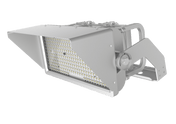
For large, open parking lots (e.g., stadium parking, big-box retail lots) with wide aisles and high mounting heights, LED linear high bays provide consistent, long-distance uniform lighting with no shadow zones. These fixtures offer narrow to medium beam angles, high lumen output (30,000-80,000lm) and modular design—ideal for covering expansive spaces with seamless light coverage.
4. LED Shoebox Lights (Municipal/High-Traffic Parking Lots)
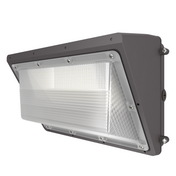
LED shoebox lights are the go-to choice for high-traffic municipal and commercial parking lots in 2026, combining rugged construction (IP67+ rating, corrosion-resistant housing) with precision optics that deliver perfect uniformity. They feature adjustable slip fitter mounts for easy beam angle alignment, smart control compatibility and a 50,000+ hour lifespan—eliminating maintenance gaps that can lead to temporary shadow zones from burnt-out fixtures.
Key Fixture Features to Prioritize in 2026: 4000K-5000K CCT (crisp visibility with no harsh glare), CRI 80+ (accurate color perception), IP66/IP67 weather resistance, and photocell/motion sensor compatibility (for smart dimming without sacrificing uniformity).
2026 Step-by-Step Uniform Lighting Design for Shadow-Free Parking Lots
Designing a shadow-free uniform parking lot lighting system doesn’t have to be complex—follow this 5-step actionable guide for 2026, tailored to both new installations and lighting upgrades, to ensure seamless coverage and eliminate shadows for good:
- Conduct a Full Site Audit: Map your parking lot’s dimensions, layout (aisles, parking spaces, walkways), terrain (slopes, curbs) and critical zones (entrances/exits, crosswalks, handicap spots). Note any existing obstacles (light poles, trees, buildings) that could cast shadows—these will dictate fixture placement and beam angle.
- Define Your Lighting Standards: Align with local building codes for minimum illuminance levels (typically 5-10 fc/footcandles for parking lots, 10-15 fc for high-safety zones) and lock in a 3:1+ uniformity ratio as your non-negotiable target.
- Model the Design with Lighting Simulation Software: Use DIALux or Relux to input your site data, select your LED fixtures (with their exact beam angle/lumen specs) and test different layouts (staggered vs. grid). Adjust fixture placement, height and beam angle until the simulation shows a uniform, shadow-free light distribution with your target uniformity ratio.
- Select Smart, Durable LED Fixtures: Choose the fixture type that matches your parking lot’s size/needs (area lights, shoebox lights, etc.) and prioritize the 2026 key features (adjustable beam angles, weather resistance, CRI 80+). For upgrades, replace old HPS/halogen fixtures with LED equivalents that match the modeled beam angle and lumen output—avoid “bulb swaps” that lead to uneven light and shadows.
- Install with Precision Beam Alignment: Ensure professional installation by licensed electricians who can align each fixture’s beam angle exactly as modeled. Even a small misalignment (10-15°) can create shadow zones—precision is key here. For existing systems, conduct a beam angle audit and realign fixtures to eliminate unintended shadows.
How to Maintain Uniform Lighting (and Keep Shadows at Bay) Long-Term
A great uniform lighting design only stays shadow-free with proper ongoing maintenance—fortunately, 2026 LED technology makes this effortless, with minimal upkeep required to preserve seamless coverage. Follow these low-effort maintenance best practices to keep your parking lot shadow-free for the fixture’s 50,000+ hour lifespan:
- Schedule Annual Visual Inspections: Conduct a single yearly walkthrough/drive-through to check for physical damage (cracked lenses, bent poles) or obstructions (overgrown trees, debris) that could cast new shadows. Trim overhanging branches and remove obstacles to preserve light flow.
- Leverage Smart Monitoring for Fixture Performance: Use LED fixtures with smart control integration (Zigbee, DALI) to monitor performance in real time. The system will alert you to dim or failing fixtures before they create shadow zones—replace modular components (LED modules, drivers) quickly with plug-and-play parts (no full fixture teardown needed).
- Clean Lenses Bi-Annually: LED fixture lenses coated with dust, dirt or bird droppings can reduce light output by up to 30%, creating unintended shadow zones. Clean lenses twice a year with a simple wipe-down—no disassembly required—to maintain full lumen output and uniformity.
- Avoid Random Fixture Replacements: If a fixture needs replacement, use the exact same model with identical beam angle and lumen specs. Mixing different fixture types creates uneven light and shadows—stick to your original design for consistency.
Conclusion
Lighting shadows in parking lots are a preventable safety hazard, business liability and user experience issue—and in 2026, uniform LED lighting is the ultimate solution to say goodbye to them for good. By designing your parking lot lighting system around the core principles of uniformity ratio, beam angle/height pairing and overlapping light zones, selecting the right 2026 LED fixtures (area lights, shoebox lights, canopy lights) and following a precision design and installation process, you can create a shadow-free environment that boosts safety, reduces crime, minimizes liability and enhances the overall experience for drivers and pedestrians alike. The best part? Modern LED uniform lighting systems deliver these benefits with exceptional energy efficiency (60-70% savings over traditional HPS lighting), a 50,000+ hour lifespan and minimal maintenance—turning parking lot lighting from a recurring cost into a long-term investment in safety and success. In 2026 and beyond, uniform shadow-free lighting isn’t just a nice-to-have for parking lots—it’s a must-have.