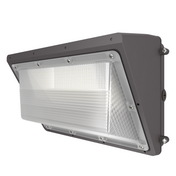

Introduction: Why Wattage Matters for Outdoor LED Wall Pack Lights
Outdoor LED wall pack lights are indispensable for security, visibility, and aesthetics in commercial, residential, and industrial spaces. Unlike indoor lighting, outdoor environments demand lights that can withstand weather elements while delivering targeted brightness—and wattage is the primary factor determining how much light a wall pack produces. Choosing the wrong wattage leads to common pitfalls: insufficient light for safety (e.g., dark parking lots) or wasted energy (e.g., overpowered lights for small patios). This guide breaks down the best wattage for every outdoor scenario, so you can balance performance, efficiency, and cost.
Key Factors to Consider Before Choosing Wattage
Before diving into specific wattage recommendations, it’s critical to align your choice with these variables—they’ll ensure your LED wall pack light meets your unique needs:
- Application Area Size: Larger spaces (e.g., warehouses, parking garages) require higher wattage to cover broad areas, while small spaces (e.g., entryways, porches) need lower wattage to avoid glare.
- Desired Brightness (Lumens): Wattage correlates with lumens (the actual light output). LED wall packs are energy-efficient—1 watt ≈ 80-100 lumens (vs. 15-20 lumens for incandescent). For reference: 500 lumens = soft ambient light; 2000+ lumens = bright security light.
- Mounting Height: Higher mounting (10-20 feet) needs more wattage to distribute light evenly at ground level. Lower mounting (5-8 feet) works with lower wattage to prevent harsh glare.
- Lighting Goals: Security-focused areas (e.g., backyards, loading docks) need brighter light (higher wattage) to deter intruders. Decorative or ambient areas (e.g., garden paths, storefronts) can use lower wattage for a warmer glow.
- Energy Efficiency & Regulations: Many regions have energy codes (e.g., ENERGY STAR) that favor LED wall packs with optimal wattage—avoid over-wattaging to save on electricity bills.
Best Wattage Recommendations for Common Outdoor Applications
1. Residential Spaces (Porches, Entryways, Backyards)
- Wattage Range: 10W-30W (800-3000 lumens)
- Use Cases:
- 10W-15W: Small porches, garden paths, or side yards (soft ambient light, no glare for neighbors).
- 20W-30W: Main entryways, large backyards, or driveways (bright enough to identify visitors and enhance security).
- Pro Tip: Pair with motion sensors for 20W-30W models—only activate when needed to save energy.
2. Commercial & Retail Spaces (Storefronts, Sidewalks, Loading Docks)
- Wattage Range: 30W-60W (3000-6000 lumens)
- Use Cases:
- 30W-40W: Storefronts, sidewalks, or small parking areas (inviting brightness for customers, visibility after dark).
- 50W-60W: Loading docks, delivery areas, or large commercial entryways (high-intensity light to prevent theft and ensure safety for workers).
- Pro Tip: Choose LED wall packs with adjustable beam angles (120°-180°) for 30W-40W models—direct light where it’s needed without wasting it.
3. Industrial & Warehouse Spaces (Parking Garages, Perimeters, Loading Bays)
- Wattage Range: 60W-100W+ (6000-10,000+ lumens)
- Use Cases:
- 60W-80W: Large parking lots, warehouse perimeters, or outdoor work areas (even light distribution over wide spaces).
- 100W+: High-ceiling loading bays, industrial yards, or remote outdoor facilities (extreme brightness for 24/7 operations and maximum security).
- Pro Tip: Opt for DLC-listed LED wall packs (DesignLights Consortium) for 60W+ models—they qualify for rebates and meet strict efficiency standards.
4. Municipal & Public Spaces (Parks, Walkways, Public Buildings)
- Wattage Range: 20W-50W (2000-5000 lumens)
- Use Cases:
- 20W-30W: Public walkways, park trails, or small plazas (gentle light that’s safe for pedestrians and wildlife).
- 40W-50W: Public building exteriors, parking areas for government facilities, or transit stops (bright enough for security without disturbing nearby residents).
- Pro Tip: Select warm white (2700K-3000K) or neutral white (3500K) for 20W-30W models—cool white (5000K+) can feel harsh in public spaces.
Mistakes to Avoid When Choosing Wattage
- Over-Wattaging: Assuming “higher wattage = better” wastes energy and creates glare. For example, a 100W LED wall pack is overkill for a small porch—stick to 10W-15W.
- Ignoring Lumens: Wattage is a measure of energy use, not brightness. Always check lumens to ensure you’re getting the right light output (e.g., 30W LED = 2400 lumens, which is brighter than a 150W incandescent).
- Forgetting Mounting Height: A 30W LED wall pack mounted at 20 feet will appear dimmer than the same wattage at 10 feet. Adjust wattage based on how high you’ll install the light.
- Neglecting Weather Resistance: Regardless of wattage, choose LED wall packs with IP65+ rating for outdoor use—they’ll withstand rain, snow, and dust for long-lasting performance.
Conclusion: Choose Wattage Based on Your Specific Needs
The best wattage for an outdoor LED wall pack light depends on your space size, brightness goals, and mounting height. For most users:
- Residential: 10W-30W (prioritize ambient light and energy savings).
- Commercial: 30W-60W (balance visibility and customer experience).
- Industrial: 60W-100W+ (prioritize security and wide coverage).
By matching wattage to your application, you’ll get a LED wall pack that’s efficient, effective, and long-lasting. If you’re still unsure, calculate your space’s square footage (multiply length x width) and aim for 20-30 lumens per square foot for ambient light, 50-70 lumens per square foot for security-focused areas.
Ready to upgrade your outdoor lighting? Explore our selection of energy-efficient LED wall pack lights—available in all wattages to fit every application!