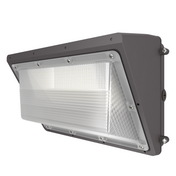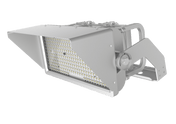

Warehouses are the backbone of logistics and manufacturing, and adequate lighting is critical to ensuring operational efficiency, worker safety, and inventory accuracy. Among the various lighting solutions available, UFO-style LED high bay lights have become the preferred choice for warehouses due to their compact design, high energy efficiency, uniform light distribution, and long lifespan. However, one of the most common and crucial questions warehouse managers and facility owners face is: What wattage of UFO-style LED high bay lights should be used?
The answer is not one-size-fits-all. The appropriate wattage depends on a combination of factors, including warehouse ceiling height, floor area, desired light intensity (lux level), type of work performed, and environmental conditions. Choosing the wrong wattage—whether too low or too high—can lead to issues such as insufficient illumination (increasing accident risks), wasted energy (higher electricity bills), or glare (reducing worker comfort and productivity). This blog will delve into these factors in detail, provide practical calculation methods, and offer guidance on selecting the right wattage for different warehouse scenarios, helping you make an informed decision that balances performance, efficiency, and cost.
First: Understand the Core Concepts of Warehouse Lighting
Before diving into wattage selection, it’s essential to clarify two key lighting terms that will guide your decision: lux (lx) and lumen (lm).
Lux is the unit of measurement for light intensity (illuminance) at a specific surface (e.g., the warehouse floor). It represents how much light reaches the area where work is performed. Lumen, on the other hand, is the unit of total light output from a fixture. For UFO-style LED high bay lights, higher wattage typically corresponds to higher lumens (but this can vary by fixture efficiency, measured in lumens per watt, lm/W).
The key takeaway: Your goal is to select a wattage that delivers the required lux level on the warehouse floor. This requires matching the fixture’s lumen output (determined by wattage and efficiency) to the warehouse’s size and ceiling height.
Key Factors Determining the Wattage of UFO-Style LED High Bay Lights
To select the correct wattage, you need to evaluate the following factors systematically. Each factor interacts with the others, so it’s important to consider them holistically.
1. Warehouse Ceiling Height (The Most Critical Factor)
Ceiling height is the primary determinant of wattage because light intensity decreases as distance from the light source increases (this is known as the inverse square law). The higher the ceiling, the more powerful (higher wattage) the UFO LED high bay light needs to be to ensure sufficient lux levels on the floor.
Common warehouse ceiling heights and corresponding recommended wattage ranges (for standard efficiency UFO LED high bay lights, ~130-150 lm/W):
-
Low ceilings (10-15 feet / 3-4.5 meters): Suitable for 50-100W UFO LED high bay lights. At this height, lower wattage fixtures can easily deliver adequate light to the floor without wasting energy.
-
Medium ceilings (15-25 feet / 4.5-7.5 meters): Requires 100-200W UFO LED high bay lights. This is the most common ceiling height in warehouses, and mid-range wattage fixtures balance light output and energy efficiency.
-
High ceilings (25-40 feet / 7.5-12 meters): Needs 200-300W or higher UFO LED high bay lights. At this height, light dispersion is more significant, so high-wattage fixtures with strong light penetration are necessary.
-
Very high ceilings (above 40 feet / 12 meters): May require 300W+ UFO LED high bay lights or multiple fixtures per area. In some cases, specialized high-bay lights with narrow beam angles (to focus light) may be needed to avoid light loss.
2. Warehouse Floor Area and Layout
The size of your warehouse and its layout (e.g., open floor vs. rack-storage areas) directly impact the number of fixtures needed and their individual wattage. A larger area requires more total lumen output, which can be achieved by either using higher-wattage fixtures or more lower-wattage fixtures.
For example: A small warehouse (1,000 sq. ft. / 93 sq. m) with a 15-foot ceiling may only need 2-3 x 100W UFO LED high bay lights. In contrast, a large warehouse (10,000 sq. ft. / 929 sq. m) with the same ceiling height may require 20-30 x 100W fixtures or 10-15 x 200W fixtures. The choice between more low-wattage vs. fewer high-wattage fixtures often depends on layout—rack-storage areas may benefit from more smaller fixtures to avoid shadowing between racks, while open floors can use fewer high-wattage fixtures for uniform coverage.
3. Desired Lux Level (Based on Warehouse Operations)
Different warehouse operations require different light intensity levels. The International Organization for Standardization (ISO) and local lighting standards (e.g., OSHA in the US) specify recommended lux levels for various tasks. Below are common warehouse activities and their required lux ranges:
-
General storage (bulky items, minimal handling): 100-200 lux. This is suitable for warehouses where items are stored in large containers and rarely accessed (e.g., long-term storage facilities). Lower wattage fixtures (50-100W for medium ceilings) are sufficient here.
-
Order picking (manual picking from racks): 300-500 lux. Picking requires precise visibility to read labels and identify small items. This requires higher wattage fixtures (100-200W for medium ceilings) or additional fixtures to eliminate shadows.
-
Precision operations (packing, inspection, assembly): 500-1000 lux. These tasks demand high light intensity to ensure accuracy (e.g., inspecting product quality, packing small parts). High-wattage fixtures (200W+ for medium ceilings) or specialized high-lumen fixtures are needed here.
-
Loading docks and aisles: 200-300 lux. Adequate lighting is critical for safety during loading/unloading and movement of forklifts. Mid-range wattage fixtures (100-150W) with wide beam angles are ideal for covering large aisle areas.
4. Light Reflectivity of Warehouse Surfaces
The color and material of your warehouse’s walls, ceiling, and floors affect light reflectivity. Light-colored surfaces (white, off-white) reflect more light, reducing the required wattage, while dark surfaces (black, dark gray) absorb light, requiring higher wattage to achieve the same lux level.
For example: A warehouse with white painted walls and ceiling will reflect up to 70-80% of light, so you may be able to use 10-20% lower wattage fixtures compared to a warehouse with dark concrete walls (which reflect only 20-30% of light). If your warehouse has dark surfaces, consider increasing the wattage or repainting surfaces to a lighter color to improve light efficiency.
5. Environmental Conditions
Warehouse environmental conditions such as dust, humidity, and temperature can affect lighting performance, which may indirectly influence wattage selection.
-
Dusty environments: Dust can accumulate on light fixtures, reducing light output over time. To compensate, you may need to select slightly higher wattage fixtures (e.g., 10-15% higher) or choose fixtures with IP65+ dustproof ratings to minimize dust buildup.
-
Humid or wet environments (e.g., cold storage, refrigerated warehouses): LED fixtures perform well in cold temperatures, but humidity can damage non-waterproof fixtures. Choose waterproof UFO LED high bay lights (IP67+ rating) and ensure the wattage is sufficient to account for any light loss in cold conditions (though LED light output is less affected by cold than traditional lighting).
6. Energy Efficiency and Cost Considerations
While higher wattage fixtures deliver more light, they also consume more energy. It’s important to balance light output with energy efficiency to minimize long-term costs. Modern UFO-style LED high bay lights have high efficacy (130-180 lm/W), meaning they produce more lumens per watt than older LED models or traditional lighting (e.g., metal halide, HPS).
For example: A 150W UFO LED high bay light (150 lm/W) produces 22,500 lumens, which is equivalent to a 400W metal halide fixture (50 lm/W) that produces 20,000 lumens. By choosing a high-efficacy LED fixture, you can get more light with lower wattage, reducing energy bills. Additionally, consider fixtures with dimming capabilities (e.g., motion sensors, daylight harvesting) to further optimize energy use—this allows you to use higher-wattage fixtures when needed and dim them during low-activity periods.
Practical Calculation Method: How to Calculate the Required Wattage
To determine the exact wattage of UFO-style LED high bay lights for your warehouse, follow these simple steps. Note: This is a basic calculation—for complex layouts, it’s recommended to consult a professional lighting designer.
Step 1: Calculate the Total Required Lumens
Total Lumens = Warehouse Area (sq. m) × Desired Lux Level × Maintenance Factor × Reflectance Factor
-
Warehouse Area: Calculate the floor area (length × width). For example, a 20m × 15m warehouse = 300 sq. m.
-
Desired Lux Level: Refer to the earlier section (e.g., 300 lux for order picking).
-
Maintenance Factor (MF): Accounts for light loss over time (dust buildup, fixture aging). Typically 0.7-0.8 for warehouses (use 0.7 for dusty environments, 0.8 for clean environments).
-
Reflectance Factor (RF): Accounts for light reflection from surfaces. Use 0.8 for light-colored surfaces, 0.6 for medium-colored surfaces, 0.4 for dark-colored surfaces.
Example: 300 sq. m warehouse × 300 lux × 0.7 (MF) × 0.8 (RF) = 300 × 300 × 0.7 × 0.8 = 50,400 total lumens required.
Step 2: Determine the Lumen Output per Fixture
Choose a UFO-style LED high bay light with known efficacy (lm/W). For example, a 150W fixture with 150 lm/W produces 150 × 150 = 22,500 lumens per fixture.
Step 3: Calculate the Number of Fixtures and Verify Wattage
Number of Fixtures = Total Required Lumens ÷ Lumens per Fixture
Example: 50,400 ÷ 22,500 ≈ 2.24 → 3 fixtures (round up to the nearest whole number). So, 3 × 150W UFO LED high bay lights will meet the required light intensity.
Recommended Wattage for Common Warehouse Scenarios
To simplify your decision, here are pre-computed recommendations for common warehouse scenarios (based on standard 130-150 lm/W UFO LED high bay lights, light-colored surfaces, and clean environments):
-
Scenario 1: Small general storage warehouse (100 sq. m, 4m ceiling, 150 lux). Recommended wattage: 50-70W per fixture, 4-5 fixtures total.
-
Scenario 2: Medium order-picking warehouse (500 sq. m, 6m ceiling, 400 lux). Recommended wattage: 150-200W per fixture, 8-10 fixtures total.
-
Scenario 3: Large precision packing warehouse (1,000 sq. m, 8m ceiling, 800 lux). Recommended wattage: 250-300W per fixture, 15-20 fixtures total.
-
Scenario 4: High-ceiling loading dock (200 sq. m, 10m ceiling, 300 lux). Recommended wattage: 300W per fixture, 6-8 fixtures total.
Common Mistakes to Avoid When Selecting Wattage
To ensure you select the right wattage, avoid these common pitfalls:
-
Underestimating Ceiling Height: Choosing a wattage that’s too low for high ceilings leads to insufficient floor illumination, increasing accident risks. Always prioritize ceiling height when selecting wattage.
-
Overlooking Shadowing: In rack-storage areas, even if the total wattage is sufficient, placing fixtures too far apart can create shadows between racks. Use more lower-wattage fixtures instead of fewer high-wattage ones to ensure uniform coverage.
-
Ignoring Maintenance Factor: Failing to account for light loss over time means the warehouse will become underlit as fixtures age or accumulate dust. Always include the maintenance factor in your calculations.
-
Choosing Wattage Based on Traditional Lighting: Don’t directly replace traditional fixtures (e.g., 400W metal halide) with the same wattage LED. LED is more efficient, so a 150-200W UFO LED can replace a 400W metal halide.
Final Tips for Selecting UFO-Style LED High Bay Light Wattage
1. Consult Lighting Standards: Check local or industry standards (e.g., OSHA, ISO) to ensure your selected lux level and wattage comply with safety and operational requirements.
2. Test Before Full Installation: If possible, test a sample fixture of the desired wattage in your warehouse to verify light intensity and coverage. This helps avoid costly mistakes when purchasing multiple fixtures.
3. Choose High-Quality Fixtures: High-quality UFO-style LED high bay lights have consistent lumen output and longer lifespans, ensuring reliable performance. Avoid low-cost, low-efficacy fixtures that may require higher wattage to compensate for poor light output.
4. Consider Future Expansion: If your warehouse may expand or change operations (e.g., from general storage to order picking), choose fixtures with dimming capabilities or select a slightly higher wattage to accommodate future needs.
Final Thoughts
Selecting the right wattage of UFO-style LED high bay lights for your warehouse requires a holistic assessment of ceiling height, floor area, operational needs, surface reflectivity, and environmental conditions. By following the factors and calculation methods outlined in this blog, you can choose a wattage that delivers optimal light intensity, ensures worker safety and productivity, and minimizes energy costs.
Remember, there’s no “one perfect wattage” for all warehouses—your decision should be tailored to your specific space and needs. If you’re unsure about the calculations or have a complex warehouse layout, don’t hesitate to consult a professional lighting designer. Investing time in selecting the right wattage will pay off in the long run with improved operational efficiency, lower energy bills, and a safer working environment.
If you have more questions about UFO-style LED high bay lights (e.g., how to install them in high-ceiling warehouses, which brands offer the best efficacy), feel free to leave a comment below!