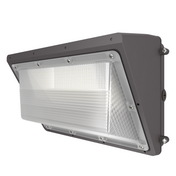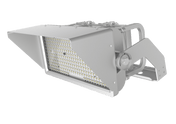

Football fields demand lighting that balances visibility, safety, and performance—whether it’s a community training ground or a professional stadium hosting HD broadcasts. LED technology has become the gold standard for football field lighting, offering unmatched energy efficiency, precise light control, and durability that outperforms traditional metal halide or HPS systems. But with varying field sizes, event levels, and budget constraints, choosing the right LED solution requires careful consideration of FIFA/UEFA standards, optical design, and operational needs. This guide breaks down the best LED stadium lighting solutions for every football field type, backed by 2026 industry data and real-world case studies.
1. Solution 1: Community Training Fields & Youth Leagues (Low-Level Use)
For small training fields (50x30m) or youth league venues, the priority is affordable, low-maintenance lighting that meets basic safety standards.
- Core Specifications:
- Illuminance: 200–300 lux (horizontal), uniformity U1≥0.5 (per FIFA Class III standards).
- Fixture Selection: 300–500W LED stadium lights (160–180 lm/W), delivering 48,000–90,000 lumens per unit. Opt for IP65-rated die-cast aluminum fixtures to withstand outdoor elements.
- Layout: 4-pole configuration (8–12m pole height), with 2–3 fixtures per pole. Wide beam angles (45°–60°) ensure uniform coverage across small pitches.
- Key Benefits:
- Energy Savings: 60% lower energy use vs. metal halide—annual cost for a 4-pole field is ~\(800 vs. \)2,000 for traditional lighting.
- Low Maintenance: 50,000-hour lifespan (10+ years of use) eliminates frequent bulb replacements, saving ~$5,000 in maintenance over a decade.
- Cost Estimate: \(15,000–\)25,000 (fixtures + installation), with ROI achieved in 2–3 years via energy savings.
2. Solution 2: Amateur/High School Football Fields (Competitive Non-Broadcast)
Amateur and high school fields (100x60m) require brighter, more uniform lighting to support competitive play and spectator visibility.
- Core Specifications:
- Illuminance: 500–800 lux (horizontal), 300–480 lux (vertical), uniformity U1≥0.6 (FIFA Class II standards).
- Fixture Selection: 600–800W LED lights (170–180 lm/W), featuring TIR optics to minimize glare (GR≤35) and light spill. CRI≥80 ensures accurate color representation for jerseys and grass.
- Layout: 6-pole configuration (16–18m pole height), spaced 5–10m from the sideline. Mix of medium beam angles (30°–45°) for midfield and wide angles (45°–60°) for corners.
- Key Benefits:
- Safety & Performance: Uniform lighting eliminates dark spots around goal areas, reducing injury risks for players. Anti-glare design prevents discomfort for spectators and referees.
- Flexibility: Dimmable fixtures (0–10V) allow adjusting brightness from 300 lux (training) to 800 lux (game days), saving 30% energy during non-peak use.
- Real-World Example: A high school in Texas replaced 1000W metal halides with 700W LEDs, cutting annual lighting costs by $3,200 and improving field visibility—coaches reported a 25% reduction in missed passes due to better light uniformity.
3. Solution 3: Professional Football Stadiums (Non-Broadcast)
Professional non-broadcast stadiums demand tournament-grade lighting that meets FIFA Class I standards, supporting high-speed play and spectator experience.
- Core Specifications:
- Illuminance: 800–1500 lux (horizontal), 560–1050 lux (vertical), uniformity U1≥0.7.
- Fixture Selection: 1000–1200W LED stadium lights (180 lm/W), with advanced thermal management (aerospace-grade aluminum fins) to maintain 50,000-hour lifespan. IP66 rating with 96-hour salt spray resistance suits all climates.
- Layout: 8-pole configuration (18–25m pole height) or mixed 6+2 corner pole design. Narrow beam angles (25°–35°) for long-distance coverage and medium angles (35°–45°) for edge areas.
- Key Benefits:
- Broadcast-Ready Upgradeability: High CRI (Ra≥90) and flicker-free operation ( allow future integration with HD cameras if the venue expands to televised events.
- Durability: Wind load resistance up to 150km/h and -30°C to +50°C operating range ensure reliability in extreme weather.
- Cost Estimate: \(80,000–\)150,000, with 10-year TCO 40% lower than metal halide systems due to $15,000+ in annual energy savings.
4. Solution 4: Broadcast-Grade Professional Stadiums (FIFA/UEFA Sanctioned)
For stadiums hosting national/international matches or 4K broadcasts, the lighting must meet strict FIFA/UEFA broadcast standards—prioritizing vertical illuminance, color accuracy, and glare control.
- Core Specifications:
- Illuminance: 1500–2500 lux (horizontal), 1200–2000 lux (vertical), uniformity U1≥0.8.
- Fixture Selection: 1200–1500W premium LED lights (180–200 lm/W), with R9≥70 for true red color rendering (critical for team uniforms on camera). Anti-glare hoods and non-symmetrical optics achieve GR≤30.
- Layout: 8–12 pole configuration (25–30m high-mast poles) with precise aiming (±3° accuracy) to balance horizontal/vertical illuminance ratios (1:0.7 minimum).
- Key Benefits:
- 4K/8K Broadcast Compatibility: High luminance (2000+ cd/m²) and flicker-free drivers (≥1000Hz) eliminate strobing in slow-motion replays, meeting IEC 61547 standards.
- Smart Control Integration: Cloud-based systems (e.g., Holophane Holos Air) enable scene presets (broadcast, training, concert) and remote energy monitoring, cutting use by an additional 25%.
- Case Study: MK Dons Football Stadium (EFL club) upgraded to 40,000-lumen LED fixtures with smart controls, reducing energy consumption by 70% vs. metal halide. The system supports custom lighting scenes for football matches, concerts, and exhibitions, maximizing venue versatility.
5. Key Selection Criteria for Any Football Field
Regardless of your venue’s level, prioritize these factors when choosing an LED solution:
- Certifications: Look for DLC Premium, FIFA/UEFA-compliant fixtures to ensure performance and eligibility for utility rebates (up to $50 per fixture).
- Optical Design: Avoid general-purpose outdoor lights—football-specific fixtures with precision optics reduce light spill by 30%, avoiding neighborhood complaints and compliance issues.
- Thermal Management: Fixtures with integrated cooling fins and high-efficiency drivers (≥90% efficiency) prevent lumen depreciation, ensuring consistent performance for 10+ years.
- Warranty: 5–10 year manufacturer warranties (covering lumen depreciation and components) vs. 1–2 years for traditional lighting.
6. Cost-Saving Tips for LED Football Field Lighting
- Leverage Rebates: Many regions offer energy-efficiency incentives—up to $50,000 for professional stadiums upgrading to LEDs.
- Phased Installation: For budget-constrained venues, upgrade fixtures in phases (e.g., goal areas first) while maintaining uniform lighting across the field.
- Choose Modular Fixtures: Modular LED designs allow replacing individual modules (not entire fixtures) if repairs are needed, reducing long-term maintenance costs.
Conclusion: Invest in the Right LED Solution for Your Football Field
The best LED stadium lighting solution for your football field depends on its size, use case, and long-term goals. From affordable 4-pole setups for youth training to broadcast-grade systems for professional stadiums, LEDs deliver superior energy savings, performance, and durability across all categories.
By aligning with FIFA/UEFA standards, prioritizing optical precision, and leveraging smart controls, you’ll create a lighting system that enhances player performance, delights spectators, and delivers significant ROI. With 2026 models offering higher efficacy (up to 200 lm/W) and longer warranties, there’s never been a better time to upgrade.
Prioritize reputable brands like Holophane, Qiaoshi, and Philips with proven football lighting experience, and consult a lighting designer for a DIALux evo photometric plan to optimize fixture placement and uniformity. The right LED solution will keep your football field illuminated efficiently and reliably for years to come.