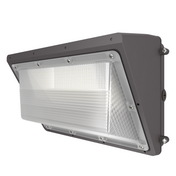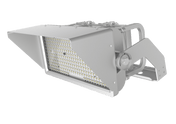

The global push for smarter, more sustainable infrastructure has placed LED street lighting at the forefront of municipal and transportation planning. By 2026, LED street lights will have become the undisputed standard for highways, urban roadways, residential streets, and everything in between.
This comprehensive guide examines the best LED street lights available in 2026, covering the latest product launches, technological breakthroughs, regulatory standards, and key selection criteria for highway and roadway applications. Whether you are a municipal engineer, a transportation authority buyer, or a contractor planning a major lighting retrofit, this article provides the actionable information you need to make an informed decision.
1. Market Overview: A Sector in Hypergrowth
The LED street light market has grown at an extraordinary pace. According to the latest industry data, the global market was valued at $17.28 billion in 2025 and is projected to reach $20.86 billion in 2026, representing a compound annual growth rate (CAGR) of 20.7%. Looking further ahead, the market is expected to reach $43.41 billion by 2030 at a CAGR of 20.1%.
Several interrelated factors are driving this rapid expansion:
-
Urban infrastructure development: As cities worldwide expand and densify, the need for modern, reliable street lighting has intensified.
-
Municipal modernization: Thousands of cities are in the midst of replacing legacy high-pressure sodium (HPS) and metal halide systems with energy-efficient LED alternatives.
-
Government smart-city initiatives: LED street lights are a foundational component of smart cities, enabling IoT connectivity, real-time monitoring, and adaptive lighting strategies.
-
Wireless control adoption: Remote management of lighting networks reduces operational costs and improves responsiveness.
Within the global LED street lighting market, Asia-Pacific dominates as both the largest producer and consumer, with China playing a particularly significant role. However, North America and Europe remain crucial markets, driven by stringent energy codes and substantial utility rebate programs. The outdoor LED lighting market as a whole is projected to grow from $35.08 billion in 2025 to $40.64 billion in 2026, reflecting a 15.8% CAGR.
2. What Makes a Great Highway LED Street Light in 2026?
Not all LED street lights are suitable for high-speed, high-traffic roadways. Highway applications demand a distinct set of performance characteristics that go beyond basic illumination.
2.1 Luminous Efficacy (lm/W)
High efficacy translates directly into lower energy bills. Modern LED street lights consistently deliver 130–200+ lumens per watt (lm/W), with some premium models reaching 200 lm/W or higher. By comparison, legacy HPS lamps achieve only 60–80 lm/W at the system level once ballast and optical losses are accounted for. When selecting a fixture for highway use, efficacy should be a primary consideration—higher efficacy means more light per watt, directly reducing your operating expenses.
2.2 Optical Precision and Distribution Patterns
Roadway lighting requires precise optical control to place light exactly where it is needed—on the pavement—while minimizing glare for drivers and light trespass onto adjacent properties.
IES (Illuminating Engineering Society) distribution types are the industry standard for street lighting:
-
Type II: Suitable for walkways, bike paths, and narrow roadways.
-
Type III: The most common distribution for general roadways and parking lots, projecting light forward and to the sides.
-
Type IV: An asymmetric, forward-throw distribution ideal for illuminating areas directly in front of the fixture, often used at intersections.
-
Type V: A circular, symmetrical pattern appropriate for large open areas.
High-quality highway fixtures also feature full-cutoff (or "dark sky") optics, which ensure zero uplight. This eliminates wasted energy and light pollution—a requirement that is increasingly mandated by local ordinances.
2.3 Lumen Packages for Road Classifications
Different road classifications demand different light levels. Use this table as a starting guide:
| Road Classification | Typical Pole Spacing | Recommended Mounting Height | Recommended Lumen Output | Wattage Range (150 lm/W) |
|---|---|---|---|---|
| Residential street | 100–150 ft | 15–20 ft | 4,000–8,000 lm | 25W–50W |
| Collector road | 120–180 ft | 20–25 ft | 8,000–12,000 lm | 50W–80W |
| Arterial road | 150–200 ft | 25–35 ft | 12,000–20,000 lm | 80W–130W |
| Highway (non-interstate) | 180–220 ft | 30–40 ft | 20,000–30,000 lm | 130W–200W |
| Major highway / interstate | 200–250 ft | 40–50 ft | 30,000–45,000+ lm | 200W–300W+ |
Of course, exact requirements vary based on local IES-recommended foot-candle levels, lane width, pavement type, and ambient lighting conditions. Always request a photometric layout from your supplier.
2.4 Surge Protection and Durability
Highway fixtures are exposed to lightning strikes, grid transients, and harsh weather. In 2026, premium roadway luminaires come equipped with surge protection in the range of 10kV/10kA to 20kV/10kA, meeting standards such as ANSI C136.2‑2023 Extreme. This level of protection ensures continuous operation through power disturbances and significantly reduces maintenance costs.
Environmental ratings are equally important. For highway applications, IP65 is the minimum acceptable rating (dust-tight and protected against low-pressure water jets); IP66 is preferred for exposed locations. Additionally, IK09 or IK10 impact ratings protect against vandalism and accidental collisions.
2.5 Smart Controls and Adaptive Dimming
The era of "dumb" street lights is ending. In 2026, intelligent controls are rapidly becoming the baseline specification. Adaptive lighting systems that adjust output based on real-time traffic, weather conditions, and pedestrian presence offer substantial benefits:
-
DOE data shows that adding adaptive dimming and motion-based controls to a baseline LED conversion can capture an additional 20%–30% in energy savings beyond the initial 50%–75% reduction from LED technology, particularly on low-traffic roads after midnight.
-
Zhaga-compliant and D4i-ready drivers allow plug-and-play sensor integration, making fixtures future-proof.
-
DALI‑2 and BACnet compatibility enables integration with broader building and city infrastructure systems.
The global smart street lighting market, valued at $3.4 billion in 2024, is projected to reach $9.4 billion by 2030, growing at a CAGR of 18.4%. This growth is driven by municipalities increasingly recognizing that smart lighting is not a luxury but a cost-saving imperative.
3. Notable Product Launches in 2026
3.1 Evluma RoadMax Edge Series (February 2026)
In February 2026, Evluma announced the launch of its RoadMax Edge roadway luminaire series—RX‑E1, RX‑E2, and RX‑E3—delivering a scalable, high-efficiency LED lighting platform engineered specifically for municipalities, utilities, and transportation authorities.
Key specifications include:
-
Lumen packages spanning 3,000 to 45,000 lumens across three body sizes
-
Modular light engine and replaceable driver assembly for easy upgrades and long-term field service
-
Low-glare glass optics
-
Custom 20kV/10kA surge protection meeting ANSI C136.2‑2023 Extreme
-
Enhanced paint process for durability in demanding road and coastal environments
Ken Cartmill, Co‑CEO & EVP of Product Development at Evluma, stated: "From energy-saving efficacy to precise optical control and future-ready driver options, this series is designed to provide sustained performance. From quiet neighborhood streets to busy highways, the RoadMax Edge is lighting the way."
3.2 TRT Lighting Aspect Gen2 Expansion (January–February 2026)
TRT Lighting significantly expanded its Aspect Gen2 street and highway lantern range. The series is now available in nine LED configurations: 16, 24, 32, 48, 64, 80, 96, 112, and 128 LEDs, extending the range of outputs for everything from footpaths and residential streets through to highway applications.
Key features include:
-
Power ratings from 9W up to 307W
-
Multiple color temperature options from PC Amber through to 5700K
-
Universal mounting and tool-free access for simplified installation and maintenance
-
High-transmission flat glass cover delivering up to 204 LL/CW
-
TM66 score of 2.7 (strong circular-economy credentials)
-
Two new dedicated zebra crossing options for pedestrian crossings
The modular design allows interchangeable heads, enabling upgrades as requirements change over time. Optional extras include Lumi LinQ connectivity, shields, National Highways tether options, and a marine-grade finish for exposed coastal locations.
3.3 Groupe Ragni North America ALTURAN and EMBLÈME (January 2026)
For municipalities seeking a blend of architectural design and robust performance, Groupe Ragni North America launched two new urban LED luminaires in January 2026.
ALTURAN is a modern architectural street lighting luminaire designed for roadways, shared streets, and pedestrian-focused urban environments:
-
Slim rectangular profile (7.87 × 3.94 inches) with monobloc steel construction
-
Mounting heights from 9 to 26 feet
-
IP66 weather protection and IK08 impact resistance
-
0% upward light ratio (ULR) supporting dark-sky compliance
-
Integrated Zhaga-standard LED modules and smart drivers supporting DALI control, constant light output (CLO), and adaptive dimming
EMBLÈME is a decorative outdoor LED luminaire for residential neighborhoods, pedestrian areas, plazas, and heritage-sensitive environments:
-
Accommodates 8 to 64 LEDs with a wide range of photometrics
-
ULR below 1%
-
Tool-free opening system with integrated door retention
-
Zhaga-ready with optional connectivity for sensors and adaptive lighting
3.4 Modular "Tool-Free" Streetlight Wins Designplus Award (March 2026)
European lighting manufacturer Lightholm received a Designplus Award by Light+Building 2026 in the Sustainability & Future Energy+ category for its GEO Street Light. The design features a modular, "tool-free" assembly and replaceable components, embodying circular economy principles that are increasingly valued in sustainable public procurement.
4. Certification and Compliance: What Specifiers Must Know
4.1 DLC SSL V6.0 — The New North American Benchmark
The DesignLights Consortium (DLC) released the final version of SSL V6.0 (alongside LUNA V2.0) in November 2025, representing the first major update to North America's lighting product performance requirements in five years. Applications opened on January 5, 2026, and all non-compliant illumination products will be delisted from the DLC Qualified Products List (QPL) by October 1, 2026.
Key changes in V6.0 directly impact roadway lighting specifications:
-
Higher efficacy thresholds: Minimum efficacy requirements increase by an average of 14% across most product types, with category-specific increases up to 19%. Premium-tier products must achieve 20 lm/W higher efficacy than standard listings.
-
Mandatory dimming functions: Standard-tier outdoor lights must support continuous dimming down to at least 20%; premium-tier products require dimming to 10% or lower.
-
Non-white light pathways: New classifications for 1800K, 2000K, and amber LEDs, with strict blue light limits.
-
Stricter controllability requirements: Drivers must support DALI‑2 or D4i compatibility, along with BACnet for integration with building and infrastructure systems.
For highway and roadway lighting projects, DLC certification is no longer optional—it effectively controls access to the nearly 700 utility and efficiency programs (accounting for approximately 70% of commercial lighting incentives in the US and Canada) that require DLC listing for rebates.
4.2 California Title 24 — JA8‑2025 Takes Effect
As of January 1, 2026, the California Energy Commission's 2025 Title 24 Building Energy Efficiency Standards have taken full effect. All lighting products used in new construction, additions, and alterations in California must now bear the JA8‑2025 or JA8‑2025‑E label and be registered in the CEC database. The previous JA8‑2022 label is no longer valid. Given California's economic size, these standards often foreshadow national trends.
5. The Business Case: ROI, Energy Savings, and Total Cost of Ownership
The financial case for highway LED lighting upgrades has never been stronger. Municipalities that have completed large-scale retrofits consistently report total cost of ownership (TCO) reductions of 40%–70% over a 10-year horizon compared to legacy HPS systems.
5.1 Energy Savings
| Metric | HPS (250W System) | LED Street Light (100W, 150 lm/W) |
|---|---|---|
| System wattage | ~250W | 100W |
| Annual energy (11h/night) | ~1,000 kWh | ~400 kWh |
| Annual electricity cost (@$0.12/kWh) | $120 | $48 |
| Energy reduction | — | 60% |
| Annual savings per fixture | — | $72 |
For a municipality with 10,000 street lights, annual energy savings alone can exceed $720,000. Smart controls can push total reduction to 70%–80% on selected roads, with DOE-confirmed payback periods commonly ranging from 4 to 8 years.
5.2 Maintenance Savings
LED street lights are designed for 50,000 to 100,000 hours of operation—equivalent to 10 to 20 years of continuous use without bulb replacements. HPS lamps, by contrast, require replacement every 15,000 to 24,000 hours (every 2–3 years), with each replacement involving costly aerial work, equipment rental, and traffic management. In addition to bulb replacement, traditional HPS systems demand ongoing wiring repairs, ballast replacements, and fixture servicing, all of which are eliminated with properly specified LED luminaires.
5.3 Total Cost of Ownership (10‑Year)
| Cost Component | HPS (250W) | Smart LED (100W) |
|---|---|---|
| Fixture cost (installed) | $400 | $550 |
| Energy cost (10 years) | $1,200 | $480 |
| Maintenance cost (10 years) | $600+ (3–5 lamp changes) | $50 (cleaning only) |
| 10-year TCO (per pole) | $2,200 | $1,080 |
These figures are consistent with DOE (2024) benchmarks, which estimate that a conventional HPS pole carries a 10‑year TCO of $1,800–$2,400, compared to $900–$1,400 for a networked smart LED pole.
6. Key Selection Criteria for Highway LED Street Lights
When procuring LED street lights for highway applications in 2026, use the following checklist to evaluate products:
| Criterion | Target | Why It Matters |
|---|---|---|
| Luminous efficacy | ≥130 lm/W (standard), ≥150 lm/W (premium) | Directly reduces energy costs and qualifies for rebates |
| Lumen output | Match lumen output to roadway classification and mounting height | Ensures adequate illuminance without over-lighting |
| Color temperature (CCT) | 3000K (dark-sky zones), 4000K (general), 5000K (highway) | Affects visibility, light pollution, and driver comfort |
| Distribution pattern | Type III (general roadway), Type IV (intersections) | Places light precisely where needed |
| Full-cutoff / BUG rating | Zero uplight, BUG rating ≤B0/U0/G1 | Dark-sky compliance and energy efficiency |
| Surge protection | ≥10kV/10kA (minimum 6kV/10kA) | Resilience against lightning and grid surges |
| IP rating | IP65 minimum, IP66 preferred | Weather resistance in all conditions |
| IK rating | IK09 or higher | Impact resistance against vandalism/collisions |
| Smart controls | Zhaga/D4i ready, DALI‑2 or 0‑10V dimming | Future-proofing and adaptive lighting capability |
| Certifications | DLC SSL V6.0 listed, UL/ETL | Rebate eligibility, safety, and project financing |
7. Trends Shaping Highway Lighting Beyond 2026
7.1 Smart City Integration
Illumination is no longer considered a separate utility—it is part of intelligent city infrastructure. 7‑in‑1 smart city poles consolidate LED lighting, CCTV, EV charging, Wi‑Fi, environmental sensing, signage, and emergency services on a single IP backbone. These multifunction poles cut street furniture counts by 30%–50% and reduce civil works costs by up to 40%. Expect this trend to accelerate as cities seek to maximize the value of every infrastructure dollar.
7.2 Turtle‑Safe and Dark‑Sky Lighting
DLC V6.0 has formalized Turtle Lighting criteria, which require specific spectral output (590‑605 nm for de‑Amber) and low blue light emission to protect marine ecosystems in coastal regions. For inland municipalities, dark‑sky policies are also tightening, with many jurisdictions mandating full‑cutoff fixtures and CCT ≤3000K.
7.3 Adaptive AI Lighting
The "AI light follow car" system is moving from pilot projects to widespread deployment. These systems dim lights to low‑power standby mode when no traffic is present and instantly brighten as vehicles approach—delivering safety without wasting energy. In 2026, expect this technology to become standard on new highway installations, particularly on low‑traffic rural sections.
7.4 Li‑Fi and Visible Light Communication
While still emerging, the Light Fidelity (Li‑Fi) / Visible Light Communication market is growing exponentially, from $1.21 trillion in 2025 to a projected $2.66 trillion in 2026 at a CAGR of 120.4%. Street lights are natural candidates for Li‑Fi deployment—every highway fixture becomes a potential data node.
8. Conclusion
Choosing the best LED street light for highway and roadway applications in 2026 requires balancing multiple factors: luminous efficacy, optical precision, durability, smart control readiness, and regulatory compliance. The products highlighted in this guide—Evluma RoadMax Edge, TRT Lighting Aspect Gen2, and Groupe Ragni ALTURAN—represent the leading edge of what the industry has to offer.
Municipalities, transportation authorities, and contractors who move forward with DLC SSL V6.0–compliant, Zhaga‑ready, high-efficacy fixtures will not only achieve immediate energy savings of 50%–75% but will also position themselves for the smart infrastructure demands of the coming decade. With payback periods as short as four years and 10‑year TCO reductions exceeding 40%, the economic case is as compelling as the operational one.