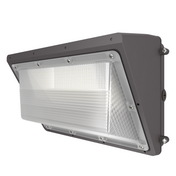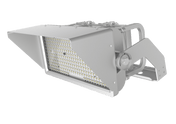

Selecting the perfect LED parking lot light isn’t just about brightness—it’s a strategic decision that impacts safety, energy efficiency, compliance, and long-term cost savings. Whether you’re upgrading an existing lot or designing a new one, three critical factors demand your attention: wattage (and lumen output), optical design, and mounting method. This comprehensive guide breaks down each component with actionable insights to help you make an informed choice.
1. Wattage & Lumens: The Foundation of Proper Illumination
Wattage alone no longer defines a light’s brightness—lumens (the actual light output) and efficiency (lumens per watt, lm/W) are the modern metrics that matter. However, wattage remains a practical reference for power consumption and scaling to your parking lot’s needs.
Key Considerations for Wattage/Lumen Selection
-
Parking Lot Size & Foot-Candle Requirements: Start by calculating your total square footage, then multiply by the recommended foot-candle (fc) level. Most commercial parking lots require 1–5 fc (1 fc = 1 lumen per square foot) per IES RP-20 standards. For example:
- A 20,000 sq. ft. retail parking lot (high traffic) targeting 3 fc needs 60,000 total lumens.
- A 10,000 sq. ft. office employee lot (low traffic) targeting 1.5 fc needs 15,000 total lumens.
- Pole Height & Spacing: Taller poles (15–40+ feet) and wider spacing demand higher lumens to avoid dark spots. A 20-foot pole typically pairs with 100–200W LED fixtures (13,000–32,000 lumens), while 30-foot poles may require 200–300W fixtures (26,000–48,000 lumens).
- Energy Efficiency Compliance: New standards like GB 30255—2026 (effective 2027) emphasize full-time efficiency, including standby power consumption. Opt for fixtures with >130 lm/W efficiency to meet future regulations and cut energy costs.
- HID to LED Conversion: If replacing old HID lights, use this rule of thumb: 100W HID ≈ 30–40W LED (3,900–5,200 lumens), 250W HID ≈ 80–100W LED (10,400–13,000 lumens), 400W HID ≈ 120–150W LED (15,600–19,500 lumens).
Scene-Specific Wattage Recommendations
| Parking Lot Type | Pole Height | Recommended Wattage | Target Lumens |
|---|---|---|---|
| Underground Garage | 8–12 ft | 30–60W | 3,900–7,800 |
| Small Office Lot | 12–15 ft | 60–100W | 7,800–13,000 |
| Retail/Mall Lot | 15–20 ft | 100–200W | 13,000–26,000 |
| Industrial/Logistics | 20–30 ft | 200–300W | 26,000–39,000 |
| Large Commercial Lot | 30–40 ft | 300–400W | 39,000–52,000 |
2. Optics: Direct Light Where It Matters Most
LED optics—including beam angle, light distribution type, and lens material—determine how light spreads across your lot. Poor optical design leads to glare, uneven coverage, and wasted energy.
Beam Angle Selection
- Wide Angle (120°+): Ideal for underground garages and tight spaces. Reduces shadows between pillars and ensures uniform illumination at low mounting heights (8–12 ft).
- Medium Angle (90°–120°): Versatile for most surface lots. Balances coverage and intensity for 15–20 ft poles, making it perfect for office parks and small retail lots.
- Narrow Angle (60°–90°): Best for tall poles (25+ ft) in industrial lots or large commercial areas. Concentrates light to cover longer distances without sacrificing brightness.
Light Distribution Types
- Type III: Symmetrical distribution, ideal for perimeter lots or areas where light needs to spread evenly in all directions.
- Type IV: Asymmetrical distribution, designed for linear spaces (e.g., driveways, walkways alongside buildings). Directs light away from structures to avoid glare.
- Type V: Circular distribution, perfect for center-pole mounting in large, open lots. Ensures 360° coverage with no dark zones.
Lens Material & Quality
- Polycarbonate (PC) Lenses: Impact-resistant and weatherproof, ideal for outdoor use. Look for UV-stabilized PC to prevent yellowing over time.
- Acrylic Lenses: Offer better light transmittance (90%+ vs. 85% for PC) but are less durable. Best for covered garages or low-traffic areas.
- Optical Grade Coatings: Anti-glare (AG) coatings reduce harsh light for better visibility, while anti-reflective (AR) coatings maximize lumen output.
3. Mounting: Secure, Functional, and Compliant
The right mounting method ensures your LED lights are stable, adjustable, and meet local safety codes. Consider your pole type, lot layout, and maintenance needs.
Common Mounting Types
- Yoke Mount: The most versatile option. Attaches to the top or side of poles with adjustable brackets, allowing you to tilt the fixture for precise light direction. Ideal for surface lots and poles of all heights.
- Trunnion Mount: Designed for wall or pole-side mounting. Low-profile and secure, perfect for underground garages or areas where overhead mounting isn’t possible.
- Ceiling Mount: For covered garages or canopies. Flush-mount or pendant options save space while providing uniform overhead illumination.
- Pole-Top Mount: Traditional choice for tall poles (20+ ft). Centers the fixture at the top of the pole for maximum coverage, often paired with Type V light distribution.
Mounting Considerations
- Pole Compatibility: Ensure the mounting bracket fits your pole diameter (most standard poles are 2–4 inches). For non-standard poles, opt for adjustable brackets.
- Wind Load Resistance: Outdoor fixtures must withstand local wind speeds. Look for mounting hardware rated for at least 90 mph (145 km/h) to avoid damage.
- Maintenance Access: Choose mounts that allow easy access for bulb replacement or cleaning. Yoke mounts with quick-release brackets reduce maintenance time.
- Wiring & Safety: Follow NEC (National Electrical Code) standards for wiring. Use weatherproof junction boxes and GFCI protection for wet locations.
Bonus: Additional Factors to Optimize Your Choice
- Color Temperature (CCT): 4000K (cool white) is the sweet spot for parking lots—bright enough for safety without appearing harsh. Avoid 5000K+ (daylight) as it can cause glare, and 3000K (warm white) may be too dim for large areas.
- IP Rating: Outdoor fixtures need a minimum IP65 rating (dust-tight and water-resistant). For coastal areas or heavy rain, opt for IP66 or IP67 to prevent corrosion.
- Lifespan & Warranty: LED fixtures should offer 50,000+ hours of lifespan (10+ years with average use) and a 5–10 year warranty. This reduces replacement costs and downtime.
- Smart Features: Motion sensors, dimming controls, or IoT connectivity can cut energy use by 30–50% by adjusting brightness based on traffic. Look for fixtures compatible with smart lighting systems.
Final Checklist for Choosing the Right LED Parking Lot Light
- Calculate total square footage and required foot-candles to determine lumens/wattage.
- Match beam angle and light distribution to pole height and lot layout.
- Select a mounting type that fits your poles and maintenance needs.
- Verify compliance with energy efficiency standards (≥130 lm/W) and safety codes.
- Prioritize durability (IP65+, UV-stabilized lenses) and a long warranty.
- Consider smart features for added energy savings.
By focusing on wattage/lumens, optics, and mounting—plus these bonus factors—you’ll choose an LED parking lot light that’s safe, efficient, and cost-effective for years to come. Whether you’re a facility manager, contractor, or business owner, this guide takes the guesswork out of lighting your parking lot.