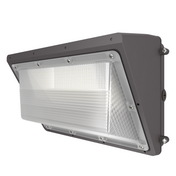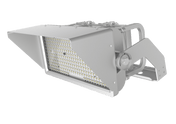

When it comes to parking lot lighting, the choice between LED and metal halide (MH) isn’t just about brightness—it’s a financial and operational decision that impacts your bottom line for years. Metal halide has long been a staple for commercial lots, but LED technology has evolved to deliver unprecedented energy efficiency, longer lifespans, and lower total ownership costs. In this detailed comparison, we’ll break down energy savings, maintenance expenses, ROI, and performance to answer the critical question: Which lighting solution puts more money back in your pocket?
The Core Showdown: LED vs Metal Halide at a Glance
Before diving into the numbers, let’s highlight the fundamental differences that drive cost savings. This side-by-side comparison draws on industry standards and real-world data from lighting contractors and energy audits:
|
Factor
|
LED Parking Lot Lights
|
Metal Halide Lights
|
|
Energy Efficiency
|
130–140 lumens per watt (lm/W)
|
60–100 lm/W (30–50% less efficient)
|
|
Lifespan
|
50,000–100,000 hours (10–20 years)
|
6,000–15,000 hours (2–5 years)
|
|
Annual Energy Cost (400W eq.)
|
$131 (150W LED)
|
$350 (400W MH)
|
|
Maintenance Costs (10yrs)
|
$400 (minimal replacements)
|
$2,800 (bulb/ballast swaps + labor)
|
|
Warm-Up Time
|
Instant full brightness
|
15–20 minutes (delayed illumination)
|
|
Lumen Depreciation
|
10% loss after 50,000 hours (L70 rating)
|
30–40% loss within 1 year
|
|
Upfront Cost
|
\(150–\)400 per fixture
|
\(100–\)300 per fixture (lower initial investment)
|
|
Rebate Eligibility
|
DLC Premium/Standard (25–50% project cost back)
|
Rarely qualified for modern energy rebates
|
Source: Vanguard Electrical Contractors, FES Lighting, Luma Energy
1. Energy Savings: LED Slashes Utility Bills by 60–75%
Energy consumption is the single largest ongoing cost for parking lot lighting—and this is where LED dominates. Metal halide fixtures waste massive amounts of energy as heat, while LEDs convert 90% of electricity into usable light. Let’s crunch the numbers for a typical commercial lot:
Real-World Energy Cost Example
Suppose you have a 100-space parking lot with 20 fixtures running 12 hours/day, 365 days/year (average commercial usage):
- Metal Halide (400W each): Total annual energy use = 20 fixtures × 400W × 12hrs × 365 = 35,040 kWh. At \(0.10/kWh, this costs **\)3,504/year**.
- LED Equivalent (150W each): Total annual energy use = 20 fixtures × 150W × 12hrs × 365 = 13,140 kWh. At \(0.10/kWh, this costs **\)1,314/year**.
**Annual Savings: \(2,190**—that’s a 62% reduction in energy costs alone. For larger industrial lots with 50+ fixtures, savings can exceed \)10,000/year .
Compliance & Rebates Amplify Savings
Modern energy codes (e.g., ASHRAE 90.1-2022, IECC) mandate high-efficacy lighting, and LED fixtures (≥130 lm/W) easily meet these standards. Metal halide systems often fail compliance, leading to penalties. Additionally, LED’s DLC certification unlocks utility rebates covering 25–50% of project costs—turning a higher upfront investment into immediate savings.
2. Maintenance Savings: LED Eliminates 90% of Service Costs
Metal halide’s short lifespan and frequent failures create a hidden financial burden. Here’s why LEDs’ “set-it-and-forget-it” design saves tens of thousands over a decade:
The True Cost of Metal Halide Maintenance
- Bulb Replacements: Metal halide bulbs last 6,000–15,000 hours—meaning you’ll replace each bulb 3–5 times every 10 years. For 20 fixtures, that’s 60–100 bulb replacements at \(20–\)50 each.
- Ballast Failures: Ballasts (critical for MH operation) fail even more often than bulbs—adding \(50–\)100 per replacement plus labor.
- Labor & Equipment: Changing bulbs on 20–40ft poles requires boom lifts (\(300–\)500/day) and licensed electricians. For 20 fixtures, 10-year maintenance costs exceed $2,800.
LED’s Maintenance Advantage
LED fixtures last 50,000–100,000 hours—so most require zero bulb replacements for 10–20 years. Even when maintenance is needed, modular designs and longer warranty periods (5–10 years) minimize costs. A Mayco International case study found that switching to LED reduced annual maintenance costs by \(39,735—on top of \)68,863 in energy savings.
3. Total Ownership Cost (TOC): LED Pays for Itself in 2–4 Years
While metal halide has a lower upfront cost, total ownership cost (TOC)—the sum of purchase, energy, maintenance, and replacement costs—tells the real story. Let’s compare TOC for a 10-year lifecycle:
|
Cost Category
|
20 Fixtures (LED)
|
20 Fixtures (Metal Halide)
|
|
Initial Purchase
|
\(4,000 (\)200/fixture)
|
\(3,000 (\)150/fixture)
|
|
10-Year Energy Cost
|
\(13,140 (\)1,314/year)
|
\(35,040 (\)3,504/year)
|
|
10-Year Maintenance
|
$400
|
$2,800
|
|
Rebate (DLC Premium)
|
-$2,000 (50% of purchase)
|
$0
|
|
10-Year TOC
|
$15,540
|
$40,840
|
10-Year Savings: $25,300—that’s a 62% reduction in total ownership cost. LED’s higher upfront investment is recouped in just 2–4 years, and savings compound annually thereafter.
4. Performance Benefits That Indirectly Save Money
LED’s superior lighting quality isn’t just a luxury—it drives tangible financial benefits:
- Safety & Security: LEDs’ higher CRI (70–80 vs. MH’s 65–70) and uniform coverage reduce accidents, theft, and liability claims. Better visibility also improves security camera effectiveness, deterring crime.
- No Warm-Up Time: Metal halide’s 15–20 minute warm-up leaves lots of dark during peak hours (e.g., store openings, shift changes)—creating safety hazards. LED’s instant illumination eliminates this risk.
- Smart Control Compatibility: LEDs work seamlessly with motion sensors, dimming controls, and IoT systems—reducing energy use by an additional 30–50% by adjusting brightness based on traffic.
When Might Metal Halide Make Sense? (Rare Exceptions)
Metal halides’ only advantage is lower upfront cost—but this is rarely worth it unless:
- You’re operating a temporary lot (≤3 years) with no long-term plans.
- You have existing MH infrastructure and cannot access rebates for LED retrofits.
Even in these cases, the 2–4 year ROI of LED makes it a better financial choice for most businesses.
Final Verdict: LED Saves More—Here’s How to Get Started
LED parking lot lights deliver 60–75% lower energy costs, 90% less maintenance expense, and a 2–4 year ROI—all while improving safety and compliance. To maximize savings:
- Calculate Your Needs: Use your lot size, pole height, and foot-candle requirements (1–5 fc per IES RP-20) to select the right LED wattage (100–300W for most lots).
- Prioritize DLC-Certified Fixtures: Unlock rebates and ensure energy efficiency ≥130 lm/W.
- Add Smart Controls: Motion sensors and dimming can boost savings by 30–50%.
- Work with a Licensed Contractor: They’ll conduct photometric analysis to avoid over-illumination and ensure compliance.
FAQ: LED vs Metal Halide Parking Lot Lights
Q: Is LED brighter than metal halide?
A: Yes—LED delivers more usable lumens per watt and maintains brightness (90% after 50,000 hours) vs. MH’s 30–40% lumen depreciation
Q: How long does LED take to pay for itself?
A: Typically 2–3 years, thanks to energy savings and rebates. For high-traffic lots, ROI can be as fast as 18 months .
Q: Can I replace metal halide with LED without changing poles?
A: Yes—LED retrofits are compatible with most existing poles and mounting systems (yoke, trunnion, pole-top)
By choosing LED over metal halide, you’re not just upgrading your lighting—you’re making a long-term investment that saves money, improves safety, and reduces your carbon footprint. For facility managers, contractors, and business owners, the math is clear: LED is the only lighting solution that delivers sustained savings for parking lots.