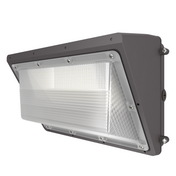

For commercial property managers, facility owners, and homeowners, outdoor lighting is a necessary expense—but it doesn’t have to be a costly one. Traditional outdoor wall lighting (HPS, metal halide, fluorescent) is inefficient, short-lived, and drains budgets with high energy bills and frequent maintenance. Switching to LED wall pack lights is one of the most impactful ways to cut costs—delivering 50–70% energy savings, plus long-term reductions in maintenance and replacement expenses.
In this guide, we’ll conduct a comprehensive energy savings analysis of switching to LED wall pack lights, including: direct energy cost comparisons, maintenance savings, utility penalty avoidance, rebate opportunities, and ROI calculations. Whether you’re lighting a commercial parking lot, building perimeter, or residential driveway, this data-driven breakdown will show you exactly how much you can save—and how quickly you’ll recoup your investment—while boosting your search visibility for queries like “LED wall pack energy savings,” “switch to LED wall packs cost,” and “LED wall pack ROI analysis.”
Why LED Wall Packs Deliver Unmatched Energy Savings
Before diving into the numbers, let’s recap the core reasons LED wall packs outperform traditional fixtures in efficiency:
- Higher Luminous Efficacy: LED wall packs produce 100–150 lumens per watt (lm/W), compared to 50–80 lm/W for HPS and 60–90 lm/W for metal halide. This means they deliver the same brightness with far less energy.
- Lower Wattage Requirements: A 30W LED wall pack matches the brightness of a 100W HPS fixture; a 60W LED equals a 150W metal halide. This translates to 50–70% lower energy consumption per fixture.
- No Warm-Up Energy Waste: Unlike HPS (which takes 5–10 minutes to reach full brightness) or fluorescent (which flickers and wastes energy on startup), LEDs turn on instantly at full brightness—no wasted energy.
- Better Power Factor: Premium LED wall packs have power factor (PF) ≥ 0.95, compared to 0.6–0.8 for traditional fixtures. This eliminates utility “reactive power” penalties (common for commercial/industrial users).
- Controllability: Compatibility with dusk-to-dawn photocells, motion sensors, and dimming systems cuts energy use by an additional 30–50% (vs. constant-on traditional lighting).
These factors combined make LED wall packs the most energy-efficient outdoor lighting solution on the market.
Step 1: Direct Energy Cost Savings Analysis (Per Fixture & System-Wide)
The biggest savings come from reduced electricity use. Let’s break down the numbers using real-world wattage comparisons and average electricity rates ($0.15/kWh, the U.S. commercial average in 2024):
A. Per Fixture Energy Savings
Key Takeaway: A single LED wall pack saves
B. System-Wide Energy Savings (Commercial/Industrial Example)
Let’s analyze a 100-fixture system (common for commercial parking lots or industrial perimeters):
Pro Tip: For 24/7 operations (e.g., hospital parking lots, industrial perimeters), savings double. A 100-fixture LED system operating 24hrs/day saves
11,826/year vs. metal halide.
Step 2: Maintenance & Replacement Savings
Traditional fixtures require frequent bulb/ballast replacements—costly in labor (especially for high-mounted fixtures) and parts. LED wall packs eliminate this expense:
A. Lifespan Comparison
- HPS Wall Packs: 10,000–20,000 hours (1–2 years of 12hr/day use).
- Metal Halide Wall Packs: 8,000–15,000 hours (0.8–1.7 years of 12hr/day use).
- LED Wall Packs: 50,000–100,000 hours (5–10 years of 12hr/day use).
B. Maintenance Cost Calculation (100-Fixture System)
Key Takeaway: Maintenance savings alone cover the upfront cost of LED fixtures for many systems. For the 100-fixture example above,
Step 3: Utility Penalty Avoidance (Power Factor Savings)
Commercial and industrial utilities penalize users with low power factor (typically below 0.9). Traditional fixtures have PF = 0.6–0.8, while premium LEDs have PF ≥ 0.95—eliminating these penalties.
Penalty Savings Example (100-Fixture Metal Halide vs. LED System)
- Metal Halide System: Total load = 15,000W (15kW), PF = 0.7. Apparent Power (kVA) = 15kW / 0.7 = 21.43 kVA.
-
Utility Penalty:
0.10 × 720hrs =464 / 12 ≈464.
- LED System: Total load = 6,000W (6kW), PF = 0.95. Apparent Power (kVA) = 6kW / 0.95 ≈ 6.32 kVA. No penalty (kVA ≈ kW).
- Annual Penalty Savings: $464/year.
For larger systems (e.g., 500-fixture industrial perimeter), penalty savings can reach $2,320/year.
Step 4: Rebates & Incentives (Reduce Upfront Costs)
Most utilities and government programs offer rebates for switching to LED lighting—further boosting savings and shortening ROI:
-
DLC/ENERGY STAR Rebates: Utilities typically offer
20 per fixture for DLC (DesignLights Consortium) or ENERGY STAR-certified LED wall packs. A 100-fixture project qualifies for2,000 in rebates.
- State/Local Incentives: Programs like California’s SGIP (Self-Generation Incentive Program) or New York’s NYSERDA offer additional rebates (up to $30 per fixture) for energy-efficient lighting.
- Federal Tax Credits: Commercial users can claim a 179D tax deduction for energy-efficient building improvements, including LED lighting (up to $1.80 per sq. ft.).
Example: A 100-fixture LED system (
20,000 upfront cost) with a 15% utility rebate (
1,000 state incentive reduces upfront cost to $16,000.
Step 5: Full ROI Calculation (Energy + Maintenance + Rebates)
Let’s calculate ROI for the 100-fixture commercial parking lot example (12hr/day operation,
200/fixture LED cost):
Key Takeaway: Even with higher upfront costs, LED wall packs deliver ROI in 3–18 months for most commercial projects. For 24/7 operations, ROI is as fast as 1–2 months.
Step 6: Environmental Savings (Bonus!)
While not a direct financial benefit, LED wall packs reduce carbon footprint—aligning with corporate sustainability goals:
- Carbon Emission Reduction: A 100-fixture LED system (12hr/day) reduces annual CO2 emissions by ~30 tons (equivalent to planting 794 trees or driving 65,000 fewer miles).
- No Toxic Materials: Unlike HPS (lead) or fluorescent (mercury), LEDs are toxin-free—reducing disposal costs and environmental impact.
Real-World Case Study: Industrial Perimeter Lighting Upgrade
A 500-fixture industrial perimeter lighting system (24hr/day operation) switched from 150W metal halide to 60W LED wall packs:
-
Old System: 500 × 150W = 75,000W. Annual energy cost: 75,000W × 24hrs × 365 ÷ 1000 ×
98,550. Annual maintenance:2,320. 10-year total: $1,213,700.
-
New LED System: 500 × 60W = 30,000W. Annual energy cost: 30,000W × 24 × 365 ÷ 1000 ×
39,420. Annual maintenance:0. Upfront cost: 500 ×100,000 –85,000. 10-year total:85,000 = $479,200.
-
10-Year Savings:
479,200 = $734,500 (61% savings). ROI: 85,000 ÷ (98,550 – 39,420 + 20,500 + 2,320) ≈ 0.82 years (10 months).
Common Myths About LED Wall Pack Energy Savings
- Myth 1: “LEDs are too expensive—savings don’t justify upfront cost.”
Reality: ROI is typically 3–18 months for commercial projects. The 10-year net savings are 3–5x the upfront cost.
- Myth 2: “LEDs save energy but dim over time—losing brightness.”
Reality: LEDs dim gradually (L70 lifespan = 50,000+ hours), but this is offset by their initial high efficacy. A 50,000-hour LED is still brighter than a new HPS fixture.
- Myth 3: “Controls don’t add significant savings.”
Reality: Dusk-to-dawn photocells + motion sensors cut energy use by 30–50%—adding
2,295/year in savings for a 100-fixture system.
How to Maximize Energy Savings When Switching to LED Wall Packs
- Choose High-Efficacy Fixtures: Opt for LED wall packs with ≥ 120 lumens/W (higher efficacy = more savings).
- Integrate Controls: Pair with dusk-to-dawn photocells, motion sensors, and dimming systems (0–10V or DALI).
- Select the Right Wattage: Avoid overlighting—use the lumen calculation (Total Lumens = Area × Target Lux × 10.76) to match brightness to needs.
- Invest in Quality: Choose fixtures with PF ≥ 0.95, aluminum heat sinks, and reputable drivers (Mean Well, Inventronics) to avoid penalties and ensure long lifespan.
- Claim Rebates: Work with your utility to maximize rebates—ask for DLC/ENERGY STAR-qualified fixture lists.
Final Thoughts
Switching to LED wall pack lights delivers unparalleled energy savings, plus reductions in maintenance, penalties, and environmental impact. For commercial and industrial users, the numbers speak for themselves: 50–70% lower energy bills, 100% maintenance savings, and ROI in as little as 3 months. Even for residential users, a 10-fixture LED system saves
Key takeaways for maximum savings:
- Prioritize high-efficacy (≥ 120 lm/W) LED wall packs with PF ≥ 0.95.
- Integrate controls (photocells, motion sensors) to cut energy use by an additional 30–50%.
- Claim all available rebates and incentives to reduce upfront costs.
- Avoid overlighting—match wattage/lumens to your space’s needs.
If you need help calculating energy savings for your specific project, comparing LED wall pack models, or accessing rebates, leave a comment below or contact our lighting experts for a free, personalized savings analysis!