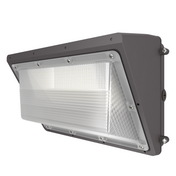

Parking lots and building perimeters are critical areas that demand reliable, bright, and efficient lighting—for safety, security, and compliance. Whether it’s a commercial parking garage, retail store perimeter, or industrial facility fence line, these spaces require lighting that eliminates dark spots, deters intruders, and guides pedestrians/drivers without glare. LED wall pack lights have emerged as the ideal solution for these applications, outperforming traditional HPS or metal halide fixtures in energy efficiency, durability, and targeted illumination.
In this guide, we’ll dive into everything you need to know about using LED wall pack lights for parking lots and building perimeters: from selecting the right fixtures to optimizing installation layouts, meeting brightness standards, and maximizing energy savings. Whether you’re upgrading an existing system or designing a new one, this article will help you create a safe, compliant, and cost-effective lighting setup—while boosting your search visibility for queries like “LED wall packs for parking lots,” “building perimeter lighting solutions,” and “commercial parking lot LED wall packs.”
Why LED Wall Packs Are Perfect for Parking Lots & Building Perimeters
LED wall packs offer unique advantages that make them tailored for these high-demand outdoor spaces:
- Targeted Illumination: With adjustable beam angles (60°–150°), they focus light where it’s needed—covering parking lanes, walkways, and perimeter fences without wasting light on unused areas.
- Weather Resistance: Most models feature IP65+ ratings, withstand rain, snow, salt spray, and extreme temperatures (-40°F to 122°F)—critical for 24/7 outdoor use.
- Energy Efficiency: Use 50–70% less energy than traditional fixtures. A 60W LED wall pack delivers the same brightness as a 150W HPS model, slashing electricity bills for large parking lots.
- Long Lifespan: 50,000–100,000 hours of operation (5–10 years of 24/7 use) means minimal maintenance—no frequent bulb replacements 20+ feet above ground.
- Security-Focused Features: Compatible with dusk-to-dawn photocells, motion sensors, and smart controls—ensuring lights are only on when needed and deterring intruders with instant, bright illumination.
- Low Glare: Advanced optics (prismatic diffusers, full cutoff designs) reduce glare for drivers and pedestrians, minimizing accidents and complaints.
These benefits make LED wall packs the top choice for:
- Commercial parking lots (retail, office, restaurant).
- Industrial facility perimeters (fence lines, loading dock areas).
- Residential complex parking garages.
- Building exteriors (entryways, windows, fence lines).
- Municipal parking structures.
Step 1: Select the Right LED Wall Packs for Parking Lots & Perimeters
Choosing the correct fixtures is the foundation of a successful lighting system. Focus on these key specifications to match your space’s needs:
A. Wattage & Lumen Output (Meet Brightness Standards)
Parking lots and building perimeters have specific brightness requirements (measured in lux or foot-candles) to ensure safety and compliance. Use this guide to select the right wattage/lumens:
- Parking Lots:
- General Parking Areas: 50–100 lux (5–10 foot-candles) – enough to navigate safely and identify vehicles.
- High-Traffic Zones (entrances, exits, crosswalks): 100–150 lux (10–15 foot-candles) – brighter for busy areas.
- Security-Focused Lots (late-night retail, industrial): 150–200 lux (15–20 foot-candles) – deters intruders and supports security cameras.
- Wattage Guide: 30–60W (3,000–6,000 lumens) for general areas; 60–100W (6,000–10,000 lumens) for high-traffic/security zones.
- Building Perimeters:
- Fence Lines & Open Areas: 75–125 lux (7–12 foot-candles) – eliminates dark spots for security.
- Entryways & Windows: 125–175 lux (12–17 foot-candles) – highlights access points and deters break-ins.
- Wattage Guide: 40–80W (4,000–8,000 lumens) for fence lines; 80–120W (8,000–12,000 lumens) for entryways.
Pro Tip: Calculate total required lumens using Total Lumens = Area (sq. ft.) × Target Lux × 10.76. For example, a 10,000 sq. ft. parking lot needing 75 lux requires 10,000 × 75 × 10.76 = 8,070,000 lumens total. Divide by fixture lumens (e.g., 6,000 lumens per 60W wall pack) to get the number of fixtures needed (135 fixtures).
B. Beam Angle (Maximize Coverage)
Beam angle determines how light spreads—choose based on your space’s layout:
- Wide Beam (120°–150°): Ideal for large, open parking lots or long perimeter fence lines. Covers more area per fixture, reducing the total number needed.
- Medium Beam (90°–120°): Perfect for parking lot aisles or building walls with windows/entryways. Balances coverage and intensity.
- Narrow Beam (60°–90°): Use for targeted areas (parking lot entrances, security camera zones, or narrow perimeter paths). Reduces glare and light trespass.
Example: A rectangular parking lot (100ft × 200ft) uses 120° wide-beam wall packs mounted on perimeter walls—covering 2–3 parking lanes each without dark spots.
C. Weather Resistance & Durability
Parking lots and perimeters are exposed to the elements—prioritize these features:
- IP Rating: IP65+ is mandatory. IP65 (dust-tight + low-pressure water resistance) for most climates; IP66 (high-pressure water resistance) for coastal areas, heavy rain, or industrial washdowns.
- Housing Material: Aluminum or 316 stainless steel (resists corrosion, especially in coastal or industrial areas). Avoid plastic housings—they crack in extreme temperatures.
- Temperature Range: Choose fixtures rated for -40°F to 122°F to handle winter cold and summer heat.
D. Color Temperature (Balance Visibility & Atmosphere)
Color temperature (K) affects visibility and security—select based on your goals:
- Cool White (5000K–6000K): Bright, crisp light that mimics daylight. Enhances visibility for security cameras, vehicle identification, and task performance. Ideal for industrial perimeters, late-night retail parking lots, or high-crime areas.
- Neutral White (4000K): Balanced light that reduces eye strain while maintaining visibility. Perfect for commercial parking lots (retail, office) or residential complex perimeters.
- Warm White (3000K–3500K): Soft light that’s less harsh for residential areas but still provides adequate security. Use for building exteriors in residential neighborhoods to avoid disturbing residents.
E. Security & Control Features
Maximize safety and efficiency with these must-have features:
- Dusk-to-Dawn Photocells: Automatically turn on at dusk and off at dawn—eliminates manual control and wasted energy.
- Motion Sensors: Activate full brightness when motion is detected (e.g., intruders near perimeter fences) and dim to 30% when no motion—saves 30–50% on energy.
- Full Cutoff Design: Prevents upward light (complies with dark sky standards) and reduces glare for drivers.
- Emergency Backup: For critical areas (e.g., hospital parking lots), choose fixtures with battery backups—ensures lighting during power outages (complies with NFPA standards).
Step 2: Optimize Installation Layout for Parking Lots & Perimeters
Proper placement ensures uniform coverage, eliminates dark spots, and minimizes glare. Follow these guidelines:
A. Parking Lot Installation
- Mounting Height: 12–18 feet above ground. Higher mounting (15–18 feet) covers more area per fixture, reducing the total number needed. For example, a 16-foot mounting height covers 2–3 parking lanes (30–45 feet wide).
- Spacing: Space fixtures 1.5–2x the mounting height apart. A fixture mounted 15 feet high should be spaced 22.5–30 feet apart. For wide-beam (120°) fixtures, use the upper end of the range; for narrow-beam, use the lower end.
- Placement: Mount on perimeter walls, light poles, or building exteriors. Ensure fixtures are positioned to cover parking aisles, crosswalks, and entryways—avoid overlapping light (wastes energy) or gaps (dark spots).
- Glare Reduction: Tilt fixtures 15–30° downward to direct light toward the ground. Avoid mounting fixtures facing directly into driver paths or pedestrian walkways.
B. Building Perimeter Installation
- Mounting Height: 8–14 feet above ground. Lower mounting (8–10 feet) for fence lines; higher mounting (12–14 feet) for building walls.
- Spacing: Space fixtures 10–15 feet apart for fence lines (narrow beam) and 15–20 feet apart for building exteriors (wide beam). Ensure light overlaps by 20–30% to eliminate dark spots.
- Placement: Mount on fence posts, building walls, or gate pillars. Position fixtures to cover the perimeter line (e.g., 1–2 feet beyond the fence) and avoid light trespass on adjacent properties.
- Security Camera Alignment: Tilt fixtures 5–10° toward security camera lenses to improve image quality—avoid direct glare on cameras (blurs footage).
Step 3: Meet Compliance & Safety Standards
Parking lots and building perimeters are subject to local codes and national standards—non-compliance leads to fines or liability claims:
- Brightness Standards:
- OSHA: Requires minimum 5 foot-candles (54 lux) for parking lots and 10 foot-candles (108 lux) for walkways.
- IESNA (Illuminating Engineering Society): Recommends 5–15 foot-candles (54–161 lux) for parking lots, depending on use.
- Light Trespass: Most cities limit light trespass to 50 lux at property lines. Use narrow beam angles, full cutoff fixtures, or shielding to comply.
- Dark Sky Compliance: Many areas (e.g., national park buffer zones) prohibit upward light. Choose full cutoff LED wall packs (no upward light emission).
- Energy Codes: IECC requires LED outdoor lighting to have efficacy ≥ 100 lumens/W—ensure your fixtures meet this standard.
- Safety: Ensure fixtures are UL/ETL-certified for outdoor use and installed by licensed electricians (prevents electrical hazards).
Step 4: Maximize Energy Savings & ROI
LED wall packs already save energy, but these tips further reduce costs:
- Use Controls: Pair with dusk-to-dawn photocells and motion sensors—cuts energy use by 30–50% compared to constant-on lighting.
- Dimming: Choose dimmable fixtures (0–10V or DALI) to reduce brightness during low-traffic hours (e.g., 2–6 AM).
-
Rebates & Incentives: Many utilities offer rebates for DLC or ENERGY STAR-certified LED wall packs—covers 10–30% of purchase costs. For example, a 100-fixture project could qualify for
15,000 in rebates.
- Quality Fixtures: Invest in mid-range to premium models (e.g., Samsung chips, Mean Well drivers) with PF ≥ 0.95—avoids utility penalties and extends lifespan, reducing replacement costs.
Real-World Example: LED Wall Packs for a Retail Parking Lot
A 15,000 sq. ft. retail parking lot (100ft × 150ft) needed upgrading from 50x 150W HPS wall packs to LED:
-
Old System: 50 fixtures × 150W = 7,500W total. Annual energy cost:
0.15 = $4,927.50. Lifespan: 10,000 hours (1–2 years replacement).
-
New LED System: 40x 60W LED wall packs (6,000 lumens each, 120° wide beam, IP65, 4000K). Total lumens: 240,000 (meets 100 lux target). Annual energy cost: 40 × 60W × 12 × 365 ÷ 1000 ×
1,555.20. Savings: $3,372.30/year (68% reduction).
-
ROI: Upfront cost of
200) – rebate of6,800. ROI timeline: 6,800 ÷ 3,372.30 ≈ 2 years.
Additional benefits: No maintenance for 7–10 years, reduced glare (UGR 20), and improved security camera footage quality.
Common Mistakes to Avoid
- Underlighting Dark Spots: Skipping fixtures in corners or narrow aisles—leads to security risks and liability. Use the lumen calculation to ensure full coverage.
- Overlighting: Choosing too high wattage (e.g., 100W for general parking areas) causes glare and wasted energy. Stick to target lux requirements.
- Poor Spacing: Spacing fixtures too far apart creates dark spots; too close causes hot spots. Follow the 1.5–2x mounting height rule.
- Ignoring Light Trespass: Mounting wide-beam fixtures facing adjacent properties—results in code violations and neighbor complaints. Use narrow beams or shielding.
- Cheap Fixtures: Using low-quality models with IP54 rating or plastic housings—fails in harsh weather, requiring frequent replacements.
Final Thoughts
LED wall pack lights are the ultimate solution for parking lots and building perimeters—offering bright, efficient, and durable lighting that enhances safety, deters intruders, and reduces costs. By selecting the right fixtures (wattage, beam angle, weather resistance), optimizing installation layout, and integrating controls, you’ll create a compliant, low-maintenance system that delivers long-term value.
Key takeaways for success:
- Match wattage/lumens to target lux requirements (50–200 lux depending on use).
- Use wide beams for open areas and narrow beams for targeted zones.
- Mount at 12–18 feet for parking lots and 8–14 feet for perimeters.
- Integrate photocells/motion sensors to maximize energy savings.
- Choose IP65+ fixtures with aluminum housings for durability.
If you need help calculating the number of fixtures for your parking lot or building perimeter, comparing top LED wall pack models, or accessing rebates, leave a comment below or contact our lighting experts for a free, personalized consultation!