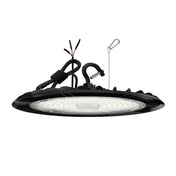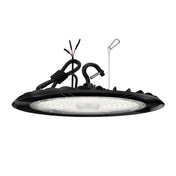

LED UFO high bay lights have become the go-to choice for industrial spaces, warehouses, and large commercial facilities—thanks to their compact design, wide coverage, and energy-saving benefits. But one often-overlooked factor that makes or breaks their performance is heat dissipation. Unlike traditional lighting, LEDs don’t emit heat as light (they’re cool to the touch), but they still generate internal heat during operation. For UFO high bays—which are sealed, high-wattage fixtures (100W–400W) operating 10–16 hours daily—poor heat dissipation can lead to catastrophic performance drops, premature failure, and wasted energy.
In this guide, we’ll break down how heat dissipation directly impacts LED UFO high bay light performance (lifespan, brightness, efficacy, and stability), explain the science behind heat management, and share actionable tips to choose fixtures with superior heat dissipation. Whether you’re retrofitting a warehouse or designing a new industrial space, this article will help you make informed decisions—while boosting your search visibility for queries like “LED UFO high bay heat dissipation,” “how to improve LED high bay performance,” and “best heat-dissipating UFO high bay lights.”
Why Heat Dissipation Matters for LED UFO High Bay Lights
First, let’s clarify the basics: LEDs convert ~20–30% of energy into light, and the remaining 70–80% becomes heat. For UFO high bays—named for their dome-shaped, sealed design—this heat is trapped inside the fixture unless properly channeled away. Here’s why this matters:
LEDs are temperature-sensitive components. When operating above their optimal junction temperature (typically 85°C/185°F), their performance degrades rapidly. For UFO high bays—used in high-ceiling, often poorly ventilated spaces (e.g., warehouses with minimal airflow)—heat buildup is inevitable without effective heat dissipation. This isn’t just a minor inconvenience; it directly impacts four critical performance metrics.
Key Impacts of Heat Dissipation on LED UFO High Bay Performance
Let’s dive into how heat management (or lack thereof) affects your lighting system:
1. Lifespan: The #1 Casualty of Poor Heat Dissipation
LED lifespan is rated based on “L70” (the time it takes for brightness to drop to 70% of initial output). Heat is the biggest enemy of LED longevity:
- Good Heat Dissipation: A UFO high bay with a premium heat sink (e.g., aluminum alloy, copper core) keeps the LED junction temperature below 85°C. This delivers the full rated lifespan of 50,000–100,000 hours (5–10 years of 24/7 use).
- Poor Heat Dissipation: If the junction temperature rises to 100°C/212°F, LED lifespan can drop by 50% (to 25,000–50,000 hours). At 120°C/248°F, lifespan plummets to just 10,000–20,000 hours—meaning you’ll need to replace fixtures twice as often.
For example: A warehouse with 50 UFO high bays (rated 50,000 hours) with poor heat dissipation will need replacements in 3–4 years, costing
20,000. With proper heat management, those same fixtures last 8–10 years—saving tens of thousands in replacement costs.
2. Brightness & Luminous Efficacy
Heat directly reduces LED brightness and efficiency (lumens per watt):
- Brightness Loss: For every 10°C increase in junction temperature above 85°C, LED brightness drops by 3–5%. A 200W UFO high bay (26,000 lumens) operating at 105°C will lose 6–10% of its brightness—equivalent to a 180W fixture. This creates dark spots in warehouses, reducing visibility and safety.
-
Efficacy Drop: Higher temperatures increase energy loss, lowering luminous efficacy. A UFO high bay rated 130 lumens/W at 85°C may drop to 115–120 lumens/W at 105°C—wasting 8–12% more energy for the same light output. Over a year, a 50-fixture warehouse could waste
2,500 in electricity bills.
3. Color Consistency & Stability
LEDs emit light at a specific color temperature (e.g., 5000K “daylight” for warehouses). Heat disrupts this consistency:
- Color Shift: High temperatures cause LEDs to shift toward warmer tones (e.g., 5000K → 4500K) or cooler tones (rare, but possible with poor-quality chips). This creates uneven lighting—some areas appear “yellowish,” others “bluish”—which is problematic for tasks requiring color accuracy (e.g., inspection stations, packaging lines).
- Color Rendering Index (CRI) Loss: CRI (ability to show true colors) can drop by 5–10 points when LEDs overheat. A UFO high bay with CRI 80 at 85°C may fall to CRI 70–75 at 105°C, making it harder for workers to distinguish between products or detect defects.
4. Reliability & Safety Risks
Poor heat dissipation doesn’t just degrade performance—it poses safety hazards:
- Driver Failure: The LED driver (powers the fixture) is sensitive to heat. Trapped heat can damage capacitors and circuits, causing the driver to fail prematurely (often within 2–3 years). A failed driver means the fixture stops working entirely—even if the LEDs are still functional.
- Fire Risk: In extreme cases (e.g., faulty heat sinks + high wattage + poor ventilation), heat buildup can melt wires or plastic components, increasing fire risk. While rare, this is a critical concern for industrial spaces with flammable materials (e.g., warehouses storing paper, chemicals).
How LED UFO High Bay Lights Manage Heat (Key Design Features)
High-quality UFO high bays use three core design elements to optimize heat dissipation. When shopping for fixtures, look for these features:
1. Heat Sink Material & Design
The heat sink is the most critical component—its job is to absorb heat from the LED chip and radiate it into the air.
- Materials: Aluminum alloy is the gold standard (lightweight, affordable, and excellent thermal conductivity). Premium models use copper cores (superior conductivity but more expensive) or aluminum-copper hybrids. Avoid fixtures with plastic or thin-gauge metal heat sinks—they’re ineffective.
- Design: Look for heat sinks with fins (increased surface area for heat radiation) and honeycomb/grid patterns (improves airflow). The best UFO high bays have heat sinks that cover the entire dome—maximizing heat transfer. For example, a 200W UFO high bay should have a heat sink with at least 500 cm² of surface area.
2. Thermal Interface Material (TIM)
TIM is a thin layer between the LED chip and heat sink that eliminates air gaps (air is a poor heat conductor).
- High-Quality TIM: Silicone or ceramic TIM (thermal conductivity ≥ 3.0 W/m·K) ensures efficient heat transfer. Cheap fixtures use low-grade TIM (≤ 1.5 W/m·K) or no TIM at all—creating hotspots.
- Application: TIM must be evenly applied to avoid gaps. Look for fixtures with factory-applied TIM (not user-applied, which is error-prone).
3. Sealing & Ventilation
UFO high bays are sealed to prevent dust/water ingress (IP65+ rating), but this can trap heat. Smart designs balance protection and airflow:
- Vented Domes: Some UFO high bays have strategically placed vents (with dust/water filters) to allow hot air to escape. Avoid fully sealed fixtures for high-temperature environments (e.g., foundries, greenhouses).
- Thermal Management Coatings: Heat sinks with ceramic or anodized coatings improve heat radiation (up to 15% better than uncoated metal).
How to Choose LED UFO High Bay Lights with Superior Heat Dissipation
Use this checklist to evaluate heat dissipation when purchasing UFO high bays:
|
Evaluation Factor
|
What to Look For
|
Red Flags to Avoid
|
|
Heat Sink
|
Aluminum alloy (≥ 2mm thickness), finned design, large surface area (≥ 400 cm² for 150W fixtures).
|
Plastic heat sinks, thin-gauge metal (≤ 1mm), no fins.
|
|
Thermal Performance
|
Junction temperature rating ≤ 85°C, L70 lifespan ≥ 50,000 hours.
|
No temperature rating, L70 lifespan 0,000 hours.
|
|
TIM Specification
|
Thermal conductivity ≥ 3.0 W/m·K (silicone/ceramic material).
|
No TIM mentioned, thermal conductivity < 1.5 W/m·K.
|
|
Ventilation
|
IP65+ rating with vented design (for high-temperature spaces).
|
Fully sealed dome with no vents (for spaces > 90°F/32°C).
|
|
Wattage vs. Heat Sink Size
|
Proportional sizing (e.g., 300W fixture = larger heat sink than 100W).
|
Small heat sink for high wattage (e.g., 300W with same heat sink as 150W).
|
|
Manufacturer Data
|
Thermal test reports, L70 lifespan data, and junction temperature specs.
|
No technical data on heat dissipation.
|
Tips to Improve Heat Dissipation for Existing LED UFO High Bay Lights
If you already have UFO high bays with poor heat dissipation, use these hacks to extend their lifespan and performance:
- Increase Airflow: Install industrial fans or improve ventilation in the space (e.g., open windows, add exhaust fans). Even minor airflow improvements can reduce fixture temperature by 5–10°C.
- Adjust Mounting Height: Avoid mounting fixtures too close to ceilings (leave 12–18 inches of clearance) to allow heat to escape. For 30ft+ ceilings, this is less critical, but still beneficial.
- Clean Heat Sinks Regularly: Dust buildup on heat sinks reduces heat radiation by 20–30%. Clean heat sinks every 6–12 months with a soft brush or compressed air.
- Reduce Wattage (If Possible): Use dimmers or reduce fixture wattage (e.g., from 200W to 150W) if the space is over-lit. Lower wattage = less heat generation.
- Add Heat Sink Extenders: Aftermarket heat sink extenders (aluminum fins) can increase surface area by 30–50%, improving heat radiation.
Common Myths About LED UFO High Bay Heat Dissipation
Let’s debunk misconceptions that lead to poor purchasing decisions:
- Myth 1: “LEDs are cool, so heat dissipation doesn’t matter.”
Reality: LEDs generate significant internal heat—even if the fixture feels cool to the touch. Poor heat dissipation still degrades the LED chip and driver.
- Myth 2: “Bigger fixtures have better heat dissipation.”
Reality: Size isn’t everything. A compact UFO high bay with a well-designed aluminum fin heat sink can outperform a larger fixture with a cheap plastic heat sink.
- Myth 3: “IP67/IP68 rating means worse heat dissipation.”
Reality: High IP ratings (waterproof/dustproof) can trap heat, but premium fixtures use vented, filtered designs to balance protection and airflow.
- Myth 4: “Heat dissipation only matters for high-wattage fixtures.”
Reality: Even 100W UFO high bays suffer from heat buildup in poorly ventilated spaces. Heat dissipation is critical for all wattages.
Final Thoughts
Heat dissipation is the unsung hero of LED UFO high bay light performance. It directly impacts lifespan, brightness, energy efficiency, and safety—making it a non-negotiable factor when selecting fixtures for industrial or commercial spaces.
Key takeaways for buyers:
- Prioritize fixtures with aluminum fin heat sinks, high-quality TIM, and proportional heat sink-to-wattage sizing.
- Avoid cheap UFO high bays with plastic heat sinks or no thermal specifications—they’ll cost you more in replacements and energy bills.
- For existing fixtures, improve airflow and clean heat sinks regularly to extend lifespan.
By understanding how heat dissipation affects LED UFO high bay performance, you’ll choose fixtures that deliver reliable, efficient lighting for years to come—saving money and ensuring a safe, well-lit space for your team.
If you need help calculating the right UFO high bay wattage for your space or comparing products with superior heat dissipation, leave a comment below or contact our lighting experts for a free consultation!