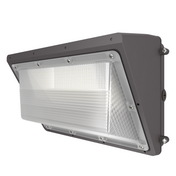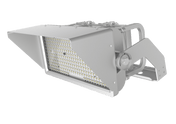

In today's world, where energy conservation and emission reduction are global consensuses, high-efficiency LED area lights are not only key to reducing lighting costs but also a core element in enhancing spatial comfort. Whether in commercial offices, industrial workshops, or home living rooms, choosing the right high-efficiency LED area lights can reduce energy consumption by more than 50% and extend their lifespan by 3-5 years. However, faced with a bewildering array of product parameters and promotional terminology on the market, many people find themselves in the dilemma of "dizzying from the parameters and regretting their purchase after buying." This article will teach you practical skills for quickly mastering the selection of high-efficiency LED area lights from three dimensions: interpreting core parameters, scenario-based selection strategies, and avoiding common pitfalls. It also includes recommendations for mainstream brands in 2025, helping you avoid 90% of the purchasing traps.
I. Five Essential Core Parameters: Understanding Product Performance from a Professional Perspective
The "high efficiency" of high-efficiency LED area lights is not just a marketing gimmick, but is determined by specific parameters. Understanding these five key indicators will help you easily distinguish between good and bad products:
1. Luminous Efficacy (lm/W): The Gold Standard for Energy Efficiency
Luminous efficacy refers to the luminous flux (unit: lumens lm) produced per watt of electrical energy consumed by the luminaire. It is the core indicator for judging whether an LED light is energy-efficient. According to the latest standard GB 7000.1-2025, qualified LED area lights meet the following requirements:
- - Indoor commercial area lights: ≥100 lm/W
- - Industrial workshop area lights: ≥120 lm/W
- - Outdoor plaza area lights: ≥130 lm/W
Purchase Tip: For the same power, every 10 lm/W increase in luminous efficacy can reduce annual power consumption by approximately 8%. For example, a 100W area light with 120 lm/W can save nearly 100 yuan in electricity costs per year compared to 100 lm/W (based on 8 hours of use per day and an electricity cost of 0.6 yuan/kWh). Avoid products labeled "equivalent to XX watts" and directly check the actual luminous efficacy value.
2. Color Rendering Index (Ra): Key to Reproducing the True Colors of Objects
The color rendering index (CRI) reflects the ability of an LED light to reproduce the natural colors of an object. It is divided into general CRI (Ra) and special CRI (R9-R15). The requirements for CRI vary significantly depending on the application scenario:
|
Application scenarios
|
Ra minimum value
|
Special requirements
|
|---|---|---|
|
Office/Classroom
|
≥80
|
R9(Red)≥0
|
|
Clothing store/showroom
|
≥90
|
R13(Color)≥80
|
|
Industrial quality inspection
|
≥95
|
R1-R15 All items≥85
|
Tips to avoid pitfalls: Some low-priced products claim "high color rendering" but do not specify the exact Ra value. It is recommended to choose products that clearly state Ra≥80 and provide a third-party testing report. In scenarios where color accuracy is critical, such as clothing stores, be sure to choose professional-grade products with Ra≥90; otherwise, it will cause color distortion in clothing and affect sales.
3. Color Temperature (K): The Invisible Adjuster Affecting Spatial Atmosphere
Color temperature determines the warm or cool tone of light, measured in Kelvin (K). Different color temperatures are suitable for different functional areas:
- - Below 3000K (Warm Yellow Light): Suitable for leisure areas such as living rooms and cafes, creating a warm and relaxing atmosphere, but can cause eye strain during prolonged reading.
- - 3000K-5000K (Neutral Light): Ideal for work areas such as offices, classrooms, and workshops, balancing brightness and comfort, and less prone to color differences.
- - Above 5000K (Cool White Light): Suitable for places requiring high-intensity lighting such as stadiums and warehouses, but excessively high color temperatures (such as above 6500K) can create a cold feeling.
Advanced Options: Many smart zone lights now support color temperature adjustment from 2700K to 6500K, which can be switched according to different time periods and scene requirements, making them particularly suitable for multi-functional conference rooms and other spaces.
4. Protection Rating (IP): Safety Guarantee for Different Environments
IP ratings consist of two digits. The first digit indicates the dustproof rating (0-6), and the second digit indicates the waterproof rating (0-8). GB 7000.1 clearly specifies the protection ratings for lighting fixtures in different environments:
Common Scene Protection Rating Requirements:
- - Indoor dry areas (offices, bedrooms): IP20 and above
- - Damp areas (kitchens, bathrooms): IP44 and above (splash-proof)
- - Outdoor areas (courtyards, parking lots): IP65 and above (dustproof and waterproof)
- - Underwater environments (pool lights): IP68 and above (can withstand prolonged immersion)
Case Study: In 2024, a shopping mall suffered tens of thousands of yuan in losses due to a short circuit caused by a leaking water pipe in its corridor lighting, which had an insufficient protection rating (only IP20). For outdoor installations, always choose products with an IP65 rating or higher, and carefully check the integrity of the sealing rings.
5. Driver Power Supply: The "Heart" that Determines the Lifespan of Lighting Fixtures
The lifespan of LED lights largely depends on the quality of the driver power supply. A high-quality driver should possess the following characteristics:
- - Constant current output: To prevent premature aging of the LED chip due to current fluctuations; current accuracy should be ≤±5%.
- - Wide voltage range: Supports 100V-240V full voltage input, adapting to different power grid environments.
- - Multiple protections: Equipped with over-temperature, over-voltage, and short-circuit protection functions, such as automatic power-off at 105℃.
- - Efficiency ≥85%: The higher the driver power supply conversion efficiency, the lower the energy loss.
Identification method: Check whether the product is labeled with the driver power supply brand (such as well-known brands like Mean Well, Infineon, etc.). Avoid choosing low-priced products with "unbranded drivers." Legitimate products will provide a CCC certification certificate for the driver power supply.
II. Scenario-Based Purchasing Guide: Customized Solutions for Different Spaces
The selection of high-efficiency LED area lights cannot be generalized; it requires comprehensive consideration of the specific functional needs, size, and decoration style of the space. Here are purchasing strategies for four common scenarios:
1. Commercial Office Areas: Balancing Efficiency and Comfort
Office areas require uniform lighting distribution to avoid glare and shadows that could affect work efficiency. Recommended Selection:
- - Lighting Type: Panel lights or grille lights, beam angle 120°-150°
- - Key Parameters: Luminous efficacy ≥100 lm/W, Ra≥80, color temperature 4000K-5000K
- - Installation Method: Recessed installation saves space; suspended installation is suitable for high ceilings (≥3.5 meters).
- - Smart Functions: Supports DALI dimming or human body sensing; automatically reduces brightness to 30% when no one is present.
Calculation Method: The required luminous flux per square meter is approximately 300-500 lm. For example, a 20-office requires a total luminous flux of 6000-10000 lm, which can be achieved by selecting 4-6 20W (120 lm/W) panel lights.
2. Industrial Workshop Areas: High Brightness and Durability Prioritized
Industrial environments place higher demands on the brightness, protection, and lifespan of lighting fixtures. The following should be given special attention:
- - Fixture Type: Industrial/mining lamps or high-bay lights; heat dissipation structure must be made of die-cast aluminum.
- - Core Parameters: Luminous efficacy ≥ 120 lm/W, Ra ≥ 70, protection rating IP65, lifespan ≥ 50,000 hours
- - Special Requirements: High-temperature workshops require high-temperature resistant drivers (operating temperature -30℃ to 50℃); areas with high dust levels require regular cleaning of the lamp surface.
Energy Saving Case: A car parts workshop replaced traditional 400W metal halide lamps with 100W LED industrial/mining lamps (luminous efficacy 130 lm/W), reducing single-lamp power by 75% and saving nearly 2000 kWh of electricity annually, recovering the cost in 2 years.
3. Home Living Areas: Balancing Atmosphere and Health
Living spaces such as the living room and bedroom require a balance between lighting functionality and ambiance creation. Different areas require different lighting choices:
Living Room: Choose a combination of dimmable ceiling lights or track lights. The main light color temperature should be 3000K-4000K. Auxiliary lights (spotlights) can highlight decorative paintings or ornaments. Ra≥90 ensures accurate color reproduction.
Bedroom: Prioritize flicker-free warm light (around 3000K) to avoid blue light hazards (meeting the RG0 standard). A dimmable wall lamp can be added near the bed for convenient reading.
Health Tip: Children's room lighting fixtures must comply with the photobiological safety standard GB/T 20145, with a blue light level ≤RG0, to avoid affecting children's visual development.
4. Outdoor Public Areas: Safe, Durable, and Resistant to Extreme Conditions
Outdoor areas such as courtyards, parking lots, and plazas need to withstand harsh environments such as wind, rain, and low temperatures. Key selection points:
- - Lighting Type: LED floodlights or streetlights, using tempered glass covers and stainless steel brackets.
- - Core Parameters: Luminous efficacy ≥130 lm/W, IP65 protection rating, wind pressure resistance ≥12, operating temperature -40℃-60℃
- - Smart Upgrade: Equipped with light sensing and time control functions, automatically turning on the lights at dusk and reducing brightness after midnight, achieving energy savings of up to 40%.
III. Four Common Buying Mistakes for Beginners
Many people are easily misled by appearances when choosing LED area lights, falling into the following misconceptions and ultimately paying more for them:
Misconception 1: Focusing Only on Power, Ignoring Luminous Efficacy
Incorrect belief: "The higher the wattage, the brighter it is." In reality, a 100W low-efficiency LED light (80 lm/W) may be less bright than a 60W high-efficiency LED light (130 lm/W). The correct approach is to compare luminous efficacy and actual luminous flux, not simply look at the wattage.
Misconception 2: Ignoring Flicker and Blue Light Hazards
Low-priced products often have flicker issues (difficult to detect with the naked eye but harmful to eyesight in the long run), and excessive blue light can also affect sleep quality. When purchasing, use a mobile phone camera to point at the light; if scrolling stripes appear on the screen, flicker is present. For children's and elderly people's rooms, prioritize flicker-free products with RG0 blue light rating.
Myth 3: Believing "Waterproof lights can be installed anywhere"
IP65 rated lights are resistant to rain but cannot be submerged in water; IP44 lights are only splash-proof and cannot be directly exposed to rain. Outdoor installations require selection based on the specific environment. For example, IP68 underwater lights should be chosen for poolside areas, while IP65 is sufficient for garden lights.
Myth 4: Neglecting after-sales service
LED area lights are durable consumer goods. Reputable brands typically offer 3-5 years of warranty, while counterfeit products often only offer 1 year or even no warranty. When purchasing, confirm the warranty coverage (whether it includes the light source and driver) and whether free repair or replacement services are provided.
IV. Recommended Mainstream Brands of High-Efficiency LED Area Lights in 2025
Based on the LED lighting brand ranking released by Maigou.com in October 2025, and combined with market feedback on area light products, the following trustworthy brands are recommended:
1. OPPLE (Top Choice for Comprehensive Strength in China)
As a Shanghai Stock Exchange-listed company and a standard drafting unit, OPPLE Lighting's area light products cover all scenarios including commercial, industrial, and residential use. The luminous efficacy generally reaches 110-130 lm/W, and the driver power supply adopts independently developed constant current technology with a warranty of up to 5 years. Recommended models: Commercial LED panel lights (suitable for offices), Industrial and mining lights (suitable for industry).
2. NVC Lighting (Commercial Lighting Expert)
NVC Lighting has been deeply involved in the commercial lighting field for many years. Its area light products are known for their high color rendering and uniform illumination, with Ra generally ≥90, making them particularly suitable for scenarios with high color requirements such as clothing stores and showrooms. The intelligent dimming series supports DALI and DMX512 control systems for convenient centralized management. Recommended Models: Grille Light Panel (Office), Track Spotlight (Commercial Display).
3. Philips Lighting (International Brand Benchmark)
With a century-long history, Philips Lighting has accumulated deep expertise in LED technology. Its area lighting products integrate smart connectivity, allowing remote control of color temperature and brightness via a mobile app, and support for integration with smart home systems. The outdoor series features a patented heat dissipation structure with a lifespan of up to 100,000 hours. Recommended Models: Hue Smart Panel Light (Home), CityTouch Outdoor Floodlight (Public Area).
4. Foshan Lighting FSL (Value-for-Money Choice)
As a time-honored Chinese brand and a listed company, Foshan Lighting's area lighting products are renowned for their high cost-performance ratio. Basic models with a luminous efficacy ≥100 lm/W are priced at only 60%-70% of international brands. They also pass CCC certification and EMC electromagnetic compatibility testing, making them suitable for users with limited budgets. Recommended Models: LED Industrial Lights (Industrial), Ceiling Lights (Home).
V. Summary: High-Efficiency LED Area Light Selection Checklist
By mastering the following key points, you can easily select the right high-efficiency LED area lights for your needs:
- Confirm core parameters: Luminous efficacy ≥ 100 lm/W, Ra ≥ 80, IP rating matching the usage environment
- Select color temperature according to the scenario: Office 4000K-5000K, Home 3000K-4000K, Outdoor 5000K and above
- Check the driver power supply: Constant current output, multiple protections, efficiency ≥ 85%
- Prioritize brand products with CCC certification and a warranty of 3 years or more
- Calculate the total luminous flux requirement based on the space area to avoid overly bright or dim lights
Selecting high-efficiency LED area lights is a "technical skill," but by grasping the core parameters and scenario requirements, you can avoid pitfalls and select products that are both energy-efficient and practical. If you have any specific questions during the selection process, please leave a message in the comments section, and I will provide you with personalized advice!