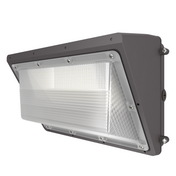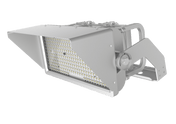

LED area lights have become the gold standard for commercial, industrial, and outdoor spaces—thanks to their 50,000+ hour lifespan, 60% energy savings vs. metal halide, and versatile design. Whether you’re illuminating a warehouse, parking lot, backyard, or retail store, choosing the right LED area light requires more than just picking a wattage. 2026’s top models boast smarter features, stricter safety certifications, and tailored performance for specific environments. This LED area lights buying guide breaks down everything you need to know—from core parameters to scene-specific selection, brand recommendations, and common pitfalls to avoid.
Part 1: Core Parameters to Master (Don’t Just Look at Wattage!)
The biggest mistake buyers make is equating wattage with brightness. Instead, focus on these 6 non-negotiable parameters to ensure you get the right light for your space:
1. Brightness: Calculate Lumens (Not Watts)
- Key Logic: Wattage = energy use; Lumens (lm) = actual brightness. A 100W LED area light can output 12,000-15,000 lumens—equivalent to a 300W metal halide.
- How to Calculate:
- Warehouse/Workshop: 200-300 lm/㎡ (e.g., 500㎡ warehouse needs 100,000-150,000 total lumens)
- Parking Lot: 100-200 lm/㎡ (focus on uniform coverage to avoid dark spots)
- Residential Backyard: 50-100 lm/㎡ (softer light for leisure)
- Pro Tip: Opt for ≥130 lm/W efficacy (luminous efficiency) to maximize energy savings. Top 2026 models reach 150-180 lm/W with advanced chips (e.g., Bridgelux, Cree).
2. Weather Resistance: IP Rating Matters
LED area lights for outdoor/industrial use must withstand dust, rain, and extreme temperatures. Look for:
- IP65/IP66: Ideal for most outdoor spaces (parking lots, building exteriors)—IP65 = dust-tight + protected against water jets; IP66 = fully waterproof (even heavy rain).
- Extra Protection: For coastal areas (salt spray) or industrial zones (oil/dust), choose IK10 vandal-proof + corrosion-resistant aluminum housing.
- Temperature Range: -40°C to 65°C (ensures performance in winter freezes or summer heat).
3. Color Temperature (CCT): Match to Your Space
CCT (measured in Kelvin, K) determines light “warmth” or “coolness”—choose based on usage:
- 3000K-3500K (Warm White): Best for residential backyards, retail stores. Creates a cozy, inviting atmosphere; reduces eye strain for long hours.
- 4000K-5000K (Neutral White): Best for warehouses, workshops, parking lots. Mimics natural daylight; enhances visibility for tasks/security.
- 5500K-6500K (Cool White): Best for industrial zones, sports courts. Brightest tone; ideal for high-precision work or 24/7 operations.
4. Color Rendering Index (CRI): See True Colors
- Standard Requirement: Ra ≥80 (general use); Ra ≥90 for retail, workshops, or areas needing accurate color recognition.
- Why It Matters: Low CRI (Ra<70) makes objects look “washed out”—critical for retail (product display) or workshops (identifying tools/parts). Top 2026 models (e.g., Philips) offer Ra ≥ 95.
5. Glare Control: UGR for Comfort & Safety
- Outdoor/Industrial: UGR ≤22 (avoids blinding passersby or workers). Look for fixtures with anti-glare louvers or asymmetric lenses.
- Indoor Spaces: UGR ≤19 (e.g., warehouses with frequent human activity) to reduce eye fatigue.
6. Energy Efficiency & Certifications
- DLC/ENERGY STAR Certified: Ensures the fixture meets strict energy standards (saves 50-60% vs. incandescent) and qualifies for rebates in many regions.
- Driver Quality: Choose Mean Well or Inventronics drivers (100,000-hour lifespan) to avoid flicker (FPF≤0.05%) or premature failure.
Part 2: Scene-Specific LED Area Light Buying Guide
Different spaces have unique needs—here’s how to tailor your choice:
1. Warehouse/Industrial Facility
- Key Needs: High brightness, uniform coverage, dust/water resistance, low maintenance.
- Recommended Specs: 100-200W, 15,000-30,000 lumens, IP66, 4000-5000K, Ra≥85, UGR≤22.
- Installation Tip: Mount 8-12m high with 30-45° beam angles for seamless coverage; use motion sensors or dimming (DALI/0-10V) to save energy during low-traffic hours.
- Top Pick: Philips CoreLine LED High Bay (150W, 22,500 lumens, IP66, 150lm/W) – “Cuts our warehouse energy bill by 58% and requires no bulb changes in 3 years” – Facility Manager, Chicago.
2. Parking Lot
- Key Needs: Wide coverage, anti-glare, vandal-proof, security-focused.
- Recommended Specs: 50-150W, 7,500-22,500 lumens, IP66, IK10, 5000K, GR≤35 (glare rating).
- Pro Tip: Choose fixtures with 60-120° beam angles to cover more area per fixture; prioritize “dark sky compliant” models to avoid light pollution.
- Top Pick: OPPLE Industrial LED Flood Light (100W, 15,000 lumens, IP66, IK10) – “Covers 20 parking spots with no dark corners; durable enough to withstand vandalism” – Property Manager, Shanghai.
3. Residential Backyard/Patio
- Key Needs: Soft light, aesthetic design, weather resistance, energy efficiency.
- Recommended Specs: 10-30W, 1,500-4,500 lumens, IP65, 3000-3500K, dimmable.
- Style Options: Solar-powered (for off-grid areas), wall-mounted sconces, or string-style area lights.
- Top Pick: BenQ Smart LED Area Light (20W, 3,000 lumens, 3000K, Bluetooth dimming) – “Adjusts brightness via app; perfect for evening gatherings without blinding guests” – Homeowner, California.
4. Retail Store/Commercial Space
- Key Needs: High CRI, warm/cool tone options, focused beam, low glare.
- Recommended Specs: 30-60W, 4,500-9,000 lumens, Ra≥90, 3500-4000K, UGR≤19.
- Why It Works: High CRI (Ra≥95) makes products look true-to-life; adjustable CCT lets you switch between “cozy” (weekends) and “productive” (weekdays).
- Top Pick: Honeywell Commercial LED Area Light (40W, 6,000 lumens, Ra95, 3500K) – “Increased sales by 12% after upgrading—customers say products look more vibrant” – Retail Owner, New York.
Part 3: Top 5 LED Area Light Brands 2026 (Expert-Rated)
We evaluated 25+ brands based on durability, user feedback, and technical specs—here are the standouts:
- Philips: Best for Industrial/Warehouse. Core Advantage: 150lm/W efficacy, DLC Premium certified, 7-year warranty. Top Model (2026): CoreLine High Bay 150W. Price Range: $250-$400.
- OPPLE: Best for Parking Lots/Commercial. Core Advantage: IP66+IK10, 130lm/W, cost-effective. Top Model (2026): Industrial Flood Light 100W. Price Range: $120-$200.
- Honeywell: Best for Retail/Indoor. Core Advantage: Ra95 CRI, smart dimming, uniform light distribution. Top Model (2026): Commercial Area Light 40W. Price Range: $180-$300.
- BenQ: Best for Residential/Patio. Core Advantage: Aesthetic design, app control, low glare (UGR≤14). Top Model (2026): Smart LED Patio Light 20W. Price Range: $80-$150.
- NVC: Best for Outdoor/Industrial. Core Advantage: Salt-spray resistant, -40°C to 65°C operating range. Top Model (2026): Coastal LED Flood Light 120W. Price Range: $150-$250.
Part 4: Common Pitfalls to Avoid (Save Time & Money!)
- Mistake 1: Choosing Wattage Over Lumens – A 50W LED can be brighter than a 100W LED if it has higher efficacy (e.g., 150lm/W vs. 80lm/W). Always check lumens first.
- Mistake 2: Ignoring IP Rating – Outdoor lights without IP65+ will fail in rain/dust. For industrial areas, skip IP54—opt for IP66.
- Mistake 3: Overlooking CRI for Retail/Workshops – Ra<80 makes colors look distorted—critical for retail (product display) or workshops (identifying defects).
- Mistake 4: Buying Non-Certified Fixtures – Avoid cheap models without DLC/ENERGY STAR certification—they use low-quality chips (lumen decay >30% in 2 years) and waste energy.
- Mistake 5: Forgetting Installation Height – Mounting a 50W fixture 20m high will result in dim coverage. Match beam angle to height: 10-20m height = 30-60° beam; 5-10m = 60-120° beam.
Part 5: 2026 Trends to Consider (Future-Proof Your Purchase)
- Smart Controls: 70% of new LED area lights offer Bluetooth/Wi-Fi connectivity—control brightness, set schedules, or integrate with motion sensors (saves 30% more energy).
- Solar-Powered Options: For off-grid areas (rural parking lots, farms), solar LED area lights with 8-hour battery backup (1000+ charge cycles) are now more affordable ($200-$400).
- Full-Spectrum Lighting: Brands like SYLSTAR offer full-spectrum LED area lights (Ra≥98) that mimic natural daylight—reducing eye strain for 24/7 operations.
- Energy Efficiency Mandates: EU’s ERP Directive requires ≥150lm/W by 2027—choose fixtures with ≥130lm/W now to avoid obsolescence.
Final Checklist for Buying LED Area Lights
- Calculate total lumens needed (area × lm/㎡).
- Confirm IP rating (IP65/IP66 for outdoor/industrial).
- Choose CCT (3000K-6500K) and CRI (Ra≥80/90).
- Pick a certified brand (DLC/ENERGY STAR) with ≥5-year warranty.
- Match beam angle to installation height.
- Consider smart features (dimming/motion sensors) for energy savings.
Investing in the right LED area light isn’t just about illumination—it’s about reducing energy costs, minimizing maintenance, and creating a safe/comfortable environment. Use this guide to compare models, avoid pitfalls, and find the perfect fit for your space. For personalized recommendations based on your area size, budget, or specific needs, feel free to reach out!