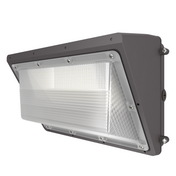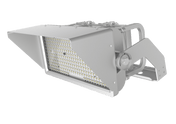

If you’re tired of sky-high electricity bills, frequent bulb replacements, and inefficient lighting weighing down your budget, the answer is clear: LED area lights aren’t just a lighting upgrade—they’re a proven money-saving investment. In 2026, businesses, municipalities, and homeowners across the globe are realizing that switching to LED area lights delivers far more than brighter illumination; it unlocks dramatic, long-term savings on energy, maintenance, and even regulatory compliance. But just how much can you save with LED area lights? Let’s break down the hard data, real-world examples, and actionable strategies to maximize your returns.
The Shocking Truth: How Much Energy Do LED Area Lights Save?
The biggest driver of savings with LED area lights is their unmatched energy efficiency. Unlike traditional metal halide, fluorescent, or incandescent lights— which waste 50-90% of energy as heat—LEDs convert nearly all electricity into usable light. Here’s the numbers that matter:
- U.S. Department of Energy (DOE) Data: LEDs use up to 75% less energy than traditional lighting, with top 2026 models reaching 150-180 lumens per watt (lm/W) vs. 50-80 lm/W for metal halide. For a 10,000 sq. ft. warehouse using 50 fixtures, this translates to 30,000+ kWh saved annually.
- Residential Savings: The average household can cut lighting costs by 15% (≈$225/year) by switching to LEDs, with area lights for patios or garages saving an extra $50-$80/year alone.
- Commercial Impact: A parking lot with 20 metal halide fixtures (400W each) uses 69,200 kWh/year. Replacing them with 150W LED area lights slashes usage to 25,950 kWh—saving $4,325/year at $0.10/kWh.
Real Example: The Franklin Institute upgraded their parking facility to LED area lights and reduced energy use by 264,902 kWh annually—enough to power 24 average homes for a year.
Maintenance Savings: 90% Less Hassle, 90% Lower Costs
Traditional area lights are a maintenance nightmare. Metal halide and fluorescent fixtures last just 15,000-20,000 hours (2-3 years with daily use) and require frequent bulb, ballast, or starter replacements—often involving costly. LED area lights eliminate this burden:
- Long Lifespan: Quality LEDs last 50,000-100,000 hours (5-10 years of daily use)—5-8x longer than traditional lights.
- Minimal Upkeep: LEDs have no filaments, ballasts, or moving parts, so they rarely fail. A warehouse with 100 LED fixtures may need just 2-3 replacements over a decade, vs. 50+ for metal halide.
- Cost Breakdown: For a facility with 30 high-bay LED area lights, maintenance costs drop from $1,800/year (traditional) to $180/year—saving $16,200 over 10 years.
User Testimonial: “We replaced 80 metal halide fixtures in our distribution center with LEDs. In 4 years, we’ve only changed 1 fixture—no more paying $300/hour for lift rentals and maintenance crews. Maintenance savings alone covered the upgrade cost in 18 months” – Facility Manager, Ohio.
Government Rebates & Incentives: Get Paid to Switch to LEDs
In 2026, governments and utilities are doubling down on energy efficiency, offering lucrative rebates to offset the upfront cost of LED area lights. These incentives can cover 30-75% of project costs, slashing payback periods to as little as 6 months:
- DLC/ENERGY STAR Rebates: Efficiency Vermont offers $15 rebates per ENERGY STAR LED fixture (up from $10), with $5-$10 rebates for DLC-certified exterior models.
- Xcel Energy Bonus Rebates: Commercial projects get an extra 25-50% in rebates for LED tubes, high bays, and outdoor area lights—up to 75% of project costs covered.
- Tax Credits: U.S. businesses qualify for a 179D tax deduction of up to $1.80/sq. ft. for energy-efficient lighting upgrades, including LED area lights.
- Global Incentives: The EU’s ERP Directive and China’s policies offer grants for LED retrofits, with coastal regions adding salt-spray resistant LED rebates.
Pro Tip: Use tools like Eaton’s Crouse-Hinds ROI Calculator to estimate rebates, energy savings, and payback periods tailored to your facility.
Full Lifecycle Cost: LEDs Beat Traditional Lights 2-3x Over
Many buyers hesitate at LED’s higher upfront cost (2-3x that of traditional lights), but this ignores the full lifecycle cost (LCC)—the total expense of purchase, energy, and maintenance over the fixture’s lifetime. Here’s how they compare for a 5-year period:
| Lighting Type | Upfront Cost (20 Fixtures) | Annual Energy Cost | Annual Maintenance Cost | 5-Year Total Cost |
|---|---|---|---|---|
| 400W Metal Halide | $4,000 | $4,325 | $1,200 | $31,625 |
| 150W LED Area Light | $9,000 | $1,622 | $120 | $17,710 |
| Savings with LEDs | - | $2,703/year | $1,080/year | $13,915 total |
Key Insight: Even with higher upfront costs, LEDs cost 44% less over 5 years. By year 10, savings jump to $30,000+ per 20 fixtures.
2026 LED Area Light Features That Boost Savings Even More
Modern LED area lights come with smart features that amplify your savings beyond energy and maintenance:
- Smart Controls: Occupancy sensors, daylight harvesting, and dimming (DALI/0-10V) reduce energy use by an extra 30% by lowering brightness when spaces are empty or sunny.
- Thermal Efficiency: LEDs emit 90% less heat than incandescent lights, reducing HVAC loads by 5-10% in warehouses and commercial buildings—cutting cooling costs in summer.
- Modular Design: New LED models let you replace individual components (not the entire fixture) if needed, extending lifespan and avoiding premature replacements.
- Solar-Powered Options: Off-grid LED area lights (with solar panels and battery backup) eliminate electricity costs entirely—ideal for rural parking lots, farms, or remote facilities. They now cost just $200-$400/fixture, with 1000+ charge cycles.
How to Maximize Savings: 5 Pro Tips for 2026
- Choose DLC/ENERGY STAR Certified Fixtures: These models meet strict efficiency standards (≥130lm/W) and qualify for the highest rebates.
- Right-Size Your LEDs: Don’t overbuy wattage—calculate needed lumens (area × lm/㎡) to avoid wasting energy. A 100W LED can replace a 300W metal halide in most cases.
- Leverage Smart Controls: Pair LEDs with motion sensors or app-based dimming. A retail store with 50 LED area lights saved an extra $800/year by dimming lights after closing hours.
- Bundle Retrofits: Upgrade all area lights at once to qualify for bulk rebates. Xcel Energy offers an additional 10% contractor incentive for projects over $5,000.
- Calculate ROI First: Use tools like Lumenloop’s Office Lighting Calculator or Wiska’s LED ROI Calculator to input your space size, usage hours, and electricity cost—get a precise payback period and savings estimate.
The Environmental Bonus: Save the Planet While Saving Money
LED area lights aren’t just good for your wallet—they’re good for the planet. By reducing energy use, they cut carbon emissions:
- 1 LED area light (150W) reduces CO₂ emissions by 100kg/year vs. a 400W metal halide.
- A parking lot with 20 LED fixtures cuts emissions by 2,000kg/year—equivalent to planting 54 trees.
- LEDs contain no mercury or toxic materials, unlike fluorescent lights, and their aluminum housings are 100% recyclable.
This sustainability boost also helps businesses meet ESG goals and qualify for green building certifications (LEED, WELL) – a competitive advantage in 2026.
Final Verdict: Yes, LED Area Lights Deliver Massive Savings
The question isn’t “Can you save more with LED area lights?”—it’s “How much will you save?” For most users, the numbers speak for themselves:
- 30-80% lower energy bills
- 90% less maintenance costs
- 30-75% of upfront costs covered by rebates
- ROI in 6-24 months
- 5-10 years of hassle-free operation
In 2026, with LED prices declining (down 40% since 2020) and energy costs rising, there’s never been a better time to switch. Whether you’re a business owner looking to cut overhead, a property manager tired of maintenance headaches, or a homeowner wanting to reduce utility bills, LED area lights deliver savings that grow year after year.
Ready to Start Saving? Use our quick checklist:
- Audit your current lighting (wattage, number of fixtures, usage hours).
- Calculate potential energy savings with an ROI calculator.
- Research local rebates (DLC, ENERGY STAR, utility programs).
- Choose LED area lights with ≥130lm/W, IP65/IP66 rating, and 5-year warranty.
- Install smart controls to maximize savings.
The switch to LED area lights isn’t just an upgrade—it’s an investment that pays you back, month after month, year after year. Start saving today!
If you want to dive deeper—like getting a personalized savings estimate for your space, comparing top LED area light models for maximum ROI, or learning how to apply for specific rebates—feel free to share your details (space type, size, current lighting) and I’ll tailor the guidance!