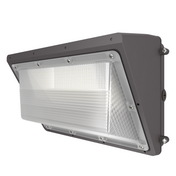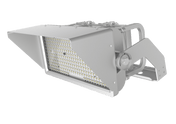

Outdoor lighting is a critical investment for homes, businesses, and municipalities—but choosing between LED area lights and traditional options (halogen, high-pressure sodium/HPS, fluorescent) can be a tough call. Traditional lighting has been around for decades, but LEDs have revolutionized the industry with their energy efficiency and long lifespan. The debate boils down to one question: which option delivers better value, performance, and long-term benefits? This comprehensive comparison breaks down the key differences between LED area lights and traditional lighting, backed by data, real-world use cases, and industry insights to help you make an informed decision.
1. Energy Efficiency: LEDs Dominate with 50-70% Savings
Energy efficiency is where LEDs pull ahead by a wide margin. Traditional lighting wastes most of its energy as heat—halogen lights convert just 10% of electricity into light, HPS 25%, and fluorescent 40%. LEDs, by contrast, convert 90% of electricity into light, resulting in 50-70% lower energy bills. Let’s quantify the difference for a typical commercial parking lot with 100 fixtures:
|
Lighting Type
|
Wattage per Fixture
|
Annual Energy Use (kWh)
|
Annual Energy Cost (at $0.15/kWh)
|
10-Year Energy Cost
|
|
Halogen
|
300W
|
130,000
|
$19,500
|
$195,000
|
|
HPS
|
250W
|
108,000
|
$16,200
|
$162,000
|
|
Fluorescent
|
150W
|
65,000
|
$9,750
|
$97,500
|
|
LED
|
100W
|
43,000
|
$6,450
|
$64,500
|
For residential use (10 fixtures), LEDs save \(1,560 annually vs. halogen and \)1,170 vs. HPS. Over a decade, that’s \(15,600 and \)11,700 in savings—funds that can be reinvested in other upgrades. LEDs also support smart controls (dimming, motion sensors) that cut energy use by an additional 30-50%, while traditional lights lack this flexibility. For example, a warehouse in Texas reduced energy costs by 62% after switching from HPS to LED area lights with motion sensors.
2. Lifespan & Durability: LEDs Outlast Traditional Lights 5-10x
Traditional lighting requires frequent replacements, which adds up in cost and hassle. Halogen bulbs last just 2,000 hours (less than a year of daily use), HPS 10,000 hours (1-2 years), and fluorescent 8,000 hours (1 year). LEDs, by contrast, have a lifespan of 50,000-100,000 hours (5-10 years of continuous use). This means:
- Halogen: 25 replacements over 10 years
- HPS: 5 replacements over 10 years
- LED: 0-1 replacements over 10 years
For a commercial space with 100 fixtures, maintenance costs (bulb + labor) add up to \(40,000 for HPS and \)87,500 for halogen over a decade—compared to just $200 for LEDs. LEDs are also more durable: their solid-state design resists shock, vibration, and extreme temperatures (-40°F to 140°F), while traditional bulbs are fragile and prone to burning out in harsh conditions. Coastal areas benefit from LED’s corrosion-resistant aluminum housings, which prevent rust better than HPS’s metal halide fixtures.
3. Performance & Visibility: LEDs Enhance Safety & Security
Visibility is critical for outdoor lighting—whether for deterring crime, preventing accidents, or improving user comfort. Traditional HPS lights emit a yellowish, dim glow with a low Color Rendering Index (CRI which distorts colors and obscures details like license plates or facial features. Fluorescent lights flicker and produce harsh glare, while halogen lights create hot spots and dark shadows.
LED area lights solve these issues with:
- High CRI (80+): Reveals true colors, making it easier to identify hazards or suspicious activity. A study by the University of North Carolina found that parking lots with high-CRI LEDs had 38% fewer property crimes than those with HPS.
- Uniform Coverage: 120-180° beam angles eliminate dark spots, while full-cutoff optics reduce glare for drivers and pedestrians.
- Instant On/Off: No warm-up time (unlike HPS, which takes 5-10 minutes to reach full brightness) and no cool-down period, making LEDs ideal for motion-sensor applications.
For businesses like retail stores or warehouses, this enhanced visibility reduces liability claims from slips/falls and improves employee productivity. A distribution center in Ohio reported a 60% reduction in workplace accidents after switching to LEDs, attributed to better visibility of hazards.
4. Cost: Higher Upfront, But Lower Total Cost of Ownership
Traditional lighting has a lower upfront cost—halogen fixtures cost \(50-\)100 each, HPS \(80-\)150, and fluorescent \(70-\)120. LEDs, by contrast, range from \(150-\)300 per fixture. However, when you factor in energy and maintenance savings, LEDs have a far lower Total Cost of Ownership (TCO) over their lifespan:
|
Lighting Type
|
Upfront Cost (100 Fixtures)
|
10-Year Energy Cost
|
10-Year Maintenance Cost
|
Total 10-Year Cost
|
|
Halogen
|
$10,000
|
$195,000
|
$87,500
|
$292,500
|
|
HPS
|
$15,000
|
$162,000
|
$40,000
|
$217,000
|
|
Fluorescent
|
$12,000
|
$97,500
|
$30,000
|
$139,500
|
|
LED
|
$25,000
|
$64,500
|
$200
|
$89,700
|
LEDs also qualify for rebates and incentives (\(10-\)100 per fixture) from utility companies and government programs, which can slash upfront costs by 10-30%. For example, a restaurant chain in California received $5,000 in rebates for installing LED parking lot lights, cutting their ROI timeline to just 1.2 years.
5. Environmental Impact: LEDs Are Greener & More Sustainable
Sustainability is a top priority for modern businesses and homeowners—and LEDs are the clear winner here. Traditional lighting contains toxic materials: fluorescent bulbs have mercury (a neurotoxin), and HPS bulbs contain lead. These materials pose environmental risks if not disposed of properly. LEDs, by contrast, are mercury-free and 100% recyclable.
LEDs also reduce carbon emissions: a single 100W LED fixture replaces a 250W HPS light, cutting annual carbon emissions by 1,200 pounds. For a city with 10,000 streetlights, this is 6,000 tons of carbon saved annually—equivalent to taking 1,250 cars off the road. Traditional lighting’s short lifespan also increases landfill waste: a 100-fixture commercial setup generates 250 halogen bulbs or 50 HPS bulbs over a decade, compared to just 1-2 LED bulbs.
6. Installation & Compatibility: LEDs Are Versatile & Easy to Install
LED area lights are designed to be compatible with existing infrastructure, making retrofitting simple. Most LED fixtures fit standard mounting brackets (pole, wall, ceiling) and wiring, so you don’t need to replace poles or rewire your space. Traditional lighting, by contrast, may require specialized fixtures or wiring (e.g., HPS ballasts), which adds to installation costs.
LEDs also offer more mounting options: low-profile models for underground garages, solar-powered versions for remote areas, and smart-enabled fixtures for centralized control. For example, a small business owner retrofitted their parking lot from HPS to LEDs in a single day with no additional wiring, saving $2,000 in installation costs. Traditional lighting upgrades often require longer downtime and more labor, disrupting business operations.
7. Additional Benefits: LEDs Offer Smart Features & Compliance
LEDs go beyond basic illumination with features that traditional lighting can’t match:
- Smart Controls: Remote access via smartphone apps, scheduling, and real-time energy monitoring. Multi-location businesses can manage all lights from a single dashboard, while homeowners can sync LEDs with their home security systems.
- Adjustable Color Temperature: 3000K (warm white) to 6000K (cool white) lets you tailor lighting to your needs—warm white for residential spaces, cool white for commercial security.
- Compliance: LEDs meet light pollution regulations (full-cutoff optics) and energy efficiency standards (Energy Star certification), avoiding fines and qualifying for rebates. Traditional HPS lights often fail to meet modern light pollution laws, requiring costly retrofits.
When Might Traditional Lighting Make Sense?
While LEDs are superior in most cases, traditional lighting may be a temporary solution for:
- Budget Constraints: If you need immediate lighting with no upfront investment (e.g., a short-term construction site), halogen or fluorescent may be cheaper—though LEDs will save money in the long run.
- Existing Infrastructure: If you have a small number of HPS fixtures that are less than 2 years old, it may be more cost-effective to wait until they fail before replacing them.
However, even in these cases, LEDs’ fast ROI (1-3 years for commercial, 3-5 years for residential) makes them a better long-term investment.
Conclusion: LEDs Win—Hands Down
When comparing LED area lights vs. traditional lighting, LEDs outperform in every critical category: energy efficiency, lifespan, performance, cost, and sustainability. Traditional lighting may have a lower upfront cost, but its high energy bills, frequent replacements, and poor performance make it a costly choice over time. LEDs, by contrast, deliver immediate savings, enhanced safety, and minimal maintenance—all while reducing your environmental footprint.
Whether you’re a homeowner looking to light your backyard, a business owner upgrading a parking lot, or a municipal planner retrofitting streetlights, LEDs are the clear winner. With rebates, incentives, and advancing technology, there’s never been a better time to make the switch. The numbers don’t lie: LEDs save money, improve safety, and last longer—making them the smart choice for any outdoor lighting need.
Ready to upgrade? Look for reputable LED brands like Hishine, COMLED, and Beyond LED Technology, which offer parking lot-specific fixtures with the features outlined in this guide. For custom layouts, consult a lighting designer to create a photometric plan tailored to your space—ensuring you get the most out of your LED investment.