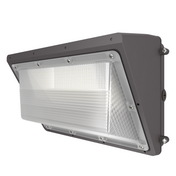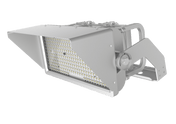

Commercial spaces—from warehouses and manufacturing facilities to retail parking lots and office campuses—rely on outdoor lighting to ensure safety, security, and operational efficiency. For business owners and facility managers, lighting isn’t just a utility—it’s an investment that impacts bottom lines, employee well-being, and customer perception. In recent years, LED area lights have become the go-to choice for commercial lighting upgrades, outperforming traditional halogen, fluorescent, and high-pressure sodium (HPS) fixtures in every critical category. But what specific benefits make LEDs indispensable for commercial use? Let’s explore the top advantages of switching to LED area lights for businesses, backed by data and real-world use cases.
1. Unmatched Energy Efficiency: Slash Operational Costs
For commercial spaces with extensive lighting needs—think 50+ fixtures across a warehouse or shopping center parking lot—energy costs can quickly become a significant expense. LED area lights address this pain point with their superior energy efficiency, converting 90% of electricity into light (compared to 50% or less for traditional lights). This translates to 50-70% lower energy bills, a game-changer for businesses operating on tight margins.
Let’s quantify the savings for a typical commercial setup: A 100-fixture parking lot using 250W HPS lights consumes 130,000 kWh annually, costing \(19,500 at \)0.15/kWh. Switching to 100W LED area lights reduces energy use to 52,000 kWh, cutting annual costs to \(7,800—a savings of \)11,700 per year. For larger facilities like distribution centers with 500 fixtures, annual savings jump to \(58,500. Over a decade, that’s a total of \)585,000 in energy cost reductions—funds that can be reinvested in core business operations.
LEDs also support demand response programs, where utility companies offer rebates for reducing energy use during peak hours. Commercial users can leverage smart LED controls (e.g., dimming, scheduling) to participate, earning additional savings while reducing strain on electrical grids. For example, a retail chain with 20 locations saved $35,000 annually by enrolling their LED parking lot lights in a utility demand response program.
2. Enhanced Security & Visibility: Protect Assets and People
Commercial spaces are prime targets for theft, vandalism, and trespassing—making security a top priority. LED area lights excel at deterring criminal activity thanks to their bright, uniform illumination and high color rendering index (CRI). Unlike HPS lights, which emit a yellowish, dim glow that obscures details, LEDs produce crisp, natural light with a CRI of 70+ (often 80+), ensuring faces, license plates, and suspicious activity are clearly visible.
A study by the University of North Carolina found that commercial parking lots lit with LEDs experienced a 38% reduction in property crimes compared to those using HPS lights. This is due to two key factors: LEDs eliminate dark spots (via 120-180 degree beam angles) that intruders use to hide, and their intense brightness creates a perception of surveillance. For businesses like convenience stores or warehouses with after-hours operations, this enhanced security protects inventory, equipment, and employees.
LEDs also improve safety for customers and staff by reducing accident risks. Well-lit walkways, loading docks, and parking areas minimize slips, trips, and falls—lowering liability claims and workers’ compensation costs. A distribution center in Ohio reported a 60% reduction in workplace accidents after switching to LED area lights, attributed to improved visibility of hazards like wet floors and uneven surfaces.
3. Low Maintenance & Long Lifespan: Reduce Downtime
Commercial lighting maintenance is costly—not just for bulb replacements, but for labor, equipment (e.g., cherry pickers for high fixtures), and downtime. LED area lights eliminate these headaches with their impressive lifespan of 50,000-100,000 hours (5-10 years of continuous use), compared to just 10,000 hours for HPS or 2,000 hours for halogen.
For a commercial space with 100 fixtures, this means:
- HPS: 5 bulb replacements over 10 years (50,000 hours), costing \(30 per bulb + \)50 labor per replacement = $4,000 total maintenance.
- LED: 0-1 bulb replacements over 10 years, costing \(0-\)120 total maintenance.
That’s a savings of \(3,880-\)4,000 over a decade—before factoring in reduced downtime. For warehouses or manufacturing facilities, every hour of lighting maintenance can disrupt operations, leading to lost productivity. LEDs’ long lifespan means fewer maintenance calls, keeping businesses running smoothly.
Additionally, LED fixtures are built with durable materials (corrosion-resistant aluminum housings, IP65+ weather resistance) that withstand harsh commercial environments—rain, snow, extreme temperatures, and industrial debris. This durability reduces the risk of fixture damage, further cutting maintenance costs.
4. Scalability & Smart Control Integration: Adapt to Business Needs
Commercial spaces have dynamic lighting requirements—whether scaling up operations, adjusting to seasonal hours, or optimizing for specific tasks (e.g., night shifts, loading dock activity). LED area lights offer unmatched scalability and control, thanks to integration with smart technology and IoT platforms.
Smart LED fixtures can be controlled remotely via smartphone apps, cloud-based dashboards, or building management systems (BMS). Commercial users can:
- Set schedules to dim lights during low-traffic hours (e.g., 2 AM-5 AM for retail parking lots) or brighten during peak times.
- Use motion sensors to trigger full brightness in high-risk areas (e.g., loading docks, storage yards) and revert to energy-saving modes when spaces are empty.
- Monitor energy use in real time, identifying inefficiencies and adjusting settings to maximize savings.
For multi-location businesses, centralized control is a game-changer. A restaurant chain with 50 locations can manage all LED area lights from a single dashboard, ensuring consistent lighting across sites and simplifying maintenance. Smart LEDs also support scalability—adding new fixtures is seamless, as they integrate with existing control systems without requiring rewiring.
Advanced models even offer adjustable color temperature (3000K-5000K), allowing businesses to tailor lighting to their needs. For example, retail stores may use warm white (3000K) to create a welcoming atmosphere, while warehouses use cool white (5000K) to maximize visibility for detailed tasks.
5. Compliance & Sustainability: Meet Regulations and Enhance Brand Image
Modern businesses face increasing pressure to reduce their environmental footprint—from government regulations to consumer demand for sustainable practices. LED area lights help commercial spaces meet these goals by reducing energy use and carbon emissions.
A single 100W LED fixture replaces a 250W HPS light, cutting carbon emissions by 1,200 pounds per year. For a commercial space with 100 fixtures, that’s 120,000 pounds of carbon saved annually—equivalent to taking 10 cars off the road. This environmental impact helps businesses comply with regulations like the EPA’s Energy Star program or local carbon reduction mandates, avoiding fines and improving public perception.
Sustainability also enhances brand image. A 2023 survey by Nielsen found that 66% of consumers are willing to pay more for products from environmentally responsible companies. By switching to LEDs, businesses signal their commitment to sustainability, attracting eco-conscious customers and employees. For example, a retail chain’s LED lighting upgrade was featured in their sustainability report, leading to a 15% increase in customer loyalty among environmentally focused shoppers.
6. Improved Lighting Quality: Boost Productivity and Customer Experience
Lighting quality directly impacts employee productivity and customer satisfaction—two critical factors for commercial success. LED area lights deliver superior lighting quality with:
- Uniform Coverage: Advanced optical lenses eliminate glare and dark spots, ensuring consistent illumination across large spaces.
- Instant On/Off: No warm-up time required, so spaces are illuminated immediately—critical for emergency situations or unexpected after-hours activity.
- Flicker-Free Operation: Unlike fluorescent lights, LEDs produce no flicker, reducing eye strain for employees working night shifts or extended hours.
For warehouses and manufacturing facilities, improved lighting quality translates to higher productivity. A study by the Lighting Research Center found that workers in LED-lit spaces completed tasks 12% faster with fewer errors, compared to those in HPS-lit environments. For retail stores, bright, natural LED lighting enhances product visibility, making merchandise more appealing to customers and increasing sales.
7. Fast ROI: A Financially Sound Investment
While LED area lights have a higher upfront cost than traditional fixtures (e.g., \(150-\)300 per LED vs. \(50-\)100 per HPS), their energy and maintenance savings deliver rapid ROI for commercial users. Let’s calculate ROI for a 100-fixture commercial parking lot:
- Upfront Cost: LED (\(25,000) vs. HPS (\)9,000) → $16,000 price premium.
- Annual Savings: \(11,700 (energy) + \)400 (maintenance) = $12,100.
- ROI Timeline: \(16,000 ÷ \)12,100 ≈ 1.3 years.
With rebates and incentives (e.g., \(10-\)100 per fixture from utility companies or government programs), ROI timelines shrink even further—often to less than a year. For example, a warehouse in California received a \(10 per fixture rebate on 500 LEDs, reducing upfront costs by \)5,000 and cutting ROI to 1.1 years. This makes LEDs a low-risk, high-reward investment for commercial spaces.
Conclusion: LEDs Are a Must-Have for Commercial Spaces
Switching to LED area lights isn’t just a lighting upgrade—it’s a strategic decision that delivers financial, operational, and environmental benefits for commercial spaces. From slashing energy costs and reducing maintenance to enhancing security and scalability, LEDs outperform traditional lighting in every key metric that matters to businesses.
Whether you’re managing a small retail store or a large industrial facility, LED area lights offer a flexible, future-proof solution that adapts to your needs. With fast ROI, long-term savings, and improved safety and productivity, they’re an investment that pays dividends for years to come.
Don’t let outdated lighting hold your business back. Make the switch to LED area lights and experience the difference—lower costs, enhanced security, and a more sustainable, efficient commercial space. The benefits are clear, and the ROI is undeniable: LEDs are the smart choice for commercial lighting.