
Introduction: The Great Exterior Lighting Debate
For decades, commercial and industrial properties relied on traditional lighting—metal halide (MH) and high‑pressure sodium (HPS) wall packs—to illuminate building perimeters, loading docks, and walkways. Then came LED wall pack lights, promising lower energy bills, longer life, and better light quality. But which one is truly better for your application?
This head‑to‑head comparison covers everything: energy consumption, lifespan, light quality, maintenance costs, upfront investment, and environmental impact. By the end, you will have a clear answer and the data to justify your next lighting upgrade. We will also include SEO‑friendly headings and keywords to help this guide rank for commercial buyers searching for the best exterior lighting solution.
1. What Are We Comparing?
Traditional Wall Pack Lighting
-
Metal Halide (MH): Produces white light (CRI ~65–70) but takes 5–10 minutes to warm up. Efficiency: 65–90 lm/W.
-
High‑Pressure Sodium (HPS): Yellow‑orange light (CRI ~22), very poor color rendering. Efficiency: 80–110 lm/W. Long warm‑up and restrike time.
-
Typical wattages: 70W, 150W, 250W, 400W (actual power draw includes ballast loss: +10–15%).
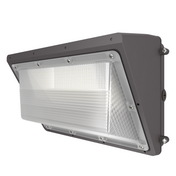
LED Wall Pack Lighting
-
LED technology: Solid‑state, instant on, dimmable, directional light.
-
Typical wattages: 20W, 40W, 60W, 80W, 100W, 150W (replaces up to 400W HID).
-
Efficiency: 130–170 lm/W (and improving).
Both fixture types mount on exterior walls and serve similar applications. But their performance differs dramatically.
2. Energy Efficiency: LED Wins by a Landslide
| Fixture Type | Typical System Wattage | Lumens (Maintained) | Efficacy (lm/W) | Annual Energy Use (4,000 hrs) |
|---|---|---|---|---|
| 150W Metal Halide | 165W (incl. ballast) | ~9,000 lm | ~55 lm/W | 660 kWh |
| 70W HPS | 77W | ~5,800 lm | ~75 lm/W | 308 kWh |
| 40W LED | 40W | 5,200–6,500 lm | 130–160 lm/W | 160 kWh |
| 250W Metal Halide | 275W | ~15,000 lm | ~55 lm/W | 1,100 kWh |
| 80W LED | 80W | 10,000–12,000 lm | 130–150 lm/W | 320 kWh |
Conclusion: An 80W LED wall pack replaces a 250W MH and saves 780 kWh per year – about $94 annually at $0.12/kWh. For 50 fixtures, that is nearly $5,000 per year.
Winner: LED
3. Lifespan & Maintenance: LED Runs for Years, Traditional Fails Often
-
Metal Halide lamps: 10,000–20,000 hours (typical 15,000). In real‑world outdoor conditions (heat, cold, voltage fluctuations), many fail by 12,000 hours.
-
HPS lamps: 15,000–24,000 hours, but lumen depreciation is severe (lose 30–40% light output by 50% of life).
-
LED wall packs: 50,000–100,000 hours (L70 – time to 70% of initial lumens). Many quality fixtures reach 70,000+ hours.
Maintenance frequency:
-
Traditional: Replace lamp every 1.5–2 years (at 4,000 hrs/year). Also replace ballasts every 5–7 years.
-
LED: No lamp changes for 10–15 years. No ballast to fail.
Maintenance cost per fixture (10 years):
-
Traditional: 5–7 lamp changes ($25–$40 each) + 1 ballast change ($50–$80) + labor (lift rental, electrician – $150–$250 per visit). Total >$500.
-
LED: $0 (except occasional cleaning). Total ~$50 (cleaning).
Winner: LED
4. Light Quality: LED Delivers Clear, White Light
| Aspect | Metal Halide | HPS | LED |
|---|---|---|---|
| Color Rendering Index (CRI) | 65–70 (fair) | 20–25 (poor – orange) | 70–90+ (good to excellent) |
| Color Temperature | 4000K (cool white) | 2000K (yellow) | 3000K–5000K (selectable) |
| Warm‑up time | 5–10 min | 3–5 min | Instant (<0.1 sec) |
| Restrike after power loss | 10–15 min cool‑down | 1–2 min | Instant |
| Flicker | Moderate | High (double‑frequency ripple) | <1% flicker (driver dependent) |
Why light quality matters for commercial properties:
-
Security cameras capture clearer images under white light (HPS yellow makes identification difficult).
-
Employees and visitors feel safer with natural‑looking illumination.
-
Reading signage, package labels, and license plates is easier.
Winner: LED
5. Environmental Impact: LED Is Greener
-
Energy consumption: LED uses 50–75% less electricity → lower CO₂ emissions from power plants.
-
Hazardous materials: Metal halide and HPS lamps contain mercury (toxic). LED fixtures contain no mercury.
-
Recycling: Traditional lamps require special disposal (universal waste rules). LEDs are generally non‑hazardous and recyclable as electronics.
-
Light pollution: LED wall packs can be specified with dark‑sky optics (full cutoff, Type III/IV distribution) that direct light downward. Many traditional wall packs were designed with uplight, wasting energy and annoying neighbors.
Winner: LED
6. Upfront Cost: Traditional Is Cheaper… But Total Cost of Ownership Tells a Different Story
| Cost Component | 250W Metal Halide Wall Pack | 80W LED Wall Pack (Equivalent) |
|---|---|---|
| Fixture price | $80–$120 (plus lamp $25) | $120–$180 |
| Installation labor | Similar (mounting, wiring) | Similar |
| Annual energy (4,000 h @ $0.12) | $132 | $38.40 |
| 5‑year energy cost | $660 | $192 |
| Maintenance (lamp changes) | $150 (3 lamps + labor) | $0 |
| Total 5‑year cost | ~$900–$950 | ~$312–$372 |
Payback period: Even if the LED fixture costs $60 more upfront, the energy savings of $93.60/year pay back the difference in 8 months. After that, pure savings.
Winner: LED (over any period >1 year)
7. Real‑World Comparison: Case Study
Site: Retail strip mall, 30 wall packs, previously 150W metal halide. Operating hours: dusk to dawn (4,200 hours/year). Electricity: $0.13/kWh.
Before (MH):
-
Actual power per fixture: 165W
-
Annual energy per fixture: 693 kWh → $90.09
-
Total annual energy: 20,790 kWh → $2,702.70
-
Lamp replacements: every 18 months (2,800 hours) → ~$45/fixture/year (labor + lamp)
After (50W LED wall packs with photocell):
-
Power per fixture: 50W
-
Annual energy per fixture: 210 kWh → $27.30
-
Total annual energy: 6,300 kWh → $819
-
Maintenance: $0 (first 5 years)
Annual savings:
-
Energy: $2,702.70 – $819 = $1,883.70
-
Maintenance: 30 × $45 = $1,350
-
Total annual savings: $3,233.70
Project cost: 30 LED fixtures @ $150 = $4,500 + installation ($1,500) = $6,000.
Simple payback: $6,000 / $3,233.70 = 1.86 years. After that, the mall saves over $3,200 per year.
8. Situations Where Traditional Lighting Might Still Be Used (Rare)
While LED is superior in almost every way, a few niche cases exist:
-
Very low usage areas (e.g., a wall pack that operates 200 hours/year). The energy savings may not justify the LED premium. But even then, the maintenance avoidance often does.
-
Legacy fixtures with incompatible sockets – Some old wall packs use odd bases. However, retrofit LED lamps (screw‑in) exist for most.
-
Upfront budget constraints – If a property owner has zero capital, they may keep traditional lights until a rebate or financing appears. But with DLC rebates (often $30–$75 per fixture), the LED upfront cost can become lower than traditional.
For 99% of commercial applications, LED is the better choice.
9. Making the Switch: What to Look for in an LED Wall Pack
If you decide LED is better (and the evidence says yes), here is a quick checklist:
-
Wattage: 40W replaces 150W MH; 80W replaces 250W MH; 120W replaces 400W MH.
-
Distribution: Type III for general perimeter; Type IV for wide areas.
-
Color temperature: 4000K (neutral) or 5000K (cool).
-
Controls: Built‑in photocell (dusk‑to‑dawn) is standard. Consider motion sensor (bi‑level dimming) for extra savings.
-
Certifications: UL/cUL listed, DLC Premium (for rebates), IP65 rated.
-
Warranty: Minimum 5 years, ideally 7–10 years.
10. Conclusion: LED Wall Pack Lights Are Clearly Better
After comparing energy efficiency, lifespan, light quality, maintenance, environmental impact, and total cost of ownership, the answer is undeniable: LED wall pack lights are better than traditional metal halide or high‑pressure sodium lighting for commercial use.
-
Energy savings: 50–75% less electricity
-
Lifespan: 5–10× longer (50,000–100,000 hours vs. 10,000–20,000)
-
Light quality: White, high CRI, instant on, no flicker
-
Maintenance: Virtually zero for a decade
-
Payback: Typically 1–3 years, then years of savings
While traditional fixtures have a slightly lower upfront price, their high operating and maintenance costs make them more expensive within the first two years. For any property owner, facility manager, or contractor looking to reduce expenses and improve exterior lighting, LED wall packs are the superior choice.