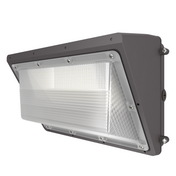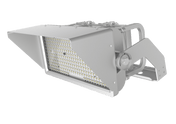

When night falls, the exterior of your commercial building speaks volumes. Poorly lit walls, dark loading docks, and shadowy entryways not only look uninviting but also pose security and safety risks. LED wall pack lights are the industry standard for illuminating the perimeter of retail stores, office buildings, warehouses, hotels, and multi‑family housing. They mount directly onto exterior walls, casting light downward and outward to cover sidewalks, parking areas, and building facades.
But with dozens of options on the market—different wattages, color temperatures, photocells, and mounting styles—how do you choose the right one? This complete buying guide for commercial use covers everything you need to know: benefits, key features, selection criteria, installation tips, and future trends. By the end, you will be able to specify the perfect LED wall pack for your property, maximize energy savings, and avoid common mistakes.
1. What Are LED Wall Pack Lights?
A wall pack (also called a wall mount light or building exterior light) is a rugged, weatherproof luminaire designed to be mounted vertically on an exterior wall. Traditional wall packs used high‑pressure sodium (HPS) or metal halide lamps, but modern LED wall packs offer superior performance and efficiency.
Key characteristics:
-
Shape: Typically rectangular or semi‑circular (“shoebox” style)
-
Light distribution: Type II, III, IV, or V (more on that later)
-
Mounting: Direct wall mount (surface or flush)
-
Construction: Die‑cast aluminum housing, tempered glass lens, powder‑coat finish
-
IP rating: Usually IP65 or higher (dust‑tight and water‑resistant)
LED wall packs are used for:
-
Building perimeters and facades
-
Loading docks and delivery areas
-
Parking lot edges and walkways
-
Entryways and exit doors
-
Gas station canopies (wall‑mounted variants)
-
Multi‑family housing (apartment breezeways)
2. Key Benefits of LED Wall Packs for Commercial Use
2.1 Massive Energy Savings
Compared to legacy HID wall packs (150W, 250W, or 400W), LED wall packs consume 50–75% less energy. A 50W LED wall pack can replace a 150W metal halide fixture, saving over 300 kWh per year per fixture. For a commercial property with 20 wall packs, that is 6,000+ kWh annually – roughly $720 saved at $0.12/kWh.
2.2 Extremely Long Life (50,000–100,000 hours)
LED wall packs last 5–10 times longer than HID lamps. No more annual bulb changes. Maintenance crews are freed for other tasks, and ladder work is minimized – a significant safety and cost benefit.
2.3 Instant On & Flicker‑Free
Unlike HPS or metal halide lamps that take minutes to warm up, LEDs reach full brightness instantly. This is critical for security lighting triggered by motion sensors or for areas that need immediate illumination when someone approaches.
2.4 Better Light Quality (CRI 70–80+)
Most commercial LED wall packs offer neutral white (4000K) or cool white (5000K) with a Color Rendering Index above 70 (many exceed 80). This makes it easier to identify faces, read signage, and see true colors – enhancing security and curb appeal.
2.5 Reduced Light Trespass & Glare
Well‑designed LED wall packs feature precision optics that direct light where it is needed (down and out) rather than up into the sky or into neighbors’ windows. Dark‑sky compliant models are available for areas with light pollution ordinances.
2.6 Built‑in Photocells & Motion Sensors
Most commercial LED wall packs come with an integrated photocell (daylight sensor) that automatically turns the light on at dusk and off at dawn. Some also include a motion sensor that dims the light to 10–30% when no movement is detected, then ramps to 100% on demand – saving even more energy.
3. Features to Look for in Commercial LED Wall Packs
When selecting an LED wall pack for commercial use, prioritize these features:
3.1 Lumen Output & Wattage Equivalency
| Old HID Wattage | LED Wall Pack Wattage | Typical Lumens |
|---|---|---|
| 70W HPS / 100W MH | 20–30W | 2,000–3,500 lm |
| 150W HPS / 175W MH | 40–60W | 4,500–7,000 lm |
| 250W HPS / 250W MH | 70–100W | 8,000–12,000 lm |
| 400W HPS / 400W MH | 120–150W | 13,000–18,000 lm |
For most commercial wall packs, 40–80W (4,500–9,000 lumens) is sufficient for general perimeter lighting. For loading docks or high‑activity areas, go higher.
3.2 Light Distribution Patterns (Type II, III, IV, V)
-
Type II – Preferred for walkways, paths, and narrower areas. Light spreads moderately to the sides.
-
Type III – Most common for wall packs. Light is thrown forward and slightly to the sides – ideal for illuminating building walls and adjacent parking.
-
Type IV – Wide, forward‑throw distribution for mounting on the side of a building to light a large parking lot or open area.
-
Type V – Symmetrical circular pattern (less common for wall packs; more for pole mounts).
Recommendation: For most commercial building perimeters, choose Type III. For larger lots, Type IV.
3.3 Color Temperature (CCT)
-
3000K – Warm white (residential, historic districts – rarely used in commercial)
-
4000K – Neutral white (good balance; recommended for most commercial)
-
5000K – Cool white (maximum visibility; popular for security and loading docks)
-
5700K+ – Daylight (harsh; avoid for general use)
Commercial best practice: 4000K for aesthetics + visibility, or 5000K for high‑security areas.
3.4 Photocell (Dusk‑to‑Dawn) & Motion Sensor
-
Built‑in photocell – A must for energy savings. Avoid models without one, or you will need an external contactor.
-
Bi‑level dimming – Fixture runs at 20–30% power during unoccupied periods, then jumps to 100% when motion is detected. Saves 50–70% more energy compared to always‑on.
3.5 Voltage & Surge Protection
Commercial LED wall packs typically operate on 120–277V AC (universal voltage). For larger facilities with 347V or 480V, verify compatibility. Look for 6kV or 10kV surge protection – crucial in areas prone to lightning or grid fluctuations.
3.6 Certifications & Ratings
-
UL / cUL – Safety certified for wet locations.
-
DLC Premium – Required for utility rebates in North America.
-
IP65 or IP66 – Water and dust ingress protection.
-
Dark Sky (IDA) – Optional but valuable for environmentally sensitive areas.
3.7 Warranty
Commercial LED wall packs should carry a minimum 5‑year warranty (many offer 7 or 10 years). Avoid no‑name brands with 1‑year warranties – they often cut corners on drivers and LEDs.
4. Step‑by‑Step Buying Guide for Commercial Use
Follow these five steps to select the right LED wall pack for your project.
Step 1: Assess Your Application & Mounting Height
-
Mounting height: Typically 10–20 feet above ground.
-
Area to illuminate: Building facade (close), walkway (15–30 ft wide), or parking lot edge (30–60 ft wide).
Step 2: Determine Required Lumens
Use a simple rule of thumb:
-
Accent/facade lighting: 500–1,000 lumens per fixture
-
Walkway perimeter: 2,000–4,000 lumens
-
Loading dock / security zone: 6,000–12,000 lumens
For precise results, perform a lighting calculation using the fixture’s photometric file (IES file).
Step 3: Choose Distribution Pattern
-
Type III – General perimeter and walkways (most common)
-
Type IV – Wide areas like parking lots adjacent to building
-
Type II – Narrow walkways or corridors
Step 4: Select Controls
-
Always‑on with photocell – Simplest, most reliable.
-
Bi‑level (motion sensor) – Highest energy savings; ideal for alleys, dumpster areas, rarely occupied zones.
-
0‑10V dimming – For integration with building automation systems.
Step 5: Verify Certifications & Warranty
Check DLC listing (for rebates), UL listing, and warranty length. Also confirm the fixture is dark‑sky compliant if your municipality requires it.
5. Installation & Placement Tips
-
Height: Mount wall packs at least 15–20 ft above grade to avoid vandalism and reduce glare for pedestrians.
-
Spacing: For uniform coverage, space fixtures at 2–2.5× the mounting height. Example: mounted at 18 ft, space 36–45 ft apart.
-
Aiming: Some wall packs have adjustable arms to tilt the light downward or sideways. Use this to avoid light trespass into windows.
-
Electrical: Ensure the junction box is rated for wet locations. Use weatherproof gaskets and silicone sealant around conduit entries.
6. Cost & ROI Analysis
Let us compare a 50W LED wall pack vs. a 150W metal halide wall pack for a commercial building with 20 fixtures operating 4,000 hours/year (dusk to dawn ~11 hours/night) at $0.12/kWh.
| Metal Halide (150W) | LED (50W) | |
|---|---|---|
| Actual power draw | 165W (incl. ballast) | 50W |
| Annual energy per fixture | 660 kWh | 200 kWh |
| Annual energy cost per fixture | $79.20 | $24.00 |
| Annual energy cost (20 fixtures) | $1,584 | $480 |
| Annual energy savings | – | $1,104 |
| Fixture cost (each) | $80 (lamp + ballast replacement) | $120 |
| Total investment (20 fixtures) | – | $2,400 |
| Simple payback | – | 2.2 years ($2,400 / $1,104) |
After payback, the LED wall packs continue saving over $1,000 per year for the next 8–10 years – total savings >$10,000.
7. Common Mistakes to Avoid
-
Over‑lighting – Using a 150W LED when 50W would suffice creates glare and wastes energy.
-
Ignoring distribution type – A Type V wall pack on a building wall will throw light upward into the sky (light pollution) and not enough onto the walkway.
-
Skipping surge protection – LED drivers are sensitive. In lightning‑prone areas, lack of SPD leads to early failures.
-
Buying based on price only – Cheap wall packs often use inferior LEDs and drivers that fail within 2 years. The labor to replace them cancels any upfront savings.
8. Future Trends in Commercial Wall Packs (2026+)
-
Connected lighting – Wall packs with Bluetooth Mesh or Zigbee for wireless control and energy monitoring.
-
Solar‑hybrid – Integrated solar panels and batteries for off‑grid or low‑energy applications (e.g., remote storage yards).
-
Human‑centric exterior lighting – Tunable white (3000K–5000K) that shifts color temperature based on time of night to reduce circadian disruption.
-
Higher efficacy – Leading models already exceed 170 lm/W; expect 200 lm/W by 2028.
9. Conclusion: Light Your Commercial Property the Right Way
LED wall pack lights are a proven, cost‑effective solution for commercial exterior lighting. By following this complete buying guide—understanding benefits, selecting the right lumens, distribution pattern, controls, and certifications—you can significantly reduce energy bills, improve security, and enhance your building’s curb appeal.