
LED wall pack lights have become the gold standard for outdoor illumination in commercial, industrial, and residential settings—replacing outdated metal halide and high-pressure sodium (HPS) fixtures with unmatched efficiency, durability, and performance. Whether you’re looking to enhance building security, brighten walkways, or highlight architectural features, understanding what LED wall pack lights are and how they work is key to making an informed lighting decision in 2026. This comprehensive guide breaks down their design, functionality, benefits, and practical applications to help you leverage this versatile outdoor lighting solution.
What Are LED Wall Pack Lights?
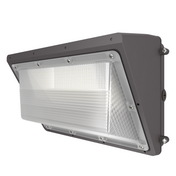
LED wall pack lights are robust, wall-mounted outdoor lighting fixtures engineered to deliver targeted, powerful illumination for exterior spaces. Unlike ceiling-mounted or ground fixtures, they attach directly to building walls, making them ideal for areas where pole mounting isn’t feasible—such as building perimeters, entryways, parking garages, loading docks, walkways, and commercial storefronts . Their compact, weather-resistant design allows them to thrive in harsh outdoor conditions, from extreme temperatures to heavy rain and dust.
In 2026, LED wall packs come in four primary types to suit different needs:
- Full-cutoff wall packs: Direct light downward to eliminate glare and light pollution, complying with dark-sky regulations .
- Semi-cutoff wall packs: Balance downward and outward light distribution for broader coverage without excessive spill .
- Adjustable wall packs: Allow precise aiming of light output to target specific areas like stairwells or signage .
- Smart wall packs: Integrate sensors and IoT connectivity for remote control, scheduling, and motion-activated operation .
Modern models range in wattage from 12W to 72W and deliver 3,200 to 22,000 lumens—enough to replace 100W+ traditional fixtures while using 50–70% less energy . They’re designed for versatility, with applications spanning retail storefronts, office buildings, warehouses, apartment complexes, and municipal facilities.
Core Components of LED Wall Pack Lights
To understand how LED wall packs work, it’s essential to break down their key components—each playing a critical role in performance and longevity:
- LED Chips: The “heart” of the fixture, these semiconductor diodes convert electricity into visible light with minimal heat loss. High-quality chips (often from brands like Cree or Nichia) deliver 120–142 lumens per watt (lm/W) in 2026 models, ensuring bright, efficient illumination .
- LED Driver: A vital component that regulates voltage and current to the LED chips, ensuring consistent performance and preventing burnout. Modern drivers offer wide input voltage (120–277V AC), power factor ≥0.90, and 90%+ efficiency—critical for reliability .
- Heat Sink: Typically made of die-cast aluminum with finned design, it dissipates heat from the LED chips to keep junction temperatures below 85°C. This extends the fixture’s lifespan to 50,000+ hours (10+ years of use) .
- Housing: A rugged, weather-sealed enclosure (usually aluminum) that protects internal components from moisture, dust, and impact. Top-tier models have an IP65–IP67 rating, making them suitable for wet locations and extreme climates (-40°F to 113°F) .
- Optical Lens/Diffuser: Made of high-quality PC material, it shapes light distribution, reduces glare, and ensures uniform coverage. Lenses are available in various beam angles (15°–100°) to match application needs—narrow beams for long-distance projection, wide beams for close-range wash .
- Sensors (Optional): Photocells (for dusk-to-dawn operation) and motion sensors (to activate light only when activity is detected) are common add-ons, boosting energy savings by 20–40% .
How Do LED Wall Pack Lights Work?
The operating principle of LED wall pack lights is straightforward yet efficient, leveraging solid-state technology to outperform traditional lighting:
- Power Conversion: When connected to an electrical source, the LED driver converts alternating current (AC) from the grid to direct current (DC)—the power type LEDs require. It also stabilizes voltage to prevent fluctuations that could damage the chips .
- Light Generation: The regulated DC power flows to the LED chips, exciting electrons within the semiconductor material. This excitation produces photons (visible light) without the heat waste common in incandescent or HPS bulbs, which lose 50–80% of energy as heat .
- Heat Management: As the LEDs operate, the heat sink draws excess heat away from the chips. Passive cooling (via fins) or active cooling (in high-wattage models) ensures the fixture stays within safe temperature ranges, preserving lumen output and lifespan .
- Light Distribution: The optical lens or diffuser shapes the light into a targeted beam pattern, directing it where it’s needed most. Full-cutoff models block upward light, while adjustable designs let users fine-tune coverage .
- Smart Operation (If Equipped): Photocells detect ambient light levels, automatically turning the fixture on at dusk and off at dawn. Motion sensors trigger full brightness when movement is detected (e.g., a pedestrian or vehicle) and dim to 20–30% during inactivity, maximizing energy savings .
Unlike traditional metal halide fixtures, which require 5–10 minutes to warm up to full brightness, LED wall packs turn on instantly at 100% luminosity—even in extreme cold . This instant-on capability is a key safety feature for security lighting, as it eliminates dark intervals when threats could go undetected.
Key Benefits of LED Wall Pack Lights (2026 Update)
LED wall packs outperform traditional lighting in every critical category, making them a smart investment for 2026:
- Energy Efficiency: 120–142 lm/W efficiency vs. 60–90 lm/W for metal halide, cutting electricity costs by 50–70% . A 30W LED wall pack replaces a 100W metal halide fixture, saving \(20–\)30 annually per fixture (based on $0.15/kWh) .
- Long Lifespan: 50,000–100,000 hours vs. 8,000–15,000 hours for metal halide, reducing replacement frequency and labor costs .
- Superior Light Quality: CRI 70–90+ (vs. 40–60 for HPS) and selectable color temperatures (3000K warm white to 5000K cool white) improve visibility, color recognition, and security .
- Durability: IP65–IP67 rating, impact-resistant housing, and vibration resistance make them ideal for harsh outdoor conditions .
- Eco-Friendly: No mercury or hazardous materials, and reduced energy use lowers carbon emissions by 1–2 tons per fixture annually .
- Low Maintenance: Minimal bulb replacements and no warm-up time mean less downtime and lower operational costs .
How to Choose the Right LED Wall Pack Light (2026 Buying Guide)
To maximize performance and ROI, consider these key factors when selecting an LED wall pack:
- Lumen Output: Match brightness to your space—3,200–8,000 lumens for small entryways, 10,000–22,000 lumens for parking lots or large building perimeters .
- Wattage & Efficiency: Prioritize models with ≥120 lm/W to ensure energy savings .
- Color Temperature: 3000K–4000K for residential or hospitality settings (warm, inviting glow); 5000K for commercial/industrial areas (bright, alerting light) .
- Protection Ratings: IP65 for general outdoor use, IP67 for coastal or high-rainfall areas; IK08+ impact resistance for high-vandalism zones .
- Sensors & Controls: Opt for built-in photocells for convenience; add motion sensors or smart connectivity (Zigbee, Bluetooth) for extra savings .
- Certifications: Look for UL, CE, and RoHS certifications to ensure safety and compliance with environmental standards .
- Warranty: Choose fixtures with 5–10 year warranties (covering LEDs and drivers) from reputable brands like PacLights, Hyperlite, or OCM Lighting.
Installation & Maintenance Tips
Installing LED wall pack lights is straightforward, but proper setup ensures optimal performance:
- Safety First: Turn off power to the installation area and use a voltage tester to confirm it’s off. Wear insulated gloves and safety glasses .
- Mounting: Choose a sturdy wall location 8–12 feet above ground for best coverage. Use weatherproof screws and seal gaps with silicone caulk to prevent moisture intrusion .
- Wiring: Follow local electrical codes, connecting the fixture to the power source via the terminal block. Ensure all connections are tight and waterproof .
- Maintenance: Clean the lens annually with a soft cloth to remove dust/dirt (which can reduce light output by 10–15%). Inspect wiring and sensors quarterly for damage .
Final Thoughts: Why LED Wall Packs Are a 2026 Must-Have
LED wall pack lights combine efficiency, durability, and versatility to solve modern outdoor lighting needs. Their simple yet effective design—powered by LED chips, regulated by drivers, and protected by rugged housing—delivers bright, reliable illumination while cutting costs and environmental impact. Whether you’re upgrading an existing lighting system or planning a new project, LED wall packs offer long-term value that traditional fixtures can’t match.
In 2026, as sustainability and smart technology become increasingly important, LED wall packs stand out as a future-proof solution. With their ability to integrate with smart city systems, comply with regulations, and deliver decades of reliable performance, they’re more than just lights—they’re an investment in safety, efficiency, and peace of mind.