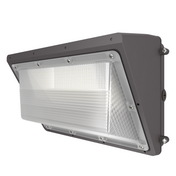

Cities, municipalities, and property managers worldwide are facing a critical decision when it comes to street lighting: stick with traditional lighting technologies or upgrade to modern LED street lights. Traditional lighting—including high-pressure sodium (HPS), metal halide (MH), and fluorescent fixtures—has been the standard for decades, but LEDs have emerged as a game-changer in terms of efficiency, performance, and cost savings. In this comprehensive comparison, we’ll break down the key differences between LED street lights and traditional lighting across 10 critical categories, helping you make an informed choice for your lighting project in 2026.
1. Energy Efficiency: The Core Advantage of LEDs
Energy efficiency is where LED street lights pull ahead by a wide margin. LEDs convert up to 90% of electricity into visible light, while traditional lighting wastes 50–80% of energy as heat. Modern LED street lights achieve 140–180 lumens per watt (lm/W), compared to just 60–100 lm/W for HPS and 70–90 lm/W for metal halide. For example, a 100W LED street light can replace a 250W HPS fixture while delivering brighter, more uniform light. This translates to immediate energy savings of 50–70% for cities. A mid-sized city with 5,000 street lights could cut annual energy costs by \(250,000–\)400,000 by switching to LEDs— a critical benefit amid rising utility rates and sustainability mandates.
Traditional lighting’s poor energy efficiency isn’t just costly; it also increases carbon footprints. HPS and MH lights require more power to produce the same lumen output, leading to higher greenhouse gas emissions from power plants. LEDs align with global net-zero goals, as their reduced energy use directly lowers a city’s carbon footprint.
2. Lifespan: LEDs Outlast Traditional Lights by Years
Lifespan is another area where LEDs dominate. High-quality LED street lights have a rated lifespan of 50,000–100,000 hours (10–20 years of regular use), while traditional lighting falls far short: HPS bulbs last 15,000–25,000 hours (3–5 years), and metal halide lasts 8,000–15,000 hours (2–3 years). This means LEDs need replacement just once every decade or two, compared to 3–5 times for HPS.
For municipalities, this translates to massive maintenance savings. Fewer replacements mean less labor, fewer road closures, and lower equipment costs. A city with 10,000 street lights might spend \(50–\)100 per fixture on replacement labor for HPS—adding up to \(500,000–\)1 million every 3–5 years. LEDs eliminate most of these costs, freeing up budgets for other public services. Additionally, LEDs are more durable: they have no fragile filaments or glass components, making them resistant to vibration, extreme weather, and vandalism—common issues for outdoor street lighting.
3. Light Quality & Public Safety
Traditional HPS lights produce a warm, yellowish glow with a low Color Rendering Index (CRI 20–40), which distorts colors and reduces visibility. This makes it harder for drivers, cyclists, and pedestrians to identify hazards, faces, or objects at night. LEDs, by contrast, offer CRI 70–85+ and produce bright, white light (3000K–5000K) that mimics natural daylight. This improves contrast, clarity, and color recognition, directly lowering nighttime accident rates and crime in urban areas.
LEDs also feature directional lighting design, which focuses light exactly where it’s needed—on roadways and sidewalks—instead of wasting it upward (a major issue with HPS). Full-cutoff LED optics reduce light pollution, comply with dark-sky regulations, and protect nocturnal wildlife. Traditional lights, with their omnidirectional glow, contribute significantly to light pollution and wasted illumination.
4. Cost: Upfront vs. Long-Term Value
One of the biggest misconceptions about LED street lights is that they’re “too expensive.” While LEDs have a higher upfront cost (\(200–\)800 per fixture) compared to HPS (\(50–\)150), their long-term value is unmatched. When calculating total cost of ownership (TCO)—including energy, maintenance, and replacement—LEDs deliver ROI in 2–5 years, with decades of savings afterward.
For example, a 100W LED street light costs \(300 upfront, uses 100kWh annually (at \)0.15/kWh = \(15/year), and needs replacement once every 15 years. A 250W HPS fixture costs \)80 upfront, uses 250kWh annually (\(37.50/year), and needs replacement every 4 years. Over 15 years, the LED costs \)300 + (\(15×15) + \)300 (replacement) = \(825. The HPS costs \)80 + (\(37.50×15) + (\)80×3) (replacements) = \(80 + \)562.50 + \(240 = \)882.50. Beyond 15 years, the LED continues to save money, while the HPS requires more replacements and higher energy costs.
Traditional lighting also has hidden costs: labor for maintenance, traffic disruptions during bulb changes, and environmental disposal fees (HPS contains toxic mercury). LEDs have no mercury, reducing disposal costs and environmental liability.
5. Smart Technology Integration
In 2026, smart city integration is a non-negotiable feature for street lighting—and LEDs are built for it. Modern LED street lights support photocells, motion sensors, IoT connectivity (LoRaWAN, Zigbee, 4G/5G), and cloud-based management systems. This allows cities to remotely monitor fixtures, dim lights during low-traffic hours (saving an additional 20–40% on energy), schedule operation, and detect faults instantly.
Traditional lighting offers no such flexibility. HPS and MH lights operate at full power 24/7 (unless manually switched), wasting energy during empty streets or daylight hours. Adding smart controls to traditional lights is possible but costly and inefficient, as the fixtures themselves still lack energy-saving capabilities. LEDs’ compatibility with smart technology makes them a foundational component of modern smart cities, enabling data-driven urban planning and resource optimization.
6. Environmental Impact
Sustainability is a top priority for cities in 2026, and LEDs outperform traditional lighting on every environmental metric. LEDs use 50–70% less energy, reducing reliance on fossil fuels and lowering carbon emissions. A single LED street light can reduce CO2 emissions by 1–2 tons per year compared to HPS.
Traditional HPS lights contain mercury, a toxic heavy metal that leaks into soil and water during disposal. LEDs have no mercury or hazardous materials, making them safe to manufacture, use, and recycle. Additionally, LEDs’ longer lifespan means fewer fixtures end up in landfills, reducing waste. Many LED models are also solar-compatible, allowing off-grid operation in remote areas and further reducing environmental impact.
7. Performance in Extreme Conditions
Street lights must withstand harsh outdoor conditions—extreme temperatures, rain, snow, dust, and humidity. LEDs excel here, with operating temperatures ranging from -40°C to 65°C (-40°F to 149°F). Their solid-state design (no moving parts) makes them resistant to vibration and shock, ideal for busy roads or areas prone to storms.
Traditional HPS lights struggle in extreme cold, taking minutes to warm up and reach full brightness. They’re also vulnerable to damage from vibration and temperature fluctuations, leading to premature failure. LEDs turn on instantly at full brightness, regardless of temperature, ensuring reliable performance in all climates.
8. Glare Reduction & Visibility
Glare from street lights can blind drivers and pedestrians, increasing accident risks. LEDs use advanced optics and diffusers to minimize glare, delivering uniform light distribution without harsh hotspots. Traditional HPS lights produce significant glare due to their omnidirectional output and lack of precision optics, reducing visibility and comfort for road users.
LEDs also allow for customizable beam angles (Type II–V), ensuring the right light distribution for different road types: narrow residential streets, wide highways, or busy intersections. Traditional lights offer limited beam control, leading to uneven illumination and wasted light.
9. Regulatory Compliance
Cities must comply with increasingly strict regulations: dark-sky requirements, energy efficiency standards, and environmental mandates. LEDs meet all these with ease. Their full-cutoff optics comply with dark-sky rules, their high efficacy meets energy standards (e.g., ENERGY STAR), and their mercury-free design aligns with environmental regulations.
Traditional HPS lights often fail dark-sky compliance due to upward light spill. They also fall short of modern energy efficiency standards, putting cities at risk of fines or ineligibility for grants. Upgrading to LEDs ensures compliance while avoiding regulatory headaches.
10. Future-Proofing
Technology evolves rapidly, and LEDs are future-proof. They can be easily upgraded with new smart controls, sensors, or firmware, adapting to changing city needs. Traditional lighting is obsolete—manufacturers are phasing out HPS bulbs, making replacements harder to find and more expensive.
By investing in LEDs, cities avoid the need for frequent retrofits. LEDs will remain the standard for decades, ensuring infrastructure stays modern and efficient. Traditional lighting, by contrast, will require replacement within a few years as parts become unavailable.
Final Verdict: LEDs Are the Clear Choice for 2026
When comparing LED street lights vs. traditional lighting, LEDs outperform in every critical category: energy efficiency, lifespan, light quality, cost savings, smart integration, sustainability, and compliance. Traditional lighting may have a lower upfront cost, but it’s costly, inefficient, and outdated in the long run.
For cities, municipalities, and property managers looking to reduce costs, improve public safety, and support sustainability, LED street lights are the only practical choice in 2026. The data speaks for itself: LEDs save money, reduce environmental impact, and deliver superior performance—making them a wise investment for modern urban development.