
Introduction
Commercial building security starts at the perimeter. Intruders, vandals, and thieves actively avoid well‑lit properties. Conversely, dark corners, inconsistent illumination, and slow‑starting lights create vulnerabilities that criminals exploit. For decades, commercial property managers relied on metal halide or high‑pressure sodium (HPS) wall packs to light building exteriors, loading docks, and parking lot perimeters. But those outdated technologies have serious drawbacks: slow warm‑up, poor color rendering (which makes it hard for security cameras to identify faces or vehicle colors), high energy consumption, and frequent maintenance.
In 2026, LED wall pack lights have become the gold standard for commercial perimeter security. This guide explains exactly how LED wall packs improve security, compares them to traditional technologies, provides real‑world case studies, and offers a practical installation checklist. By the end, you’ll understand why upgrading to LED wall packs is one of the fastest, most cost‑effective ways to secure your commercial building.
What Are LED Wall Pack Lights?
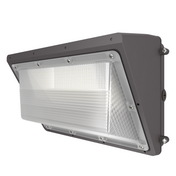
LED wall pack lights are compact, surface‑mounted luminaires designed to be attached to the exterior walls of commercial buildings. Their name derives from their original purpose: illuminating the wall directly below the fixture and the adjacent ground area, creating a “pack” of light that extends outward. Modern LED wall packs feature:
-
Slim, low‑profile housings (often die‑cast aluminum) that blend into building architecture
-
Multiple optical distributions (Type II, III, IV, V) to match mounting height and coverage needs
-
Built‑in dusk‑to‑dawn photocells for automatic on/off operation
-
0‑10V dimming for integration with motion sensors or building management systems (BMS)
-
IP65 or higher weather resistance for outdoor durability
Typical applications include building perimeters, entryways, loading docks, alleyways, parking garage exteriors, and service doors. Wall packs are distinct from floodlights (which are aimed at specific targets) and area lights (which are pole‑mounted). They provide uniform, downward‑directed illumination along the building facade and adjacent ground.
5 Key Ways LED Wall Pack Lights Improve Commercial Security
1. Eliminate Dark Spots and Shadow Zones
Criminals use darkness as cover. Traditional HID wall packs often produce uneven light distribution—bright directly under the fixture, with rapid falloff a few feet away. This creates shadow zones where intruders can hide. By contrast, LED wall packs with asymmetric optics (Type IV or Type V distributions) direct light outward and downward evenly, covering a wide, rectangular area.
Comparison of coverage:
| Feature | Metal Halide / HPS Wall Pack | LED Wall Pack |
|---|---|---|
| Light distribution | Symmetric, spotlight‑like | Asymmetric (Type IV/V) for uniform spread |
| Shadow zones near building | Yes – dark spots at ground level | No – uniform coverage from wall to 20‑30 ft |
| Glare for pedestrians | High (bare lamp visible) | Low (shielded optics) |
Practical benefit: A well‑designed LED wall pack system illuminates the entire walkway, dumpster area, and loading dock without leaving hiding spots. Security cameras capture clear, consistent footage.
2. High Color Rendering Index (CRI) for CCTV and Facial Recognition
Security cameras are only as good as the light they capture. Metal halide wall packs have modest CRI (65‑75), and HPS wall packs have abysmal CRI (20‑25), rendering everything in a monochromatic orange or greenish cast. This makes it impossible to distinguish clothing colors, vehicle details, or facial features.
LED wall packs are available with CRI 80‑90+ . Premium models reach CRI 90. This high color fidelity dramatically improves:
-
Facial recognition – security personnel and AI analytics can identify suspects
-
Vehicle description – color, make, and model become discernible
-
Forensic evidence – footage from LED‑lit areas is admissible and useful
Many insurers and law enforcement agencies now recommend or require CRI ≥ 80 for exterior security lighting.
3. Instant On / Instant Restrike – No Warm‑Up Delays
Metal halide and HPS wall packs require 3‑10 minutes to warm up to full brightness. If a motion sensor triggers the light after hours, the area remains dark during the most critical initial seconds. Worse, if power flickers or if the lights are turned off briefly, HID lamps require a 10‑15 minute cool‑down before they can restrike—leaving the building perimeter completely dark.
LED wall packs reach full brightness instantly (<0.5 seconds) and restrike instantly after any power interruption. This ensures that motion‑activated lighting works exactly when needed, deterring intruders immediately.
4. Seamless Integration with Motion Sensors and Smart Controls
Modern LED wall packs are controls‑ready, with standard 0‑10V dimming. This allows them to be paired with:
-
Passive infrared (PIR) or microwave motion sensors – lights remain at 20‑30% dim during low‑activity hours, then instantly brighten to 100% when motion is detected. The sudden increase in illumination startles and deters potential intruders while alerting security personnel.
-
Scheduling – automatically reduce light levels after midnight, then return to full output before employees arrive.
-
Remote monitoring – track fixture health, receive failure alerts, and log energy usage from a central dashboard.
-
Integration with access control and alarm systems – when an unauthorized entry is detected, the lighting system can flash or brighten specific zones.
This smart capability is impossible with traditional HID wall packs, which cannot be dimmed efficiently.
5. Consistent Light Output Over Time – No Degradation
Security depends on predictable light levels. Metal halide lamps lose 30‑50% of their lumens by half‑life (5,000‑8,000 hours), yet continue drawing full power. A wall pack that was adequately lit at installation becomes dangerously dim after 18‑24 months, but property managers may not notice the gradual decline until an incident occurs.
LED wall packs maintain >90% of initial lumens for 50,000‑100,000+ hours. This consistency means your security lighting stays effective for a decade or more without constant relamping.
LED Wall Packs vs. Traditional Wall Packs for Security
| Feature | LED Wall Pack | Metal Halide (MH) Wall Pack | High‑Pressure Sodium (HPS) Wall Pack |
|---|---|---|---|
| CRI | 80‑90+ | 65‑75 (degrades) | 20‑25 (poor) |
| Start‑up time | Instant (<0.5 sec) | 3‑10 min warm‑up | 3‑5 min warm‑up |
| Restrike after power loss | Instant | 10‑15 min delay | 1‑2 min delay |
| Motion sensor compatibility | Excellent (0‑10V dimming) | Poor (warm‑up delay) | Poor |
| Lumen maintenance (50,000h) | >90% | <50% (lamp dead) | <60% |
| Uniformity (Type IV optics) | High – even ground coverage | Poor – hot spot below fixture | Poor |
| Glare control | Shielded optics, low UGR | Unshielded lamp, high glare | Moderate glare |
| Energy use (for equivalent light) | 60‑70% less | Baseline | 30‑40% less than MH |
| Lifespan | 50,000‑100,000h | 10,000‑20,000h | 24,000‑40,000h |
| Maintenance | Near‑zero (10+ years) | Relamp every 1‑2 years | Relamp every 2‑4 years |
| Smart controls ready | Yes (0‑10V, DALI, wireless) | No | No |
| Typical payback period | 1‑3 years (with rebates) | Not applicable | Not applicable |
Additional Security Benefits of LED Wall Packs
Reduced Glare for Cameras and Neighbors
Glare from unshielded wall packs can blind security cameras, create lens flare, and wash out image details. LED wall packs with full‑cutoff optics and low UGR (<22) direct light downward exactly where needed, keeping it out of camera lenses and neighbors‘ windows. This also helps comply with dark‑sky ordinances.
Lower Operating Temperature Means Higher Reliability
HID wall packs generate intense heat (surface temperatures exceeding 200°C / 400°F). This heat can:
-
Degrade wire insulation and gaskets, leading to premature failure
-
Attract insects (which then die and block lenses)
-
Create a fire hazard if mounted near combustible materials
LED wall packs run cool (surface temperatures typically 50‑70°C / 120‑160°F). This increases reliability, reduces insect attraction, and eliminates fire risk.
No Mercury – Safer for Maintenance and Environment
Each metal halide or HPS lamp contains 10‑50 mg of mercury. When a lamp breaks during maintenance, mercury vapor is released. When lamps are discarded improperly, mercury contaminates soil and water. LED wall packs contain no mercury, making them safer for maintenance staff and the environment.
How to Select LED Wall Packs for Maximum Security
When specifying LED wall packs for security applications, consider these factors:
1. Light Distribution Type – Match to Mounting Height
| Distribution | Beam Pattern | Best Mounting Height | Coverage Shape |
|---|---|---|---|
| Type II | Forward throw, narrow width | 10‑15 ft | Long, narrow rectangle (walkways) |
| Type III | Wide forward throw | 15‑25 ft | Wide rectangle (parking lots, loading docks) |
| Type IV | 180° forward throw | 12‑20 ft | Half‑circle (building perimeters, alleyways) |
| Type V | Square or round symmetric | 8‑15 ft | Full circle (open areas) |
For general building perimeter security at 15‑20 ft mounting height, Type IV is the most common choice – it distributes light evenly along the wall and outward.
2. Lumens and Wattage
A typical commercial LED wall pack ranges from 30W to 150W, producing 3,000 to 22,500 lumens. For a standard loading dock or back alley, 4,000‑8,000 lumens (40‑60W) is often sufficient. For high‑risk perimeters or large dumpster enclosures, 10,000‑15,000 lumens (80‑100W) may be appropriate.
3. Color Temperature (CCT)
For security applications, 4000K‑5000K (neutral to cool white) is recommended. It provides the best balance of visibility, color rendering, and glare control. Avoid 6500K (very cool, harsh) and 3000K (warm, less effective for CCTV).
4. DLC V6.0 Certification
For 2026 projects, DLC certification is essential for utility rebates. Ensure the wall pack is DLC V6.0 Premium listed (V5.1 products will be delisted after December 15, 2026). Premium tier offers higher rebates – typically 75 per fixture.
5. Motion Sensor Integration
For maximum security and energy savings, select wall packs with:
-
Integrated microwave or PIR sensor – reduces installation complexity
-
0‑10V dimming leads – allows external sensor control
-
Adjustable hold time and sensitivity – prevents false triggers from animals or passing cars
A bi‑level dimming strategy (20% dim, 100% upon motion) can cut energy use by an additional 40‑60% while enhancing security.
Installation Best Practices for Security
-
Mounting height: Typically 12‑20 ft above ground. Higher mounting reduces glare but may require more lumens.
-
Spacing: For Type IV distribution, space fixtures 1.5‑2× the mounting height. Example: mounted at 15 ft, space 22‑30 ft apart.
-
Positioning: Aim wall packs to illuminate doors, dumpsters, gate entrances, and blind corners. Avoid pointing lights directly into neighboring windows.
-
Secondary safety cable: Always use a safety cable for overhead wall packs to prevent falling fixtures.
-
Photocell placement: Ensure the built‑in dusk‑to‑dawn sensor is not obstructed and is oriented away from direct light spill.
Real‑World Case Study: LED Wall Pack Retrofit Reduces Crime
A regional retail chain with 25 stores experienced 18 burglaries and 42 reported vandalism incidents over two years at their back‑of‑store loading docks and dumpster areas. The existing HPS wall packs provided poor color rendering (CRI 22) and had significant dark zones.
The company retrofitted each store with 8‑10 LED wall packs (50W each, Type IV distribution, 5000K, CRI 85) with integrated microwave motion sensors set to bi‑level dimming (30% dim, 100% on motion).
Results after 12 months:
-
Security incidents decreased by 73% (5 burglaries, 11 vandalism incidents)
-
Energy consumption for perimeter lighting dropped 64%
-
Security camera footage quality improved – suspect identifications increased
-
Maintenance costs eliminated – no more lamp changes
-
Payback period: 14 months (including DLC utility rebates)
Frequently Asked Questions (FAQ)
Q: How bright should LED wall packs be for commercial security?
A: For general building perimeter, 4,000‑8,000 lumens (40‑60W) is typically sufficient. For high‑risk areas (loading docks, cash offices, ATM vestibules), 10,000‑15,000 lumens (80‑100W) is recommended. Always conduct a night‑time assessment.
Q: Can I use LED wall packs with existing motion sensors?
A: Yes, if the wall pack has 0‑10V dimming leads. Connect the sensor‘s dimming output to the fixture‘s purple (+) and gray (-) wires. Ensure the sensor is rated for LED loads (many older sensors designed for HID loads may not work correctly).
Q: Do LED wall packs work in cold climates?
A: Yes – LED performance improves in cold temperatures. Ensure the driver is rated for your minimum ambient temperature (look for -30°C to -40°C rating). Premium wall packs from major manufacturers are tested for extreme climates.
Q: What is the typical lifespan of an LED wall pack?
A: Quality LED wall packs have an L70 rating of 50,000‑100,000 hours. At 12 hours per night (4,380 hours/year), that’s 11‑22 years of service.
Q: Are LED wall packs eligible for utility rebates in 2026?
A: Yes – if they are DLC V6.0 listed. V6.0 became active in early 2026; V5.1 products will be delisted after December 15, 2026. Premium‑tier wall packs qualify for higher rebates (typically 75 per fixture). Check with your local utility.
Q: Can LED wall packs be dimmed for different security levels?
A: Yes. Through 0‑10V dimming, you can set different light levels for “armed” vs. “disarmed” modes, or integrate with building automation systems to raise lights to 100% when an alarm is triggered.
Final Summary
LED wall pack lights are a transformative upgrade for commercial building security. They eliminate dark spots, provide instant‑on illumination, deliver high CRI for security cameras, enable motion‑activated bi‑level dimming, and maintain consistent light output for over a decade.
Key security takeaways:
-
Uniform coverage – no hiding spots
-
High CRI (80‑90+) – facial recognition and vehicle identification
-
Instant on/restrike – motion sensors work immediately
-
Smart controls – bi‑level dimming, scheduling, remote monitoring
-
Consistent output – no gradual darkening over time
-
Low glare – better for cameras and neighbors
-
No mercury – safer for maintenance
If your commercial building still relies on metal halide or HPS wall packs, you are leaving security gaps that criminals can exploit. Upgrading to LED wall packs is one of the highest‑ROI security investments you can make – often paying for itself in under two years through energy savings and reduced maintenance, while dramatically improving safety.
Take action today: Conduct a night‑time security walk of your building perimeter. Identify dark zones, slow‑starting fixtures, and areas with poor color rendering. Then contact a lighting professional for a free LED wall pack assessment and DLC V6.0 rebate analysis.