
Introduction
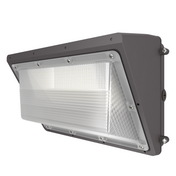
LED wall pack lights have become the undisputed standard for commercial building exteriors — lighting perimeters, loading docks, entryways, walkways, parking lots, and retail facades. Compared to outdated high-intensity discharge (HID) fixtures — metal halide (MH) and high-pressure sodium (HPS) — modern LED wall packs deliver superior brightness, consume 60–80% less energy, and operate maintenance‑free for 10+ years, all while meeting strict 2026 compliance standards including DLC 5.1/6.0 and ASHRAE 90.1.
But with hundreds of options on the market — varying in lumens, distributions, color temperatures, certifications, and control capabilities — how do you identify th right LED wall pack for your specific application? For facility managers, property owners, and electrical contractors, the wrong choice can mean dark spots that compromise security, glare that blinds security cameras, wasted energy, or missed utility rebates.
This comprehensive 2026 guide breaks down the key criteria for selecting commercial‑grade LED wall packs, provides actionable step‑by‑step decision framework, includes HID-to-LED replacement tables, spacing guidelines, DLC certification strategies, and a final checklist to help you make a cost‑effective, code‑compliant decision.
Why LED Wall Packs — The 2026 Value Proposition
Before diving into selection criteria, understand why LED wall packs are non‑negotiable for modern commercial buildings:
-
Energy Savings: 60–80% less energy than HID fixtures. A 150W LED wall pack (22,050 lumens) replaces a 400W MH fixture — which actually draws 458W with ballast — while delivering brighter, more uniform light.
-
Lifespan: 50,000–150,000 hours (L70 rating) vs. 10,000–20,000 hours for HID. A single LED wall pack can operate maintenance‑free for over a decade, even in 24/7 use.
-
Durability: IP65+ ratings withstand rain, dust, and extreme temperatures; IK08–IK10 ratings resist vandalism and accidental damage.
-
Light Quality: High CRI (80–95+) improves CCTV footage clarity and enhances color perception — critical for retail security teams.
-
Compliance: Modern LED wall packs meet DLC 5.1 Premium (≥140 lm/W efficacy and controls-ready) and UL/ETL safety certifications.
The global outdoor LED lighting market is growing at a CAGR of 5.0% from 2025 to 2035, driven by increasing demand for energy‑efficient solutions and the global shift toward sustainability. In 2026, LED chips achieve luminous efficacy exceeding 180 lumens per watt, incorporating advanced quantum dot technology and chip-on-board (COB) configurations that optimize light distribution and thermal management.
Step 1: Match Lumens to Application — Not Watts
The most critical shift in lighting specification is prioritizing lumens over watts. Unlike HID (where a higher‑wattage bulb was reliably brighter), LED efficacy varies dramatically between 120 lm/W and 180+ lm/W. Always size based on delivered lumens, not wattage consumption.
HID‑to‑LED Wall Pack Replacement Chart
| Legacy HID Wattage | LED Equivalent Wattage | Typical Lumens | Annual Energy Savings (per fixture) |
|---|---|---|---|
| 70W–100W MH | 15W–25W LED | 2,500–4,000 lm | 60–70% |
| 150W MH | 30W–50W LED | 4,500–7,500 lm | 65–75% |
| 250W–300W MH | 50W–80W LED | 8,000–12,000 lm | 70–75% |
| 400W MH | 80W–120W LED | 12,000–18,000 lm | 70–80% |
| 750W–1000W MH | 150W–200W LED | 20,000–32,000+ lm | 75–80% |
Sources: Emergency Lights Co., LED Lighting Supply, RAB Lighting
For example, a 150W metal halide wall pack uses a total of 186 watts when including lamp and ballast losses. A 45W LED wall pack (6,300 lumens) replaces the 150W MH at 140 lm/W while consuming only 45 watts — using 141 fewer watts to deliver equivalent lumens. A 45‑watt full‑cutoff wall pack producing 6,300 lumens replaces a 150‑watt metal halide at 140 lumens per watt. A 20W mini LED wall pack (2,900 lumens) with field‑selectable CCT and integrated photocell serves as a 70W MH equivalent.
When retrofitting, always size to maintained light levels. HID lumen depreciation means a metal halide lamp may produce only 50–65% of initial lumens by half‑life (5,000–10,000 hours), whereas LEDs maintain >90% of initial output for 50,000+ hours.
Step 2: Determine Required Lumen Output by Mounting Height
The amount of light reaching the ground depends on mounting height. Higher mounting requires higher lumens to maintain adequate foot‑candles.
Mounting Height & Lumen Recommendation Table
| Mounting Height | Recommended Lumens per Fixture | Typical Applications |
|---|---|---|
| 8–12 ft (2.4–3.6 m) | 1,500–3,000 lm | Residential perimeters, low‑rise buildings |
| 10–15 ft (3–4.5 m) | 3,000–6,000 lm | Entryways, small commercial buildings, walkways |
| 12–18 ft (3.5–5.5 m) | 5,000–9,000 lm | Retail facades, strip malls, gas stations |
| 15–25 ft (4.5–7.6 m) | 8,000–20,000 lm | Loading docks, warehouse perimeters, parking garages |
| 20–30 ft (6–9 m) | 12,000–30,000+ lm | Large industrial buildings, high‑bay exteriors |
Source: Emergency Lights Co., Hyperlite, Starsteck
Selectable‑wattage fixtures — available in ranges such as 16W/20W/24W or 28W/50W/77W — allow on‑site adjustment via DIP switches, providing inventory flexibility and fine‑tuning capability.
Step 3: Select the Right IES Distribution Pattern (Type II, III, IV, V)
Different mounting locations and lighting objectives require specific distribution patterns. IES distribution types (defined by photometric LM‑63‑19 files) determine how light is thrown from the building outward.
Type II (Narrow, Elongated Forward Throw)
-
Best for: Walkways, side alleys, narrow building corridors
-
Pattern: Long, narrow lateral throw — designed for applications where the fixture is placed near the center of a narrow area
-
Spacing: 1.0 to 1.25 × mounting height
-
Characteristic: Maximizes forward coverage length
Type III (Wide Forward Throw)
-
Best for: Pedestrian edges, general perimeters, medium parking areas
-
Pattern: Wider forward spread than Type II — a common façade choice balancing width and reach
-
Spacing: Approximately 1.25 to 1.5 × mounting height
-
Characteristic: Ideal for standard commercial building perimeters
Type IV (Forward Throw — 180° Semicircular)
-
Best for: Loading docks, large parking lots, building perimeters on wide aprons
-
Pattern: Semicircular 180° light distribution — pushes light away from the wall and across a wide area
-
Spacing: 1.5 to 1.75 × mounting height
Type V (Square/Round Symmetric)
-
Best for: Corner installations, open areas, courtyards, intersections
-
Pattern: Symmetric 360° circular or square illumination — ideal for illuminating from a corner where coverage on two adjoining walls is needed
-
Characteristic: Provides full surrounding illumination
Full‑Cutoff vs. Forward‑Throw
-
Full‑cutoff fixtures limit uplight and glare, making them suitable near residences, campuses, and for dark‑sky compliance.
-
Forward‑throw (Type IV) fixtures throw light outward across aprons and docks, ideal for yard‑side coverage from the building line.
-
Shields/visors trim spill light at windows and property lines; use when aiming increases line‑of‑sight brightness.
For commercial buildings, Type III is a common façade choice for pedestrian edges, while Type IV is preferred for loading docks and large parking aprons. Type II serves walkways and alleys.
Step 4: Coverage and Spacing — How Far Will Each Fixture Reach?
Understanding usable coverage prevents dark spots and reduces fixture count.
Coverage Rule of Thumb
The usable throw of a wall pack is approximately 2× the mounting height for broad‑beam fixtures. At 15 ft mounting height, expect roughly 30 ft of useful coverage from the building face. At 20 ft, expect approximately 40 ft of coverage. Forward‑throw (Type IV) optics can reach farther with fewer lumens than “spray” beams.
The Spacing‑to‑Height Ratio (SHR) is a key determinant of lighting uniformity. Achieving illuminance levels at 50% of maximum candela at the midpoint between fixtures is the minimum threshold for a seamless security envelope. Uneven spacing often leads to “hot spots” directly under luminaires and “dark spots” between — compromising security surveillance.
Practical spacing table:
| Distribution | Spacing‑to‑Height Ratio (SHR) | Example (15 ft mounting) |
|---|---|---|
| Type II (narrow) | 1.0–1.25× MH | 15–19 ft spacing |
| Type III | 1.25–1.5× MH | 19–22 ft spacing |
| Type IV (forward throw) | 1.5–1.75× MH | 22–26 ft spacing |
For deeper layout methods, always use photometric modeling (AGi32 or DIALux) for final spacing confirmation.
Step 5: Choose Color Temperature (CCT) for Your Application
CCT affects visual comfort, security perception, and CCTV performance.
For retail storefronts, well‑lit exteriors stand out after dark, drawing foot traffic and reinforcing brand identity. LED wall packs highlight architectural details, signage, and window displays. For security applications, 5000K (daylight white) provides crisp, high‑contrast illumination that enhances camera image clarity and perceived safety.
Many modern LED wall packs offer field‑selectable CCT (3000K/4000K/5000K) via DIP switches, allowing on‑site adjustment to match surrounding lights. Cree Lighting’s EDGE series supports CCTs from 3000K to 5700K, including a turtle‑friendly amber option.
Step 6: Specify Color Rendering Index (CRI) — Critical for CCTV
CRI measures how accurately colors appear under the light source (0–100 scale). For security applications, high CRI is essential for facial recognition, vehicle identification, and forensic analysis.
Premium LED wall packs — such as Cree Lighting‘s EDGE series — support multiple CRI options (70, 80, and 90), enabling specification for site‑specific security requirements. High-CRI LED wall packs improve CCTV footage clarity, a critical factor for retail security teams.
Step 7: Environmental Durability — IP and IK Ratings
Outdoor wall packs face moisture, dust, temperature swings, and physical impact. Verify both IP and IK ratings.
IP Rating (Ingress Protection — First Digit: Solids, Second: Liquids)
A 45W full‑cutoff wall pack with IP65 rating is suitable for wet locations, with an operating temperature range from -22°F to +113°F.
IK Rating (Impact Protection)
| IK Rating | Impact Energy | Application |
|---|---|---|
| IK06 | 1 joule | Low‑risk areas |
| IK08 | 5 joules | Moderate impact — standard commercial |
| IK10 | 20 joules | Vandal‑prone locations, high‑traffic areas |
Specify IK08–IK10 for high‑traffic parking garages, urban retail centers, and any location susceptible to vandalism or equipment damage.
For coastal regions or snowy areas, IP66 fixtures resist salt corrosion and heavy precipitation. Fixtures operating in extreme temperatures should specify a range of -40°C to +50°C (-40°F to +122°F).
Step 8: DLC V6.0 Certification — Your Gateway to Utility Rebates
DLC (DesignLights Consortium) certification is not optional for 2026 commercial projects — it‘s the gatekeeper for utility rebates. Approximately 75% of North American energy efficiency programs require DLC listing to qualify for any incentive at all.
DLC Tiers and Requirements
DLC Premium listing triggers bonus rebates — the difference between Standard and Premium can mean 50 more per fixture in utility rebate money. For a building with 50 fixtures, that‘s 2,500 in additional incentives.
Critical 2026 Deadlines — V6.0 Transition
DLC SSL V6.0 became active in January 2026, raising minimum efficacy by an average of 14% compared to V5.1, with category‑specific increases up to 19%.
| Milestone | Date |
|---|---|
| V6.0 applications open | January 5, 2026 |
| V5.1 removed from active QPL | October 1, 2026 |
| V5.1 final delisting | December 15, 2026 |
For any 2026 project, specify DLC V6.0 certified fixtures to ensure full rebate eligibility. V5.1 products still in inventory will lose rebate qualification after December 15, 2026 — distributors should audit stock now.
Step 9: Smart Controls — Motion Sensors, 0‑10V Dimming, and Photocells
Modern LED wall packs are controls‑ready, unlocking additional energy savings and security enhancements.
Photocells (Dusk‑to‑Dawn)
Integrated photocells automatically turn lights on at sunset and off at sunrise, eliminating daytime energy waste. Photocell sensitivity is typically set to turn on below 25 lux and off above 130 lux. Many fixtures allow the photocell to be bypassed by disconnecting internal wires for manual control.
0‑10V Dimming
Standard 0‑10V dimming allows smooth brightness adjustment from 10% to 100%. This enables bi‑level dimming strategies — lights operate at 10–20% during low‑traffic periods (e.g., 2 AM–5 AM), then instantly brighten to 100% upon motion detection, cutting energy by an additional 30%+. A 0‑10V motion sensor can control commercial LED fixtures through integrated occupancy detection, compatible with 0‑10V drivers up to 8A switching capacity and 50mA sink current.
Motion Sensors
Integrated microwave or PIR motion sensors work with 0‑10V dimming fixtures. Sensors rated for wet and cold locations can control 0‑10 VDC dim‑to‑off LED drivers, with all control parameters adjustable via wireless configuration tools. Motion sensors paired with photocells can push total energy savings up to 90%.
Smart Connectivity
2026 wall packs incorporate wireless connectivity (Wi‑Fi, Bluetooth, LoRaWAN) enabling remote monitoring, automated scheduling, and adaptive lighting control. IoT integration provides real‑time performance data, predictive maintenance alerts, and energy consumption analytics.
Step 10: Certification and Compliance Checklist
Ensure the fixtures you specify meet these regulatory requirements:
Non‑compliant lighting can result in fines, failed inspections, or denied insurance claims — making certified LED wall packs a risk‑mitigation tool.
Real‑World Application Matrix
| Application | Recommended Lumens | Distribution | CCT | CRI | Controls | Mounting Height |
|---|---|---|---|---|---|---|
| Building perimeter (standard) | 4,000–8,000 lm | Type III | 4000K | 80+ | Photocell | 10–15 ft |
| Loading dock | 8,000–15,000 lm | Type IV | 5000K | 80+ | Motion + Photocell | 15–20 ft |
| Retail storefront | 3,000–8,000 lm | Type III | 4000K | 85+ | Photocell | 12–18 ft |
| Parking garage | 6,000–12,000 lm | Type IV | 4000K–5000K | 80+ | Bi‑level dimming + Motion | 12–20 ft |
| Alley / walkway | 2,000–5,000 lm | Type II | 3000K–4000K | 80+ | Motion | 8–12 ft |
| High‑security perimeter | 10,000–20,000 lm | Type IV | 5000K | 85–90+ | Always‑on + CCTV integration | 15–25 ft |
Step‑by‑Step Selection Checklist (Printer‑Friendly)
Use this checklist when evaluating LED wall pack proposals:
Lumens & Efficiency
-
Lumens determined by application and mounting height
-
Efficacy ≥ 140 lm/W (≥ 150 lm/W for DLC Premium eligibility)
-
HID replacement wattage identified — matched via lumens, not watts
Distribution & Coverage
-
IES distribution type selected: Type II (walkway), Type III (perimeter), Type IV (loading/parking), or Type V (corner)
-
Spacing calculated using SHR for selected distribution (1.0–1.75× mounting height)
-
Uniformity (min/avg) target established
Light Quality
-
CCT selected: 4000K–5000K for commercial security; 5000K for high‑contrast CCTV
-
CRI specified: ≥ 80 minimum, ≥ 85–90 for CCTV‑critical areas
Durability & Environmental
-
IP rating: IP65 minimum for outdoor; IP66 for coastal/high‑rainfall
-
IK rating: IK08–IK10 for vandal‑prone areas
-
Operating temperature range verified for local climate
Controls & Smart Features
-
Photocell (dusk‑to‑dawn) included
-
0‑10V dimming for bi‑level or motion sensor integration
-
Motion sensor specified for energy‑sensitive areas
-
Wireless/smart controls specified for remote monitoring (optional)
Compliance & Financial
-
DLC V6.0 certification confirmed (critical for 2026 rebate eligibility)
-
UL/ETL listing verified
-
Utility rebate amount estimated before purchase
-
Warranty confirmed (5–10 years typical; Cree offers 10‑year limited)
-
5‑ or 10‑year total cost of ownership calculated
Installation
-
Secondary safety cables specified
-
Mounting location verified for clearance
-
Professional photometric plan obtained for complex layouts
Frequently Asked Questions (FAQ)
Q: How many lumens do I need for commercial building perimeter security?
A: For general building perimeters at 10–15 ft mounting height, 4,000–8,000 lumens per fixture is typically sufficient. For high‑security perimeters or loading docks at 15–25 ft height, 10,000–20,000 lumens may be required. Always verify with photometric modeling.
Q: What‘s the most common distribution type for commercial walls?
A: Type III is the most common façade choice — providing wide enough coverage for pedestrian edges and general perimeters. For loading docks and large parking aprons where light must project far from the building, choose Type IV forward throw.
Q: What is the typical payback period for LED wall pack retrofits?
A: Typical payback ranges from 1–3 years, driven by 60–80% energy savings and near‑zero maintenance costs. With DLC V6.0 utility rebates (often 150+ per fixture), payback can shrink to under 12 months. For a mid‑sized building with 50 exterior fixtures, annual energy savings of 8,000 are typical.
Q: Can I use 5000K LED wall packs with existing 4000K lighting?
A: While you can mix CCTs, it is not recommended for uniform perimeters. 5000K (daylight white) is noticeably cooler and crisper than 4000K (neutral white). Selectable‑CCT fixtures allow on‑site matching. If mixing across a large façade, the visual mismatch may be distracting.
Q: Do LED wall packs qualify for DLC rebates in 2026?
A: Yes — if DLC V6.0 certified. For any 2026 project, ensure fixtures are listed under V6.0, as V5.1 products will be delisted after December 15, 2026. DLC Premium certification typically yields higher rebate amounts (75+ per fixture) compared to DLC Standard.
Q: What is the typical warranty on commercial LED wall packs?
A: Reputable manufacturers offer 5‑10 year warranties covering both LEDs and drivers. Cree Lighting offers a 10‑year limited warranty on their EDGE series wall mounts. Always verify warranty terms — some budget fixtures offer only 1‑3 year coverage.
Final Summary
Choosing the right LED wall pack lights for your commercial building in 2026 is a systematic process that balances application requirements, technical specifications, regulatory compliance, and total cost of ownership.
The eight‑step selection framework:
-
Size by lumens, not watts — Use the HID‑to‑LED replacement table as your starting point
-
Match lumens to mounting height — Higher mounting requires higher lumen output
-
Select IES distribution pattern — Type II (walkways), Type III (perimeter), Type IV (loading/parking), Type V (corners)
-
Verify coverage and spacing — Use SHR guidelines (1.0–1.75× mounting height) to eliminate dark spots
-
Choose CCT and CRI — 4000K–5000K for commercial security; CRI ≥ 80 minimum (≥ 85–90 for CCTV)
-
Confirm IP/IK ratings — IP65 minimum outdoors; IK08–IK10 for vandal‑prone areas
-
Specify DLC V6.0 certification — Your gateway to utility rebates; V5.1 delisting by December 15, 2026
-
Add smart controls — Photocells, 0‑10V dimming, and motion sensors maximize energy savings (up to 90% additional)
The payoff is substantial. LED wall packs deliver 60–80% lower energy costs, 50,000–150,000 hours of maintenance‑free operation, superior light quality (CRI 80–95+), smart control integration, and DLC V6.0 rebate eligibility — with typical payback of 1‑3 years.
If your commercial building still relies on metal halide or HPS wall packs, you‘re leaving security gaps, spending thousands more on energy and maintenance, and missing out on available utility rebates. The 2026 decision is clear: LED wall packs are the smartest investment you can make in your building‘s exterior lighting.
Take action today: Conduct a night‑time walkthrough of your building perimeter, identify dark spots and slow‑starting fixtures, and contact a qualified lighting professional for a free photometric design and DLC V6.0 rebate assessment.