
Introduction
Poorly lit commercial exteriors invite theft, vandalism, accidents, and liability claims. Whether you manage a retail plaza, office campus, warehouse distribution center, or apartment complex, outdoor security lighting is one of the most effective deterrents against crime. In 2026, LED area lights have become the gold standard for commercial outdoor security – not just because they save energy, but because they fundamentally improve how we illuminate vulnerable spaces.
This article explains how LED area lights enhance security compared to traditional floodlights or metal halide fixtures, and provides actionable guidelines for choosing, placing, and controlling them for maximum safety.
What Are LED Area Lights?
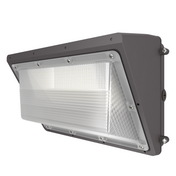
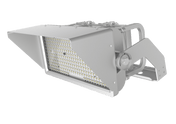
LED area lights (also called LED shoebox lights or outdoor area luminaires) are high‑output, wide‑distribution fixtures designed to illuminate large outdoor spaces from poles or building walls. Typical applications include:
-
Parking lots and garages
-
Loading docks and truck yards
-
Building perimeters and entryways
-
Pathway and campus lighting
-
Gas stations and convenience stores
-
Storage yards and equipment lots
Unlike simple floodlights that create harsh glare and deep shadows, area lights are engineered for uniform illumination with specific beam patterns (Type II, III, IV, or V) that evenly cover horizontal surfaces.
How LED Technology Directly Improves Outdoor Security
1. Elimination of Dark Spots and Shadows
Criminals exploit areas where light levels drop below visibility thresholds. Traditional metal halide or high‑pressure sodium (HPS) fixtures produce poor uniformity – bright spots directly under the pole and rapid falloff toward the next pole. LED area lights with advanced optics provide smooth, overlapping coverage that minimizes harsh shadows. With a properly designed LED layout, a person walking through a parking lot remains visible from multiple angles.
2. Superior Color Rendering (CRI) for Facial Recognition
Security cameras are only as good as the light they capture. Metal halide (CRI 65‑75) and HPS (CRI 20‑25) render colors poorly, making it difficult to distinguish clothing colors, vehicle details, or faces. LED area lights typically offer CRI >70, with premium models reaching CRI 80‑90. This higher color fidelity dramatically improves the usability of security footage for police investigations and real‑time monitoring.
3. Instant On and Flicker‑Free Operation
Traditional HID outdoor fixtures require 3‑10 minutes to warm up after power is applied. If a motion sensor triggers the light, the area remains dark during the most critical initial seconds. LED area lights turn on instantly at full brightness (<0.5 seconds). Additionally, high‑quality LED drivers produce flicker‑free output, eliminating the strobe effect that can confuse security cameras or trigger false alarms in video analytics.
4. Smart Controls and Motion Sensing
LED area lights are inherently compatible with advanced control systems that boost security while saving energy:
-
Motion sensors: Dim lights to 20‑30% during low‑activity hours, then instantly brighten to 100% when motion is detected. The sudden increase in illumination surprises and deters potential intruders, while also alerting security personnel.
-
Schedule‑based dimming: Reduce light levels after midnight, but maintain a minimum illuminance (e.g., 0.5‑1 footcandle) so security cameras still produce usable images.
-
Wireless mesh networking: Individual fixtures can communicate, allowing a single motion sensor to trigger a cascade of lights along a pathway or across a parking lot.
-
Integration with CCTV: Lighting and camera systems can be linked so that when a light goes to 100% due to motion, the corresponding PTZ (pan‑tilt‑zoom) camera immediately slews to that zone.
5. Consistent Light Output Over Time
Outdoor security depends on predictable light levels. Metal halide lamps lose 30‑50% of their lumens by half‑life (5,000‑8,000 hours), yet continue drawing full power. A parking lot that was adequately lit at installation may become dangerously dim after only 18 months. LED area lights maintain >90% of initial lumens for 50,000+ hours (typically 8‑12 years of normal outdoor operation). This consistency means you do not have to constantly relamp to maintain security standards.
6. Glare Reduction and Dark Sky Compliance
Glare can reduce security by blinding drivers and pedestrians – and it can also annoy neighbors, leading to complaints or municipal fines. LED area lights can be specified with full cutoff optics that direct light downward exactly where it is needed, while preventing upward light spill (dark‑sky friendly). Reduced glare also makes it easier for surveillance cameras to capture clear images without lens flare.
LED Area Lights vs Traditional Outdoor Lighting for Security
| Feature | LED Area Light | Metal Halide / HPS Floodlight |
|---|---|---|
| Instant full brightness | Yes (<0.5 sec) | No (3‑15 min warm‑up) |
| Color rendering (CRI) | 70‑90+ | 20‑65 (poor) |
| Uniformity (min/avg) | 0.5‑0.7 typical | 0.2‑0.4 typical (more dark spots) |
| Motion sensor compatibility | Excellent (instant response) | Poor (warm‑up delay) |
| Lumen maintenance (50,000h) | >90% | <50% |
| Controllability | 0‑10V dimming, wireless, IoT | None or expensive retrofit |
| Glare control | Full cutoff optics available | Often glass refractors with glare |
| Lifespan | 100,000+ hours (L70) | 15,000‑24,000 hours |
| Energy use | 60‑70% less than HID | Baseline |
| Security camera integration | Excellent (flicker‑free, high CRI) | Poor (flicker, low CRI) |
How to Design LED Area Lighting for Maximum Security
Follow these best practices when specifying or installing commercial outdoor LED area lights:
1. Conduct a Security Lighting Audit
Walk your property at night (or review night‑time security footage) and mark:
-
Areas with dark spots or deep shadows (behind dumpsters, between parked trucks, near stairwells)
-
Entry/exit points (doors, gates, turnstiles)
-
High‑traffic pedestrian routes
-
Locations of existing security cameras
2. Choose the Right Fixture and Optics
-
Light distribution types (IESNA):
-
Type II: Long and narrow (pathways, roadways)
-
Type III: Wide and forward (parking lots, general area)
-
Type IV: 180° forward throw (building perimeters, loading docks)
-
Type V: Square or round symmetric (center of large open lots)
-
-
Mounting height: For parking lots, 20‑30 ft poles are common. Higher poles may require special optics to maintain uniformity.
3. Meet or Exceed IES Recommended Illuminance Levels
The Illuminating Engineering Society (IES) provides standards for security lighting:
| Area type | Maintained horizontal illuminance (lux / fc) | Uniformity (avg/min) |
|---|---|---|
| Parking lot (high activity) | 10‑20 lux (1‑2 fc) | 4:1 |
| Parking lot (low activity) | 5‑10 lux (0.5‑1 fc) | 4:1 |
| Building perimeter | 5‑15 lux (0.5‑1.5 fc) | 4:1 |
| Loading dock | 20‑50 lux (2‑5 fc) | 3:1 |
LED fixtures make it easy to achieve these levels with fewer poles compared to metal halide.
4. Add Bi‑Level or Motion‑Based Controls
Bi‑level control is one of the most effective security enhancements:
-
Normal dim level: 20‑30% of full output. Provides enough light for cameras and general orientation, while saving energy.
-
Triggered high level: 100% output for 5‑15 minutes upon motion detection.
Use microwave or PIR sensors with a detection range appropriate for the area (50‑100 ft radius). Ensure sensors are mounted to ignore traffic on public roads to avoid false triggers.
5. Integrate with CCTV and Access Control
For maximum security, specify LED area lights that accept 0‑10V dimming and connect them to a building management system (BMS) or lighting controller that can:
-
Log motion events
-
Trigger camera recording and alarms
-
Provide remote status monitoring (light on/dim/off)
-
Alert maintenance when a fixture fails or lumen output degrades
Case Study: LED Retrofit Reduces Crime and Cuts Energy Use
A regional shopping center with 250 metal halide pole lights (250W each) experienced monthly security incidents – car break‑ins, loitering, and one burglary – concentrated in poorly lit zones. After an LED area light retrofit using 150W LED fixtures with Type III optics and bi‑level motion sensors:
-
Energy consumption dropped 65% (from 62,500W to 21,875W total connected load)
-
Uniformity improved from 0.25 to 0.62 (min/avg), eliminating all dark spots
-
Security incidents decreased by 78% over the following 12 months (property manager report)
-
Security camera footage quality improved – suspect identifications increased
-
Payback period: 14 months (including DLC rebates)
Frequently Asked Questions
Q: How bright should LED area lights be for security?
A: Most commercial parking lots need 5‑20 lux (0.5‑2 footcandles) maintained horizontal illuminance. Use a lighting design software (e.g., AGi32, Dialux) or consult a professional to determine exact fixture count and spacing.
Q: Do LED area lights work with existing motion sensors?
A: Yes, as long as the sensor provides a 0‑10V dimming signal or a relay for on/off control. Many modern sensors are designed specifically for LED loads.
Q: Can LED area lights be dimmed all night?
A: Yes, but for security you should avoid turning lights completely off. Dimming to 20‑30% of full output is safe and still provides usable light for cameras. Check local security lighting codes – some require minimum maintained light levels during business or overnight hours.
Q: What color temperature (CCT) is best for outdoor security?
A: 4000K to 5000K (neutral to cool white) provides the best balance of visibility, color rendering, and glare control. Avoid 6500K (very cool) which can appear harsh and cause discomfort glare.
Q: Are LED area lights dark‑sky compliant?
A: Many LED area lights are available with full cutoff optics that direct light downward and meet DarkSky International (formerly IDA) guidelines. Look for “backlight, uplight, glare (BUG)” ratings of B0‑U0‑G0 to B2‑U0‑G2 depending on application.
Q: How long do LED area lights last compared to security camera lifecycles?
A: Premium LED area lights have a rated lifespan of 100,000+ hours (L70). At 12 hours per night (4,380 hours/year), that’s over 22 years – longer than most security camera systems are kept in service.
Conclusion
LED area lights are the most effective lighting technology for commercial outdoor security in 2026. They eliminate dark spots, provide instant‑on operation, enable motion‑activated controls, deliver excellent color rendering for surveillance, and maintain consistent light levels for over a decade.
To maximize security, combine high‑quality LED area fixtures with bi‑level dimming, motion sensors, and integration with your CCTV system. The initial investment is quickly recovered through energy savings, reduced maintenance, and – most importantly – fewer security incidents and lower liability.
Take action today: Audit your commercial property’s night‑time lighting. If you see uneven coverage, slow warm‑up times, or poor color rendition, it is time to upgrade to LED area lights.