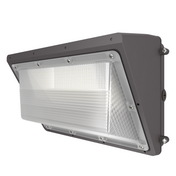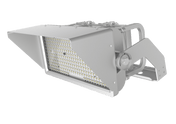

Walk into any warehouse built before 2015, and you will see them hanging from the ceiling: large, round, basket-style fixtures emitting a warm, orange-tinted glow. Those are Metal Halide (MH) or High-Pressure Sodium (HPS) high bays.
They consume massive amounts of electricity. They take 15 minutes to warm up. They produce so much heat that they raise the temperature of your warehouse by several degrees.
And they are dying.
Today, facility managers face a choice: replace the bulbs, or retrofit the entire system to LED UFO high bays.
This guide walks you through exactly how to make that switch — from calculating payback periods to physically bypassing the old ballasts.
1. Why Metal Halide Became Obsolete (The Hard Truth)
Metal Halide was revolutionary in the 1980s. It offered better color rendering than mercury vapor and higher efficiency than incandescent.
But compared to 2026 LED technology, MH is a liability.
| Metric | Metal Halide (400W) | LED UFO (150W Equivalent) |
|---|---|---|
| Actual wattage | 458W (including ballast loss) | 150W |
| Lumens (initial) | ~36,000 | ~22,000 – 24,000 |
| Lumens (after 1 year) | ~18,000 (50% degradation) | ~21,500 (<5% degradation) |
| Lumens per watt | 60-80 lm/W | 150-170 lm/W |
| Heat output | High (burns skin on contact) | Low (warm to touch) |
| Restrike time | 10-20 minutes | Instantaneous |
| Lifespan | 10,000 – 15,000 hours | 75,000 – 100,000 hours |
The killer fact: A Metal Halide lamp loses 50% of its light output halfway through its rated life. But because the human eye adjusts gradually, nobody notices until a new bulb is installed next to an old one.
LEDs experience no visible degradation for the first 50,000 hours.
2. The Three Retrofit Pathways (Choose One)
Not every warehouse retrofit looks the same. You have three options, ranging from cheapest to most comprehensive.
Pathway 1: Screw-In LED Retrofit Bulbs (The "Lazy" Retrofit)
These are LED bulbs with a mogul base (E39) that screw directly into your existing Metal Halide sockets.
-
Cost: $25 – $50 per bulb
-
Labor: Low (15 minutes per fixture)
-
The catch: You must keep the old ballast in the circuit, or bypass it. Most screw-in bulbs work with the ballast — but ballasts eventually fail, taking the bulb with it.
-
Verdict: Temporary solution only. Not recommended for professional warehouses.
Pathway 2: Ballast Bypass (Type B) – Most Common
You remove the old Metal Halide ballast and wire the LED UFO directly to line voltage (120-277V or 347V).
-
Cost: $75 – $150 per UFO fixture
-
Labor: Moderate (30 minutes per fixture including ballast removal)
-
Best for: Warehouses with structurally sound housings but failed ballasts.
-
Verdict: The industry standard for 2026. Clean, reliable, and future-proof.
Pathway 3: Full Fixture Replacement (The "Clean Slate")
You remove the entire Metal Halide fixture — housing, reflector, socket, and ballast — and install brand new LED UFO high bays on new mounting hooks or brackets.
-
Cost: $100 – $250 per fixture (including new mounting hardware)
-
Labor: High (60 minutes per fixture, plus disposal fees for old MH fixtures)
-
Best for: Warehouses with damaged, rusted, or 30+ year old housings.
-
Verdict: Highest upfront cost, but eliminates all future maintenance.
Recommendation for 80% of warehouses: Pathway 2 (ballast bypass). Keep the old housing, gut the ballast, install a new LED UFO. Best balance of cost and performance.
3. How to Calculate LED Equivalent Wattage (No More Guessing)
The most common mistake is over-lighting or under-lighting the space.
The simple formula:
Take your current Metal Halide wattage and divide by 3.
-
400W MH → 130W to 150W LED UFO
-
750W MH → 240W to 280W LED UFO
-
1000W MH → 300W to 350W LED UFO
But lumens matter more than watts. Here is the actual lumen replacement chart:
| Existing MH Fixture | Delivered Lumens (after 6 months) | Required LED Lumens | Equivalent LED Wattage |
|---|---|---|---|
| 175W MH | 7,000 – 9,000 | 10,000 – 12,000 | 80W – 100W |
| 250W MH | 11,000 – 14,000 | 15,000 – 18,000 | 100W – 130W |
| 400W MH | 16,000 – 22,000 | 22,000 – 26,000 | 150W – 180W |
| 1000W MH | 45,000 – 60,000 | 55,000 – 70,000 | 350W – 450W |
Pro tip: Go slightly brighter than the old MH. Because LEDs deliver directional light (rather than scattering in all directions), you will perceive the space as brighter even at the same lumen count.
4. Step-by-Step Retrofit Process (Ballast Bypass Method)
If you have basic electrical knowledge and a lift, you can complete this retrofit with a two-person crew.
Tools needed:
-
Scissor lift or boom lift
-
Wire strippers, voltage tester, screwdrivers
-
Wire nuts (orange or yellow)
-
New LED UFO high bay fixtures (with mounting hooks)
Step 1 – Kill power at the breaker. Lock out and tag out. Test voltage at the fixture before touching anything.
Step 2 – Remove the old Metal Halide bulb. It may be hot. Use gloves.
Step 3 – Open the fixture housing. Locate the ballast (usually a metal box or black rectangular block).
Step 4 – Cut the wires feeding the ballast. Identify line (black), neutral (white), and ground (green or bare).
Step 5 – Remove the ballast completely. Unscrew it and discard properly (ballasts contain toxic PCBs in older units — check local disposal laws).
Step 6 – Connect line voltage directly to the socket wires. Black to black, white to white, ground to ground. Use wire nuts.
Step 7 – Install the new LED UFO hook. If your old fixture hangs from a hook, keep it. If not, install a V-hook or safety cable.
Step 8 – Hang the LED UFO and connect the included pigtail to your socket. Close the housing.
Step 9 – Restore power and test. The LED should light instantly with no flicker.
Safety note: If you are not comfortable with electrical work, hire a licensed electrician. Arc flash and shock hazards are real.
5. Energy Savings & Payback Period (Real-World Example)
Let us run the numbers for a typical 50,000 sq ft warehouse with 60 existing 400W Metal Halide fixtures.
Current annual energy cost (Metal Halide):
-
Wattage per fixture: 458W (includes ballast loss)
-
Daily operation: 12 hours
-
Days per year: 260 (single shift)
-
Total kWh per year: 60 fixtures × 0.458 kW × 12 hrs × 260 days = 85,737 kWh
-
Cost at $0.12/kWh: **$10,288 per year**
After retrofit (150W LED UFO):
-
Wattage per fixture: 150W
-
Daily operation: 12 hours
-
Days per year: 260
-
Total kWh per year: 60 × 0.150 kW × 12 × 260 = 28,080 kWh
-
Cost at $0.12/kWh: **$3,370 per year**
Annual energy savings: $6,918
Additional savings:
-
Reduced HVAC load (LEDs produce 1/3 the heat of MH) → save $800–$1,500 annually
-
Reduced maintenance (no bulb changes for 10+ years) → save $500–$1,000 annually
-
Utility rebates (DLC listed fixtures) → $50–$150 per fixture = $3,000–$9,000 one-time
Total first-year benefit: ~$11,000 – $15,000
Upfront retrofit cost: 60 fixtures × $120 (average UFO + labor) = $7,200
Payback period: 6 to 8 months
Yes, months — not years.
6. Common Retrofit Mistakes (And How to Avoid Them)
Mistake 1: Leaving the old ballast in the circuit
Some "plug-and-play" LED tubes claim to work with existing ballasts. This fails when the ballast dies (and it will). Always bypass the ballast.
Mistake 2: Ignoring mounting height
A 150W UFO designed for 15-foot ceilings will create a blinding hot spot at 30 feet. Conversely, a narrow-beam UFO for 40-foot ceilings will leave dark rings on the floor if hung at 15 feet. Match beam angle to height:
-
15-20 ft → Wide beam (120° or Type V)
-
25-35 ft → Medium beam (90° or Type III)
-
35-45 ft → Narrow beam (60° or Type II)
Mistake 3: Forgetting about emergency lighting
Building codes (NFPA 101, IBC) require emergency egress lighting. Metal Halides cannot restart quickly after a power outage. LEDs can — but only if they have a battery backup. Specify integrated emergency drivers (3-7W) on at least every 4th fixture.
Mistake 4: Buying uncertified fixtures from online marketplaces
Amazon and Alibaba are flooded with UFO lights bearing fake UL or ETL labels. If a fixture causes a fire, your insurance will deny the claim. Buy only UL, ETL, or DLC listed brands (RAB, HLI, GE Current, Signify, Acuity Brands).
7. Disposal of Old Metal Halide Lamps (Important Legal Note)
Metal Halide lamps contain small amounts of mercury. In most jurisdictions (including all US states with universal waste rules), you cannot throw them in the dumpster.
Proper disposal options:
-
Take to a household hazardous waste facility (free for small quantities)
-
Use a mail-back recycling kit (e.g., LampTracker, Veolia)
-
Hire a universal waste hauler for large retrofits
Ballasts manufactured before 1979 may contain PCBs (polychlorinated biphenyls), a known carcinogen. These require specialized disposal. If your warehouse was built before 1980, test the ballasts or assume PCB content.
8. Frequently Asked Questions (Warehouse Retrofit)
Q: Can I retrofit one bay at a time, or do all fixtures at once?
A: You can phase the retrofit. However, mixing LED and Metal Halide on the same circuit may cause compatibility issues if they share a photocell or timer. Better to switch entire zones at once.
Q: Will LED UFO lights interfere with my warehouse radio or WiFi?
A: No. High-quality LEDs with FCC Class A or B certification produce minimal electromagnetic interference. Cheap drivers (no-name brands) may cause static on AM radios or two-way radios.
Q: Do I need to upgrade my wiring or breakers?
A: Rarely. LEDs draw less current than Metal Halides, so existing wiring and breakers are more than sufficient. In fact, you may be able to add more fixtures to the same circuit after retrofit.
Q: How do I clean the old reflector inside the housing?
A: Metal Halide reflectors become hazy and oxidized over time, losing 20-30% of reflectivity. While you have the housing open, wipe the reflector with a damp cloth. Or remove it entirely — LEDs do not need reflectors because they are directional.
9. The Verdict: Is Retrofit Worth It in 2026?
Unequivocally yes — if your Metal Halide fixtures are 5+ years old.
Here is why waiting costs you money:
A single 400W Metal Halide fixture costs you **~$170 per year** in electricity at $0.12/kWh. The same light from a 150W LED UFO costs ~$55 per year .
Every year you delay, you burn $115 per fixture in extra energy costs. For 100 fixtures, that is **$11,500 of wasted electricity annually** — before counting maintenance and HVAC penalties.
The technology is mature. Prices have stabilized (no longer dropping 20% per year). Rebates remain strong. And labor costs only increase over time.
The smart move: Retrofit now. Capture the utility rebates while they exist. Enjoy 10 years of maintenance-free lighting. And sell your old Metal Halide ballasts for copper scrap (some are worth $5–$15 each).