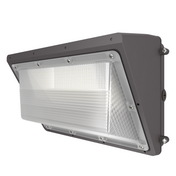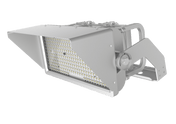

If you manage a warehouse, factory, distribution center, or gymnasium, you have faced the same question: What is the best industrial lighting fixture on the market today?
Ten years ago, the answer was complicated. You had to choose between T5HO fluorescents (decent efficiency, short lifespan), induction lighting (expensive, niche), or Metal Halide (bright but energy-hungry).
Today, the answer is simple.
UFO LED high bays have emerged as the dominant industrial lighting solution — outselling linear LED high bays by a margin of nearly 3:1 in North American and European markets.
But why? What makes a circular, saucer-shaped fixture superior to every other form factor?
This guide breaks down the engineering, economic, and practical reasons why UFO LEDs lead the market — and why they will remain the standard for the rest of this decade.
1. The UFO Form Factor: Function Over Fashion
The "UFO" name is memorable, but the shape is not a marketing gimmick. It is the result of serious thermal engineering.
The problem LEDs face: Heat kills LED chips. For every 10°C increase in operating temperature, the lifespan of an LED drops by 50%.
The UFO solution: A circular array of LED chips mounted directly onto a finned aluminum heatsink. This design maximizes surface area for passive convection cooling.
| Feature | Linear LED High Bay | UFO LED High Bay |
|---|---|---|
| Heat sink surface area | Limited to one plane | 360° radial fins |
| Airflow | Blocked by housing orientation | Unrestricted omnidirectional |
| Weight | Heavy (15–25 lbs) | Light (4–8 lbs) |
| Installation | Requires two points of attachment | Single hook or pendant |
| Vulnerability to vibration | Moderate (long lever arm) | Low (compact mass) |
The result: UFO fixtures run 15–20°C cooler than linear fixtures of equivalent wattage. That translates directly into longer life — typically 75,000 to 100,000 hours versus 50,000 hours for linear.
2. Optical Precision: Light Where You Need It
Industrial spaces are not living rooms. You do not want light bouncing off walls and ceilings. You want light on the work plane — the floor, the assembly line, the pallet racking.
UFO LEDs excel at light control because of their round, symmetric geometry.
Standard beam angle options:
-
60° (narrow): For ceilings 35–45 feet high. Creates a concentrated cone of light.
-
90° (medium): For ceilings 25–35 feet high. The most common choice for warehouses.
-
120° (wide): For ceilings 15–25 feet high. Spreads light across large floor areas.
-
Type V (rectangular distribution): For aisles. Uses specialized lenses to create a long, narrow footprint.
Linear high bays generally have fixed 120° or 130° lenses. That is fine for wide-open spaces but terrible for tall, narrow aisles — half the light ends up illuminating the racking, not the floor.
UFO advantage: Interchangeable lenses allow you to adapt a single fixture to different mounting heights and aisle widths. No need to stock multiple product lines.
3. Installation & Maintenance Simplicity
Labor is often the largest cost in a lighting retrofit. UFO LEDs dramatically reduce installation time compared to linear fixtures or traditional high bays.
Single-point mounting: A UFO hangs from a single V-hook or safety cable. One connection point. No leveling. No alignment.
Linear fixtures require two or four mounting points and must be perfectly level to avoid looking crooked.
Time comparison (per fixture, experienced crew with scissor lift):
| Task | Linear High Bay | UFO LED High Bay |
|---|---|---|
| Unbox and prep | 3 minutes | 2 minutes |
| Install mounting hardware | 8 minutes | 3 minutes |
| Hang fixture | 5 minutes | 2 minutes |
| Wire connection | 5 minutes | 4 minutes |
| Total | 21 minutes | 11 minutes |
For a 200-fixture warehouse, that saves 33 labor hours — or roughly $2,000–$3,000 in installation cost.
Maintenance is even more dramatic. When a linear fixture's driver fails, you typically replace the entire fixture or perform a difficult driver swap. When a UFO's driver fails, you unscrew four screws, disconnect two quick-connect terminals, and install a new driver — all without lowering the fixture if you use a lift.
4. Cost-Performance Leadership (2026 Data)
Five years ago, UFO LEDs were roughly the same price as linear LED high bays. Today, due to massive manufacturing volume (mostly from China, Taiwan, and Vietnam), UFOs are 15–25% cheaper than linear fixtures of equivalent lumen output.
2026 market pricing (DLC-listed, brand-name quality):
| Lumen Output | UFO LED Price | Linear LED Price | Savings with UFO |
|---|---|---|---|
| 15,000 lm (~100W) | $55–$80 | $75–$110 | 20–30% |
| 22,000 lm (~150W) | $75–$120 | $100–$150 | 20–25% |
| 35,000 lm (~240W) | $110–$180 | $150–$220 | 15–25% |
| 50,000 lm (~320W) | $160–$250 | $220–$300 | 15–20% |
Why are UFOs cheaper? Simpler manufacturing. A UFO housing is a single aluminum stamping or casting. A linear fixture requires extruded aluminum channels, end caps, diffusers, and more assembly labor.
5. Smart Controls Integration (Industry 4.0)
Modern industrial facilities are moving toward connected lighting. UFO LEDs have become the preferred platform for smart controls because of their integrated sensor cavities.
Most UFO fixtures now include a standardized 7-pin port or a dedicated sensor bay that accepts:
-
Radar motion sensors (better than PIR for warehouses — detects through plastic lenses)
-
Daylight harvesting sensors (dim lights when sunlight enters through skylights or clerestories)
-
Bluetooth mesh modules (Sensity, Silvair, or Casambi)
-
0–10V dimming receivers (basic analog control)
-
DALI-2 interfaces (digital addressable lighting control)
Linear fixtures often require external sensor boxes mounted separately — adding labor, wiring, and failure points.
Real-world example: A 500,000 sq ft distribution center in Ohio retrofitted 1,200 UFO fixtures with integrated radar sensors. Energy use dropped 78% compared to the previous Metal Halide system. The sensors cost $18 per fixture and paid for themselves in 11 months.
6. Environmental & Code Compliance Advantages
Industrial facilities face increasing pressure to meet energy codes (ASHRAE 90.1, IECC, Title 24) and sustainability goals (LEED, BREEAM).
UFO LEDs help you comply easily.
ASHRAE 90.1-2022 requirements for warehouses:
-
Lighting power density (LPD) maximum: 0.55 W/sq ft for high bay spaces
-
Automatic shut-off required
-
Daylight zone controls required where skylights exist
How UFO LEDs meet these:
-
At 150 lm/W, you can achieve 40 foot-candles at 30 feet using only 0.30 W/sq ft — well below code maximum
-
Integrated occupancy sensors satisfy automatic shut-off
-
Plug-in daylight sensors satisfy daylight harvesting
LEED v4.1 points:
-
Energy & Atmosphere (EA) credit: Optimize energy performance → Up to 18 points
-
Indoor Environmental Quality (EQ) credit: Electric lighting quality → No flicker, CRI >80
No other industrial lighting solution delivers code compliance as seamlessly as a sensor-ready UFO.
7. Comparison Against Other Industrial Lighting Options (2026)
Let us settle the debate once and for all.
| Criteria | UFO LED | Linear LED | T5HO Fluorescent | Induction | Metal Halide |
|---|---|---|---|---|---|
| Efficacy (lm/W) | 150–180 | 140–160 | 80–100 | 70–90 | 60–80 |
| Lifespan (hours) | 75k–100k | 50k–75k | 20k–30k | 50k–70k | 10k–20k |
| Cold weather performance | Excellent | Excellent | Poor (<0°C) | Good | Poor (slow start) |
| Instant on/off | Yes | Yes | Yes | Yes | No |
| Dimmable | Yes (0–10V/DALI) | Yes | Limited (not common) | Yes | Poor |
| Vibration resistance | High | Medium | Low | Medium | Low |
| Weight (150W equiv) | 4–6 lbs | 12–18 lbs | 10–15 lbs | 15–20 lbs | 20–30 lbs |
| 10-year TCO (per fixture) | $180–$250 | $250–$350 | $400–$550 | $350–$450 | $600–$800 |
Conclusion: UFO LEDs win or tie in every category. Their only limitation is aesthetic — some office environments prefer the look of linear fixtures. But for pure industrial use, UFO is the superior choice.
8. Industry Adoption Trends (2019–2026)
Market data confirms what installers already know.
US industrial lighting sales by fixture type (source: NEMA, LEDinside):
-
2019: Linear LED 45%, UFO LED 25%, Fluorescent 20%, HID 10%
-
2022: Linear LED 38%, UFO LED 42%, Fluorescent 12%, HID 8%
-
2026 (projected): Linear LED 32%, UFO LED 55%, Other 13%
Why the shift accelerated after 2022:
-
Supply chain issues favored UFOs (simpler components, more suppliers)
-
Copper prices rose (linear fixtures use more copper wiring)
-
Labor costs increased (faster installation became more valuable)
-
Sensor technology matured (integrated sensors became standard)
9. Potential Drawbacks (Honest Assessment)
No product is perfect. UFO LEDs have limitations worth acknowledging.
Drawback 1: Aesthetic in finished spaces
A UFO fixture looks industrial. In a retail store, showroom, or office, a linear or panel fixture often looks more professional.
Drawback 2: Single point of failure
One hook supports the entire fixture. If that hook fails (rare but possible), the fixture falls. Always use a secondary safety cable.
Drawback 3: Not ideal for very low ceilings (<10 ft)
At low mounting heights, the circular beam pattern creates a "bathtub" effect — dim in the center, bright at the edges. Linear fixtures or troffers work better below 10 feet.
Drawback 4: Glare at certain angles
Because the light source is concentrated in a round area, looking directly at a UFO from a 45° angle can be uncomfortable. Adding a diffuser lens (at 5–10% lumen loss) solves this.
10. Future Outlook: What Comes After UFO?
Will UFO LEDs remain dominant through 2030?
Likely, yes. The form factor is mature and optimized. Future improvements will come from:
-
Higher efficacy chips (200+ lm/W by 2028)
-
Integrated Li-Fi (data transmission through light)
-
AI-driven controls (learns traffic patterns and self-adjusts)
-
Graphene heatsinks (even better thermal management)
But the shape will remain the same. Physics favors the circle.
Frequently Asked Questions (Industrial UFO LEDs)
Q: Can UFO LEDs be used in cold storage freezers (-20°C or lower)?
A: Yes, but you need fixtures specifically rated for low temperatures. Standard UFO drivers use electrolytic capacitors that freeze below -25°C. Cold-storage models use solid-state capacitors or heating elements.
Q: Do UFO LEDs require special dimmers?
A: Yes. Most use 0–10V dimming, which requires a 0–10V dimmer and low-voltage control wiring. Standard line-voltage dimmers (TRIAC or ELV) will not work unless the fixture specifies "TRIAC dimmable."
Q: How high is too high for UFO LEDs?
A: Up to 60 feet is practical with high-wattage models (400W+). Above 60 feet, narrow-beam UFOs still work, but you may need more fixtures to maintain uniformity.
Q: Are UFO LEDs hazardous in food processing areas?
A: Choose fixtures with IP65 rating (water resistant) and smooth housings (no crevices for bacteria). Also verify NSF/ANSI 2 certification for food zones.
Final Verdict: The Market Leader for Good Reason
UFO LEDs lead the industrial lighting market not because of clever marketing, but because of superior engineering at a lower cost.
They run cooler. They install faster. They cost less. They integrate sensors more cleanly. They last longer.
If you are designing a new warehouse or retrofitting an existing one, you can choose a linear fixture if you prefer the look. But you will pay more for a product that performs the same or worse.
The ultimate industrial lighting solution is already here. It looks like a UFO. And it is not going anywhere.