
Walk through any commercial parking lot at night — retail centers, office parks, hotels, hospitals, or apartment complexes. What do you see overhead?
Twenty years ago, you would have seen the orange glow of high-pressure sodium (HPS) or the white-green haze of metal halide (MH). Ten years ago, you might have seen a mix of old and new.
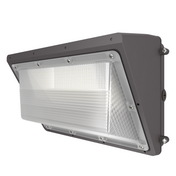
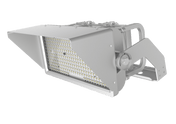
Today, you see LED area lights — sleek, rectangular fixtures casting clean, white light with no warm-up time, no buzzing ballasts, and no purple-tinted failing lamps.
The shift is complete. LED area lights have become the undisputed best choice for parking lot lighting.
But why? What makes LED superior to every other technology for this specific application?
This article presents seven data-driven reasons why LED area lights should be your only consideration for parking lot lighting in 2026.
1. Superior Energy Efficiency (50–75% Less Energy)
The most obvious advantage is also the most compelling: LEDs use dramatically less electricity.
Real-world comparison:
| Technology | Typical Wattage | Effective Lumens | Annual Energy (4,000 hrs)* | Annual Cost ($0.12/kWh) |
|---|---|---|---|---|
| 250W Metal Halide | 280W (w/ballast) | 11,000 – 14,000 | 1,120 kWh | $134 |
| 400W Metal Halide | 458W (w/ballast) | 20,000 – 24,000 | 1,832 kWh | $220 |
| 100W LED Area Light | 100W | 15,000 – 18,000 | 400 kWh | $48 |
| 150W LED Area Light | 150W | 22,000 – 26,000 | 600 kWh | $72 |
*Assuming dusk-to-dawn operation (approx. 4,000 hours per year)
The math for a typical parking lot:
A 50-fixture parking lot using 250W Metal Halide consumes 56,000 kWh annually at a cost of **$6,720** (at $0.12/kWh).
The same lot with 100W LED area lights consumes 20,000 kWh annually at a cost of $2,400 .
Annual energy savings: $4,320
Over 10 years, that is $43,200 — enough to pay for the entire LED retrofit multiple times.
2. Exceptional Uniformity (No More Dark Spots)
Poor lighting uniformity creates dark zones where shadows conceal hazards, trip risks, and potential intruders.
The problem with legacy lights: Metal halide and HPS fixtures produce light in all directions. Reflectors attempt to direct it downward, but significant light spills sideways and upward. The result is "hot spots" directly under each pole and "dark spots" midway between poles.
The LED solution: LED area lights use precision-engineered optics (lenses and reflectors) to shape light exactly where it is needed.
Uniformity comparison:
| Metric | Metal Halide (Typical) | LED Area Light (Typical) |
|---|---|---|
| Average:Min ratio (U1) | 6:1 to 10:1 | 3:1 to 5:1 |
| Max:Min ratio (U2) | 15:1 to 25:1 | 8:1 to 12:1 |
What this means for safety: A person walking through a well-designed LED-lit parking lot experiences consistent light levels from pole to pole. No sudden dark zones. No squinting to see obstacles.
Security benefit: Security cameras require uniform light to capture clear footage. Hot spots overexpose; dark spots underexpose. LED uniformity ensures usable CCTV footage across the entire lot.
3. Instant On, Instant Restrike (No Warm-Up Delay)
Parking lot lights do not operate on a schedule. Sometimes they turn off accidentally — a tripped breaker, a power outage, a photocell failure.
The metal halide nightmare: When a metal halide light turns off, it cannot turn back on immediately. It must cool down for 10–20 minutes before the arc will restrike. During that time, the parking lot is dark.
The LED reality: LEDs light instantly — 100% brightness in microseconds. If power is interrupted, LEDs return to full output the moment power is restored.
Why this matters for parking lots:
-
Security: No dark periods after power flickers
-
Safety: No warm-up wait for motion-sensor-triggered lighting
-
Convenience: No scheduling around lamp restrike times
-
Cold weather: LEDs work immediately at -30°C; metal halides struggle
4. Long Lifespan (15–20 Years of Maintenance-Free Operation)
Changing a light bulb in a parking lot is not like changing a bulb in a desk lamp. It requires a bucket truck, a crew, traffic control, and significant labor cost.
Lifespan comparison (L70 rating — time to 70% of initial lumens):
| Technology | Rated Lifespan | Replacement Frequency (4,000 hrs/year) |
|---|---|---|
| Metal Halide | 10,000 – 15,000 hours | Every 2.5 – 3.5 years |
| High-Pressure Sodium | 15,000 – 24,000 hours | Every 3.5 – 6 years |
| Induction | 50,000 – 70,000 hours | Every 12 – 17 years |
| LED Area Light | 75,000 – 100,000 hours | Every 19 – 25 years |
The maintenance cost saving:
A 100-fixture parking lot replacing metal halide lamps every 3 years:
-
Lamp cost: 100 × $25 = $2,500
-
Labor (bucket truck + 2-person crew, 4 hours): $800
-
Traffic control / parking lot disruption: $500
-
Total every 3 years: $3,800
-
Over 15 years: $19,000 (5 replacement cycles)
With LED: Zero replacement cost for 15+ years.
5. Superior Glare Control & Dark Sky Compliance
Glare from parking lot lighting is more than an annoyance. It is a safety hazard for drivers exiting the lot onto public roads. It is a nuisance for nearby residents. And increasingly, it is a regulatory violation.
The problem with legacy fixtures: Metal halide and HPS area lights emit significant light above 90° horizontal (uplight) and at high angles (glare). The reflectors cannot fully control the light.
The LED advantage: LED area lights are available in full-cutoff configurations that emit zero light above horizontal. Precision optics direct every lumen downward where it belongs.
Dark Sky compliance:
| Requirement | Metal Halide | LED Area Light |
|---|---|---|
| Full-cutoff available | Rare | Standard |
| BUG rating (Backlight, Uplight, Glare) | Typically B3-U2-G3 or worse | B1-U0-G2 or better |
| IDA DarkSky approved | No | Yes (many models) |
The glare test: Stand at the edge of a parking lot lit by metal halide and look toward the fixtures. You will see intense bright spots that cause after-images. Now look at an LED-lit lot with full-cutoff fixtures. You see the illuminated pavement — not the light source itself.
For neighboring properties: LEDs with warm CCT (3000K) and proper shielding reduce light trespass by 80–90% compared to unshielded HPS.
6. Better Color Rendering (CRI) for Safety & Aesthetics
Color rendering index (CRI) measures how accurately a light source reveals the true colors of objects. On a scale of 0 to 100, natural sunlight is 100.
CRI comparison:
| Technology | Typical CRI | Appearance |
|---|---|---|
| High-Pressure Sodium | 20–25 | Orange/yellow — impossible to distinguish colors |
| Metal Halide | 65–75 | White-green — fair color rendering |
| LED Area Light | 70–90+ | Clean white — excellent color rendering |
Why CRI matters for parking lots:
-
Security camera footage: Low CRI makes it difficult to identify clothing colors, vehicle colors, and suspect descriptions
-
Pedestrian safety: Curb edges, speed bumps, and potholes are harder to see under low-CRI light
-
Wayfinding: Signage, painted lines, and colored pavement markings lose contrast
-
Aesthetics: A parking lot is often a customer's first impression of a business. Orange HPS light says "outdated." Clean white LED light says "modern and professional."
Real-world example: A hotel chain that switched from HPS to 4000K LED area lights received guest comments about feeling "safer" and the property looking "newer" — even though no other renovations had occurred.
7. Smart Controls Integration (Motion Sensors & Dimming)
Parking lots do not need 100% light output at 2 AM when the lot is empty. But with legacy lighting, you had no choice — on or off.
LED smart control capabilities:
| Control Feature | Benefit |
|---|---|
| Motion sensors | Dim to 20–30% when empty; return to 100% when motion detected |
| Timeclock scheduling | 100% during business hours, 50% after midnight, 20% before dawn |
| Astronomical timeclock | Automatically adjusts on/off times based on sunrise/sunset |
| Demand response | Utility can dim lights during peak grid events (you get paid) |
| Remote monitoring | See energy use and fixture status from any web browser |
Energy savings with smart controls:
A parking lot with LED area lights alone saves 60–70% over metal halide. Add motion sensors and scheduling, and total savings reach 80–85% .
Example calculation:
| Scenario | Annual Energy (50 fixtures) | Annual Cost ($0.12/kWh) |
|---|---|---|
| Metal Halide (250W) | 56,000 kWh | $6,720 |
| LED (100W) — always 100% | 20,000 kWh | $2,400 |
| LED with motion sensors + scheduling | 10,000 – 12,000 kWh | $1,200 – $1,440 |
Payback for controls: Motion sensors add $30–$50 per fixture. With 50 fixtures, controls cost $1,500–$2,500. The additional annual savings ($960–$1,200) pays for controls in 1.5–2.5 years.
8. The Environmental Case (Reduced Carbon Footprint)
For organizations with sustainability goals (LEED, ESG reporting, net-zero commitments), LED area lights deliver measurable environmental benefits.
Per-fixture annual CO2 equivalent savings (compared to 250W MH, 4,000 hrs, US average grid 0.85 lbs CO2 per kWh):
| Technology | Annual kWh | Annual CO2 (lbs) |
|---|---|---|
| 250W Metal Halide | 1,120 kWh | 952 lbs |
| 100W LED (100% always) | 400 kWh | 340 lbs |
| 100W LED + controls | 220 kWh | 187 lbs |
For a 100-fixture lot: Switching from MH to LED with controls reduces CO2 emissions by 76,500 lbs (34.7 metric tons) per year — equivalent to taking 7.5 cars off the road.
LEED v4.1 points available:
-
EA credit: Optimize Energy Performance (up to 18 points)
-
EQ credit: Quality Lighting (glare reduction, CRI)
-
MR credit: Long-Life Lighting (reduced waste from lamp replacements)
9. Real-World ROI: Case Study Examples
Case Study 1: Regional Shopping Center (Midwest, USA)
-
Size: 300,000 sq ft retail center, 800 parking spaces
-
Existing lighting: 120 fixtures, 400W Metal Halide
-
Existing annual energy cost: $26,400
-
LED retrofit: 120 fixtures, 150W LED area lights
-
New annual energy cost: $8,640
-
Annual savings: $17,760
-
Retrofit cost (fixtures + labor): $28,000
-
Utility rebate (DLC): $9,600
-
Net cost after rebate: $18,400
-
Payback period: 12.4 months
-
10-year savings (net of retrofit cost): $159,200
Case Study 2: Apartment Complex (Florida, USA)
-
Size: 250-unit complex, 400 parking spaces
-
Existing lighting: 80 fixtures, 175W Mercury Vapor (aging, failing)
-
Existing annual energy cost: $9,600
-
LED retrofit: 80 fixtures, 80W LED area lights + motion sensors
-
New annual energy cost: $2,300
-
Annual savings: $7,300
-
Retrofit cost (fixtures + labor + sensors): $21,000
-
Utility rebate: $4,000
-
Net cost after rebate: $17,000
-
Payback period: 28 months
-
Resident feedback: "The parking lot feels much safer now."
Case Study 3: Hospital Parking Garage (Texas, USA)
-
Size: 5-level parking structure, 1,200 spaces
-
Existing lighting: 400 fixtures, 2-lamp T8 fluorescent (not cold-start rated)
-
Existing annual energy cost: $43,000
-
LED retrofit: 400 fixtures, 40W LED area lights (garage-specific) + daylight harvesting
-
New annual energy cost: $11,500
-
Annual savings: $31,500
-
Retrofit cost: $68,000
-
Utility rebate: $18,000
-
Net cost after rebate: $50,000
-
Payback period: 19 months
-
Additional benefit: Fluorescent lights failed in winter (below 0°C); LEDs work perfectly at -20°C
10. Common Objections (And Why They Are Wrong)
Objection 1: "LEDs cost too much upfront."
Reality: The cost gap has closed dramatically. In 2015, an LED area light cost $400–$600. In 2026, a quality DLC-listed 100W LED area light costs $150–$250 . Utility rebates often cover 30–50% of fixture cost. The payback period is typically 1–3 years.
Objection 2: "LEDs don't work well in cold weather."
Reality: The opposite is true. LEDs perform better in cold temperatures. Metal halide and fluorescent struggle below 0°C (long warm-up, reduced output). LEDs work instantly down to -30°C to -40°C.
Objection 3: "LEDs produce harsh, blue light."
Reality: You choose the color temperature. For parking lots, 4000K (neutral white) is standard and widely accepted. For residential-adjacent lots, choose 3000K (warm white). Only 5000K+ is harsh — simply do not spec it.
Objection 4: "I'll just keep maintaining my existing lights."
Reality: Every year you delay, you burn money. A 250W metal halide fixture costs $134 per year in electricity. A 100W LED costs $48 per year — $86 annual savings per fixture. For 50 fixtures, delaying one year costs you **$4,300** in extra electricity + one lamp replacement cycle ($3,800). Total delay cost: **$8,100 per year** .
11. How to Choose the Right LED Area Light for Your Parking Lot
Use this selection checklist:
| Factor | Recommendation |
|---|---|
| Lumens per fixture | 15,000–25,000 lm for 20–30 ft poles |
| Wattage | 80W–150W (replace 175W–400W HID) |
| Distribution type | Type III or Type IV for perimeter poles; Type V for interior |
| CCT (color temperature) | 4000K for most commercial; 3000K for residential-adjacent |
| CRI | 70 minimum; 80+ recommended |
| Surge protection | 6kV minimum; 10kV for lightning-prone areas |
| DLC listing | Required for utility rebates |
| Controls | 0–10V dimming driver (standard); add motion sensors for energy optimization |
| Dark sky compliance | BUG rating B1-U0-G2 or better; full-cutoff |
| Warranty | 5 years minimum; 10 years preferred |
12. Frequently Asked Questions (Parking Lot LED Area Lights)
Q: How many LED area lights do I need for my parking lot?
A: A rough rule: poles spaced at 3–4 times the mounting height. For 25-foot poles, space poles 75–100 feet apart. Use lighting design software (Visual, AGi32) for precise calculations.
Q: Can I retrofit my existing metal halide poles with LED area lights?
A: Yes, in most cases. Ensure the pole is structurally sound (no rust). You may need a pole adapter if the existing mounting is non-standard. Remove the old ballast from the pole handhole.
Q: Do LED area lights attract bugs?
A: Less than metal halide or mercury vapor. LEDs emit almost no ultraviolet (UV) light, which is what attracts insects. Warmer CCT (3000K) attracts more bugs than cooler CCT (5000K).
Q: How do I comply with local dark sky ordinances?
A: Choose fixtures with BUG rating B1-U0-G2 or better. Use 3000K CCT (not 4000K or 5000K). Install shields to prevent light trespass onto adjacent properties.
Q: What is the typical warranty on LED area lights?
A: Reputable manufacturers offer 5–10 year warranties covering defects and lumen maintenance (e.g., L70 at 75,000 hours). Avoid brands offering less than 5 years.
Final Verdict: LED Area Lights Are the Clear Winner
No other lighting technology offers the combination of benefits that LED area lights bring to parking lot applications:
-
Energy savings: 50–75% reduction
-
Maintenance elimination: 15–20 years of trouble-free operation
-
Safety improvement: Better uniformity, higher CRI, no dark zones
-
Regulatory compliance: Dark sky ready, energy code compliant
-
Smart ready: Motion sensors, dimming, remote monitoring
-
Fast payback: Typically 1–3 years
Metal halide, high-pressure sodium, mercury vapor, and fluorescent are legacy technologies for a reason. They were the best available at the time. But that time has passed.
The best choice for parking lot lighting in 2026 is unequivocally LED area lights.
The only question is not whether to switch, but how soon you can complete the retrofit.