
Walk through any commercial parking lot, college campus, or municipal park after dark. What do you see overhead?
Chances are, you see LED area lights — sleek, rectangular or circular fixtures mounted on poles ranging from 12 to 50 feet high.
These fixtures have quietly replaced nearly every other outdoor lighting technology over the past decade. Mercury vapor is gone. High-pressure sodium is fading. Metal halide is a memory.
But selecting the right LED area light is not as simple as picking a wattage and hoping for the best. You need to consider pole height, spacing, light distribution patterns, glare control, dark sky compliance, and energy codes.
This guide covers everything you need to know about LED area lights for commercial and outdoor applications in 2026.
1. What Is an LED Area Light? (Definition & Typical Uses)
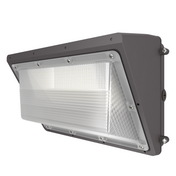
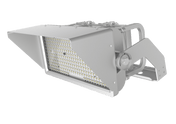
An LED area light (also called a site light, parking lot light, or shoebox light) is a luminaire designed to illuminate large outdoor spaces from elevated poles.
Typical applications:
-
Commercial parking lots (retail, office, hotel, hospital)
-
Gas station canopies and forecourts
-
College and corporate campuses
-
Municipal parks and recreational areas
-
Apartment and condominium complexes
-
Car dealership lots
-
RV parks and storage facilities
-
Roadway intersections and roundabouts
-
Walkways, bike paths, and pedestrian plazas
What distinguishes an area light from other outdoor fixtures:
| Feature | Area Light | Floodlight | Wall Pack | Street Light |
|---|---|---|---|---|
| Mounting height | 12–50 ft | 10–100+ ft | 8–20 ft | 20–40 ft |
| Beam pattern | Wide, even distribution | Narrow to wide (adjustable) | Forward-throwing | Long, narrow (Type II/III) |
| Typical use | Parking lots, campuses | Sports fields, facades | Building perimeters | Roadways |
| Pole mounting | Top or side | Top or side | Wall only | Top only |
2. Key Metrics for LED Area Light Selection
Before selecting a fixture, understand the five metrics that define outdoor lighting quality.
Metric 1: Lumens (Not Watts)
Watts measure energy input. Lumens measure light output. Always compare lumens.
| Old Technology | Typical Lumens | LED Equivalent Wattage |
|---|---|---|
| 175W Mercury Vapor | 7,000–8,000 lm | 40W–60W LED |
| 250W Metal Halide | 11,000–14,000 lm | 80W–100W LED |
| 400W Metal Halide | 20,000–24,000 lm | 120W–150W LED |
| 1000W Metal Halide | 55,000–65,000 lm | 300W–400W LED |
Rule of thumb for 2026: Target 100–150 lumens per watt (lm/W). Premium area lights achieve 160–180 lm/W.
Metric 2: Light Distribution Patterns (IESNA Types)
The Illuminating Engineering Society (IES) defines distribution patterns for outdoor area lighting. Choose based on your pole location relative to the area being lit.
| Type | Shape | Best For |
|---|---|---|
| Type I | Long, narrow (2x wide as long) | Roadways, paths, sidewalks |
| Type II | Moderate width (3x long as wide) | Parking lot perimeters, bike paths |
| Type III | Wide (4x long as wide) | General parking lot lighting |
| Type IV | Very wide, forward-throwing | Pole at edge of lot (no backlight) |
| Type V | Round, symmetric | Center of open area, roundabouts |
Type III is the most common for parking lots. Type IV is used when poles are placed at the lot perimeter (light projects inward only). Type V is used for single-pole island applications.
Metric 3: Pole Height & Spacing
Pole height determines spacing. A simple formula for initial estimation:
Maximum spacing = 4 × pole height (for Type III distribution)
Example: 25-foot poles → maximum 100-foot spacing between poles
Refined spacing by distribution type:
| Distribution | Spacing Ratio (Distance : Height) |
|---|---|
| Type I | 3:1 |
| Type II | 3.5:1 |
| Type III | 4:1 |
| Type IV | 4.5:1 |
| Type V | 2.5:1 (diameter) |
Common pole heights by application:
-
Small parking lot (<20 cars): 12–15 ft
-
Retail parking lot: 20–30 ft
-
Large regional shopping center: 25–35 ft
-
College campus walkways: 15–20 ft
-
Industrial truck yard: 30–50 ft
-
Car dealership lot: 20–30 ft
Metric 4: Uniformity Ratios
Uniformity measures how evenly light is distributed across the paved surface.
-
Avg/min: Lower is better (closer to 1.0). Maximum acceptable varies by application.
-
Max/min: Lower is better.
IESNA recommended uniformity for parking lots:
| Area Type | Avg/Min (U1) | Max/Min (U2) |
|---|---|---|
| High-activity (retail, office) | 4:1 | 10:1 |
| Medium-activity (apartments, hotels) | 6:1 | 15:1 |
| Low-activity (industrial after-hours) | 10:1 | 20:1 |
LED advantage: Modern area lights achieve uniformity of 3:1 to 5:1 — far better than legacy systems.
Metric 5: Correlated Color Temperature (CCT)
Outdoor lighting color affects visibility, security perception, and wildlife.
| CCT | Appearance | Best For |
|---|---|---|
| 3000K | Warm white | Residential areas, dark sky zones, historic districts |
| 4000K | Neutral white | Commercial parking lots, general site lighting |
| 5000K | Cool white | Security-sensitive areas, industrial yards |
Recommendation for 2026: Use 4000K for most commercial parking lots. It balances visibility with community acceptance. Avoid 5000K unless security is the primary concern — it appears harsh and blue.
3. Mounting Types for LED Area Lights
Area lights mount to poles in several ways. Choose based on pole type and retrofit needs.
Top-Mount (Slip Fitter)
The fixture slides over the top of a round pole (typically 2-3/8" to 3" OD). A set screw or clamp secures it.
-
Best for: New poles or poles with existing top-mount fixtures
-
Pros: Clean appearance, good for Type V distribution
-
Cons: Requires pole top access (bucket truck)
Side-Mount (Tenon or Bracket)
The fixture attaches to a horizontal arm or bracket extending from the pole.
-
Best for: Retrofit of older "cobra head" street lights
-
Pros: Allows Type III/IV distribution from pole edges
-
Cons: More wind loading than top-mount
Trunnion Mount
Adjustable bracket that allows tilting the fixture up or down.
-
Best for: Poles at lot perimeters (angling light inward)
-
Pros: Aiming flexibility
-
Cons: More visible hardware
Pole Cap Adapter
Converts a square or decorative pole top to accept standard round slip-fitter fixtures.
-
Best for: Decorative poles in mixed-use or municipal applications
-
Pros: Preserves aesthetics
-
Cons: Adapter cost ($30–$80 per pole)
4. Glare Control & Dark Sky Compliance
Glare from outdoor lighting is a growing regulatory concern. More than 20 US states and hundreds of municipalities have adopted dark sky ordinances.
How to Reduce Glare
-
Choose full-cutoff fixtures (zero light emitted above 90° horizontal)
-
Use shields or visors on the sides facing adjacent properties
-
Select warmer CCT (3000K produces less perceived glare than 5000K)
-
Lower mounting heights reduce glare spill distance (but may require more poles)
Dark Sky Certifications
| Certification | Requirements | Best For |
|---|---|---|
| DarkSky Approved (formerly IDA) | CCT < 3000K, full-cutoff, no uplight | Residential, parks, environmentally sensitive areas |
| Model Lighting Ordinance (MLO) | Backlight, uplight, glare (BUG) rating | Municipal compliance |
BUG Rating Explained
BUG stands for Backlight, Uplight, Glare. Every outdoor fixture should have a BUG rating per IES TM-15.
-
B (Backlight): Light emitted behind the fixture (annoying to neighbors)
-
U (Uplight): Light emitted above horizontal (wasted, causes sky glow)
-
G (Glare): Light emitted at high angles (blinding to drivers and pedestrians)
Recommended BUG targets for commercial parking lots: B1-U0-G2 or better
5. Energy Codes & Compliance (2026)
Outdoor lighting in commercial buildings must comply with energy codes. The two most common are ASHRAE 90.1 and IECC.
Lighting Power Density (LPD) Allowances
ASHRAE 90.1-2022 sets maximum watts per square foot for outdoor areas:
| Area Type | Maximum LPD (W/sq ft) |
|---|---|
| Parking lots (uncovered) | 0.075 |
| Parking structures | 0.100 |
| Walkways < 10 ft wide | 0.050 |
| Walkways > 10 ft wide | 0.070 |
| Building entrances | 0.130 |
| Gas station canopies | 0.500 (plus 0.250 for forecourt) |
How LEDs help: At 150 lm/W, a typical parking lot requires only 0.025–0.040 W/sq ft — well below code maximums.
Automatic Controls Required
Most codes now mandate:
-
Automatic shut-off (timer or astronomical timeclock)
-
Motion sensors for low-activity periods (dim to 20–30%)
-
Daylight harvesting where natural light enters (parking structures)
6. Pole Placement & Layout Strategies
Proper pole placement reduces fixture count, improves uniformity, and lowers cost.
Perimeter Lighting (Most Common)
Poles placed around the perimeter of the lot, aiming inward.
-
Best for: Rectangular lots with clear boundaries
-
Distribution: Type III or Type IV
-
Number of poles: 4–12 depending on lot size
Spacing formula for perimeter: Poles at 3–4 times mounting height along each side
Interior Lighting (Large Lots)
Poles placed both on perimeter AND in interior rows for very large lots (>200 cars).
-
Best for: Regional shopping centers, stadium parking
-
Distribution: Type V for interior poles
-
Spacing: 2.5–3 times mounting height between interior poles
Single-Pole Island
One pole illuminating a small, circular area.
-
Best for: Roundabouts, small cul-de-sac lots (<30 cars)
-
Distribution: Type V
-
Pole height: 1/3 to 1/2 the lot diameter
Common Layout Mistakes
-
Poles too far apart → dark zones between fixtures (poor uniformity)
-
Poles too close together → wasted light, higher cost (overkill)
-
Ignoring tree canopies → shadows from mature landscaping
-
Placing poles behind storage areas → blocked light, security risk
7. Security Lighting Considerations
Outdoor lighting is a crime deterrent — but only if designed correctly.
Lighting for Security: Key Principles
-
Eliminate shadows where intruders can hide (aim for uniformity > 4:1 avg/min)
-
Light vertical surfaces (building facades, fences) — horizontal light alone is insufficient
-
Provide consistent light levels from dusk to dawn (no deep dimming after hours)
-
Illuminate all entrances and exits with dedicated fixtures (not just parking lot spill light)
Recommended Security Lux Levels
| Area | Minimum Lux (horizontal) | Minimum Lux (vertical at 5 ft) |
|---|---|---|
| Parking lot (high crime area) | 20 lux (2 fc) | 10 lux (1 fc) |
| Parking lot (low crime area) | 10 lux (1 fc) | 5 lux (0.5 fc) |
| Building entrance | 50 lux (5 fc) | 25 lux (2.5 fc) |
| Walkway | 5 lux (0.5 fc) | 3 lux (0.3 fc) |
8. LED Area Light Features to Consider (2026)
Not all area lights are equal. Look for these features:
Standard Features (Minimum)
-
L70 rated lifespan ≥ 75,000 hours
-
Surge protection ≥ 6kV (10kV preferred for lightning-prone areas)
-
0–10V dimming driver (required for energy code compliance)
-
Photocell receptacle (twist-lock NEMA or ANSI C136.41)
-
Operating temperature -30°C to +45°C (-22°F to +113°F)
Premium Features (Recommended)
-
DLC Premium listed (qualifies for utility rebates, typically $50–$150 per fixture)
-
IoT-ready (Bluetooth Mesh, Zigbee, or LoRaWAN for network control)
-
Motion sensor integrated (radar or passive infrared)
-
Color tuning (switchable CCT 3000K/4000K/5000K)
-
Emergency battery backup (for egress pathways)
9. Installation & Retrofit Tips
New Installation Checklist
-
Geotech analysis for pole footings (frost depth, soil bearing capacity)
-
Underground conduit schedule (power + low-voltage control wiring)
-
Pole anchor bolt template (verify before pouring concrete)
-
Photocell orientation (faces north to avoid false triggering from own light)
-
Surge protection at service panel AND at each pole
Retrofit Tips (Replacing HID Area Lights)
-
Test your existing poles for structural integrity. Pole rust is common after 20+ years.
-
Reuse existing conduit if possible. Pull new wire — old insulation may be brittle.
-
Remove old ballasts from pole handholes (they are no longer needed).
-
Install LED-compatible photocells (some old photocells have too much leakage current).
-
Document new fixture aiming angles for future maintenance.
Safety Note
Outdoor lighting installation requires working at height and with line voltage (120–480V). Always use licensed electricians for pole wiring. Arc flash and fall hazards are serious.
10. Cost & ROI Analysis (2026)
Upfront Costs (Per Pole, Installed)
| Component | Cost Range (USD) |
|---|---|
| LED area light fixture (100W–200W) | $150 – $350 |
| Steel pole (20–30 ft, including anchor bolts) | $800 – $2,000 |
| Concrete footing (installed) | $600 – $1,200 |
| Wiring (100 ft trench, conduit, wire, breaker) | $500 – $1,000 |
| Installation labor (per pole) | $400 – $800 |
| Total per new pole | $2,450 – $5,350 |
Retrofit Cost (Per Pole, Existing Poles)
| Component | Cost Range (USD) |
|---|---|
| LED area light fixture | $150 – $350 |
| Photocell (if replacing) | $15 – $40 |
| Labor (bucket truck, 1 hour per pole) | $150 – $300 |
| Disposal of old HID fixture | $20 – $50 |
| Total per retrofit pole | $335 – $740 |
Energy Savings Example
Scenario: 20-pole parking lot, currently using 250W Metal Halide per pole (280W including ballast), operating 4,000 hours per year (dusk to dawn).
Current annual energy: 20 × 0.280 kW × 4,000 hrs = 22,400 kWh @ $0.12/kWh = **$2,688**
After LED retrofit (100W LED per pole):
20 × 0.100 kW × 4,000 hrs = 8,000 kWh @ $0.12/kWh = **$960**
Annual energy savings: $1,728
Retrofit cost: 20 poles × $500 average = $10,000
Simple payback: 5.8 years
With utility rebate (DLC Premium, $75/fixture = $1,500): Payback = 4.9 years
Maintenance savings add another 0.5–1 year (no lamp changes for 15+ years).
11. Common Mistakes to Avoid
| Mistake | Consequence | Solution |
|---|---|---|
| Over-lighting | Wasted energy, neighbor complaints | Design to recommended lux levels, not "as bright as possible" |
| Using symmetric (Type V) on perimeter | Half the light leaves the lot | Use Type III or Type IV on perimeter poles |
| Ignoring tree growth | Future shadows reduce light levels | Plan pole locations for mature tree canopies |
| No backup power for egress | Code violation, liability | Add battery backup to 1 in 4 fixtures along pathways |
| Specifying 5000K near homes | Resident complaints, light trespass | Use 3000K or 4000K in residential-adjacent areas |
12. Frequently Asked Questions (LED Area Lights)
Q: How long do LED area lights last?
A: 75,000–100,000 hours (L70 rating). For dusk-to-dawn operation (4,000 hours/year), that is 19–25 years.
Q: Can I put an LED area light on a dimmer switch?
A: Yes, if the driver is 0–10V dimmable (most are). You cannot use standard household TRIAC dimmers unless the fixture specifies TRIAC compatibility.
Q: Do LED area lights work in cold weather?
A: Yes. LEDs perform better in cold than heat. Some fixtures are rated to -40°C (-40°F).
Q: What is the difference between an area light and a floodlight?
A: Area lights provide wide, even distribution for large horizontal spaces. Floodlights provide narrower, aimable beams for vertical surfaces or specific targets.
Q: Are solar-powered LED area lights viable in 2026?
A: For remote locations without grid power, yes. For commercial parking lots, no — battery capacity and winter performance remain limiting.
Final Checklist: Selecting LED Area Lights
Before purchasing, verify these items:
-
Pole locations mapped (spacing ≤ 4× mounting height)
-
Distribution type chosen (Type III for most parking lots)
-
Uniformity modeled (use free software like Visual or AGi32)
-
CCT selected (4000K for commercial, 3000K for residential)
-
BUG rating meets local dark sky ordinance
-
Surge protection ≥ 6kV (10kV preferred)
-
DLC listed (for rebates and quality assurance)
-
Photocell and motion sensor included or specified
-
0–10V dimming driver confirmed
-
Labor and disposal budgeted for existing HID fixtures