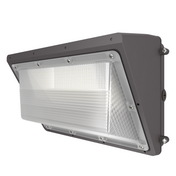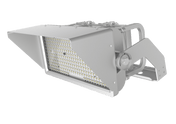

For decades, HID (High-Intensity Discharge) lighting — specifically metal halide (MH), high-pressure sodium (HPS), and mercury vapor (MV) — was the default choice for outdoor area lighting. Parking lots, campuses, car dealerships, and municipal sites all relied on these fixtures.
Then LEDs arrived.
Today, facility managers face a choice: stick with familiar HID technology or make the switch to LED area lights.
This head-to-head comparison examines every relevant metric — energy efficiency, light quality, lifespan, glare control, cold weather performance, upfront cost, maintenance, and return on investment — to answer the definitive question: Which is actually better?
Spoiler: The answer depends on your specific situation. But for most applications in 2026, the winner is clear.
1. Quick Overview: What Are We Comparing?
HID (High-Intensity Discharge) Fixtures
HID is a family of lighting technologies that produce light by passing an electrical arc through a gas-filled tube.
Common HID types for area lighting:
| Type | Color Appearance | Typical CRI | Typical Lifespan | Common Wattages |
|---|---|---|---|---|
| Metal Halide (MH) | White-green | 65–75 | 10,000–15,000 hrs | 175W, 250W, 400W, 1000W |
| High-Pressure Sodium (HPS) | Orange-amber | 20–25 | 15,000–24,000 hrs | 150W, 250W, 400W |
| Mercury Vapor (MV) | Blue-white | 15–20 | 16,000–24,000 hrs | 175W, 250W, 400W |
LED Area Lights
LED (Light Emitting Diode) area lights use solid-state technology to produce light. Modern units (2026) feature advanced optics, integrated drivers, and smart control compatibility.
| Specification | Typical Range (2026) |
|---|---|
| Efficacy | 130–180 lumens per watt |
| CRI | 70–90+ |
| Lifespan (L70) | 75,000–100,000 hours |
| Typical Wattages | 40W, 80W, 100W, 150W, 240W, 320W |
2. Energy Efficiency: The Biggest Difference
Energy consumption is where LEDs deliver their most dramatic advantage.
Watts to lumens comparison (actual delivered light):
| HID Fixture | Actual System Watts* | Initial Lumens | Lumens After 1 Year | LED Equivalent | LED System Watts | Energy Saving |
|---|---|---|---|---|---|---|
| 175W MH | 205W | 14,000 | 9,800 | 80W LED | 80W | 61% |
| 250W MH | 280W | 22,000 | 15,400 | 100W LED | 100W | 64% |
| 400W MH | 458W | 36,000 | 25,200 | 150W LED | 150W | 67% |
| 150W HPS | 180W | 16,000 | 13,600 | 60W LED | 60W | 67% |
| 250W HPS | 290W | 29,000 | 24,650 | 100W LED | 100W | 66% |
| 400W HPS | 465W | 50,000 | 42,500 | 180W LED | 180W | 61% |
*Includes ballast losses (typically 10–15% for MH, 8–12% for HPS)
Real-world energy cost example (single fixture, 4,000 hours/year at $0.12/kWh):
| Fixture | Annual kWh | Annual Cost |
|---|---|---|
| 250W Metal Halide | 1,120 kWh | $134 |
| 100W LED Area Light | 400 kWh | $48 |
| Annual savings per fixture | 720 kWh | $86 |
For a 50-fixture parking lot: $4,300 saved annually on electricity alone.
Winner: LED. By a wide margin.
3. Light Quality: CRI, CCT, and Visibility
Light quality affects security camera footage, driver safety, pedestrian comfort, and property aesthetics.
Color Rendering Index (CRI)
CRI measures how accurately colors appear under a light source (0–100 scale; sunlight = 100).
| Technology | Typical CRI | What You Can/Cannot See |
|---|---|---|
| High-Pressure Sodium | 20–25 | Cannot distinguish red from brown; all colors appear orange |
| Mercury Vapor | 15–20 | Blues and greens washed out; skin tones look sickly |
| Metal Halide | 65–75 | Acceptable but colors appear slightly green-tinted |
| LED | 70–90+ | Excellent; colors appear natural and vibrant |
Security camera impact: A suspect wearing a red jacket under HPS lighting appears brown or gray. Under LED (CRI 80+), the jacket appears red — a crucial difference for identification.
Correlated Color Temperature (CCT)
CCT describes the "warmth" or "coolness" of white light (measured in Kelvin).
| Technology | Typical CCT | Perceived Appearance |
|---|---|---|
| High-Pressure Sodium | 2100K | Deep orange (feels dated, dingy) |
| Metal Halide | 3000K–4000K | Warm to neutral white |
| Mercury Vapor | 5500K–6000K | Cool blue-white (harsh, clinical) |
| LED (selectable) | 3000K, 4000K, 5000K | Choose based on application |
Recommended CCT by application:
-
3000K: Residential-adjacent parking lots, dark sky compliance
-
4000K: Commercial parking lots (standard recommendation)
-
5000K: Security-sensitive areas (industrial, government)
Winner: LED. Superior CRI and flexible CCT options make LED the clear choice for light quality.
4. Lifespan & Maintenance Costs
HID lamps degrade rapidly and fail completely. LED fixtures fade slowly over many years.
Lifespan Comparison (L70 — time to 70% of initial lumens)
| Technology | Rated Lifespan | Operating Hours per Year | Years to Replacement |
|---|---|---|---|
| Metal Halide | 10,000 – 15,000 | 4,000 (dusk-to-dawn) | 2.5 – 3.5 years |
| High-Pressure Sodium | 15,000 – 24,000 | 4,000 | 3.5 – 6 years |
| Mercury Vapor | 16,000 – 24,000 | 4,000 | 4 – 6 years |
| LED Area Light | 75,000 – 100,000 | 4,000 | 19 – 25 years |
Lumen Depreciation (How Light Output Fades)
| Technology | Lumens at 40% of rated life | Lumens at 100% of rated life |
|---|---|---|
| Metal Halide | 50% of initial | 30–40% of initial (failure) |
| LED | 90–95% of initial | 70% of initial (still functioning) |
The hidden cost of HID: A metal halide lamp loses 50% of its light output by the time it reaches half its rated life — but the human eye adapts gradually, so facility managers often do not notice until the lamp fails entirely. Your parking lot may have been 50% darker than you thought for months or years.
Maintenance Cost Calculation (50-fixture parking lot over 15 years)
| Cost Category | HID (250W Metal Halide) | LED (100W Area Light) |
|---|---|---|
| Replacement lamps (5 cycles @ $25/lamp × 50 fixtures) | $6,250 | $0 |
| Labor (bucket truck, 2-person crew, 4 hours per cycle @ $200/hr × 5 cycles) | $4,000 | $0 |
| Traffic control / disruption (per cycle) | $2,500 | $0 |
| Fixture replacement (LED fixtures last entire 15 years; HID ballasts may fail) | $1,500 (ballast failures) | $0 |
| Total 15-year maintenance cost | $14,250 | $0 |
Winner: LED. Unquestionably. No competition.
5. Glare Control & Light Distribution
Glare from parking lot lights is a safety hazard and a neighborhood nuisance. Proper distribution ensures light lands where needed — not on adjacent properties or the night sky.
HID Limitations
HID fixtures typically use a reflector (often aluminum) to redirect light downward. This approach has inherent limitations:
-
Uncontrolled spill light: Significant light escapes at high angles, causing glare.
-
Uplight: A portion of light goes directly upward into the sky (contributing to sky glow).
-
Hot spots: Reflectors cannot create perfectly uniform distribution; light is brightest directly under the pole.
LED Advantages
LED area lights use precision injection-molded optics (lenses) to shape light with surgical accuracy.
Distribution types available (IESNA):
| Type | Pattern | Best Application |
|---|---|---|
| Type III | Wide, forward-throwing | Perimeter poles in parking lots |
| Type IV | Very wide, minimal backlight | Poles at lot edges |
| Type V | Round, symmetric | Interior poles in large lots |
BUG rating comparison (Backlight, Uplight, Glare):
| Technology | Typical BUG Rating | Dark Sky Compliance |
|---|---|---|
| Unshielded HPS/MH | B3-U2-G3 or worse | No |
| Shielded HPS/MH (add-on visor) | B2-U1-G2 | Partial |
| LED area light (full-cutoff) | B1-U0-G2 or better | Yes |
Winner: LED. Superior optics, lower glare, zero uplight, and full dark sky compliance available.
6. Cold Weather Performance
For facilities in northern climates, cold weather performance is critical.
HID in Cold Weather
| Technology | Cold Weather Behavior |
|---|---|
| Metal Halide | Struggles below 0°C (32°F). Longer warm-up time (15–25 minutes). Reduced light output. May fail to strike at very low temperatures. |
| High-Pressure Sodium | Better than MH, but warm-up time increases as temperature drops. |
| Mercury Vapor | Poor performance below freezing. Significant light loss. |
LED in Cold Weather
LEDs thrive in cold temperatures. In fact, LEDs perform better in cold than in heat because lower temperatures improve thermal management.
| Temperature | LED Performance |
|---|---|
| 0°C (32°F) | Instant full output. No warm-up. |
| -10°C (14°F) | Instant full output. |
| -20°C (-4°F) | Instant full output (if fixture rated for low temp). |
| -30°C (-22°F) | Instant full output (cold-rated fixtures only). |
Important note: Standard LED area lights use electrolytic capacitors that may freeze below -25°C (-13°F). For extreme cold climates, specify cold-weather rated fixtures with solid-state capacitors or internal heaters.
Winner: LED. Dramatically better cold weather performance — instant light at temperatures where HID fails to start.
7. Instant On/Off & Restrike Capability
Parking lot lights experience power interruptions. How they respond matters.
HID Restrike Problem
When an HID lamp is operating and power is interrupted (even for a few seconds), the arc extinguishes. The lamp cannot restrike until it cools down — 10 to 20 minutes for metal halide, 3–5 minutes for HPS.
Real-world scenario: A circuit breaker trips for 30 seconds. When reset, the parking lot remains dark for 15 minutes. During that time, the lot is unlit — a security and safety hazard.
LED Instant Restrike
LEDs have no restrike delay. Power is interrupted and restored? The LEDs return to full brightness instantly (microseconds).
Winner: LED. The restrike delay alone is a deal-breaker for many security-sensitive applications.
8. Dimming & Smart Controls
Modern parking lots benefit from dimming (reduced light during low-traffic hours) and motion sensors.
HID Dimming Limitations
| Technology | Dimmable? | Notes |
|---|---|---|
| Metal Halide | Poor | Special ballasts required; dimming causes color shift and reduced lifespan |
| High-Pressure Sodium | Limited | Dimming possible but not common; requires special ballasts |
| Mercury Vapor | No | Not dimmable |
LED Dimming Capabilities
LED area lights feature 0–10V dimming drivers as standard (or optional, depending on model). Capabilities include:
-
Continuous dimming: 0–100% with no color shift
-
Motion sensors: Dim to 20–30% when lot empty; return to 100% when motion detected
-
Timeclock scheduling: 100% during business hours, 50% after 10 PM, 20% after midnight
-
Daylight harvesting: Dim when natural light is sufficient (garages, open lots with ambient light)
Energy savings with dimming and controls: Additional 30–50% beyond standard LED energy savings.
Winner: LED. HID cannot compete in the smart controls arena.
9. Upfront Cost Comparison (2026 Pricing)
LED has a higher upfront fixture cost. HID has lower fixture cost but higher operating and maintenance costs.
Per-Fixture Cost Breakdown (100W LED vs 250W Metal Halide)
| Cost Component | 250W Metal Halide | 100W LED Area Light |
|---|---|---|
| Fixture cost | $80 – $120 | $150 – $250 |
| Lamp (bulb) cost | $20 – $35 (replaced every 2–3 years) | $0 (no lamp to replace) |
| Ballast (replacement) | $40 – $70 (fails every 5–10 years) | $0 (driver may fail but less common) |
| Photocell (replacement) | $10 – $20 (same for both) | $10 – $20 |
| Initial fixture + lamp | $100 – $155 | $150 – $250 |
Installed cost per pole (new installation):
| Component | HID (250W MH) | LED (100W Area Light) |
|---|---|---|
| Fixture | $120 | $200 |
| Pole (25 ft) | $1,200 | $1,200 |
| Concrete footing | $800 | $800 |
| Wiring | $700 | $700 |
| Installation labor | $600 | $600 |
| Total new installed cost | $3,420 | $3,500 |
Difference: LED costs approximately $80 more per pole upfront — a difference that is erased within the first year of operation by energy savings alone.
Winner: HID (slightly lower upfront cost). But the gap is narrow and shrinking annually.
10. Total Cost of Ownership (TCO) Comparison
Upfront cost tells only part of the story. TCO over 10 years provides the complete picture.
Assumptions: 50-fixture parking lot, 4,000 hours/year operation, $0.12/kWh electricity, professional installation and maintenance.
| Cost Category | 250W Metal Halide | 100W LED Area Light |
|---|---|---|
| Initial fixture cost | $6,000 (50 × $120) | $10,000 (50 × $200) |
| Installation labor | $5,000 | $5,000 |
| Energy (10 years) | $67,200 (50 × 1,120 kWh × 10 yrs × $0.12) | $24,000 (50 × 400 kWh × 10 yrs × $0.12) |
| Lamp replacements (10 years) | $8,750 (3.5 cycles × 50 lamps × $25) | $0 |
| Ballast replacements | $2,500 (estimated) | $0 |
| Labor for replacements | $6,000 (3.5 cycles × 4 hrs × $200/hr × 2-person crew) | $0 |
| Disposal of old lamps (hazardous) | $1,000 | $0 |
| Total 10-year TCO | $96,450 | $39,000 |
10-year savings with LED: $57,450
Return on investment: LED costs $4,000 more upfront but saves $5,745 per year in operating costs. Payback period: 8.4 months.
Winner: LED. Overwhelmingly.
11. Environmental Impact Comparison
For organizations with sustainability goals, environmental impact matters.
| Impact Category | HID (250W MH) | LED (100W Area Light) |
|---|---|---|
| Annual CO2 (50 fixtures) | 47,600 lbs (21.6 metric tons) | 17,000 lbs (7.7 metric tons) |
| CO2 reduction with LED | — | 30,600 lbs (13.9 metric tons) |
| Hazardous materials | Mercury (MH, MV) | None |
| Disposal requirements | Universal waste (special handling) | Standard electronic waste |
| Light pollution | Significant uplight | Zero uplight (full-cutoff models) |
Winner: LED. Lower carbon footprint, no hazardous materials, and dark sky friendly.
12. Summary Comparison Table
| Metric | HID (Metal Halide/HPS) | LED Area Light | Winner |
|---|---|---|---|
| Energy efficiency | 60–80 lm/W | 130–180 lm/W | LED |
| CRI (color accuracy) | 20–75 (poor to fair) | 70–90+ (good to excellent) | LED |
| Lifespan | 10,000–24,000 hrs | 75,000–100,000 hrs | LED |
| Maintenance required | Every 2–6 years | None for 15–20 years | LED |
| Glare control | Poor to fair | Excellent | LED |
| Cold weather start | Poor (slow or fails) | Instant (down to -30°C) | LED |
| Instant restrike | No (10–20 min delay) | Yes (microseconds) | LED |
| Dimmable | Poor or no | Yes (0–10V standard) | LED |
| Smart controls ready | No | Yes (integrated sensors) | LED |
| Upfront cost (per fixture) | $100–$155 | $150–$250 | HID (slightly) |
| 10-year TCO (50 fixtures) | $96,450 | $39,000 | LED |
| Hazardous materials | Mercury (MH, MV) | None | LED |
| Dark sky compliant | No (without shielding) | Yes (full-cutoff models) | LED |
Score: HID wins 1 category (upfront cost — narrowly). LED wins the other 12 categories.
13. When Might HID Still Make Sense?
Despite LED's overwhelming advantages, there are niche scenarios where HID remains a reasonable choice.
Scenario 1: Very Low Usage (Under 1,000 hours/year)
If a parking lot is used only occasionally (e.g., a rural church lot used 2 hours per week), the energy savings from LED may not justify the higher upfront cost.
Calculation: 50 fixtures × 100 hours/year = 5,000 kWh/year. At $0.12/kWh, the difference between HID and LED is only $200–$300 per year. Payback extends beyond 5+ years.
Scenario 2: Short-Term Occupancy (Moving in <2 years)
If you plan to sell or demolish the property within 24 months, you may not recoup the LED investment.
Scenario 3: Extreme Cold (Below -30°C / -22°F) Without Cold-Rated LEDs
Standard LED area lights may fail below -25°C. Cold-rated LEDs exist but cost 20–30% more. In these climates, HPS (which works reasonably well at -30°C) may be a viable alternative — though cold-rated LEDs are still superior.
Scenario 4: Historical Preservation or Aesthetic Matching
If a property requires matching existing HID fixtures for historical preservation (e.g., a vintage gas station or period-authentic development), HID may be specified for aesthetic reasons.
But for 95%+ of commercial parking lot applications in 2026, LED is the correct choice.
14. Frequently Asked Questions
Q: Can I retrofit my existing HID pole with an LED area light?
A: Yes, in most cases. Remove the old HID fixture and ballast, then mount the new LED fixture using a slip fitter or pole adapter. Ensure the pole is structurally sound.
Q: Do I need to replace my poles when switching to LED?
A: Rarely. LED fixtures are lighter than HID fixtures, so existing poles are more than adequate. However, inspect poles for rust or corrosion before retrofitting.
Q: Will LED area lights work with my existing photocell?
A: Possibly, but replace it. Old HID photocells may have leakage current that causes LED flicker. Install a new LED-compatible photocell ($15–$30) for reliable operation.
Q: How do I dispose of old HID lamps?
A: Metal halide, high-pressure sodium, and mercury vapor lamps contain mercury. They cannot go in regular trash. Use a universal waste handler, mail-back recycling kit, or household hazardous waste facility.
Q: Are HID lights banned anywhere?
A: Not entirely, but mercury vapor lamps are banned from manufacture in the US (effective 2008). Metal halide and HPS remain legal but are increasingly restricted by energy codes that effectively require LED levels of efficiency.
Final Verdict: Which Is Better?
For almost every commercial parking lot application in 2026, LED area lights are unequivocally better than traditional HID fixtures.
LED wins on:
-
Energy efficiency (60–75% less energy)
-
Light quality (higher CRI, selectable CCT)
-
Lifespan (75,000–100,000 hours vs 10,000–24,000)
-
Maintenance (zero for 15–20 years vs every 2–6 years)
-
Cold weather (instant start vs slow or failed)
-
Instant restrike (microseconds vs 10–20 minutes)
-
Glare control (precision optics vs crude reflectors)
-
Dark sky compliance (zero uplight vs significant)
-
Smart controls (dimmable, motion sensors, networking)
-
Total cost of ownership (saves $50,000+ over 10 years for a 50-fixture lot)
HID wins only on:
-
Upfront fixture cost (by $50–$100 per fixture — erased within months by energy savings)
The bottom line: If you are designing a new parking lot or retrofitting an existing one, there is no compelling reason to specify HID fixtures in 2026. LED area lights deliver better performance, lower operating costs, and a faster payback.
The technology gap is not closing. It has already closed.