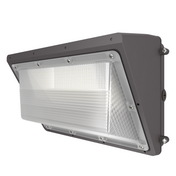

In the era of urbanization and sustainability, street lighting has evolved from a basic safety necessity to a critical component of smart, eco-friendly cities. Among the technological advancements reshaping this sector, LED street lighting stands out—not just for its brightness or longevity, but for its transformative energy efficiency. For municipalities, urban planners, and property managers, energy efficiency isn’t just a buzzword; it’s the game changer that redefines the value, performance, and impact of modern LED street lighting. In this blog, we’ll explore why energy efficiency is the core driver behind LED street lighting’s dominance, backed by real-world data, city case studies, and actionable insights for 2026 and beyond.
The Staggering Cost of Inefficient Street Lighting
Traditional street lighting—powered by high-pressure sodium (HPS) lamps, metal halide bulbs, and fluorescent fixtures—has long been a drain on city budgets and the environment. According to the International Commission on Illumination (CIE), urban public lighting accounts for 15–30% of a city’s total electricity consumption. For a mid-sized city with 100,000 street lights, this translates to annual electricity costs of over $6 million (based on 0.6 yuan per kWh) and millions of tons of carbon emissions.
HPS lamps, the most common traditional street light, waste 60–70% of energy as heat, with a meager light efficiency of just 80–120 lumens per watt (lm/W). They also require frequent replacement—lasting only 15,000–24,000 hours (2–3 years)—adding to maintenance costs and traffic disruptions. In contrast, modern LED street lights flip the script: they convert over 95% of electricity into visible light, boasting efficiencies of 150–200 lm/W—more than double that of HPS lamps. This gap isn’t just incremental; it’s revolutionary, unlocking savings and capabilities that make LED street lighting indispensable for modern cities.
Energy Efficiency: The Triple Win for Cities
Energy efficiency isn’t just about “saving electricity”—it’s a catalyst for a triple win: financial savings, environmental progress, and enhanced urban livability. Let’s break down how this game changer delivers tangible value:
1. Unprecedented Cost Savings (50–80% Lower Energy Bills)
The most immediate benefit of energy-efficient LED street lighting is massive cost reduction. By cutting energy consumption by 50–80% compared to traditional systems, cities can redirect millions of dollars from utility bills to critical public services like schools, hospitals, and infrastructure. For example:
- Los Angeles replaced 210,000 HPS street lights with LEDs, achieving a 63% energy savings and slashing annual electricity costs by $8 million.
- Baoshan Longyang District (China) swapped 400W HPS lamps for 90W LED lights, reducing single-lamp annual electricity use by 3,000 kWh and cutting the city’s total annual power consumption by 5.87 million kWh—saving over $350,000 in 电费 alone.
- Qianjiang City (China) upgraded 6,473 old street lights to graphene-enhanced LED fixtures, achieving a 50% comprehensive energy savings and reducing annual carbon emissions by 124,000 tons—equivalent to planting 6.89 million trees.
These savings aren’t just one-time gains. Over the 50,000–100,000-hour lifespan of LED street lights (10–15 years), cities avoid repeated bulb replacements and maintenance, further lowering the total cost of ownership (TCO). For instance, Wuxi Huishan District’s LED street lighting project, which upgraded 30,000 lamps, is projected to save 112 million yuan ($15.6 million) in electricity costs over a 10-year period.
2. Accelerating Sustainability & “Dual Carbon” Goals
As the world races to meet net-zero emissions targets, energy-efficient LED street lighting has become a non-negotiable tool for cities. By reducing energy use, LEDs directly cut carbon footprints: a city replacing 100,000 HPS lights with LEDs can reduce annual CO₂ output by 68,000+ tons—equivalent to taking 14,700 cars off the road.
Case studies from around the globe highlight this impact:
- Longyang District’s LED street lighting upgrade reduced carbon emissions by 827.9 tons annually, equivalent to saving 2,430 tons of standard coal.
- Suixi County (China) expects to cut carbon emissions by 620 tons in 2026 alone through its LED street lighting project—equal to planting 38,000 trees.
Unlike traditional lamps, LEDs also contain no mercury, lead, or toxic metals, eliminating hazardous waste and environmental contamination. Their 100% recyclability further enhances their sustainability credentials, aligning with global efforts to build circular economies. For cities striving to meet “dual carbon” (carbon peaking and carbon neutrality) goals, energy-efficient LED street lighting isn’t just an option—it’s a mandatory step forward.
3. Enabling Smart City Integration
Energy efficiency and smart technology go hand in hand—and LED street lighting is the perfect example. The low power consumption of LEDs makes them ideal for integration with Internet of Things (IoT) devices, turning ordinary street lights into smart city hubs. In 2026, energy-efficient LED systems aren’t just “lights”—they’re connected nodes that enable:
- Smart dimming & scheduling: Adjust brightness based on real-time traffic, pedestrian flow, or weather (e.g., dimming to 30% during low-traffic hours). Wuxi’s smart LED street lights achieve a 48% maximum energy savings by automatically adapting to conditions.
- Remote monitoring & predictive maintenance: Cloud-based platforms track energy use, detect faults, and dispatch repairs—reducing maintenance labor by 50%+ and cutting fault response time from hours to minutes. Longyang District’s smart system reduced 故障修复时间 to 30 minutes or less, while Qianjiang City’s platform compressed it to 2 hours.
- Multi-functionality: LED poles integrate 5G microcells, EV chargers, environmental sensors (PM2.5, noise), and CCTV cameras—turning “light poles” into versatile urban infrastructure. Hangzhou Binjiang District’s smart LED poles, for example, collect real-time environmental data while saving 30%+ energy annually.
Without energy efficiency, these smart features would be impractical—high-power traditional lights can’t support IoT integration without skyrocketing energy costs. LED’s low energy footprint makes smart city ambitions affordable and scalable, proving that energy efficiency is the foundation of modern urban innovation.
Why 2026 Is the Tipping Point for Energy-Efficient LED Street Lighting
While LED street lighting has been around for years, 2026 marks the moment when energy efficiency pushes it from “adoption” to “standardization.” Here’s why:
- Falling costs: LED hardware prices have dropped 80% since 2015, making energy-efficient upgrades accessible to even small municipalities. Innovations like graphene composite 散热 technology (used in Qianjiang’s project) further boost efficiency while lowering costs.
- Policy incentives: Governments worldwide are backing energy-efficient street lighting with subsidies, tax breaks, and grants. For example, Longyang District secured 4.6 million yuan in national bonds for its LED project, while Suixi County used a “contract energy management (EMC)” model—where private companies fund upgrades and recoup costs through energy savings—eliminating upfront government investment.
- Smart city momentum: As 5G, IoT, and AI become mainstream, cities need energy-efficient infrastructure to power their smart initiatives. LED street lights, with their low energy use and connectivity, are the perfect fit for 2026’s smart city plans.
Overcoming Barriers: From Initial Investment to Full Adoption
The biggest myth about energy-efficient LED street lighting is that it’s “too expensive upfront.” While LED fixtures cost more than traditional lamps, their rapid return on investment (ROI) dispels this myth. Most cities recoup their initial investment in 3–5 years through energy and maintenance savings—and after that, enjoy decades of pure cost savings.
For cities worried about upfront costs, innovative financing models like EMC (contract energy management) are game changers. Under EMC, energy service companies (ESCOs) cover 100% of the cost of LED upgrades, installation, and maintenance. Governments repay the investment using a portion of the energy savings, with no additional 财政 burden. Qianjiang City’s EMC project, for example, upgraded 6,473 street lights with zero upfront government spending, while delivering 236,090 kWh in annual energy savings. Suixi County’s EMC model is expected to save 960,000 yuan in electricity costs in the first half of 2026 alone.
Final Thoughts: Energy Efficiency = Future-Proof Cities
In 2026 and beyond, energy efficiency isn’t just a feature of modern LED street lighting—it’s the core value proposition that makes it indispensable. It transforms street lighting from a cost center to a revenue generator, from a pollution source to a sustainability driver, and from a standalone fixture to a smart city hub. For municipalities looking to reduce costs, meet climate goals, and build safer, more livable cities, energy-efficient LED street lighting isn’t just an upgrade—it’s a strategic investment in the future.
The data speaks for itself: cities that prioritize energy efficiency in LED street lighting save millions, cut emissions, and unlock the full potential of smart urban infrastructure. As technology advances and policies support green development, the question isn’t “if” to switch to energy-efficient LED street lights—it’s “when.” For forward-thinking cities, the answer is now.
FAQ
Q: How much energy can LED street lights really save compared to traditional HPS lamps?
A: Modern LED street lights save 50–80% more energy than HPS lamps. For example, replacing a 400W HPS lamp with a 90W LED can reduce annual electricity use by 3,000 kWh per light.
Q: What is the ROI for energy-efficient LED street lighting?
A: Most cities recoup their initial investment in 3–5 years through energy and maintenance savings. With EMC financing, ROI can be even faster—often with zero upfront costs.
Q: Do energy-efficient LED street lights compromise on brightness or safety?
A: No—LED street lights deliver brighter, more uniform lighting than traditional lamps. Longyang District’s LED upgrade, for example, increased road brightness by 50% while saving 75.4% energy.
Q: Can LED street lights integrate with smart city technologies?
A: Yes—energy efficiency makes IoT integration practical. Smart LED street lights support remote dimming, motion sensors, environmental monitoring, and 5G connectivity, turning them into smart city hubs.