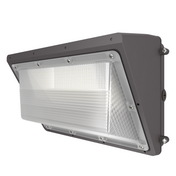

Cities worldwide are undergoing a massive transformation in public lighting, and 2026 stands as a pivotal year for the widespread adoption of LED street lights. Replacing outdated high-pressure sodium (HPS), metal halide, and fluorescent street lamps with modern LED technology is no longer just an environmental trend—it’s a strategic investment that delivers measurable returns across energy, cost, safety, and sustainability. In this guide, we break down the top 10 benefits of switching to LED street lights in 2026, backed by real-world data and industry advancements, to help municipalities, urban planners, and property managers understand why this upgrade is essential.
1. Unmatched Energy Efficiency (50–80% Savings)
The single most compelling benefit of LED street lights is their extraordinary energy efficiency. Traditional street lights waste 60–70% of energy as heat, while LEDs convert over 95% of electricity into visible light. In 2026, modern LED street lights deliver 150–200 lumens per watt (lm/W), compared to just 50–80 lm/W for HPS lamps. This translates to 50–80% lower energy consumption for the same or better illumination.
For a mid-sized city with 50,000 street lights, this can slash annual electricity costs by $1–3 million—funds that can be redirected to other public services. With global energy prices remaining volatile in 2026, this energy efficiency is not just a cost saver but a critical hedge against utility inflation.
2. Extremely Long Lifespan (10x Longer Than Traditional Lights)
LED street lights are built for durability, with a rated lifespan of 50,000–100,000 hours—equivalent to 10–15 years of continuous use. In stark contrast, HPS street lights last only 15,000–24,000 hours (2–3 years) before needing replacement.
This longevity eliminates the need for frequent bulb swaps, reducing labor costs, minimizing traffic disruptions from maintenance crews, and cutting down on waste. In 2026, cities can expect to replace LED street lights just once every decade, compared to 4–5 replacements for traditional systems over the same period.
3. Drastically Reduced Maintenance Costs & Effort
Longer lifespans directly translate to 70–90% lower maintenance expenses. Traditional street lights require regular bulb changes, ballast replacements, and manual inspections—costly and time-consuming tasks. LED street lights, however, are solid-state devices with no fragile filaments or gas components, making them highly resistant to vibration, extreme temperatures (-40°C to 60°C), and harsh weather.
In 2026, smart LED systems take this a step further with remote monitoring and predictive maintenance. City managers can track each light’s performance in real time, receive instant alerts for faults, and pinpoint issues without physical inspections. This shifts maintenance from reactive “fix-when-broken” to proactive “prevent-failures,” cutting maintenance labor by 50%+.
4. Superior Visibility & Public Safety
LED street lights deliver brighter, more uniform, and color-accurate lighting that drastically improves nighttime safety. Unlike HPS lamps, which cast a yellow, distorted glow with a Color Rendering Index (CRI) of just 20–25, LEDs have a CRI of 75–90+—closer to natural daylight.
This means pedestrians, cyclists, and drivers can see objects, faces, and road hazards with far greater clarity. Studies show that well-lit LED streets reduce nighttime accidents by 20–40% and deter criminal activity by 36% or more. In 2026, this enhanced visibility is a cornerstone of safer, more livable urban environments.
5. Eco-Friendly & Sustainable (Zero Toxic Materials)
LED street lights are a cornerstone of green urban infrastructure. Unlike traditional lamps, they contain no mercury, lead, or other toxic heavy metals—eliminating hazardous waste disposal risks and environmental contamination.
Their ultra-low energy use also slashes carbon emissions: a city replacing 100,000 HPS lights with LEDs can reduce annual CO₂ output by 68,000+ tons—equivalent to taking 14,700 cars off the road. Additionally, LED components are 100% recyclable, further reducing their environmental footprint. In 2026, as cities prioritize net-zero goals, LED street lights are non-negotiable for sustainable development.
6. Minimal Light Pollution & Glare Control
Traditional street lights scatter light upward and outward, contributing to severe urban light pollution that disrupts ecosystems, astronomy, and human sleep. LED street lights, by contrast, use precision optical design to direct light exactly where it’s needed—on roads and sidewalks—minimizing skyglow and glare.
In 2026, advanced LED fixtures include anti-glare shields and warm color temperatures (3000K–4000K) that reduce blue light pollution, making nighttime lighting more natural and less disruptive. This benefit is increasingly important as cities strive to protect dark skies and biodiversity.
7. Seamless Smart City Integration (2026’s Defining Advantage)
2026 is the year LED street lights evolve from simple lighting fixtures to smart city hubs. Modern LED systems integrate seamlessly with IoT (Internet of Things) technology, enabling:
- Remote dimming & scheduling: Adjust brightness based on time, traffic, or weather (e.g., dim to 30% at 2 AM).
- Motion & ambient light sensors: Automatically brighten when pedestrians/vehicles are detected, conserving energy during quiet hours.
- Centralized management: Control entire street light networks via a cloud-based platform, optimizing energy use and performance.
- Multi-functionality: LED poles can house 5G microcells, environmental sensors (PM2.5, noise), CCTV cameras, EV chargers, and digital displays—turning “light poles” into smart urban infrastructure.
This integration future-proofs cities, making LED street lights a foundational element of 2026’s smart city vision.
8. Exceptional Durability & Reliability
LED street lights are built to withstand the harshest conditions. As solid-state devices, they have no moving parts, glass bulbs, or fragile filaments—making them far more resistant to shock, vibration, and extreme weather (rain, snow, sandstorms) than traditional lights.
In 2026, industrial-grade LED street lights offer IP66/67 waterproof and dustproof ratings, ensuring reliable performance in coastal, desert, or high-moisture environments. Their low heat output also reduces fire risks, a critical safety feature for urban infrastructure.
9. Faster Payback & Lower Total Cost of Ownership (TCO)
While LED street lights have a higher upfront cost than traditional lamps, their rapid return on investment (ROI) makes them far more economical long-term. Energy savings, reduced maintenance, and longer lifespans mean most cities recoup their initial investment in 3–5 years.
After that, LED systems generate pure cost savings for 7–10+ years. In 2026, with government incentives for energy-efficient upgrades and falling LED hardware costs, the TCO of LED street lights is 30–50% lower than traditional systems over their lifetime.
10. Enhanced Quality of Life & Urban Aesthetics
Beyond practical benefits, LED street lights elevate the quality of urban life. Their clean, bright, uniform lighting makes streets feel safer and more inviting, encouraging nighttime walking, cycling, and community activity.
In 2026, customizable LED color temperatures and designs also improve urban aesthetics—replacing dull, yellow HPS lights with modern, sleek fixtures that complement city architecture. Well-lit, attractive public spaces boost property values, support local businesses, and foster a sense of community pride.
Why 2026 Is the Perfect Time to Switch to LED Street Lights
2026 marks a tipping point for LED street light adoption:
- Technology maturity: LEDs are now more efficient, affordable, and reliable than ever.
- Smart city momentum: IoT integration is mainstream, making LED lights essential for future-proofing.
- Sustainability mandates: Global net-zero goals and local regulations push cities toward green infrastructure.
- Cost competitiveness: LED prices have dropped 80% since 2015, making upgrades accessible for all municipalities.
Final Thoughts
Switching to LED street lights in 2026 is not just a lighting upgrade—it’s a strategic investment in energy efficiency, public safety, sustainability, and smart city development. The 10 benefits outlined above—from massive energy savings to seamless smart integration—deliver tangible, long-term value for cities, residents, and the planet.
For municipalities and urban planners, now is the time to act: partner with reputable LED lighting providers, leverage government incentives, and begin the transition to a brighter, more efficient, and sustainable urban future.
FAQ
Q: How much does it cost to switch a city to LED street lights in 2026?
A: Costs vary by city size, but a typical mid-sized city (50,000 lights) can expect an upfront investment of $5–10 million, with full ROI in 3–5 years via energy and maintenance savings.
Q: Do LED street lights work in cold climates?
A: Yes—modern LED street lights perform reliably in temperatures as low as -40°C, with no warm-up time (instant full brightness), unlike HPS lamps.
Q: Can LED street lights be dimmed?
A: Absolutely—2026 LED systems support full dimming (0–100%) via smart controls, optimizing energy use based on real-time conditions.
Q: Are LED street lights compatible with existing infrastructure?
A: Most LED fixtures are retrofittable to existing poles, minimizing installation costs and disruption.
Would you like me to expand this blog into a 2000-word version with more 2026-specific data, city case studies, and a detailed ROI calculation section?