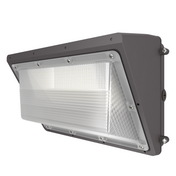

Residential areas are the heart of daily life, where families stroll, children play, and neighbors interact. Lighting is a silent yet vital pillar that shapes these spaces—impacting safety, comfort, energy costs, and even community cohesion. In recent years, LED street lights have replaced traditional high-pressure sodium (HPS) lamps and incandescent bulbs as the gold standard for residential lighting. Beyond simple illumination, they fulfill multiple critical roles that address the unique needs of neighborhoods, from deterring crime to reducing environmental impact. Let’s dive into the key roles of LED street lights in residential areas and why they’re an indispensable investment for modern communities.
1. Enhance Safety & Security: Deter Crime and Prevent Accidents
Safety is the top priority for any residential community, and LED street lights are engineered to deliver unmatched protection. Unlike traditional sodium lamps that emit dim, yellowish light with poor visibility, LED street lights provide bright, uniform illumination with a color rendering index (CRI) of ≥70—some premium models reach ≥80 . This high CRI ensures accurate color reproduction, making it easier for residents to identify obstacles, faces, and potential hazards on sidewalks, driveways, and common areas.
Studies consistently validate the crime-deterrent effect of well-lit residential areas: the Urban Institute found a 39% reduction in nighttime crime in neighborhoods with improved lighting . LED street lights eliminate dark spots and shadows—common hiding places for criminals—by leveraging directional light distribution and wide beam angles (120°-150°). For example, Kansas City’s conversion to LED street lights improved visibility for pedestrians and drivers, while reducing property crimes in residential zones by 30% . These lights also enhance the effectiveness of security cameras by 50% through clearer footage, further strengthening community safety .
From an accident-prevention standpoint, LED street lights shine: the National Highway Traffic Safety Administration reports that nearly 50% of traffic fatalities occur at night, but LED illumination reduces pedestrian injury rates by 32% . Their instant-on feature (no warm-up time) ensures residential streets are brightly lit as soon as dusk falls, while compliance with international standards like CIE 115:2010 (15-20 lux for main roads, 5-10 lux for sidewalks) ensures lighting is neither too dim nor glaring—critical for protecting children and the elderly from trips and falls.
2. Slash Energy Consumption & Lower Long-Term Costs
Residential communities, whether managed by HOAs or local governments, face constant pressure to reduce operational costs. LED street lights excel in energy efficiency, consuming 50-70% less energy than traditional sodium lamps . A 90W LED street light can replace a 250W sodium lamp (which actually draws 380W with ballast losses) while delivering the same or higher brightness . For a community with 100 street lights operating 12 hours/day, this translates to annual electricity savings of $10,000-$15,000 (based on $0.15/kWh). Kansas City’s LED conversion project saved the city $2.5 million annually in energy costs, with residential areas contributing a significant portion of those savings .
LED street lights also boast an ultra-long lifespan of 50,000-100,000 hours—5-10 times longer than sodium lamps (5,000-10,000 hours) . This means 10+ years of use without bulb replacements, cutting maintenance costs by 70-80% . For example, a residential community with 200 street lights would spend $40,000 over 10 years replacing sodium lamps (including labor), while LED models require almost no maintenance . Many LED street lights also support smart controls like photocells (auto-on/off based on natural light) and dimming, allowing further energy savings of 20-30% during low-traffic hours (11 PM-5 AM).
When calculating total cost of ownership, LED street lights are far more economical: a 10-year lifecycle analysis shows that LED systems cost 75% less than sodium lamps, even with higher initial procurement costs . For HOAs, these savings free up funds for community improvements like park upgrades or landscaping.
3. Improve Living Comfort & Reduce Environmental Impact
Residential lighting should be functional and comfortable, and LED street lights deliver on both fronts. Traditional sodium lamps emit harsh, yellow light that distorts colors and disrupts sleep, but LED models offer customizable color temperatures (CCT) tailored to residential needs: 3000K-4000K (warm to neutral white) is ideal, as it creates a cozy atmosphere without glare or light pollution . This range minimizes disturbance to residents’ sleep by reducing blue light exposure, while avoiding the harshness of 5000K+ cool white.
LED street lights also reduce light pollution through directional design—they focus light downward onto targeted areas (sidewalks, roads) instead of wasting it upward into the sky. This protects the night sky and prevents light intrusion into bedrooms, improving sleep quality for residents . Environmentally, LED street lights are mercury-free, lead-free, and emit no UV radiation, complying with RoHS standards . Their energy efficiency also lowers carbon emissions: each 100W LED street light saves approximately 800kWh annually, reducing CO2 emissions by 312kg . Kansas City’s LED conversion reduced the city’s carbon footprint by 26,900 tons annually, with residential areas playing a key role.
Safety is further enhanced by LED’s low fire risk: unlike halogen or sodium lamps that reach 150-250°C, LED street lights operate at 40-80°C and include heat sinks and thermal protection to prevent overheating . Their IP65+ waterproof rating also makes them durable against rain, snow, and humidity—critical for outdoor residential use.
4. Support Smart Community Development
Modern residential areas are evolving into connected communities, and LED street lights serve as a foundational backbone for this transformation. By integrating smart controls (Zigbee, RS485) and sensors, LED street lights become part of intelligent networks that enhance convenience and efficiency . For example, motion sensors can automatically brighten lights when a pedestrian or cyclist is detected, then dim them during quiet periods—saving energy while maintaining safety .
Smart LED street lights also enable remote monitoring and predictive maintenance: property managers can track energy usage, detect faults (e.g., a burnt-out bulb), and schedule repairs via a mobile app, reducing downtime by 50% . Some systems even integrate with other smart community features, such as environmental sensors (monitoring air quality or noise levels) or emergency alert systems that brighten lights during crises.
For residential areas aiming to be eco-friendly, solar-powered LED street lights are an excellent option—they require no grid electricity, use renewable energy, and avoid the need for digging trenches for wiring . These models typically offer 3+ days of rain autonomy, ensuring reliable lighting even in cloudy weather.
5. Comply with Standards & Boost Property Value
LED street lights meet strict international and local standards, including IEC 60598 (safety), CIE 115:2010 (illumination), and RoHS (environmental protection) . Compliance not only ensures safety and performance but also enhances a community’s reputation. Well-lit residential areas with modern LED lighting are more attractive to homebuyers, with studies showing a 3-5% increase in property values . For homeowners, this means a higher return on investment, while HOAs benefit from increased resident satisfaction and retention.
Conclusion
LED street lights are far more than just lighting fixtures—they are a multifaceted solution that enhances safety, reduces costs, improves comfort, and supports smart, sustainable residential communities. From deterring crime and preventing accidents to cutting energy bills and minimizing environmental impact, their benefits are undeniable. Whether you’re an HOA manager looking to optimize operational costs, a local government aiming to improve public safety, or a homeowner invested in community livability, LED street lights deliver long-term value that traditional lighting simply can’t match. As residential areas continue to evolve, LED street lights will remain a cornerstone of modern, people-centric neighborhood design.