
Introduction
When drivers return to their cars after dark, they‘re not thinking about lumens or color rendering. They’re thinking about safety: Can I see clearly? Are there dark spots where someone could be hiding? And property managers? They‘re thinking about liability, energy bills, and maintenance costs. The lighting choice in your parking lot affects all of it — and in 2026, LED area lights have emerged as the clear, undeniable perfect choice.
The Illuminating Engineering Society (IES) publishes the definitive standard for parking facility lighting in IES RP-20 [2†L4-L8]. It states that general parking areas should be illuminated at 0.2 to 1.0 foot‑candles (fc) , with 1.0 fc recommended for higher‑security facilities [2†L7-L9]. For high‑activity commercial lots, the recommended range is typically 1.0 to 2.0 fc, with transitional zones (where the eye adapts from bright sunlight into a garage) requiring up to 10 fc [2†L10-L12].
Modern high‑quality LED area lights exceed these IES targets at a fraction of the energy cost of traditional lighting. In the following sections, we‘ll explore the measurable, quantified reasons why LED area lights are not just a good option — they are the perfect lighting solution for any parking lot in 2026.
1. Massive Energy Savings — 50–80% Lower Electricity Bills
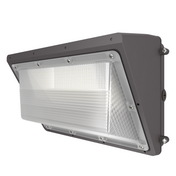
The most immediate and measurable benefit of LED area lights is dramatically reduced energy consumption. A typical 400‑watt metal halide parking lot fixture (including ballast losses) actually draws approximately 458 watts, while a modern 150W LED shoebox light at 150 lm/W efficacy produces equivalent — often superior — illumination.
A 300‑watt LED area light produces the same illumination as a 750‑watt metal halide while cutting energy costs by 60 percent annually. Swapping a 400W metal halide to a 150W LED cuts energy use by 60 to 75 percent.
Real‑world case studies confirm these savings:
-
Five‑year savings analysis: $48,399 in energy savings — a 74% reduction in energy consumption [0†L6-L7].
-
California adaptive lighting scenarios can reduce lighting energy use and carbon emissions 72–93% in areas with average occupancy of 20% [0†L15-L17].
-
Department of Defense demonstration projects found energy and cost savings of 60 to 90% using advanced LED light sources with controls, while improving light quality and brightness — confirmed by user surveys [4†L5-L10].
For a mid‑sized parking lot with 50 poles, commercial retrofits have trimmed usage by 70–76%. For a single large parking lot with 1,000 LED lights, annual electricity savings can exceed $10,500 [4†L17-L19].
2. Superior Light Quality — High CRI and Uniformity for Safety
LED area lights deliver consistent, high‑quality illumination that metal halide and HPS simply cannot match — and this directly improves security and user confidence.
Color Rendering Index (CRI): LED area lights achieve 80+ CRI (and premium models 85–90+), compared to metal halide‘s 65–75 CRI and high‑pressure sodium‘s dismal 20–25 CRI. Superior CRI allows security cameras to capture usable facial recognition footage and distinguishes vehicle colors — critical for forensic evidence.
Uniformity: LED optics achieve uniformity ratios of 4:1 max:min (or better) across the lot — a key IES RP‑20 requirement — virtually eliminating hiding spots for potential intruders. Uniformity matters just as much as average illuminance. A lot with 2.0 fc average but 10:1 uniformity still has dark pockets where crimes can occur. IES RP‑20 specifies a maximum‑to‑minimum uniformity ratio of 20:1 for open lots and 10:1 for parking garages [6†L23-L26]. LED area lights routinely achieve ratios of 4:1 or better.
Vertical illuminance for security: IES RP‑20 increasingly emphasizes vertical illuminance — light hitting a person‘s face at 5 ft above ground — which is critical for facial recognition. Research shows that once horizontal levels exceed about 5–10 lux and vertical levels hit 0.5–1 lux, further increases give diminishing returns for crime reduction [2†L12-L15]. LED fixtures achieve these vertical targets efficiently.
User‑tested results: Department of Defense demonstration projects found that LED lighting with controls improved light quality in terms of color rendering and brightness, confirmed by user surveys [4†L5-L10].
3. Exceptional Lifespan — 50,000 to 100,000+ Hours
Parking lot relamping is expensive and disruptive. Each metal halide lamp replacement requires bucket trucks, electricians, lane closures, and hazardous waste disposal for mercury‑containing lamps. LED area lights eliminate most of this.
LED lifespan: Quality LED area lights achieve an L70 rating of 50,000–100,000+ hours. At 12 hours of nightly operation (4,380 hours/year), that‘s 11–22+ years of service.
Metal halide lifespan: Only 10,000–20,000 hours — requiring relamping every 2‑4 years depending on operating hours [1†L31-L33].
Some ultra‑premium LED fixtures (like the WIHTU 150W shoebox) are rated for 60,000 hours, providing more than a decade of reliable, maintenance‑free use with IP65 waterproof protection and an operating range of -40°F to 140°F (-40°C to 60°C) [5†L41-L44].
This extended lifespan directly translates into reduced labor costs for boom lifts and electricians, eliminated hazardous waste disposal fees for mercury‑containing HID lamps, and zero disruption to parking lot operations for bulb changes.
4. Instant On / Instant Restrike — No Warm‑Up Delays
Metal halide lamps require 3–10 minutes to warm up to full brightness. If a motion sensor triggers the light, the area remains dark during the most critical initial seconds — an unacceptable security gap. After a power interruption, metal halide needs 10–15 minutes to cool down before it can restart.
LED area lights reach full brightness in less than 0.5 seconds and restrike instantly after any power interruption.
Real‑world example: The Fruitland parking lot LED upgrade project installed motion‑sensor LED fixtures [0†L19-L23]. When someone walks or drives through the area, the lights brighten to full power immediately — no warm‑up, no delay, no security gap [0†L21-L23].
5. Adaptive Controls — Dimming, Motion Sensors, and Up to 93% Additional Savings
2026’s advanced control systems offer unprecedented flexibility, energy savings, and operational efficiency, with annual energy savings of 40–60% compared to 2020‑era LED fixtures. Smart technology is no longer an add‑on but a core component of modern LED area lighting design.
Core adaptive control strategies:
-
Dusk‑to‑dawn photocells: The most widely used solution for parking lots automatically adjust to seasonal daylight changes, preventing energy‑wasting daytime operation [6†L27-L32].
-
Motion sensors (mmWave radar): Innovative mmWave radar systems detect passing vehicles and dynamically adjust brightness through PWM waves, significantly improving operational performance while minimizing lighting energy consumption [6†L4-L11].
-
Adaptive brightness control: Designed to provide light only when and where it‘s needed, ensuring consistent visibility while reducing unnecessary energy usage. The Singapore smart carpark lighting project achieved up to 80% reduction in electricity costs and a full return on investment within 2.14 years [0†L24-L30][6†L12-L18].
The California Lighting Technology Center‘s adaptive parking garage luminaires integrate intelligent controls to control light output based on garage occupancy [6†L20-L25]. California‘s PIER program scenarios show potential to reduce lighting energy use 72–93% in parking lots with average occupancy of 20% [0†L15-L17].
6. Perfect Color Temperature — 4000K–5000K for Safety
4000K–5000K (neutral to cool white / daylight) is the gold standard for commercial parking lots in 2026. This CCT range offers crisp, clear illumination that enhances safety and visibility while accurately rendering surface colors such as asphalt, concrete, painted lines, and signage [6†L34-L36].
Why 5000K works for parking lots: For automotive environments, 5000K daylight creates high‑contrast illumination that makes lane markings, curbs, and obstacles stand out clearly — improving driver safety and pedestrian visibility.
Many premium LED shoebox lights (such as the Lumina 200W with 4000K/5000K switchable CCT) offer field‑selectable CCT, allowing parking lot managers to adjust color temperature on‑site without changing fixtures.
7. Environmental Durability — IP65+ Ratings for Any Climate
LED area lights are engineered to withstand extreme outdoor conditions.
IP65 standard: Dust‑tight and protected against water jets from any direction. IP65 ensures reliable performance in rain, snow, wind, and dust — common in parking lots [5†L11-L13].
IP66 upgrade: Fully waterproof, resistant to powerful water jets — recommended for coastal areas and high‑rainfall regions.
Extended operating range: Premium LED fixtures operate reliably from -40°F (-40°C) to 140°F (60°C), covering extreme cold and hot climates [5†L41-L44].
Sealed housing: Waterproof designs keep bugs, debris, and moisture from entering the lens, maintaining optical clarity over the life of the fixture [5†L21-L22].
8. Environmental Benefits — No Mercury, Lower Carbon Footprint
No hazardous materials: Metal halide and HPS lamps contain 10–50 mg of mercury each — a potent neurotoxin requiring special disposal as hazardous waste. LED area lights contain no mercury and are fully RoHS compliant.
Lower carbon footprint: The 50–80% energy reduction translates directly into lower greenhouse gas emissions. California‘s adaptive lighting scenarios show emissions reductions of 72–93%. After December 15, 2026, V5.1 products fall off the QPL, and products not on the QPL don‘t qualify for rebates.
Key V6.0 requirements for parking lot lighting:
-
Higher efficacy thresholds (raised 10–20 lm/W compared to V5.1)
-
Premium tier requires controllability (dimming/field‑adjustable output)
-
DLC Standard vs. Premium — Premium fixtures typically qualify for 75+ per fixture in additional rebate incentives
For any 2026 parking lot project, specify DLC V6.0 certified fixtures — ideally Premium tier — to maximize utility rebate eligibility.
How to Choose the Perfect LED Area Light for Your Parking Lot
Consider these key specifications:
| Specification | Recommendation |
|---|---|
| Lumens (for 15–25 ft poles) | 10,000–20,000 lm for small/medium lots; 20,000–40,000+ lm for large lots |
| Distribution pattern | Type II for narrow walkways/lanes; Type III for parking lots; Type IV for building perimeters; Type V for open areas |
| CCT | 4000K–5000K (neutral to cool white) for safety and visibility |
| CRI | 80+ minimum; 85–90 recommended for CCTV‑critical lots |
| IP rating | IP65 minimum; IP66 for coastal or high‑rainfall areas |
| Operating temperature | Verify range covers your climate — premium fixtures offer -40°F to 140°F |
| Controls | Dusk‑to‑dawn photocell required; 0‑10V dimming with motion sensors strongly recommended |
| DLC certification | DLC V6.0 Premium required for 2026 utility rebates |
Frequently Asked Questions (FAQ)
Q: What foot‑candle level does a parking lot need?
A: IES RP‑20 recommends 0.2–1.0 fc for general parking areas, with 1.0 fc recommended for higher‑security facilities [2†L7-L9]. High‑activity commercial lots (retail centers, hospitals) typically use 1.0–2.0 fc, and transitional entrance zones require 10 fc minimum.
Q: Are LED area lights worth the higher upfront cost compared to metal halide?
A: Yes — with energy savings of 50–80%, maintenance reductions of 90%+, and DLC V6.0 rebates, most parking lot LED retrofits pay for themselves in 1.5–3 years. One analysis shows a 1.3‑year payback and a 10.8x return over 15 years.
Q: Can LED area lights be used in cold climates?
A: Yes — LED performance typically improves in cold temperatures. Premium fixtures are rated for operation from -40°F (-40°C) to 140°F (60°C), covering even the coldest Canadian and Northern US winters [5†L41-L44].
Q: What‘s the typical lifespan of an LED parking lot light?
A: Quality LED area lights have an L70 rating of 50,000–100,000+ hours. At 12 hours per night (4,380 hours/year), that‘s 11–22+ years of operation — meaning you may never need to replace a lamp [0†L50-L51].
Q: Can I install LED area lights on existing metal halide poles?
A: Usually yes — but have a structural engineer review older poles (15+ years) for corrosion or fatigue. LED fixtures are significantly lighter than metal halide fixtures and ballasts, but wind load calculations change.
Final Summary
LED area lights are not just a good choice for parking lot lighting — they are the perfect choice in 2026.
The evidence across 10 critical categories is conclusive:
-
Energy: 50–80% savings — $48,399 over five years in one documented case
-
Light quality: CRI 80+ for security cameras, uniform 4:1 max:min coverage — no dark spots
-
Lifespan: 50,000–100,000+ hours vs. 10,000–20,000 — 5–10× longer
-
Instant operation: <0.5 seconds vs. 3–10 minute warm‑up — immediate security response
-
Adaptive controls: Up to 93% additional energy savings with motion sensors and photocells
-
Environmental: No mercury, IP65+ weather resistance, dark‑sky compliant
-
Compliance: Meets or exceeds IES RP‑20 standards — reduces liability
-
ROI: 1.5–3 year payback — 10.8x return over 15 years
Take action today: Walk your parking lot at night, measure light levels, and note any dark spots or slow‑starting metal halide fixtures. Then contact a qualified lighting professional for a free photometric design and DLC V6.0 rebate assessment — before the December 15, 2026 V5.1 delisting deadline.
For your property‘s safety, your budget, and your customers’ peace of mind, the case is closed: LED area lights are the perfect parking lot lighting solution for 2026 and beyond.