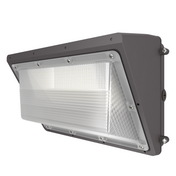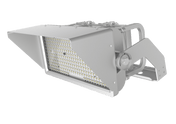

If your commercial property still relies on metal halide or high‑pressure sodium (HPS) area lights—often called HID (High‑Intensity Discharge) lighting—you're likely overpaying for electricity, spending too much on maintenance, and falling behind modern safety and environmental standards.
The year 2026 marks a turning point. With rising energy costs, tighter regulations, and the continued phase‑out of HID components, delaying your upgrade to LED area lights is no longer a cost‑saving move—it's a financial liability.
This guide provides a head‑to‑head comparison of LED area lights vs. traditional HID lighting, plus five urgent reasons why you should switch in 2026.
1. Quick Comparison: LED Area Lights vs. HID
| Feature | Metal Halide / HPS (HID) | LED Area Lights |
|---|---|---|
| Efficiency (LPW) | 60–100 lumens per watt | 130–170+ lumens per watt |
| Lifespan | 10,000–20,000 hours | 50,000–100,000 hours |
| Warm‑up time | 5–10 minutes (restrike: 10–15 min) | Instant on / instant re‑strike |
| Color temperature | 3000K–4000K (metal halide); 2100K (HPS) | 3000K–5000K+ available |
| CRI (Color accuracy) | 65–80 (HPS: <25) | 80–90+ |
| Light depreciation | 30–50% lumen loss mid‑life | <10% at 50,000 hours |
| Mercury content | Yes (hazardous waste) | No |
| Cold weather performance | Poor (longer warm‑up) | Excellent (instant, full brightness) |
| Typical payback vs. LED | Baseline | 1–3 years |
The efficiency gap has widened. In 2026, premium LEDs achieve 170+ lumens per watt while HID technology has not improved in decades.
2. Energy Cost Comparison (Real Numbers)
Assumptions: 50 area lights, 12 hours/night, 365 days/year, $0.12/kWh.
| 250W Metal Halide (280W actual) | 100W LED Area Light | Difference | |
|---|---|---|---|
| Annual energy per fixture | 1,226 kWh | 438 kWh | –788 kWh |
| Annual energy cost per fixture | $147 | $53 | –$94 |
| Annual energy cost for 50 fixtures | $7,350 | $2,650 | –$4,700 |
Over 10 years (one LED lifespan):
That's $47,000 in energy savings—just from switching 50 lights.
And energy rates are projected to rise 3–5% annually in many regions through 2026–2030.
3. Maintenance Cost Comparison (The Hidden Drain)
HID lights require frequent, expensive maintenance:
| Maintenance Activity | Metal Halide (50 fixtures, 10 years) | LED (50 fixtures, 10 years) |
|---|---|---|
| Lamp replacements | 5–7 cycles ($30 each) → ~$9,000 | $0 |
| Ballast replacements | 2–3 cycles ($50 each) → ~$6,250 | $0 |
| Bucket truck rental (10 visits) | $3,000 | $0 |
| Labor (40 hours @ $100/h) | $4,000 | $0 |
| Disposal of hazardous lamps | $500 | $0 |
| Total maintenance cost | ~$22,750 | $0 |
Over 10 years, HID maintenance costs roughly equal the purchase price of new LED fixtures.
4. Light Quality: Safety & Security
Poor lighting affects crime rates, liability, and customer perception.
| Factor | HPS (Yellow Light) | Metal Halide | LED (5000K) |
|---|---|---|---|
| Color appearance | Orange/yellow | White (degrades over time) | Crisp daylight |
| CCTV effectiveness | Poor (monochromatic) | Moderate | Excellent |
| Facial recognition | Difficult | Moderate | Clear |
| Perceived safety | Low | Moderate | High |
Case study: A national retail chain reported a 19% reduction in after‑dark incidents after switching from HPS to 5000K LED area lights. Security cameras captured usable footage for 93% of events vs. 41% previously.
In 2026, insurance carriers increasingly ask about lighting types. Some offer discounts for LED‑only properties.
5. Regulatory & Supply Chain Pressures in 2026
Several factors make 2026 a critical year to switch:
A. HID Component Phase‑Out
Major manufacturers (Philips, GE, Sylvania) have significantly reduced HID lamp and ballast production. Replacement parts are becoming harder to find and more expensive.
B. Energy Codes (IECC / ASHRAE)
The 2024 and 2026 energy code updates require higher efficacy than HID can achieve. New construction and major retrofits cannot legally install HID in many jurisdictions.
C. Utility Rebate Expirations
Many utilities are reducing or eliminating rebates for HID‑to‑LED after 2026, assuming most properties have already switched. Waiting means leaving money on the table.
D. ESG & Sustainability Reporting
Publicly traded companies and large tenants now require lighting emissions data. HID lights consume 3× more energy and contain mercury—both harm ESG scores.
Delaying to 2027 means higher energy costs, fewer rebates, and potential non‑compliance with building codes.
6. Smart Controls: Something HID Cannot Do
LED area lights work seamlessly with modern lighting controls. HID cannot.
| Feature | LED | HID |
|---|---|---|
| Dusk‑to‑dawn photocell | ✓ (standard) | ✗ (limited) |
| 0–10V dimming | ✓ | ✗ (HID dimming is expensive and inefficient) |
| Motion sensor integration | ✓ | ✗ |
| Schedule‑based dimming (e.g., 50% after midnight) | ✓ | ✗ |
| Daylight harvesting | ✓ | ✗ |
Real savings from controls:
With a simple schedule (100% until 10 PM, 50% until 6 AM), you save an additional 30% beyond LED‑vs‑HID savings.
-
100W LED running 12h at 100%: 438 kWh/year
-
Same LED with 6h at 100% + 6h at 50%: 328 kWh/year
-
Extra saving: 110 kWh/year per fixture ($13 at $0.12/kWh)
HID cannot participate in these savings—ever.
7. Environmental & Disposal Benefits
| HID (Metal Halide / HPS) | LED | |
|---|---|---|
| Contains mercury | ✓ (hazardous waste) | ✗ |
| Special disposal required | ✓ (costly) | ✗ |
| CO₂ emissions (per fixture/year) | ~870 lbs (250W) | ~310 lbs (100W LED) |
| Recyclable | Partial (glass, metal) | >95% (aluminum, polycarbonate, circuit boards) |
For a 50‑fixture property, switching to LED reduces annual CO₂ emissions by 28,000 lbs—equivalent to taking 2.5 cars off the road.
Many states have strict mercury disposal laws. Improper HID disposal can result in fines of $10,000+ per violation.
8. Total Cost of Ownership (TCO) Comparison – 10 Years
Assumptions: 50 fixtures, 12h/night, $0.12/kWh, $150 per LED fixture, $80 per HID fixture (but frequent replacements).
| Cost Component | HID (250W Metal Halide) | LED (100W Area Light) |
|---|---|---|
| Initial fixtures (50) | $4,000 | $7,500 |
| Utility rebate (LED only) | $0 | –$3,000 (est. $60/fixture) |
| Net upfront | $4,000 | $4,500 |
| Energy (10 years) | $73,500 | $26,500 |
| Maintenance (10 years) | $22,750 | $0 |
| Disposal (hazardous) | $500 | $0 |
| Total 10‑year cost | $100,750 | $31,000 |
10‑year savings with LED: $69,750
Return on additional upfront investment (vs. HID): over 2,000%
Even if you keep HID fixtures you already own, the energy and maintenance costs exceed the price of new LEDs within 2–3 years.
9. Why 2026 is the Tipping Point (Not 2025, Not 2027)
| Factor | 2024 | 2025 | 2026 | 2027+ |
|---|---|---|---|---|
| HID parts availability | Moderate | Low | Very low | Critically low |
| HID lamp prices | Stable | Rising | Rising fast | Unpredictable |
| Utility rebates for LED | High | Medium | Medium–Low | Low/None |
| Energy code restrictions | Some | More | Strict | Very strict |
| LED fixture prices | Still falling | Stabilized | Best value | May rise (tariffs) |
2026 offers the optimal balance: mature LED technology, competitive pricing, available rebates, and before HID parts become unobtainable.
10. Action Plan: Switch to LED Area Lights in 2026
Follow these steps to execute a cost‑effective HID‑to‑LED conversion:
-
Audit your current HID fixtures – Count them, note wattages, and record pole heights.
-
Check local utility rebates – Many require pre‑approval and DLC‑listed fixtures.
-
Request a free photometric plan – Ensure proper optics (Type III, IV, or V) for your layout.
-
Choose DLC‑listed LED area lights with 5‑year minimum warranty and 10kV surge protection.
-
Add photocells and 0–10V dimming to maximize savings.
-
Schedule installation – Off‑hours to minimize disruption.
-
Recycle HID lamps properly – Use a certified hazardous waste handler.
Conclusion: The Switch is Essential in 2026
LED area lights outperform HID in every measurable way: energy, maintenance, light quality, controls, environmental impact, and total cost of ownership. HID technology is obsolete, parts are disappearing, and energy codes are leaving it behind.
Waiting until 2027 or 2028 means:
-
Paying thousands more in unnecessary energy bills
-
Scrambling for expensive, hard‑to‑find HID replacement parts
-
Missing out on utility rebates that may expire
-
Potentially violating building codes
The question is no longer “if” you should switch to LED area lights. It’s “why haven’t you already?” Start your 2026 upgrade today.