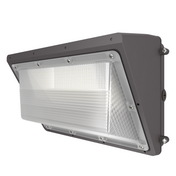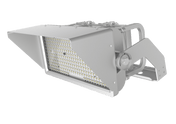

If you own or manage a commercial building—whether it's a retail store, apartment complex, office park, hotel, or industrial facility—you need reliable, energy‑efficient outdoor lighting. LED wall pack lights are the standard solution for mounting on building exteriors, illuminating walkways, entrances, loading docks, and perimeter areas.
But with hundreds of options on the market in 2026, how do you choose the right wall pack for your property?
This ultimate guide covers everything: lumens, color temperature, optics, certifications, smart controls, mounting types, and total cost of ownership. Use it as your complete buying checklist.
1. What Are LED Wall Pack Lights?
LED wall packs are outdoor light fixtures designed to be mounted vertically on building walls (or parapets). They project light outward and downward to illuminate:
-
Building entrances and exits
-
Sidewalks and pathways
-
Parking lot perimeters
-
Loading docks and service areas
-
Alleyways and stairwells
-
Signage and facade lighting
Unlike area lights (which are pole‑mounted), wall packs are building‑mounted and typically cover smaller, targeted zones.
2. Why Upgrade to LED Wall Packs in 2026?
Legacy wall packs used metal halide, high‑pressure sodium (HPS), or fluorescent lamps. Here's why 2026 is the year to switch to LED:
| Factor | Legacy (HID/Fluorescent) | LED Wall Packs |
|---|---|---|
| Energy efficiency | 40–80 lumens per watt | 120–160+ LPW |
| Lifespan | 6,000–20,000 hours | 50,000–100,000 hours |
| Maintenance | Frequent lamp changes | Zero maintenance for 10+ years |
| Warm‑up time | 5–15 minutes | Instant on |
| Cold weather performance | Poor | Excellent |
| Mercury content | Yes (hazardous) | No |
| Utility rebates | Limited | DLC rebates available |
In 2026, LED technology is mature, prices are stable, and DLC rebates are still widely available—but many utilities are reducing rebates after 2026.
3. Key Specifications to Compare
When evaluating LED wall packs, focus on these technical parameters:
A. Lumens (Brightness) – Not Watts
| Application | Recommended Lumens |
|---|---|
| Small entryway / stairwell | 1,000–2,000 lumens |
| Standard entrance / walkway | 2,000–4,000 lumens |
| Loading dock / service area | 4,000–8,000 lumens |
| Large facade / perimeter security | 8,000–15,000+ lumens |
Look for lumens per watt (LPW) ≥ 130 for 2026 efficiency standards.
B. Wattage (for reference only)
| Wattage | Typical Lumens | Best For |
|---|---|---|
| 20W–30W | 2,000–4,000 lm | Entrances, stairwells |
| 40W–60W | 5,000–8,000 lm | Loading docks, medium walls |
| 80W–100W | 10,000–15,000 lm | Large facades, high security |
| 120W–150W | 16,000–24,000 lm | Very large buildings, long throw |
C. Color Temperature (Kelvin)
-
3000K (warm white) – Residential feel, minimal glare, good for neighborhoods
-
4000K (neutral white) – Balanced, good for most commercial properties
-
5000K (daylight) – Maximum visibility and security, recommended for industrial and high‑crime areas
For 2026, 4000K is the most popular for general commercial use. 5000K is preferred for security-focused applications.
D. Beam Optics (Distribution Patterns)
This is the most overlooked but critical factor. LED wall packs offer different beam patterns to match your mounting height and wall distance.
| Pattern | Shape | Best For |
|---|---|---|
| Type I | Narrow, symmetrical | Walkways, narrow paths |
| Type II | Medium width | Standard entrances (8–12 ft high) |
| Type III | Wide rectangular | Parking lot perimeters, loading docks |
| Type IV | Forward throw (asymmetric) | Illuminating outward from wall |
| Type V | Round (full cutoff) | Large open areas, facades |
Wrong optics = light trespass (neighbor complaints) or dark zones directly below the fixture.
4. Mounting Types & Installation
LED wall packs come in several mounting configurations:
| Mount Type | Description | Best For |
|---|---|---|
| Surface mount | Directly on wall surface | Standard installations (most common) |
| Junction box mount | Mounts to standard 4" round or octagonal box | Retrofits, easy installation |
| Flush mount | Sits flush against wall (minimal protrusion) | Aesthetic applications, tight spaces |
| Slip fitter | Mounts to tenon (arm extending from wall) | Pole‑arm or extended wall mounting |
Always verify wall pack width and height against your available mounting space.
5. Critical Certifications for 2026
Outdoor wall packs face water, dust, temperature extremes, and power surges. Never buy non‑certified.
| Certification | What It Means | Required For |
|---|---|---|
| UL / cUL / ETL | Safety certified for US/Canada | All commercial installations |
| DLC Listed | Efficiency verified; utility rebate eligible | Maximizing ROI |
| IP65 | Water and dust proof (dust‑tight, protected from jets) | All outdoor use |
| IP66 | Higher water resistance (powerful jets) | Harsh environments (coastal, heavy rain) |
| 5kV–10kV surge protection | Protects against lightning and grid surges | All outdoor locations (especially lightning-prone areas) |
| Dark Sky Approved | Fully shielded (no uplight) | Areas with light pollution ordinances |
⚠️ In 2026, many municipalities require Dark Sky compliant wall packs for new construction. Check local codes.
6. Smart Features Worth Adding
Modern LED wall packs can reduce energy use by another 30–50% with controls:
A. Photocell (Dusk‑to‑Dawn)
-
Automatically turns light on at sunset, off at sunrise
-
Available as built‑in or twist‑lock receptacle (field‑replaceable)
-
Must-have for any outdoor wall pack
B. Motion Sensor (Integrated or External)
-
Dims to 20–30% when no activity, brightens on detection
-
Ideal for: stairwells, alleys, low‑traffic entrances after midnight
-
Additional savings: 30–40% beyond standard LED efficiency
C. 0–10V Dimming
-
Allows schedule‑based dimming (e.g., 100% until 10 PM, 50% from 10 PM–6 AM)
-
Works with building automation systems
-
Not all wall packs support dimming – verify before purchase
D. Emergency Battery Backup
-
Keeps light on for 90+ minutes during power failure
-
Required by code for egress paths and certain commercial entrances
-
Adds ~$30–$60 to fixture cost
E. Selectable Wattage & CCT
-
Allows on‑site adjustment (e.g., 30W/40W/50W and 3000K/4000K/5000K)
-
Reduces inventory (one SKU fits multiple applications)
-
Very popular in 2026
Recommendation: For most commercial properties, choose a wall pack with built‑in photocell + motion sensor (or photocell + 0–10V dimming schedule).
7. How Many Wall Packs Do You Need? (Quick Method)
Use this simplified approach:
-
Measure the wall length and desired coverage distance (how far outward you want light).
-
For typical 8–12 ft mounting height, one wall pack covers roughly:
-
Type II (medium): 15–25 ft along wall × 15–20 ft outward
-
Type III (wide): 25–40 ft along wall × 20–30 ft outward
-
Example:
A 150‑ft building facade with parking lot in front. Mounting height 10 ft.
Using Type III wall packs (40 ft spacing) → 150 ÷ 40 = 4 fixtures.
For precise layouts, request a free photometric plan (AGi32 or Visual) from your supplier.
8. Common Mistakes to Avoid
❌ Buying by wattage only – A 50W cheap wall pack may produce fewer lumens than a quality 30W unit.
❌ Wrong optics – Type I on a loading dock leaves dark areas directly below.
❌ No photocell – Lights run during the day = wasted energy.
❌ Skipping DLC listing – You lose utility rebates (typical: $20–$60 per fixture).
❌ Ignoring surge protection – One lightning strike can destroy a whole building's wall packs.
❌ Mounting too high or too low – Higher than 15 ft reduces ground illumination; lower than 8 ft creates glare.
9. Top LED Wall Pack Features for 2026 (Checklist)
When comparing products, use this checklist:
-
Lumens per watt ≥ 130
-
4000K or 5000K color temperature (for commercial security)
-
Correct beam optics (Type II, III, or IV for your layout)
-
UL / DLC listed
-
IP65 minimum rating
-
5kV surge protection minimum (10kV preferred)
-
Built‑in or twist‑lock photocell receptacle
-
0–10V dimming (if desired)
-
5‑year warranty minimum (10‑year preferred)
-
Selectable wattage / CCT (optional, reduces inventory)
-
Dark Sky compliant (if required in your area)
10. Total Cost of Ownership (TCO) Comparison – 10 Years
Assumptions: 20 wall pack fixtures, 12 hours/night, 4,380 hours/year, $0.12/kWh.
| Cost Component | 70W Metal Halide (100W actual) | 30W LED Wall Pack (DLC) |
|---|---|---|
| Initial fixtures (20) | $600 ($30 ea) | $1,200 ($60 ea) |
| Utility rebate (LED only) | $0 | –$600 ($30/fixture) |
| Net upfront | $600 | $600 |
| Energy (10 years) – per fixture | 100W × 43,800h = 4,380 kWh → $525 | 30W × 43,800h = 1,314 kWh → $158 |
| Energy (10 years) – 20 fixtures | $10,500 | $3,160 |
| Maintenance (10 years) | Lamp changes (5× $15) + ballast (2× $25) + labor = ~$1,500 | $0 |
| Total 10‑year cost | $12,600 | $3,760 |
10‑year savings with LED: $8,840
ROI on same upfront cost: over 1,400%
Even if your existing HID wall packs are "free" (already installed), the energy and maintenance savings justify immediate replacement.
11. 2026 Trends in LED Wall Packs
A. Selectable Wattage & CCT (Single SKU)
One fixture replaces 5–10 SKUs. Installers set wattage and color temperature on‑site via DIP switches.
B. Integrated Motion Sensor with Bluetooth Mesh
Sensors communicate with each other. When one detects motion, nearby wall packs also brighten. Ideal for large building perimeters.
C. Smart Building Integration (BACnet, DALI)
Wall packs connect to building automation systems for centralized scheduling, dimming, and energy reporting.
D. Solar‑Ready Wall Packs
Some 2026 models accept solar panel input for off‑grid or low‑energy applications (parking lots without utility power).
12. Action Plan: Choose & Install in 2026
-
Audit your building – Count existing wall packs, note mounting heights, and measure wall lengths.
-
Check local codes – Dark Sky requirements? Emergency egress rules?
-
Verify utility rebates – Search "DLC wall pack rebate [your utility]".
-
Choose your fixture – Use the checklist above.
-
Request a photometric plan – Free from quality suppliers.
-
Order one sample – Test before buying 20+.
-
Schedule installation – Off‑hours to minimize disruption.
-
Recycle old HID lamps – Use a certified hazardous waste handler.
Conclusion
Choosing the best LED wall pack lights in 2026 comes down to four things: lumens (not watts), correct optics, DLC certification, and smart controls (photocell + optional motion sensor).
With energy rates rising and utility rebates still available, there has never been a better time to replace outdated HID wall packs. The fixtures pay for themselves in energy savings within 1–2 years, then deliver free, maintenance‑free light for a decade.
Start your upgrade today—your building's security, your tenants, and your bottom line will thank you.