
When you think about building security, you probably imagine cameras, alarms, access control systems, and security guards. But there is one layer of protection that is often overlooked—yet it is the most cost‑effective and constantly active defense you can install.
Lighting.
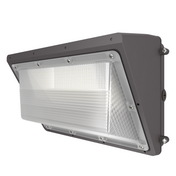
Specifically, LED wall pack lights mounted on the exterior of your building. They are not just for aesthetics or code compliance. They are a proactive security tool that deters intruders, improves surveillance, reduces liability, and pays for itself through energy savings.
This guide explains why LED wall pack lights are your best defense for perimeter security—and how to choose the right ones.
1. The Crime Prevention Principle: Light Deters
Every law enforcement agency and security professional agrees on one basic fact: Criminals avoid well‑lit areas.
The reasoning is simple:
-
More light means higher chance of being seen
-
Higher chance of being seen means higher chance of being caught
-
Higher chance of being caught means criminals choose another target
According to the U.S. Department of Justice, properties with inadequate exterior lighting are 3 to 5 times more likely to experience after‑hours break‑ins, vandalism, and theft compared to well‑lit properties.
A study by the University of Cincinnati found that improved street and perimeter lighting reduced crime by 21% on average—with some areas seeing reductions of over 40%.
LED wall packs provide the bright, uniform, white light that criminals hate.
2. Why LED Wall Packs Beat Traditional Security Lighting
Most older buildings still use metal halide or high‑pressure sodium (HPS) wall packs for perimeter lighting. Compared to modern LED, they are poor security tools.
| Feature | Metal Halide / HPS | LED Wall Pack |
|---|---|---|
| Warm‑up time | 5–15 minutes (delayed security) | Instant on (full brightness) |
| Color quality | Yellow/orange (HPS) or poor CRI | 5000K daylight, CRI 80+ |
| CCTV effectiveness | Poor to moderate | Excellent |
| Facial recognition | Difficult (HPS) | Clear |
| License plate capture | Poor (glare/color washout) | Good to excellent |
| Strobe/flicker at end of life | Yes (distracting) | No |
| Restrike after power outage | 10–15 minutes (dark period) | Instant |
A metal halide wall pack that has been off for a few minutes (e.g., after a brief power flicker) takes 10–15 minutes to relight. That's a 15‑minute window of darkness. LED wall packs relight instantly.
3. How LED Wall Packs Enhance Surveillance Cameras
Modern security cameras (CCTV, IP cameras, AI‑based analytics) depend entirely on light quality. You can have 4K cameras with advanced analytics—but if the light is poor, the footage is useless.
LED 5000K (Daylight) vs. HPS (Yellow/Orange)
| Factor | HPS (Yellow) | 5000K LED |
|---|---|---|
| Color accuracy | Very poor (skin tones look unnatural) | Excellent (true colors) |
| Camera auto‑white balance | Struggles | Works perfectly |
| Detail in shadows | Very low | High |
| Glare reduction | Poor | Good (with proper optics) |
Real‑world example:
A convenience store chain switched from HPS wall packs to 5000K LED. Within 60 days, police were able to identify suspects from security footage in 83% of incidents—up from just 34% previously.
LED wall packs don't just light your perimeter—they make your existing cameras actually useful.
4. Motion Sensors: The Force Multiplier
A standard dusk‑to‑dawn wall pack is good. A motion‑sensing LED wall pack is dramatically better for security.
How motion sensor wall packs work:
-
Standby mode (dim): 10–30% brightness (saves energy, but perimeter is still visible)
-
Occupied mode (full): 100% brightness when motion is detected
-
Timer: Returns to dim after 30–120 seconds of no activity
Security benefits of motion sensing:
| Feature | Benefit |
|---|---|
| Sudden bright light startles intruders | Many flee immediately |
| Alerts security personnel or passersby | Unexpected light draws attention |
| Reduces light trespass | Dim mode keeps neighbors happy |
| Extends LED lifespan | Lower average brightness = longer life |
A motion‑sensing LED wall pack can reduce energy use by 60–70% compared to a full‑brightness‑all‑night fixture—while actually improving security response.
5. Uniform Illumination Eliminates Hiding Spots
Poorly designed perimeter lighting creates dark zones and deep shadows—perfect hiding spots for criminals.
Common problems with legacy wall packs:
-
Narrow beam leaves dark areas directly below the fixture
-
Light trespass wastes energy illuminating neighboring properties (not your perimeter)
-
Glare blinds cameras and passersby
LED wall packs with proper optics (Type III, Type IV, or Type V) provide uniform illumination:
| Optics Pattern | Best For | Security Benefit |
|---|---|---|
| Type III (wide rectangular) | Parking lot perimeters | No dark zones along building edge |
| Type IV (forward throw) | Illuminating outward from wall | Covers walkways and adjacent areas |
| Type V (round) | Large open perimeters | Eliminates radial shadows |
Dark Sky‑approved wall packs are fully shielded (no uplight) and direct all light downward where it's needed for security.
6. Real‑World Security Case Study
Location: Multi‑tenant office park, suburban Atlanta
Previous lighting: 50 metal halide wall packs (70W) on building perimeters
Problem: 7 break‑ins and 12 vehicle burglaries in 18 months. Security cameras captured "blurry shapes, no usable details."
Solution: Upgraded to 30W LED wall packs (5000K, Type IV optics, integrated motion sensors, dusk‑to‑dawn photocell).
Results (12 months after upgrade):
| Metric | Before (Metal Halide) | After (LED Motion Wall Packs) |
|---|---|---|
| After‑hours break‑ins | 5 | 1 |
| Vehicle burglaries | 8 | 2 |
| Vandalism incidents | 6 | 1 |
| Usable CCTV footage for police | ~30% | ~85% |
| Tenant security complaints | 12 | 1 |
Annual energy savings: ~$4,200
**Security ROI (reduced losses, lower insurance):** ~$15,000+ per year (estimated)
The LED upgrade paid for itself in 8 months from energy savings alone. The security benefits were a bonus.
7. Insurance Discounts for LED Perimeter Lighting
Many commercial insurers now offer premium reductions for properties with high‑quality LED perimeter lighting.
| Insurer | Typical Discount | Requirement |
|---|---|---|
| Various (ask your broker) | 5–15% on liability policy | Uniform 5+ footcandles on all perimeter areas |
| Some specialty insurers | Up to 20% | Motion sensors + 5000K LED + camera integration |
Why insurers care:
Well‑lit perimeters reduce:
-
Slip/trip/fall claims (visitors see hazards)
-
Assault/battery claims (better visibility)
-
Theft claims (deterrence)
-
Vandalism claims
Ask your insurance agent: "Do you offer a lighting‑based security discount?" Many do—but you must ask.
8. Key Security Features to Look for in LED Wall Packs
When selecting LED wall packs for perimeter security, prioritize these features:
| Feature | Why It Matters for Security |
|---|---|
| 5000K color temperature | Best for CCTV, facial recognition, alertness |
| CRI ≥ 80 (≥85 preferred) | Accurate color identification (clothing, vehicles) |
| Type III or Type IV optics | Uniform coverage along building perimeter |
| Integrated motion sensor | Startles intruders + saves energy |
| Dusk‑to‑dawn photocell | Automatic activation (never forgotten) |
| 0–10V dimming | Allows schedule‑based bright/dim (e.g., 100% 6 PM–12 AM, 50% 12 AM–6 AM) |
| 10kV surge protection | Prevents lightning damage (security system stays operational) |
| Emergency battery backup | Light remains on during power failure (critical for egress) |
| 5‑year minimum warranty | Ensures long‑term reliability |
9. Common Security Lighting Mistakes (And How to Avoid Them)
| Mistake | Why It's Bad | Solution |
|---|---|---|
| Mounting wall packs too high | Light doesn't reach ground effectively | Mount at 8–12 ft for perimeters |
| Using narrow beam optics (Type I) | Dark zones directly below fixture | Use Type III or IV |
| No motion sensors | Constant full brightness wastes energy, doesn't startle intruders | Add integrated motion sensor |
| Warm color temperature (3000K) | Less alertness, worse CCTV | Choose 4000K–5000K |
| Glare‑prone fixtures | Blinds cameras and people | Choose fully shielded / Dark Sky |
| No backup power | Security lights off during outages | Add emergency battery backup on key fixtures |
10. The Psychology of Light: Why Intruders Avoid LEDs
Research in environmental criminology shows that light quality matters as much as light quantity.
| Light Type | Psychological Effect on Potential Intruder |
|---|---|
| Dim yellow/orange (HPS) | "Probably an old, poorly maintained property. Low risk." |
| Flickering metal halide | "Maybe nobody monitors this place." |
| Bright white (5000K LED) | "This property is managed. Cameras probably work. Move on." |
| Motion sensor activation (sudden bright light) | "I've been detected. Leave immediately." |
LED wall packs send a clear message: This property is monitored, maintained, and not an easy target.
11. Perimeter Security Lighting Checklist
Use this checklist to evaluate your current perimeter security lighting:
-
Are all building entrances and exits illuminated to at least 5 footcandles?
-
Is there any dark zone larger than 10 ft along your perimeter?
-
Do your security cameras capture clear facial details and license plates at night?
-
Do your wall packs turn on instantly after a power flicker?
-
Have you had any after‑hours break‑ins or vandalism in the past 12 months?
-
Do your wall packs have motion sensors to startle intruders?
-
Have you asked your insurer about a lighting security discount?
If you answered "No" to any of these questions, your perimeter security has a gap that LED wall packs can fill.
12. Action Plan: Deploy LED Wall Packs for Security in 2026
-
Walk your perimeter at night (9 PM, midnight, 3 AM) – Note dark zones, shadows, and glare.
-
Review your security camera footage – Can you identify faces and plates?
-
Audit existing wall packs – Type, wattage, age, beam pattern.
-
Choose LED wall packs with: 5000K, Type III/IV optics, motion sensor, photocell, 10kV surge protection.
-
Install on all perimeter zones – Focus first on entrances, loading docks, and high‑risk areas.
-
Test with your cameras – Adjust angles and brightness as needed.
-
Notify your insurer – Apply for security discount.
-
Monitor incident rates – You should see a drop within 90 days.
Conclusion
LED wall pack lights are not just lighting fixtures—they are active security devices.
They deter intruders through bright, white, uniform illumination. They make your security cameras actually useful. They startle criminals with sudden motion‑activated brightness. They reduce liability and insurance costs. And they do all of this while saving 70% on energy compared to outdated HID wall packs.
Your perimeter is your first line of defense. Don't leave it in the dark.
Upgrade to LED wall pack lights in 2026—and turn your building's exterior into a real security asset.