
Whether you manage a shopping center parking lot, an office park, a hotel driveway, or an apartment complex, outdoor area lighting plays a critical role in safety, security, and curb appeal.
Traditional area lights—metal halide, high-pressure sodium, or fluorescent—are rapidly being replaced by LED area lights. Why? Lower energy bills, better light quality, and minimal maintenance for 5–10 years.
But with so many options (wattages, mounting heights, photocells, and optics), how do you select the right LED area light for your commercial property?
This guide covers everything you need to know.
1. What Are LED Area Lights? (And When to Use Them)
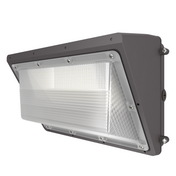
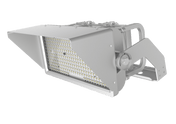
LED area lights (also called LED shoebox lights or LED site lights) are designed for outdoor, wide-area illumination from poles or building walls.
Typical applications:
-
Parking lots and garages
-
Gas stations and car dealerships
-
Street lighting and roadways
-
Pathway and perimeter lighting
-
Loading docks and logistics yards
Unlike floodlights (which project a narrow beam), area lights provide even, uniform coverage over a large horizontal surface.
2. Why Switch to LED Area Lights?
| Feature | Old Technology (Metal Halide / HPS) | LED Area Lights |
|---|---|---|
| Energy use | 250W–1000W | 60W–300W (equivalent) |
| Lifespan | 10,000–20,000 hours | 50,000–100,000 hours |
| Warm‑up time | 5–10 minutes | Instant on |
| Light quality | Yellowish or poor CRI | 5000K daylight options |
| Maintenance | Frequent bulb changes | Nearly zero |
Annual energy saving: Replacing ten 250W metal halides with 100W LEDs saves ~2,500 kWh/year—over $300 at $0.12/kWh.
3. Key Specifications to Compare
A. Lumens – Not Watts
Watts tell you energy use. Lumens tell you brightness.
| Application | Recommended Lumens |
|---|---|
| Small parking lot (10–15 poles) | 10,000–15,000 lumens |
| Large retail parking lot | 20,000–30,000 lumens |
| Gas station canopy | 15,000–25,000 lumens |
| Roadway / street lighting | 12,000–20,000 lumens |
Look for lumens per watt (LPW) ≥ 130 for modern efficiency.
B. Color Temperature (Kelvin)
-
3000K–4000K – Warm to neutral (residential feel, less glare)
-
5000K (daylight) – Best for security and task visibility – recommended for commercial parking lots
Most commercial properties choose 5000K for safety and crime deterrence.
C. Optics & Beam Patterns
This is the most overlooked but critical factor. Good LED area lights offer multiple lens options to shape light exactly where needed.
| Pattern | Shape | Best For |
|---|---|---|
| Type II | Rectangular, medium width | Roadways, pathways |
| Type III | Wide rectangle, longer throw | Parking lots (standard) |
| Type IV | Asymmetric, forward throw | Building perimeters, sidewalks |
| Type V | Round (square distribution) | Center of large open lots |
Wrong optics = light trespass (neighbor complaints) or dark zones.
D. Mounting Height & Pole Spacing
| Pole Height | Recommended Lumens per Fixture | Typical Spacing |
|---|---|---|
| 15–20 ft | 10,000–15,000 lumens | 2–3 × height |
| 20–30 ft | 15,000–25,000 lumens | 3–4 × height |
| 30–40 ft | 25,000–40,000 lumens | 4–5 × height |
Rule of thumb: pole spacing ≤ 4× mounting height for uniform coverage.
4. Critical Certifications & Ratings
Outdoor lights face water, dust, surges, and temperature swings. Never buy non‑certified commercial area lights.
| Certification | What It Means |
|---|---|
| UL / cUL / ETL | Safety certified for US/Canada |
| DLC Listed | Required for utility rebates (often $50–$150 per fixture) |
| IP65 or IP66 | Water and dust proof – essential for outdoor use |
| 5kV or 10kV surge protection | Protects against lightning and grid surges |
⚠️ Without surge protection, one thunderstorm can destroy an entire parking lot lighting system.
5. Smart Features Worth Adding
Modern LED area lights can reduce energy use by another 30–50% with controls:
-
Photocell (dusk‑to‑dawn sensor) – Automatically turns lights on at sunset, off at sunrise. Many fixtures include a twist‑lock photocell receptacle.
-
Motion sensor (integrated or external) – Dims to 30% when no activity, brightens on detection. Ideal for low‑traffic areas after midnight.
-
0–10V dimming – Allows schedule‑based dimming (e.g., 100% until 10 PM, 50% from 10 PM to 6 AM).
-
Emergency battery backup – Keeps select lights on during power failure (may be required for egress paths).
A 0–10V dimming schedule can cut energy costs by 40% with little noticeable impact on safety.
6. How Many LED Area Lights Does Your Property Need?
A simplified method:
-
Calculate total area (square feet).
-
Choose target footcandles (fc):
-
Low‑activity parking: 1–2 fc
-
General commercial parking: 2–5 fc
-
Gas station / high‑security: 5–10 fc
-
-
Total lumens needed = area (sq ft) × footcandles × 1.2 (loss factor).
-
Divide by lumens per fixture.
Example:
50,000 sq ft parking lot at 3 fc → needs ~180,000 lumens.
Using 100W LED area lights (14,000 lumens) → 13 fixtures.
For precise layouts, ask a supplier for a free photometric plan (AGi32 or Dialux).
7. Installation & Pole Considerations
-
Slip fitter mounting – Standard for round poles (fits 2⅜" or 3" tenons).
-
Trunnion (bracket) mount – For wall mounting or square poles.
-
Adjustable angle (0°–15°) – Helps aim light exactly where needed.
Before ordering, confirm your pole tenon size and bolt pattern.
8. Common Mistakes to Avoid
❌ Buying by wattage only – A 100W cheap fixture may produce fewer lumens than a quality 80W unit.
❌ Ignoring optics – Type V in a narrow parking aisle wastes light on buildings.
❌ Skipping DLC listing – You lose utility rebates (typical rebate: $50–$150 per fixture).
❌ No surge protection – Leads to premature driver failure.
❌ Over‑lighting – Causes light trespass, glare, and higher energy bills.
9. ROI Calculation Example
Replace 20 metal halide 250W area lights (12 hours/night) with 20 LED 100W area lights.
-
Annual energy savings: (250W–100W) × 20 × 12h × 365 ÷ 1000 = 13,140 kWh
-
**At $0.12/kWh:** $1,577 saved per year
-
Plus maintenance savings: No lamp changes for 5+ years (metal halide needs 2–4 replacements)
Typical payback period: 1.5–3 years (including installation). Utility rebates shorten this further.
10. Final Checklist Before Buying
Use this list when comparing LED area lights:
-
Lumens per watt (LPW) ≥ 130
-
5000K color temperature (for security & visibility)
-
Correct optics (Type III / IV / V for your layout)
-
UL / DLC listed
-
IP65 minimum
-
5kV or 10kV surge protection
-
Photocell receptacle (or included dusk‑to‑dawn sensor)
-
0–10V dimming capable
-
5‑year warranty minimum
-
Available in slip fitter or trunnion mount (matches your poles)
Conclusion
Choosing the best LED area lights for your commercial property doesn’t have to be complicated. Focus on lumens, optics, mounting height, and DLC certification. Add surge protection and photocells, and you’ll have a reliable, energy‑efficient outdoor lighting system that lasts a decade or more.
Need a lighting layout? Most quality suppliers offer free photometric plans for commercial projects—ask before you buy.