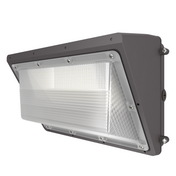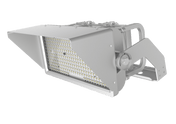

When it comes to outdoor LED lighting, two popular options often cause confusion: LED area lights and LED flood lights. Both are designed to illuminate outdoor spaces, but their functionality, light distribution, and ideal uses vary significantly. Whether you’re lighting a parking lot, backyard, construction site, or sports court, understanding the difference between these two fixtures is crucial to getting the right brightness, coverage, and value. In this guide, we’ll break down the core distinctions between LED area lights and flood lights, helping you make an informed decision for your outdoor lighting project.
What Are LED Area Lights?
LED area lights (also known as “area flood lights” or “site lights”) are designed for uniform, wide-area illumination of large, open spaces. Their primary goal is to provide consistent brightness across a defined area, eliminating dark spots and ensuring even visibility.
Key features of LED area lights:
- Light Distribution: Wide but controlled—typically covers a large, contiguous area (e.g., a parking lot or industrial yard) with uniform brightness.
- Beam Angle: Moderate to wide (60°–120°), balancing coverage and intensity to avoid glare.
- Mounting: Usually mounted on poles (15–40 feet high) or walls, positioned to cast light over a broad horizontal area.
- Brightness & Wattage: Available in 10W–400W+ with 800–40,000+ lumens, optimized for sustained, large-scale illumination.
- Design: Robust, weather-resistant (IP65+ rated) housings, often with directional shields to focus light downward/ outward.
What Are LED Flood Lights?
LED flood lights are engineered for high-intensity, concentrated illumination of specific targets or small-to-medium areas. They’re designed to “flood” a particular spot with bright light, making them ideal for highlighting objects, securing narrow spaces, or supplementing existing lighting.
Key features of LED flood lights:
- Light Distribution: Concentrated or wide (depending on beam angle), but focused on a specific area or target (e.g., a building facade, driveway, or construction zone).
- Beam Angle: Variable—narrow (15°–30°) for spotlighting, medium (45°–60°) for focused coverage, or wide (90°–120°) for broader floodlighting.
- Mounting: Versatile—can be wall-mounted, ground-mounted, or mounted on short poles (8–15 feet), often adjustable to direct light precisely.
- Brightness & Wattage: Ranges from 5W–300W with 400–30,000+ lumens, with high lumen density for intense, targeted light.
- Design: Compact, lightweight, and weather-resistant, with adjustable heads for precise light direction.
Core Differences Between LED Area Lights and Flood Lights
To simplify the comparison, let’s outline the key distinctions in a clear table:
|
Factor
|
LED Area Lights
|
LED Flood Lights
|
|
Primary Purpose
|
Uniform illumination of large, open areas
|
Concentrated illumination of specific targets/ small areas
|
|
Light Distribution
|
Wide, even coverage (no hot spots)
|
Focused (narrow/medium) or wide (but targeted)
|
|
Beam Angle
|
60°–120° (moderate to wide, fixed)
|
15°–120° (variable, adjustable)
|
|
Mounting Height
|
15–40 feet (high poles/walls for large coverage)
|
8–15 feet (low poles/walls/ground for targeted light)
|
|
Brightness Profile
|
Consistent, low-glare brightness across the area
|
Intense brightness in the focused zone (may have glare)
|
|
Ideal Applications
|
Parking lots, industrial yards, sports courts, campuses
|
Driveways, building facades, construction sites, backyard accents
|
|
Design Focus
|
Coverage area and uniformity
|
Directionality and intensity
|
|
Wattage Range
|
10W–400W+ (higher wattage for larger spaces)
|
5W–300W (lower wattage for targeted use)
|
When to Choose LED Area Lights vs. Flood Lights?
- Choose LED Area Lights If: You need to illuminate a large, open space (1,000+ sq. ft.) with uniform brightness—e.g., commercial parking lots, industrial yards, school campuses, or sports courts. They’re ideal for safety-focused areas where dark spots could pose hazards.
- Choose LED Flood Lights If: You need to highlight a specific target (e.g., a building sign, landscaping) or illuminate a small-to-medium space (e.g., residential driveway, backyard patio, construction zone). They’re perfect for task lighting, security, or accent lighting.
Real-World Examples of Use Cases
To help you visualize the difference:
- LED Area Light Use Case: A 5,000 sq. ft. retail parking lot needs consistent illumination to ensure customer safety. A 200W LED area light mounted on a 25-foot pole provides 16,000–20,000 lumens of even light across the entire lot, eliminating dark corners.
- LED Flood Light Use Case: A homeowner wants to secure their 200 sq. ft. driveway and highlight their front yard landscaping. A 30W LED flood light with a 45° beam angle (2,400–3,000 lumens) mounted on the garage wall targets the driveway, while a 10W flood light with a 15° beam angle accents a garden statue.
Common Myths About LED Area Lights vs. Flood Lights
Let’s debunk some misconceptions:
- Myth 1: “Area lights and flood lights are the same.” Reality: Area lights prioritize uniform coverage for large spaces, while flood lights prioritize targeted intensity for specific areas/targets.
- Myth 2: “Flood lights are brighter than area lights.” Reality: Brightness depends on lumens, not fixture type. A 400W area light (36,000+ lumens) is brighter than a 30W flood light (2,400 lumens)—but flood lights have higher intensity in their focused zone.
- Myth 3: “Area lights can’t be used for small spaces.” Reality: Smaller 10W–30W area lights work for medium spaces (e.g., small parking lots, restaurant patios)—but flood lights are more efficient for tiny spaces (e.g., walkways).
Additional Tips for Choosing the Right Fixture
- Consider Space Size: For spaces larger than 1,000 sq. ft., area lights are more efficient. For smaller spaces or targeted areas, flood lights are better.
- Check Beam Angle: If you need flexibility, choose a flood light with an adjustable beam angle. For fixed wide coverage, area lights are ideal.
- Prioritize Glare Reduction: For areas with pedestrians/drivers (e.g., parking lots), area lights with shielded designs reduce glare better than unadjusted flood lights.
- Match Lumens to Needs: Use the formula from our previous guide to calculate required lumens: Total Lumens = Space Size (sq. ft.) × Lumens per sq. ft. (e.g., 15–50 for commercial spaces).
Final Thoughts
The key difference between LED area lights and flood lights boils down to coverage vs. focus. LED area lights are for large, uniform illumination, while flood lights are for targeted, intense brightness. By assessing your space size, lighting goal (uniformity vs. focus), and mounting options, you can select the fixture that best meets your needs—whether it’s a sprawling industrial yard or a cozy residential driveway.
Remember: Both fixtures offer energy efficiency, long lifespans, and weather resistance (IP65+ rated), so your choice ultimately depends on how you need the light to perform. Use this guide to avoid confusion and choose the right outdoor LED lighting for your project!