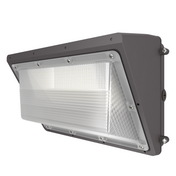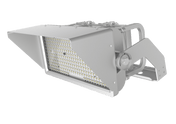

Choosing the right wattage for LED area lights is critical to balancing brightness, energy efficiency, and cost-effectiveness in outdoor spaces. Too low a wattage leaves dark spots that compromise safety, while too high a wattage wastes energy and creates harsh glare. Unlike traditional metal halide or sodium lights (which lose significant energy to heat), LED area lights deliver consistent lumens per watt—meaning wattage directly correlates to usable brightness. In this guide, we’ll break down how to determine the best wattage for your outdoor application, from small residential yards to large commercial parking lots, and share expert tips to avoid common mistakes.
Key Factors That Determine LED Area Light Wattage
Before diving into specific wattage recommendations, it’s important to understand the three core factors that influence your choice:
- Space Size & Coverage Area: Larger spaces (e.g., industrial yards) require higher wattage to ensure uniform illumination, while small areas (e.g., patio walkways) need lower wattage.
- Mounting Height: The higher the light is mounted, the more wattage is needed to reach the ground effectively. A 20-foot pole requires more wattage than an 8-foot wall mount for the same coverage.
- Lighting Goal: Are you illuminating for safety (e.g., parking lots), ambiance (e.g., backyard patios), or task-specific needs (e.g., loading docks)? Safety-focused areas demand higher wattage, while ambient spaces can use lower wattage.
Pro Tip: LED wattage is not directly comparable to traditional lighting wattage. For reference, 1 watt of LED ≈ 8-10 lumens (vs. 1 watt of incandescent = 1 lumen). So a 50W LED area light is equivalent to a 400W incandescent light—use this conversion to avoid overbuying.
Best Wattage for Common Outdoor Applications
Below is a detailed breakdown of recommended wattages for the most popular outdoor uses, organized by space type, size, and mounting height:
1. Residential Outdoor Spaces
Residential areas prioritize ambiance, safety, and energy efficiency—no need for industrial-grade wattage.
2. Commercial/Commercial-Grade Outdoor Spaces
Commercial areas (retail, offices, small businesses) need reliable brightness for safety and customer comfort.
3. Industrial/Large-Scale Outdoor Spaces
Industrial areas require high wattage to cover expansive, high-traffic zones—safety and visibility are non-negotiable.
How to Calculate Exact Wattage for Your Space
For precision (especially for large or irregularly shaped areas), use this simple formula to estimate required wattage:
- Determine Required Lumens: Multiply your space size (sq. ft.) by the recommended lumens per sq. ft. (see below):
- Ambient/Residential: 10–20 lumens/sq. ft.
- Safety/Commercial: 20–50 lumens/sq. ft.
- Industrial/High-Traffic: 50–100 lumens/sq. ft.
- Convert Lumens to Wattage: Divide total lumens by LED efficacy (typically 80–100 lumens/W for high-quality LEDs).
Example: A 1,000 sq. ft. commercial parking lot (needs 30 lumens/sq. ft.):
- Total Lumens = 1,000 × 30 = 30,000 lumens
- Required Wattage = 30,000 ÷ 90 (average efficacy) ≈ 333W → Round up to 350W (or use two 175W fixtures for better coverage).
Common Wattage Mistakes to Avoid
- Choosing Wattage Based on Traditional Lighting: Don’t assume you need a 400W LED to replace a 400W metal halide—LEDs are 4–5x more efficient, so a 100W LED is sufficient.
- Overlooking Mounting Height: A 50W LED mounted at 25 feet will appear dimmer than the same 50W LED mounted at 15 feet—adjust wattage upward for higher mounts.
- Ignoring Light Distribution: Wide-beam angle (120°+) fixtures can cover more area with lower wattage, while narrow-beam (30°) fixtures need higher wattage for the same coverage.
- Prioritizing Wattage Over Lumens: Wattage measures energy use, not brightness—always check lumens (and lumens per watt) to ensure you’re getting enough light.
Additional Tips for Choosing LED Area Light Wattage
- Opt for Dimmable Fixtures: Dimmable LEDs let you adjust brightness as needed (e.g., lower wattage at night for residential areas, higher during peak hours for commercial spaces).
- Consider Solar-Powered Options: For remote areas (e.g., backyard trails), solar LED area lights (5–20W) are energy-efficient and don’t require wiring.
- Check Local Codes: Some cities have brightness regulations—ensure your wattage complies (e.g., residential areas may cap at 50W for wall-mounted lights).
- Use Multiple Fixtures: Instead of one high-wattage light (which creates glare and hot spots), use multiple lower-wattage fixtures for uniform coverage (e.g., two 50W lights instead of one 100W light).
Final Thoughts
The best wattage for your LED area light depends on your space size, mounting height, and lighting goals—but following the guidelines above will help you avoid guesswork. For residential spaces, stick to 5–50W; for commercial areas, 30–200W; and for industrial zones, 100–400W. Remember to prioritize lumens per watt (energy efficiency) and consider dimmable or multi-fixture setups for flexibility.
By choosing the right wattage, you’ll get bright, consistent lighting that enhances safety, saves energy, and meets your specific outdoor needs—whether it’s a cozy backyard patio or a sprawling industrial yard. If you’re unsure, use the lumen calculation formula or consult a lighting professional to ensure perfect results.