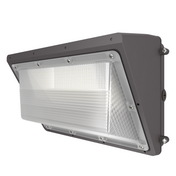

Introduction: Why Lumens Matter More Than Wattage for LED Wall Packs
When shopping for outdoor LED wall pack lights, many buyers fixate on wattage—but lumens are the true measure of how bright a light will be. Wattage only indicates energy consumption, while lumens (lm) quantify the actual light output visible to the human eye. For outdoor spaces—where safety, visibility, and ambiance depend on precise brightness—understanding lumens is critical. Choose too few lumens, and your parking lot, porch, or warehouse perimeter will be dim and unsafe; too many, and you’ll waste energy, create harsh glare, or disturb neighbors. This guide answers the key question: “How many lumens do LED wall pack lights provide?” and helps you select the perfect lumen count for your outdoor application.
What Are Lumens, and How Do They Relate to LED Wall Packs?
First, let’s clarify the basics:
- Lumens (lm): The standard unit of luminous flux—i.e., how much visible light a light source emits. The higher the lumens, the brighter the light.
- Wattage vs. Lumens: Traditional incandescent bulbs had a direct (but inefficient) wattage-lumen relationship (100W ≈ 1600 lumens). LED wall packs are far more efficient: 1 watt of LED power = 80-100 lumens (vs. 15-20 lumens for incandescent). For example:
- 20W LED wall pack = 1600-2000 lumens (equivalent to a 100W incandescent)
- 50W LED wall pack = 4000-5000 lumens (equivalent to a 250W incandescent)
- Key Takeaway: LED wall packs deliver 5-6x more lumens per watt than incandescent lights. When choosing, prioritize lumens over wattage to get the brightness you need without overspending on energy.
Factors That Determine Lumens for LED Wall Pack Lights
Not all LED wall packs of the same wattage produce the same lumens. These factors influence lumen output—and how effectively the light performs outdoors:
- LED Chip Quality: High-quality chips (e.g., Cree, Samsung) deliver consistent lumens (80-100 lm/W) and maintain brightness over time (low lumen depreciation). Cheaper chips may only produce 60-70 lm/W and dim faster.
- Beam Angle: Narrow beam angles (30°-60°) concentrate lumens for long-distance illumination (e.g., industrial yards), while wide angles (120°-180°) spread lumens over larger areas (e.g., storefronts). A 5000-lumen light with a 30° beam will appear brighter in a focused area than one with a 180° beam.
- Color Temperature: Cool white (5000K-6500K) lumens feel brighter and more alert (ideal for security), while warm white (2700K-3000K) lumens appear softer (better for ambient spaces). The same lumen count can feel “brighter” with cool white vs. warm white.
- Weather Resistance: LED wall packs with IP65+ ratings (dust/waterproof) protect internal components, ensuring lumens don’t degrade due to rain, snow, or humidity.
- Dimming/Motion Sensors: Dimmable LED wall packs let you adjust lumens based on need (e.g., 50% brightness for ambient use, 100% for security). Motion sensors trigger full lumens only when activity is detected.
Typical Lumen Ranges for LED Wall Pack Lights (By Application)
LED wall packs are available in lumen counts ranging from 800 lm (low ambient) to 20,000+ lm (high-intensity industrial). Below are the most common lumen recommendations for outdoor use:
1. Residential Spaces (Porches, Entryways, Backyards)
- Lumen Range: 800-3000 lm (10W-30W LED)
- Use Cases:
- 800-1500 lm: Small porches, garden paths, or side yards (soft ambient light—no glare, perfect for evening relaxation).
- 2000-3000 lm: Main entryways, driveways, or large backyards (bright enough to identify visitors, deter intruders, and illuminate steps/walkways safely).
- Pro Tip: Choose warm white (2700K-3000K) for 800-1500 lm models to create a cozy vibe; cool white (4000K) for 2000-3000 lm security-focused areas.
2. Commercial & Retail Spaces (Storefronts, Sidewalks, Loading Docks)
- Lumen Range: 3000-6000 lm (30W-60W LED)
- Use Cases:
- 3000-4000 lm: Storefronts, sidewalks, or small parking lots (inviting brightness that highlights merchandise and makes customers feel safe).
- 5000-6000 lm: Loading docks, delivery areas, or commercial entryways (high-visibility lumens to prevent theft, guide deliveries, and ensure worker safety after dark).
- Pro Tip: Opt for wide-beam (150°-180°) 3000-4000 lm models to cover sidewalks without dark spots; narrow-beam (60°-90°) for 5000-6000 lm loading docks to focus light on work zones.
3. Industrial & Warehouse Spaces (Parking Garages, Perimeters, Loading Bays)
- Lumen Range: 6000-15,000+ lm (60W-150W LED)
- Use Cases:
- 6000-10,000 lm: Large parking lots, warehouse perimeters, or outdoor work areas (evenly distributed lumens to cover wide spaces—ideal for 24/7 operations).
- 12,000-15,000+ lm: High-ceiling loading bays, industrial yards, or remote facilities (extreme brightness for heavy machinery, large vehicles, and maximum security).
- Pro Tip: Select DLC-listed LED wall packs (DesignLights Consortium) for 6000+ lm models—they guarantee consistent lumens, energy efficiency, and qualify for rebates.
4. Municipal & Public Spaces (Parks, Walkways, Public Buildings)
- Lumen Range: 2000-5000 lm (20W-50W LED)
- Use Cases:
- 2000-3000 lm: Public walkways, park trails, or small plazas (gentle lumens that are safe for pedestrians, cyclists, and wildlife—no light pollution).
- 4000-5000 lm: Public building exteriors, transit stops, or government parking areas (bright enough for security without disturbing nearby residences).
- Pro Tip: Choose flicker-free 2000-3000 lm models for park trails to avoid eye strain; motion-activated 4000-5000 lm lights for transit stops to save energy.
How to Calculate the Right Lumens for Your Outdoor Space
If you’re unsure which lumen count to choose, use this simple formula:
- Measure your space: Calculate square footage (length × width). For example, a 10ft × 15ft porch = 150 sq ft.
- Determine lumens per square foot (lm/sq ft):
- Ambient lighting (porches, parks): 20-30 lm/sq ft
- Task/security lighting (driveways, loading docks): 50-70 lm/sq ft
- High-security lighting (industrial yards, parking garages): 80-100 lm/sq ft
- Calculate total lumens: Square footage × lm/sq ft. For the 150 sq ft porch (ambient): 150 × 25 = 3750 lm (opt for a 3000-4000 lm LED wall pack).
Common Mistakes to Avoid When Choosing Lumens
- Confusing Lumens with Watts: Don’t assume a “100W LED” is brighter than a “50W LED”—check lumens (a 50W LED can produce 5000 lm, while a low-quality 100W LED may only produce 6000 lm).
- Over-Lighting Small Spaces: A 10,000 lm LED wall pack on a 100 sq ft porch will create blinding glare—stick to 2000-3000 lm for residential areas.
- Ignoring Lumen Depreciation: Cheap LED wall packs lose brightness over time (e.g., 50% lumen loss in 5 years). Invest in high-quality models with a 50,000-hour lifespan (minimal depreciation).
- Forgetting Beam Angle: A 5000 lm light with a 30° beam won’t cover a large parking lot—pair high lumens with wide beam angles for broad coverage.
Conclusion: Choose Lumens Based on Your Brightness Goals
LED wall pack lights provide lumens ranging from 800 lm to 15,000+ lm, with the right count depending on your space size, lighting goals, and application. To recap:
- Residential: 800-3000 lm (ambient to security brightness)
- Commercial: 3000-6000 lm (customer-friendly to high-intensity safety)
- Industrial: 6000-15,000+ lm (wide coverage and extreme security)
- Municipal: 2000-5000 lm (pedestrian-safe and low light pollution)
By focusing on lumens (not just wattage) and matching the count to your space’s needs, you’ll get an LED wall pack that’s bright enough, energy-efficient, and long-lasting. If you’re still unsure, use our lumens-per-square-foot calculator or consult a lighting expert to find your perfect fit.
Ready to shop? Explore our collection of high-lumen LED wall packs—designed for outdoor durability and optimal brightness in every application!